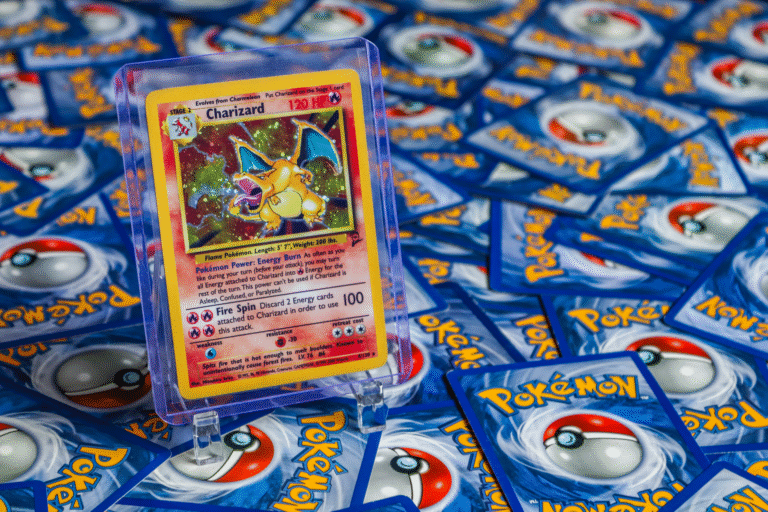
The 30th Celebration Set represents a significant moment in Pokemon TCG history, marking three decades of the franchise while introducing products designed specifically to appeal to both nostalgia-driven collectors and long-term investors. For sealed product buyers, this set signals an opportunity to acquire Celebration-themed products at their release window—a critical factor since sealed Pokemon products typically decline in value during the first 6-12 months after release unless they become genuinely scarce. The 30th Celebration Set’s position as a commemorative release means its appeal hinges on limited print runs, nostalgic card reprints, and the cultural significance of the 30th anniversary itself, all of which directly influence whether sealed boxes maintain or appreciate in value.
Specific example: A sealed Celebrations box released in October 2021 (the original Celebrations set) sold for approximately $80-100 at retail but commands $200-300+ today, primarily because The Pokemon Company produced it in quantities far below the scale of standard expansions. The 30th Celebration Set operates under similar scarcity principles—it’s neither a full expansion nor a standard special set, which means production volumes are deliberately constrained. For sealed product buyers making purchase decisions now, understanding whether this set falls into the “chase product” category (where scarcity drives long-term value) or the “novelty release” category (where supply eventually catches up to demand) requires analyzing concrete factors: official print run signals, distributor allocations, and pre-order demand metrics.
Table of Contents
- How Does Celebration Set Production Scale Affect Sealed Product Value?
- Investment Potential and the Risk of Overestimation
- How Does the 30th Celebration Set Compare to Previous Celebration Releases?
- What Buying Strategy Makes Sense for Sealed Product Collectors?
- Common Mistakes When Buying Sealed Celebration Products
- Grading and Condition Considerations for Sealed Products
- Long-Term Outlook for the 30th Celebration Set in the Sealed Product Market
- Conclusion
- Frequently Asked Questions
How Does Celebration Set Production Scale Affect Sealed Product Value?
Celebration sets operate under fundamentally different production constraints than standard expansions. Standard sets like Scarlet & Violet or Sword & Shield receive massive print runs to maximize retail availability, which floods the market and typically suppresses sealed product prices. Celebration sets, by contrast, receive intentionally limited allocations, treated as premium or commemorative releases rather than evergreen products. The Pokemon Company’s decision to release the 30th celebration Set signals it views this product as a finite window—once it goes out of print, no new stock enters the market, which is why the original 2021 Celebrations set experienced sustained appreciation despite initial skepticism from buyers who dismissed it as a niche product. The real-world implication is timing-dependent.
Sealed boxes available today at retail or near-retail pricing ($40-60 per booster box) represent your entry point before the set’s sell-through phase ends. When similar products like Hidden Fates or Shining Legends eventually went out of print, sealed boxes doubled or tripled in value within 18-24 months. However, this assumes consistent demand. The 30th Celebration Set faces one variable that earlier Celebration sets didn’t: market saturation. There are now far more people collecting sealed Pokemon products than in 2021, and many buyers who purchased the original Celebrations set at $100+ are now offloading their copies onto the secondary market, competing directly with the 30th Celebration Set for collector dollars.

Investment Potential and the Risk of Overestimation
The appeal of buying sealed 30th Celebration Set products rests on a specific bet: that this set becomes scarce enough and desirable enough to command premium pricing. This bet is not guaranteed. While the original Celebrations set appreciated significantly, it benefited from lower collector demand overall and lower sealed product availability across the entire TCG market. The 30th Celebration Set enters a marketplace where sealed Pokemon products are routinely speculated on, and casual buyers often overestimate how much value future appreciation represents. A critical limitation to consider: Pokemon’s official print-run announcements are deliberately vague.
The Pokemon Company does not publish exact numbers for how many units of the 30th Celebration Set were produced, giving buyers no way to definitively assess scarcity. You are instead relying on indirect signals—distributors running low on stock, retailers marking up prices above MSRP, online sellers’ inventory levels—none of which guarantee future value. Sealed boxes of popular sets from 2018-2020 that buyers swore would become rare instead plateaued in value or declined when The Pokemon Company unexpectedly printed more inventory. The 30th Celebration Set could follow this pattern. Additionally, if Pokemon releases another anniversary or celebration-themed product in 2026 or 2027, it could dilute demand for the 30th set by offering collectors a “newer” alternative.
How Does the 30th Celebration Set Compare to Previous Celebration Releases?
The original Celebrations set (2021) and Celebrations Classics (2023) provide the clearest comparables. The original Celebrations set featured a chaotic mix of reprinted classic cards and sold at $4 per booster pack (compared to $3.50 for standard packs), making it feel premium-priced. Sealed boxes of the original Celebrations set are now trading at $200-280, representing 2.5x-3.5x appreciation from their $80 original box price. Celebrations Classics, released just two years later, featured similar reprinting strategy but with cards from the Generations era instead of the earliest Pokemon TCG releases. Sealed Celebrations Classics boxes currently trade for $90-120, a modest premium over their $65-70 launch price.
The distinction matters because the 30th Celebration Set sits directly between these two releases in terms of production scale and market reception. It’s not as original as the 2021 Celebrations set, but it’s newer than Celebrations Classics, giving buyers a middle ground. However, this positioning also introduces risk. If buyers perceive it as “just another Celebrations product” rather than a genuinely special commemorative release, appreciation will be constrained. The original Celebrations set benefited from being the first of its kind—collectors didn’t know whether it would ever return, creating urgency. The 30th Celebration Set operates without that urgency; buyers already own previous Celebration sets and may see diminishing returns on acquiring yet another reprinting set.

What Buying Strategy Makes Sense for Sealed Product Collectors?
If you’re considering buying sealed 30th Celebration Set products, treat it as a calculated speculation rather than a guaranteed investment. The optimal approach varies depending on your risk tolerance and capital availability. Conservative buyers should purchase at or near MSRP ($40-50 for a booster box) and hold for 24+ months, accepting that value appreciation might be modest (20-50%) rather than dramatic (200%+). This timeframe gives the set enough runway to go out of print, clear remaining retail inventory, and establish itself as scarce on the secondary market. Moderate buyers can allocate 5-10% of their collecting budget to sealed 30th Celebration Set boxes as a speculative position, accepting the possibility of zero appreciation or even small losses if the set fails to capture collector demand.
The comparison to other sealed product strategies is instructive. Buying sealed Scarlet & Violet booster boxes at MSRP has historically resulted in values declining 20-40% within 12 months as the set ages and becomes overshadowed by newer releases. Buying sealed special sets like 30th Celebration at MSRP has historically resulted in either flat-to-slight appreciation (Celebrations Classics) or strong appreciation (original Celebrations). The tradeoff is capital efficiency: a sealed Scarlet & Violet box occupies the same shelf space as a 30th Celebration box but has much lower appreciation potential. Your decision should reflect how much speculative risk you want in your collection and how much patience you have holding inventory before selling.
Common Mistakes When Buying Sealed Celebration Products
The most frequent error sealed product buyers make is purchasing at inflated secondary-market prices based on FOMO (fear of missing out). A typical scenario: a sealed 30th Celebration box becomes hard to find at retail, prices spike to $80-100 on resale marketplaces like eBay or TCGPlayer, and buyers panic-purchase at these elevated prices thinking they’ve missed their window. Within 3-6 months, more inventory appears online (sometimes from international imports, sometimes from additional distributor allocations), prices normalize back to $50-60, and buyers who paid $100 are suddenly underwater on their investment. This pattern has repeated consistently across Pokemon TCG special sets; patience almost always beats panic buying. A secondary mistake is conflating rarity with demand.
A sealed product can be rare but unwanted if the market loses interest in its specific appeal. For example, certain regional exclusives or non-English language versions of sets are genuinely scarce, but they command virtually no price premium because collectors are primarily seeking English-language versions of popular cards. The 30th Celebration Set is less vulnerable to this issue since it commemorates a globally significant milestone and features English-language reprints that appeal broadly. However, buyers should still verify that demand for this set remains consistent as new releases arrive throughout 2026. Declining interest would be a warning signal that appreciation has stalled, and holding further becomes capital-inefficient.

Grading and Condition Considerations for Sealed Products
When buying sealed 30th Celebration Set boxes, you’re insulating yourself from grading concerns since sealed products are, by definition, unopened. However, the condition of the seal itself matters. A box with visible creasing, dents, or tape repairs trades at a significant discount—sometimes 20-40% below a mint-condition sealed box—because potential buyers assume the contents may have shifted or been compromised.
If you’re purchasing sealed products with the intent to hold long-term, source from retailers and distributors known for careful warehousing practices rather than from private sellers whose storage conditions you cannot verify. One nuance: some sealed product collectors have begun recording detailed photographs and video footage of their boxes before storage, creating a timestamped record of condition at the time of purchase. This practice became relevant after high-profile disputes where sealed boxes purchased years earlier were accused of being opened and resealed, with value disputes reaching thousands of dollars. For 30th Celebration Set boxes, this protective measure is probably overkill for casual collectors, but if you’re investing significant capital ($500+) in sealed inventory, it’s worth considering as insurance against future disputes.
Long-Term Outlook for the 30th Celebration Set in the Sealed Product Market
The broader trajectory of sealed Pokemon products will heavily influence the 30th Celebration Set’s future value. If Pokemon TCG maintains or grows in popularity through 2027-2028, sealed special sets historically track well—they become harder to source and command steadily rising prices. If Pokemon TCG experiences a decline in casual interest (while maintaining a core collector base), sealed products will depreciate across the board, with special sets hit disproportionately hard because they depend on novelty appeal in addition to utility. Current indicators suggest the TCG is holding strong among collectors while experiencing some normalization from the pandemic-era chaos of 2020-2021, creating a middle ground where appreciation is real but not explosive.
Looking forward, The Pokemon Company will release additional special or commemorative products in 2027 and beyond. Each new release will compete directly with the 30th Celebration Set for collector attention and speculative capital. The set that benefits most will be the one that becomes authentically scarce first—whichever hits a “gone from retail, limited secondary supply” status ahead of others. This is why timing matters for sealed product decisions. Buying now at MSRP is materially different from buying in 12 months at $80+; the former offers true speculation, the latter offers convenience at premium pricing.
Conclusion
The 30th Celebration Set offers sealed product buyers a legitimate speculative opportunity with historical precedent for appreciation, though outcomes are uncertain and highly dependent on production scarcity and sustained market demand. The key advantage is your ability to purchase at or near MSRP today, before any potential secondary-market price premiums set in. The key risk is that this set may follow the Celebrations Classics pattern (modest appreciation) rather than the original Celebrations pattern (strong appreciation), or it may stagnate entirely if buyer interest shifts to newer releases.
Your decision should rest on two factors: (1) whether you have capital available to tie up in a speculative position for 18-24+ months without requiring immediate liquidity, and (2) whether you can purchase at reasonable prices (under $60 per box) without chasing inflated secondary-market listings. If both conditions are met, acquiring a reasonable quantity of sealed 30th Celebration Set boxes represents a defensible portfolio position. If you’re buying at premiums or expecting dramatic returns, you’re misaligning your risk with your likely outcome. The 30th Celebration Set is a hold-and-hope product, not a guaranteed path to substantial profit.
Frequently Asked Questions
Should I buy sealed 30th Celebration Set boxes now or wait for prices to drop?
Buy now at MSRP if you can find them at retail prices ($40-55 per box). Waiting risks prices rising if the set becomes scarce before it goes fully out of print. The downside of waiting is limited—prices may drop 10-20% if inventory floods back—but the upside of waiting is also capped. MSRP purchasing removes this timing pressure.
How much appreciation should I expect from sealed 30th Celebration boxes?
Conservative estimate is 0-50% appreciation over 24 months if the set follows the Celebrations Classics trajectory. Optimistic estimate is 100-200%+ if it follows the original Celebrations trajectory. The most likely outcome falls between these ranges, around 30-80% appreciation if the set becomes modestly scarce and retains collector interest.
Is a 30th Celebration Set box worth holding longer than 2-3 years?
Generally, yes. Special sets appreciate more slowly than investors initially expect, and most of the value gain occurs after 18-36 months when retail inventory genuinely dries up. However, after 5+ years, holding becomes increasingly capital-inefficient—your money could be deployed toward newer special sets. Most sealed product collectors sell within 3-5 years or hold indefinitely as part of a museum-quality collection.
What’s the difference between buying sealed boxes versus sealed booster packs of the 30th Celebration Set?
Sealed booster boxes are more liquid on the secondary market and are the standard unit for sealed product speculation. Sealed booster packs are higher friction to sell in bulk and experience greater condition variance (packs are easier to damage than boxes), making them less ideal for investment. Booster boxes are the stronger choice if you’re speculating on appreciation.
Can sealed 30th Celebration Set products lose value?
Yes. If The Pokemon Company unexpectedly reprints this set or releases a superior alternative, if Pokemon TCG popularity declines sharply, or if buyer sentiment shifts toward different product types, sealed boxes could trade at losses compared to MSRP. This is why speculative purchases should represent a manageable portion of your portfolio, not your entire capital.