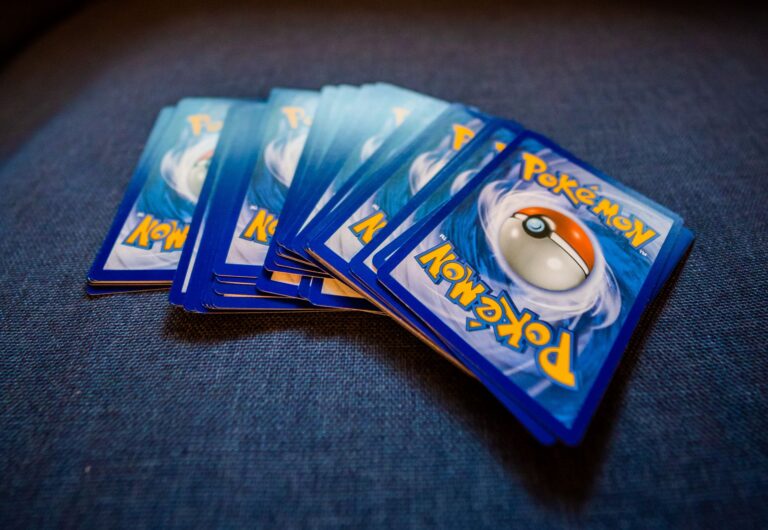
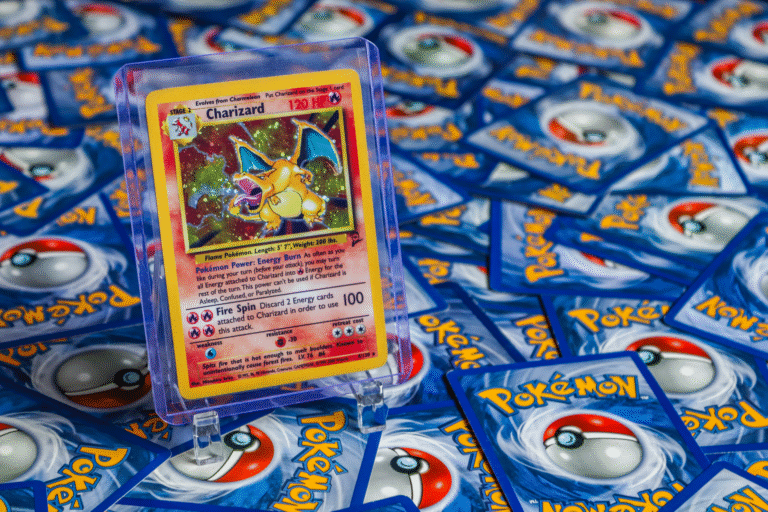
Target’s sold-out Pokémon 30th Anniversary drops reveal a franchise firing on all cylinders—one where consumer demand doesn’t just meet supply, it obliterates it. The first drop on May 2-3, 2026, cleared shelves and sold out online within hours, with some stores limiting inventory to just five Kanto starter jackets per location. That artificial scarcity has immediate real-world consequences: those same jackets, retailing for $129.99, are reselling on eBay for approximately $250.
This isn’t a niche product seeing collector markup—it’s a mainstream retail collaboration that demonstrates the Pokémon franchise has transcended its traditional fanbase and become a mass-market phenomenon. What does this reveal about franchise demand? It confirms that Pokémon’s growth isn’t a nostalgia wave that’s plateauing. The franchise has hit $150.3 billion in lifetime revenue as of Q2 2026, making it the highest-grossing entertainment property ever—ahead of Star Wars, Marvel, and Harry Potter combined. Target’s supply challenges and reseller interest are symptoms of a franchise growing faster than distribution channels can handle, not signs of a market reaching saturation.
Table of Contents
- Why Target’s Kanto Starter Jackets Became Instant Resale Gold
- The Pokémon Franchise Is Growing Faster Than Most Retailers Expected
- Johto and Hoenn Starter Jackets Signal Long-Term Franchise Ambition
- Why the Trading Card Game Market Boom Validates Target’s Gamble
- The Resale Phenomenon and Market Sustainability Questions
- What Pokémon Go’s $500 Million Annual Revenue Tells Us About Franchise Diversity
- What the Next 12 Months Will Reveal About Pokémon’s Retail Future
- Conclusion
- Frequently Asked Questions
Why Target’s Kanto Starter Jackets Became Instant Resale Gold
The inventory distribution for the first drop tells the story of demand outpacing preparation. target received minimal quantities of key items per location, and reports confirm some stores had fewer than five units of the Kanto starter jackets—a signature piece from the anniversary collection. This forced scarcity creates the conditions for secondary market premiums: a $129.99 retail jacket becoming a $250+ eBay listing represents a 93% markup, but it’s not arbitrary. It reflects real demand from collectors who missed the original drop and are willing to pay the premium rather than wait for the next restock. What’s instructive here isn’t that resellers profit—that’s inevitable when supply constrains demand. It’s that Target underestimated how aggressively the pokémon fanbase would move on limited-release apparel.
Unlike trading cards, where collectors understand the value game and expect to queue or hunt, apparel from a major retailer carries different expectations. People assumed Target would have adequate stock. The surprise factor multiplied the scramble, which fed the resale momentum. This also signals something retailers learned during sneaker and streetwear booms: collectible apparel with cultural relevance moves at speeds that standard inventory forecasting doesn’t capture. Target is implementing purchase limits for the second drop—one item per guest—to dampen scalper activity. Whether that works depends on whether resellers can simply split transactions across multiple trips or accounts, which is the usual arms race in these drops.

The Pokémon Franchise Is Growing Faster Than Most Retailers Expected
The numbers behind the Target drops aren’t accidents; they’re the visible edge of a much larger market expansion. Pokémon’s 12.4% compound annual growth rate from 2021 to 2026 means the franchise is roughly doubling in revenue every six years. To put that in context: Star Wars, Marvel, and Harry Potter are all mature franchises with legacy audiences. Pokémon is still in growth mode, and Target’s merchandise collaboration is designed to capture that momentum. The trading card game market, the franchise’s most visible segment among collectors, is expanding dramatically. In 2025, the global TCG market was valued at USD 8.4 billion. By the end of 2026—essentially now—it’s projected to reach USD 16.9 billion. That’s not gradual growth; that’s a market nearly doubling within a year.
Pokémon doesn’t capture 100% of TCG revenue, but it’s the dominant player. The question for Target and other retailers isn’t whether demand will cool. It’s whether they’ll have enough supply to capitalize on a market that’s still accelerating. The limitation worth noting: rapid growth of this magnitude doesn’t sustain indefinitely. Markets that double quickly often consolidate or correct. The Pokémon trading card boom of 2020-2021 saw unprecedented demand, followed by a cooldown phase in 2022-2023, before stabilizing and resuming growth. Target’s second drop in June includes over 40 new products, expanding beyond apparel into accessories, collectibles, and travel gear. That diversification is smart—it spreads demand across more SKUs so no single item becomes a immediate resale bottleneck.
Johto and Hoenn Starter Jackets Signal Long-Term Franchise Ambition
The second drop arriving June 6 introduces new Johto and Hoenn Pokémon Starter Jackets with region-inspired designs. This isn’t Target simply restocking the Kanto items. It’s an expansion that tells retailers and collectors something crucial: Pokémon is betting on sustained, rotating collaborative programs, not one-off drops. The addition of Johto (Gold/Silver generation) and Hoenn (Ruby/Sapphire generation) merchandise also reveals where Target believes collector affinity lies. It’s not just 90s nostalgia. Fans of the early 2000s games are now aged 25-35, with disposable income and strong nostalgic connections to those specific generations. The second drop includes more than 40 items across multiple categories, which is a deliberate strategy to manage demand differently than the first drop.
Instead of five of each jacket per store, Target is likely spreading allocation across more products, reducing the incentive for line-camping and resale speculation on any single item. The one-unit-per-guest purchase limit is also a learning curve adjustment. The first drop had no restrictions, which allowed some buyers to stack multiple items. This time, Target is trying to flatten the supply curve and reduce the vacuum-like inventory clearing that happened in May. What this reveals about franchise demand is that it’s not random. Target wouldn’t expand the collaborative line to 40+ products if internal data showed the first drop was a fluke. This is a retailer seeing sustained pre-orders, waitlist signups, and store traffic signals that indicate the audience is real and isn’t concentrated in a narrow age group or region. The Johto and Hoenn generations broaden the appeal beyond millennial Pokémon Red/Blue players.

Why the Trading Card Game Market Boom Validates Target’s Gamble
Target’s apparel collaborations exist within a broader context: the Pokémon Trading Card Game is not a niche product anymore. It’s a growth category within a $16.9 billion global TCG market that’s still expanding. The card game generates the most consistent revenue for Pokémon Company, and retail partnerships like Target’s help introduce that audience to lifestyle products—hoodies, hats, travel gear—that extend engagement beyond booster packs and preconstructed decks. The mechanics are straightforward: someone collecting Pokémon cards also wants to express that fandom through apparel. Target provides a low-friction way for casual collectors and long-term fans to do that in a mainstream retail environment. They don’t have to hunt specialty card shops or scour online resellers. They walk into Target, and there’s a Pokémon starter jacket.
This accessibility is what explains the immediate sell-through. The first drop likely captured casual collectors who didn’t even know the product existed until they saw it in-store or on social media. The tradeoff is that accessibility also creates scalper opportunities. High foot traffic and mainstream retail presence mean more eyes on products, more opportunities for bulk purchasing, and faster resale velocity. Compare this to a card shop exclusive drop, where the audience is pre-filtered and there’s less fragmentation across secondary markets. Target’s partnership makes Pokémon merchandise available to millions but also makes it available to thousands of resellers watching for opportunities. Managing that balance is why purchase limits and inventory strategizing matter.
The Resale Phenomenon and Market Sustainability Questions
The reselling of Kanto starter jackets at nearly double retail price raises a legitimate question: how long can these drops sustain high demand if secondary market friction doesn’t deter buyers? The answer is tied to franchise momentum and collector psychology. Pokémon buyers aren’t typically flipping apparel for profit the way sneaker resellers do. Most are collectors who want items they missed. The $250 price tag filters for serious collectors with discretionary income, not scalpers trying to flip for quick profit. Still, if resale premiums consistently stay high, Target and Pokémon Company might throttle allocation further or introduce authentication or resale restrictions. The bigger warning: franchise merchandise booms often create two problems in sequence. First, resellers flood the market, which damages trust among casual buyers. If you walk into Target expecting reasonable prices and see everything picked over by known resellers, you stop showing up.
Second, the secondary market cannibalization reduces incentive for Target to invest in future drops if retail margins are undercut by resales. Right now, the enthusiasm is high enough that this isn’t an immediate concern. But watching resale velocity and margins is essential for understanding whether the franchise’s retail expansion is sustainable. The emerging market data is also instructive. Emerging markets now account for 28% of total TCG revenue, up from 9% in 2019, and are projected to reach 35% by 2028. This means Pokémon’s growth isn’t just North America. It’s India, Brazil, Southeast Asia, and other regions where middle-class consumer spending is rising. These markets don’t have the same retail infrastructure as the US, so digital drops and direct-to-consumer channels may become more important than Target collaborations for reaching that audience.
What Pokémon Go’s $500 Million Annual Revenue Tells Us About Franchise Diversity
Pokémon’s revenue comes from multiple revenue streams, and apparel is just one. The mobile game Pokémon Go continues to generate over $500 million annually, nearly a decade after its 2016 launch. That’s not declining-game revenue. That’s a property with staying power across multiple mediums. Target’s apparel collaboration exists alongside thriving card games, mobile games, console games, and trading markets. This diversity is why demand remains robust.
The implication for Target’s drops: consumers aren’t choosing between Pokémon cards or apparel. They’re often buying both, which means each product category feeds engagement with the others. Someone who sees Target’s anniversary collection might go buy a booster box. Someone playing Pokémon Go might splurge on collector’s apparel. This ecosystem reinforcement is why the franchise has reached $150.3 billion in lifetime revenue. It’s not a single product; it’s multiple touch points that compound over decades.
What the Next 12 Months Will Reveal About Pokémon’s Retail Future
Target’s success with these drops will likely influence how Pokémon Company and other retailers approach future collaborations. If the June drop sells as quickly as May’s, expect competitors—Walmart, Best Buy, specialty retailers—to pitch their own exclusives. The franchise is valuable enough that retail partners will compete for allocation. Conversely, if the second drop has inventory lingering past mid-June, retailers will recalibrate and assume the May momentum was a one-off anniversary spike rather than sustainable demand.
The 30th anniversary window is temporary, which means these drops are intentionally time-limited. But the infrastructure Target builds—supply chain management, retail partnerships, authentication systems to combat counterfeits—will persist. If apparel collaborations prove profitable and scalable, they become part of the standard Pokémon monetization mix alongside cards and games. The franchise has evolved from licensing nostalgia to creating new retail categories. How well it manages that transition, without flooding the market or damaging brand trust, will determine whether these drops are a milestone or the beginning of a sustained retail phenomenon.
Conclusion
Target’s Pokémon 30th Anniversary drops reveal a franchise operating at an inflection point. The immediate sell-outs, resale premiums, and expansion to a second drop with 40+ new products aren’t signs of a fandom in decline. They’re evidence of a franchise that’s broadened its appeal beyond trading cards into mainstream lifestyle products, reached into emerging markets, and maintained relevance across multiple generations of fans. The $150.3 billion lifetime revenue and 12.4% compound annual growth rate confirm what the sold-out jackets already showed: Pokémon isn’t a 90s nostalgia product. It’s a modern, multi-channel franchise that’s still expanding.
For collectors tracking market trends, the lesson is clear: Pokémon’s mainstream retail presence will likely become standard, not exceptional. Demand is real, but so are the constraints of sustainable supply and the risks of reseller saturation. Monitor the June drop’s sell-through velocity and secondary market pricing. If inventory lingers, it signals the May peak was anniversary-driven. If it sells as quickly, prepare for more frequent and larger collaborations from Target and competitors. Either way, the franchise’s momentum is undeniable.
Frequently Asked Questions
Why did Target’s first Pokémon drop sell out so quickly?
Limited inventory per store (some locations received fewer than five units of key items) combined with unexpected mainstream demand created an artificial scarcity. Target likely underestimated how aggressively buyers, including resellers, would move on limited-release apparel.
Will the second drop be as hard to get?
The June 6 second drop is larger (40+ items) and includes a one-unit-per-guest purchase limit, designed to slow demand concentration on single items. Inventory should last longer, but signature items may still sell out.
Why is Pokémon reselling at such high markups?
Kanto starter jackets at $250 (vs. $129.99 retail) reflect a 93% premium driven by missed-drop demand and the item’s cultural relevance. The premium also attracts resellers, but most buyers are serious collectors, not profit-focused flippers.
Is Pokémon’s franchise growth sustainable?
Yes, based on current metrics. The franchise is growing at 12.4% CAGR and has diversified revenue (cards, mobile, console, retail). However, rapid growth typically consolidates or cools eventually. Watch for market saturation signals.
What does Target’s success mean for other retailers?
It signals that Pokémon apparel and lifestyle products are a viable retail category with strong demand. Expect competitors to pursue similar collaborations, especially as the franchise expands into emerging markets.
Are these drops a one-time anniversary event or the start of a recurring program?
The second drop and expansion suggest recurring programs are likely. However, success depends on managing reseller activity and maintaining supply-demand balance without flooding the market.