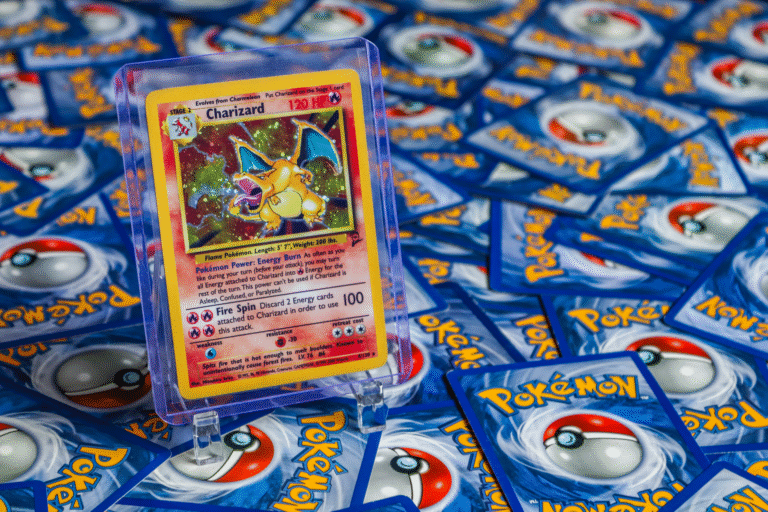
Pokémon merchandise commands higher prices than generic fan gear because it carries official licensing, built-in collectibility standards, and a globally recognized investment market that treats certain items as appreciating assets. When you buy an officially licensed Pokémon product, you’re not just purchasing a decorative item—you’re acquiring something with verifiable authenticity, production limits, and resale value that unauthorized fan creations simply cannot replicate. A first-edition base set booster box might sell for thousands of dollars, while an identically designed but unlicensed fan-made equivalent would be worth nearly nothing.
The difference comes down to trust, scarcity, and market structure. Official Pokémon Company products have documented print runs, grading systems, condition standards, and a decades-long price history that collectors reference. Fan gear, by contrast, has no standardized valuation, no secondary market, and no way for buyers to verify authenticity or compare fair pricing across sales.
Table of Contents
- Why Does Official Pokémon Merchandise Hold Value While Fan-Made Items Don’t?
- The Licensing Barrier That Creates Real Scarcity
- Condition Grading Systems and Standardized Valuation
- Market Demand and Investment Confidence
- Counterfeit Risk and the Trust Factor
- Age and Vintage Appreciation
- The Future of Pokémon Collectibles vs. Generic Fan Gear
- Conclusion
Why Does Official Pokémon Merchandise Hold Value While Fan-Made Items Don’t?
Official pokémon merchandise gains value because The Pokémon Company controls production volumes and maintains quality standards across factories worldwide. When Pokémon decides to stop printing a product line, supplies become genuinely finite—you cannot simply make more. Fan creators, on the other hand, can theoretically produce unlimited quantities of their designs. A custom Pikachu t-shirt printed by one artist might be discontinued, but nothing prevents someone else from making an identical or nearly identical version, flooding the secondary market and destroying any potential scarcity premium.
Authenticity verification also favors official products. collectors can trace official cards, coins, and sealed merchandise through manufacturing codes, packaging details, and legal trademarks. When someone questions whether a vintage Pokémon product is genuine, there’s a documented supply chain to validate it. Fan-made items have no such infrastructure. An unlicensed Dragonite statue might be beautifully crafted, but a buyer has no way to confirm it won’t fade, crack, or fall apart in six months—and no brand reputation stands behind it if quality fails.

The Licensing Barrier That Creates Real Scarcity
The Pokémon Company’s licensing agreements create artificial but legally binding scarcity that artificially supports prices. If you own a sealed Pokémon TCG set from 1999, no competitor can legally reproduce it, even if the original manufacturer has destroyed the original molds. This licensing moat is absolute—it’s not about supply and demand alone, it’s about legal exclusivity. Fan merchandise has no such protection; anyone can create similar designs if they use generic enough names and imagery. One critical limitation to understand: licensing also restricts where merchandise appears and in what quantities.
Pokémon products intended for the Japanese market sometimes never reach North America in significant numbers, creating regional scarcity that pushes prices higher. But this scarcity is fragile. If Pokémon decides to reprint a product line to cash in on demand, values can collapse. This happened with certain popular Pokémon figurine lines in the early 2000s when reprints flooded the secondary market. Collectors who paid premium prices for “rare” items suddenly held merchandise worth half as much.
Condition Grading Systems and Standardized Valuation
Official Pokémon collectibles have developed standardized grading systems that let buyers and sellers agree on value before a transaction. A Pokémon Trading Card Game card graded as PSA 9 (Mint Condition) commands a known premium over a PSA 8 (Near Mint/Mint) example. These grades reference decades of sales data, condition standards, and precedent. Someone shopping for a graded card knows exactly what they’re buying in terms of centering, corners, edges, and surface condition.
Fan merchandise has no equivalent system. If you’re buying a custom-painted Pokémon figurine, you’re trusting the seller’s description of condition, workmanship, and durability—and you have no independent verification. A handmade Charizard sculpture might be technically impressive, but without a grading standard or third-party authentication, its value is purely subjective. One collector might value it at $50; another might see it as worthless because they prefer officially licensed items. This unpredictability makes fan gear a poor investment compared to official products with transparent pricing history.

Market Demand and Investment Confidence
Pokémon merchandise taps into a global, organized secondary market where millions of people actively buy and sell collectibles. Card marketplaces like TCGPlayer, eBay, and specialty card shops publish daily price data that helps establish fair value. When you own an official first-edition Blastoise holographic card, you can look up comparable sales from the last week and know roughly what it’s worth. This price transparency exists because thousands of transactions happen weekly across standardized, authenticated items.
Fan-created merchandise exists mostly in isolation. A custom-painted Pokémon card alter commissioned from an artist might be stunning, but only the original owner and that artist know it exists. It has no resale market because there’s no standardized way to verify its authenticity or condition from buyer to buyer. This invisibility in the secondary market is the core disadvantage—official products benefit from network effects and collective price discovery, while fan gear remains illiquid and speculative.
Counterfeit Risk and the Trust Factor
Official Pokémon products face counterfeit risk, but this risk is manageable through authentication resources and legal enforcement. Counterfeit Pokémon cards are well-documented, and seasoned collectors know what to look for: poor centering, wrong card stock weight, mismatched holo patterns. Grading companies like PSA and BGS stake their reputation on spotting fakes. If a counterfeit slips through, it damages their brand and creates legal liability. This quality control incentive doesn’t exist for fan merchandise—there’s no reputation system or grading company willing to stake their credibility on authenticating an unlicensed item.
The other critical warning: fan merchandise exists in a legal gray zone. Unofficial Pokémon art or merchandise might violate intellectual property laws, creating risk for both creator and buyer. A collector who buys counterfeit Pokémon TCG products is knowingly purchasing stolen intellectual property. Someone who commissions fan art for personal use typically faces no legal consequences, but selling derivative fan merchandise is riskier. If Pokémon Company ever decides to enforce its IP aggressively, fan merchandise could be delisted from marketplaces or seized at customs, leaving collectors with worthless items and no recourse.

Age and Vintage Appreciation
Older official Pokémon merchandise appreciates over time because supply genuinely diminishes as sealed products get opened, damaged, or lost. A sealed booster box from 1999 is rarer today than it was in 2010 because some owners have opened theirs, and others threw theirs away. This one-way decay of supply creates increasing scarcity that drives prices upward. A first-edition base set box that sold for $100 in 2000 might sell for $20,000 today, not because of inflation alone, but because sealed examples have become genuinely hard to find.
Fan merchandise ages differently. An unlicensed figure made in 2005 might be worn out or forgotten by 2026, but it was never scarce to begin with. Scarcity requires limited production and market awareness from the start—qualities fan items typically lack unless they were created by exceptionally popular artists or in tiny batches that generated buzz. Even then, the lack of IP protection means someone could theoretically recreate the design if demand warrants it.
The Future of Pokémon Collectibles vs. Generic Fan Gear
The Pokémon Company continues to invest in creating limited-edition, collectible-focused products specifically designed for investment potential. Special sets, exclusive regional releases, and partnership items with companies like McDonald’s generate secondary market interest because collectors know these products have defined end dates and finite quantities. The company understands that exclusivity and controlled scarcity drive long-term value—and it actively manages these factors to maintain collector interest and price floors.
Fan merchandise will likely remain niche unless creators build a recognized brand identity strong enough to develop their own collecting community. Some fan artists have achieved this—creating loyal followings where their work holds value—but these are exceptions. The structural advantages of official licensing, global distribution, and established grading systems mean Pokémon merchandise will continue to outpace fan gear in terms of investment returns, resale demand, and long-term price appreciation.
Conclusion
Pokémon merchandise is more valuable than fan gear because of three structural advantages: official licensing creates enforceable scarcity, established markets provide price transparency and liquidity, and standardized grading systems eliminate valuation uncertainty. These factors compound over time, making official products genuine investments while fan gear remains speculative collectibles with no transparent secondary market.
If you’re building a collection with any expectation of long-term value retention or resale potential, official Pokémon products are the only category where you can reliably track pricing, verify authenticity, and predict demand. Fan merchandise has its place—supporting artists and expressing personal fandom—but it cannot compete with official items as an investment vehicle or collectible standard.