
A natural PSA 10 is a Pokémon card that achieves a perfect gem mint grade through consistent quality across all its attributes—centering, corners, edges, and surface—with minimal intervention or luck. A card that barely made the grade, by contrast, is one that scraped into a PSA 10 because a single exceptional area compensated for weakness in another, or because it caught a grader on a favorable day. The practical difference matters enormously: a natural PSA 10 represents a card that will consistently hold or appreciate in value, while one that barely qualified is fragile in the market, vulnerable to regrade scrutiny, and likely to lose collector interest if the mystique of the 10 grade dissolves. Consider a 1999 Charizard Base Set: two cards both graded PSA 10, but one displays perfect centering with flawless corners and edges, while the other has tight centering salvaged by pristine surfaces.
The first represents genuine rarity; the second represents luck. The distinction shapes buying decisions, investment strategy, and long-term portfolio health. Collectors and investors who understand this difference avoid paying peak 10 prices for cards that are actually borderline 9.5s masquerading as 10s. Understanding how cards cross into gem mint territory—and how some barely cross at all—is essential for anyone serious about Pokémon cards.
Table of Contents
- What Does PSA 10 Gem Mint Actually Require?
- The Centering Problem and Its Hidden Costs
- Surface Quality and the Illusion of Perfection
- Market Pricing Disparities Between Natural and Borderline 10s
- Corner and Edge Wear—The Hardest Attributes to Fake
- Authentication and Grader Interpretation Variability
- The Future of Card Grading and What It Means for Borderline Cases
- Conclusion
- Frequently Asked Questions
What Does PSA 10 Gem Mint Actually Require?
PSA’s grading scale runs from 1 to 10, with 10 representing gem mint condition. A true PSA 10 requires near perfection across four primary evaluation areas: centering (the image alignment on the card), corners (sharpness and wear), edges (visible wear and printing quality), and surface (scratches, creases, and print spots). None of these criteria allow for meaningful defects. A card with excellent centering but soft corners cannot achieve a 10. A card with sharp corners but loose centering will not reach 10. The grading standard is cumulative and unforgiving.
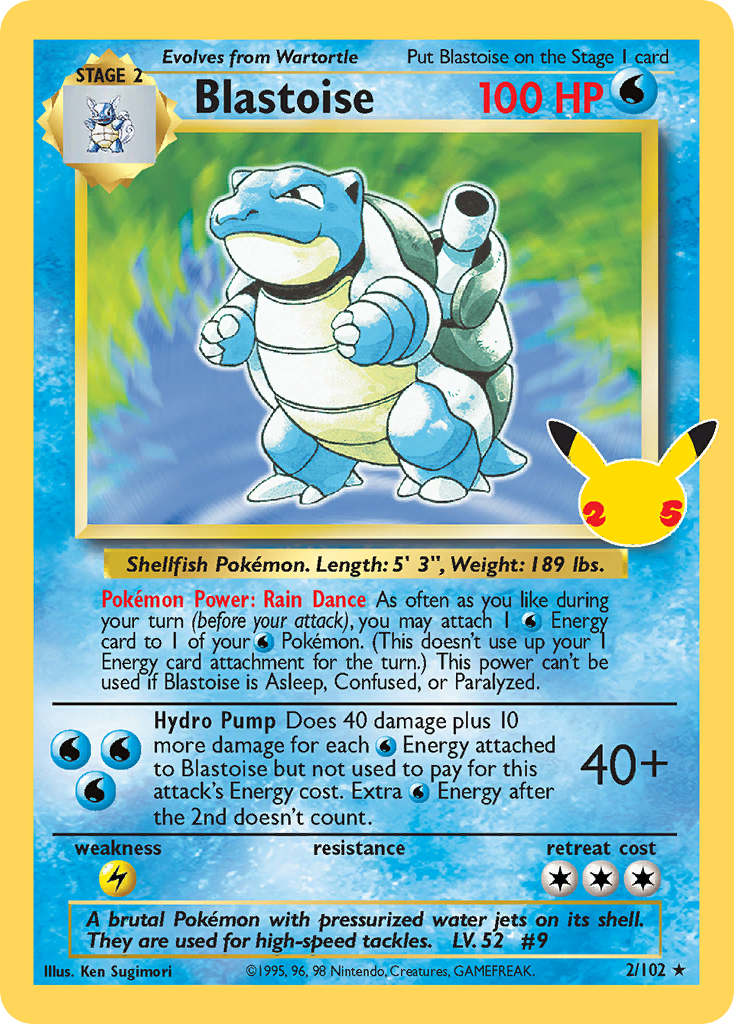
Most cards that reach PSA 10 do so because they avoided heavy play and environmental stress—they were pulled from a pack, stored correctly, and never handled excessively. These cards naturally gravitate toward higher grades because the damage that typically accumulates with age, storage, or handling simply did not occur. A PSA 10 Blastoise from a well-stored collection often reflects legitimate preservation rather than grader generosity. Cards that barely make a 10 often have one exceptional trait masking another weakness. A card might have perfect surface quality and sharp corners but marginal centering—off by a millimeter on one or both axes. The exceptional surface pushes it over the line because PSA weight the grading criteria, but barely. This card is inherently unstable: if regraded in the future, even slight shifting in interpretation can drop it to a 9.
The Centering Problem and Its Hidden Costs
Centering is perhaps the most visible and difficult-to-hide flaw in pokémon cards, especially modern ones printed with tighter tolerances than vintage cards. A naturally centered PSA 10 card will have the image sitting evenly within its borders from top to bottom and left to right. This is visually apparent and difficult to dispute. Cards that barely made a 10 often have noticeably tighter centering on one axis—the card might be centered horizontally but loose vertically, or vice versa. Graders sometimes accept this trade-off if other attributes are exceptional, but the card lives in a precarious position. The limitation here is that centering cannot be improved.
Unlike corners, which can slightly rebound if a card is stored differently, centering is locked in at the point of manufacture. A PSA 10 with marginal centering is a card betting that future grader standards do not tighten. If PSA ever shifts its criteria or if the card is regraded under new quality control, it becomes vulnerable. A collector or investor holding such a card faces the risk that its grade could be questioned, even if it technically meets current standards. Specific example: a graded PSA 10 2020 Vivid Voltage Pikachu V might have horizontal centering near-perfect but vertical centering that is noticeably loose, with the image riding slightly high. The card still grades as a 10 because the overall quality compensates, but every time a serious collector inspects it, they notice the centering issue. This creates a perception problem that affects resale value, despite the 10 label.
Surface Quality and the Illusion of Perfection
Cards that barely made a PSA 10 often achieved their grade because their surfaces are impeccable—completely free of scratches, creases, indentations, or print defects. An unblemished surface can compensate for other marginal attributes because it suggests the card was protected and handled minimally. This is the card that was pulled, placed in a sleeve immediately, and left alone for years. However, surface perfection is the easiest attribute to achieve if a card is handled correctly from the moment it was pulled. It is not a sign of exceptional quality; it is a sign of exceptional luck and storage discipline.
A card with a perfect surface but marginal centering or slightly soft corners is not a naturally strong 10—it is a 10 that exists because of what did not happen to it, not because of what it is. The practical implication is that such cards rely on continued perfect storage to maintain their value proposition. If resold multiple times or handled more liberally, the surface can deteriorate, and a card that was borderline on other attributes will suddenly look far less impressive. A specific example: a PSA 10 2019 Hidden Fates Charizard GX with a perfectly clear surface might have corners that are slightly rounded from the press or packaging, and centering that sits right at the edge of acceptable. The card made a 10 because nothing happened to the surface—no scratches, no indentation from card cases, nothing. But if that card were to shift hands three or four times over the next five years and end up in less careful storage temporarily, the perceived value collapses because the centering and corners suddenly become the focus.
Market Pricing Disparities Between Natural and Borderline 10s
A naturally graded PSA 10 Pokémon card—one with strong centering, sharp corners, clean edges, and an immaculate surface—commands a significant premium in the market. These cards are the ones that serious collectors photograph extensively, inspect under magnification, and discuss positively in forums because they stand up to scrutiny. They are the cards that dealers and grading houses are comfortable buying and reselling because the grade is defensible. A PSA 10 that barely made the grade, by contrast, tends to languish on the market at a discount to comparable natural 10s, even though both technically carry the same label.
A buyer willing to pay full price for a strong PSA 10 will often pass on a borderline 10 once they see photos or examine it in person. The discount can range from 10 to 30 percent depending on how obvious the marginal attributes are and how aware the seller is of the card’s actual condition profile. This represents a direct loss in expected value compared to what the 10 label suggests. The comparison is stark: two PSA 10 1999 Charizard Base Set cards might be listed at $20,000 and $18,000, but the higher-priced card has consistently strong centering and corners, while the lower-priced card has questionable centering and is priced lower precisely because informed collectors recognize the instability of the grade. Over time, as these cards age and potentially get regraded, that pricing gap likely widens.
Corner and Edge Wear—The Hardest Attributes to Fake
Corners and edges are where the rubber meets the road in distinguishing natural PSA 10s from borderline ones. A card with genuinely sharp corners—no rounding, no whitening—is a card that has avoided stress and handled carefully. Edges that show no fraying or visible wear indicate minimal shuffling, storage damage, or friction. These attributes are difficult to fake and nearly impossible to improve once damaged. Cards that barely made a PSA 10 sometimes have one strong corner and one slightly softer corner, or edges that show the bare minimum allowable wear.
Graders, exercising judgment, might accept this if the overall card is exceptional elsewhere. The warning here is that borderline corner or edge wear is progressive—it can worsen with age, temperature fluctuations, or even slight additional handling. A card that is acceptable under today’s criteria might not be acceptable in ten years if the wear becomes more pronounced or if standards shift. A practical example: a PSA 10 Shadowless Venusaur that has sharp top corners but slightly rounded bottom corners from press defects or packaging stress barely qualified as a 10. That card’s bottom corners might continue to soften with age, especially if the card is ever handled again or stored in a suboptimal environment. An investor holding this card faces the real risk that the borderline attribute becomes undeniable over time, creating pressure to accept a lower grade in any future assessment.

Authentication and Grader Interpretation Variability
PSA employs professional graders with standardized training, but human judgment still plays a role in borderline cases. Two different graders might evaluate the same card and one might see a PSA 9.5 while another sees a PSA 10. This variability is most pronounced for cards that sit right on the boundary. PSA’s own regrading service exists partly because collectors sometimes receive cards they feel do not match their grade—often because the card was evaluated on a favorable day or by a grader with slightly more lenient standards.
This inherent variability means that cards barely making a 10 carry additional risk. If a collector chooses to regradedown the line—whether for insurance purposes, authenticity verification, or for any reason—there is a genuine possibility the card comes back as a 9 or 9.5. This is especially true if years have passed and the card’s condition has subtly shifted. PSA’s standards have also evolved over time; cards graded as 10s a decade ago sometimes come back as 9s today under contemporary standards.
The Future of Card Grading and What It Means for Borderline Cases
As Pokémon card collecting becomes more sophisticated and the market matures, there is a trend toward greater differentiation between cards within the same grade. Some collectors and dealers are beginning to distinguish between “high-end 10s” and “low-end 10s,” or “plus” and “minus” within grades. While PSA has not officially adopted a plus/minus system for 10s, the market is organically creating one through pricing disparities.
This informal tiering will likely pressure borderline 10s further, as collectors become more discerning and demand is increasingly concentrated on the strongest examples. Looking forward, the distinction between natural and barely-made PSA 10s will only become more pronounced as the hobby matures and as high-resolution image sharing makes it harder to hide marginal attributes. Sellers of borderline 10s will face increasing pressure to either accept lower prices or justify their grades with detailed photography and condition analysis. For collectors and investors, this trend reinforces the value of purchasing strong examples rather than accepting borderline grades at full price.
Conclusion
The difference between a natural PSA 10 and one that barely made the grade is the difference between a card that will retain and build value over time and one that risks depreciation or regrading pressure. Natural 10s are characterized by consistent excellence across all grading criteria—centering, corners, edges, and surface—with no weak points compensating for strong ones. Borderline 10s achieve the grade because one or two exceptional attributes overcome marginal performance elsewhere, creating an inherent instability that buyers recognize and price accordingly.
For anyone buying, selling, or investing in graded Pokémon cards, the lesson is clear: examine the condition across all four attributes, understand why a card achieved its grade, and recognize that a 10 label masks significant variation in actual card quality. The strongest investments are in naturally graded cards that will hold up to scrutiny today and tomorrow. The riskiest purchases are borderline 10s priced as if they are strong examples—these cards are living on borrowed time, one regrading or shift in market standards away from depreciation.
Frequently Asked Questions
Can a card improve from a PSA 9 to a PSA 10 if it is regraded?
Rarely. Grading standards are generally consistent, and physical condition does not improve without intervention. Cards that are regrades typically receive the same grade or drop, not improve. A card graded as a 9 was likely evaluated correctly the first time.
Is a PSA 10 with questionable centering still valuable?
It retains value as a 10, but typically at a discount to strong 10s. Informed buyers recognize the marginal attribute and will negotiate downward. Over time, if standards tighten or the card is regraded, the discount widens significantly.
How can I tell if a PSA 10 is natural or borderline before buying?
Request high-resolution photos of all sides of the card. Examine centering by comparing the white borders on all edges, inspect corners under magnification for rounding, and check edges for fraying or wear. Ask the seller directly about any marginal attributes. Strong 10s will hold up to this scrutiny; borderline ones will show clear weaknesses.
Does PSA ever reclassify cards as lower grades?
PSA does not automatically reclassify cards, but it does offer regrading services. If a card is regraded, it can come back at a lower grade. This is more likely for borderline examples, especially if standards have tightened or the card’s condition has deteriorated.
Should I avoid buying PSA 10 cards altogether because of the risk?
No. PSA 10 cards, especially naturally graded ones, are the strongest collectibles in the hobby. The key is being selective and willing to pass on borderline examples that are overpriced relative to their actual condition.
What is the price difference between a strong PSA 10 and a borderline PSA 10?
It varies widely depending on the card, but 10 to 30 percent discounts are common for borderline examples once informed collectors inspect them. Rare vintage cards might see larger percentage gaps simply because the absolute dollar amounts are higher.


