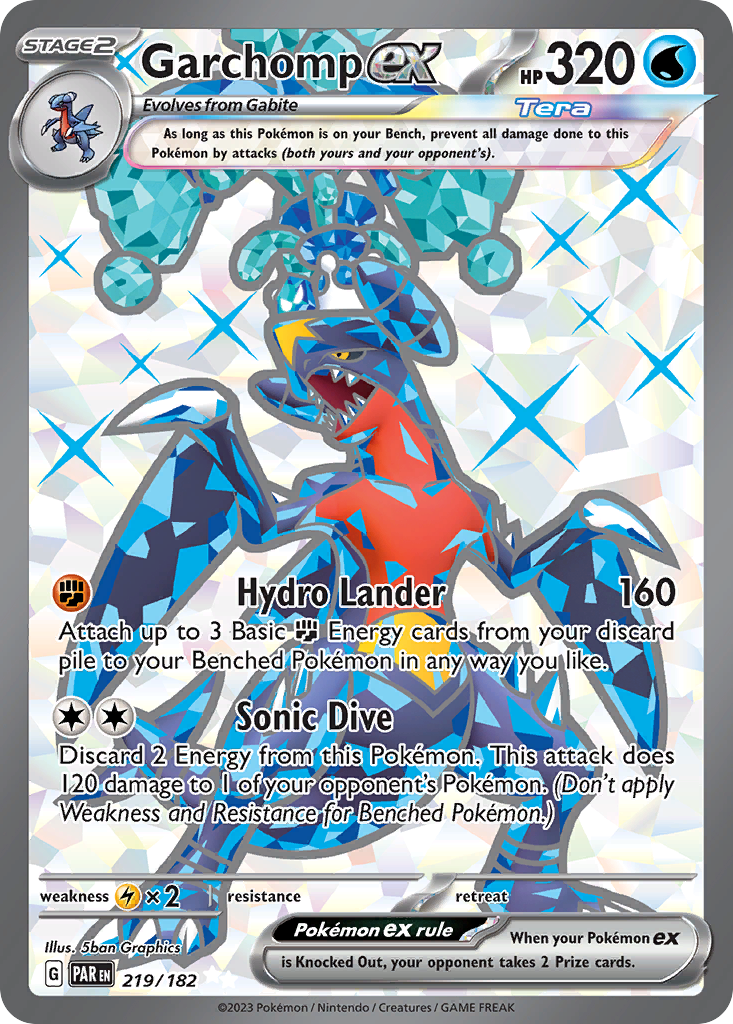
CGC fundamentally altered the Pokémon card grading landscape when it entered the market as a competitive alternative to PSA’s decades-long dominance. By 2025, CGC captured 25 percent of the total TCG grading market in just a few years, becoming the second-largest player and forcing PSA—which had maintained an iron grip on the hobby—to confront real competition for the first time. This wasn’t a gradual market shift; CGC submissions surged 189 percent in early 2025 alone, with the company grading 4.92 million cards that year and representing a 121 percent year-over-year increase. A collector submitting a modern Charizard VMAX for grading in 2024 had essentially one mainstream choice; by 2025, that same collector faced a legitimate alternative with lower fees, faster turnaround, and growing market acceptance.
The impact rippled through every layer of the hobby. Total Pokémon grading volume reached 26.8 million cards in 2025, up 32 percent from 20 million the previous year—growth that CGC largely drove through aggressive pricing and accessibility improvements. Before CGC’s arrival, PSA’s market position allowed it to set fees at levels collectors had little choice but to accept. CGC’s entry changed that calculus overnight, introducing genuine price competition and forcing a reckoning with what grading fees should actually cost. For the first time in the hobby’s modern history, collectors could choose between multiple legitimate, well-capitalized grading companies rather than defaulting to the established player.
Table of Contents
- How Did CGC Capture Market Share So Quickly in Pokémon Grading?
- The Price Wars – Lower Fees and Faster Turnaround Times
- Grade Scale Changes and What They Meant for Values
- Independent Competition and What It Means for Market Health
- Market Acceptance Gaps and the PSA Pricing Premium That Still Exists
- On-Site Grading and Accessibility Innovations
- Future Trajectory and Market Evolution
- Conclusion
How Did CGC Capture Market Share So Quickly in Pokémon Grading?
CGC’s rapid ascent stemmed from a simple formula: undercut psa‘s pricing while matching or exceeding service quality. The company offered grading starting at just $15 per card for standard turnaround—a dramatic reduction from PSA’s higher baseline—and introduced additional incentives that PSA either lacked or charged separately for. One of the most significant differentiators was the $5 reholder fee for cards valued under $10,000, later expanded to $10 at conventions. This seemingly small offering addressed a real pain point for collectors who wanted to update slabs or move cards between graders without shouldering prohibitive costs. A collector with 50 vintage holos that needed reslabbing could suddenly consider CGC instead of being stuck with outdated PSA slabs. The volume surge tells the story of pent-up demand. PSA had operated largely unchallenged for years, and while the company processed millions of cards annually, turnaround times stretched during demand spikes and pricing remained inflexible. CGC arrived with modern logistics, streamlined operations, and willingness to compete aggressively on both speed and cost.
The result: collectors who had accepted long PSA waits and premium fees suddenly had an alternative. The 189 percent submission surge in early 2025 wasn’t because the hobby had dramatically grown in that specific window—it reflected collectors redirecting submissions they would have made to PSA anyway, now choosing CGC instead. Market dynamics also favored CGC’s timing. PSA faced ongoing credibility challenges following high-profile authentication failures and management controversies. When a market leader stumbles, competitors gain room to position themselves as the fresh alternative. CGC, owned by Collectors’ Universe but operating as its own distinct entity, presented itself as a new player without PSA’s baggage. For mid-tier modern cards—the volume driver of the hobby—many collectors felt comfortable trusting CGC, especially when the financial incentive was substantial. A Pokémon trainer planning to grade 10 modern holos at $15 each instead of PSA’s higher rates faced a compelling choice, particularly for cards they planned to keep rather than immediately resell.

The Price Wars – Lower Fees and Faster Turnaround Times
CGC’s pricing structure fundamentally altered what collectors should expect to pay for grading. At $15 per card for standard turnaround on cards valued up to $1,000, CGC undercut PSA’s pricing across the board. For comparison, PSA’s standard rates began at higher thresholds, and the company’s overnight or expedited options commanded substantial premiums. This created a clear economic argument for CGC: you could grade the same card for less money, often with comparable or better turnaround times. A collector comparing $15 grading from CGC to PSA’s equivalent service faced a decision that didn’t even require technical expertise—the math simply favored CGC for most modern card submissions. However, the tradeoff between lower cost and market perception required careful consideration. While PSA’s fees were higher, the company had dominated Pokémon pricing for so long that older slabs carried premium collector acceptance. A PSA 8 Charizard hologram from Base Set carried established market value; a CGC 8 of the same card might grade identically, but the resale landscape was less certain.
Early adopters who submitted modern cards to CGC benefited immediately from lower costs, but those considering expensive vintage cards faced more complex calculations. A $500 vintage holo graded by CGC at $15 versus PSA at $50 seemed like an easy save, until you realized the PSA version might command 10-15 percent higher resale value. The price gap between CGC and PSA cards narrowed significantly in 2025, but it persisted—particularly for premium vintage material where PSA’s historical market dominance still influenced pricing. The reholder fee represented another financial innovation that benefited collectors managing existing collections. Instead of being locked into PSA slabs or paying full grading fees for a reholder, collectors could move cards into CGC slabs more affordably. This particularly benefited collectors who had accumulated PSA cards over years and wanted consistency across their collection. Rather than leave mixed slabs on display or pay to regrade everything through PSA, a collector could selectively move premium cards to CGC while keeping lesser pieces in original slabs. The $5 to $10 fee, while seemingly minor, added up dramatically across a collection—a collection of 100 cards moving to new slabs meant a potential $500-1,000 savings compared to full regrading costs.
Grade Scale Changes and What They Meant for Values
A less obvious but highly significant change came when CGC adjusted its grading scale, eliminating the Gem Mint 9.5 grade in favor of a cleaner 9-10 distinction. This technical detail affected market perception and pricing in subtle ways. Under PSA’s older system, a card could receive a 9.5, positioning it between Mint (9) and Gem Mint (10)—a designation that sounded incremental but often carried meaningful price differences. CGC’s removal of the 9.5 grade meant cards were evaluated as either Mint (9) or Gem Mint (10), with no middle ground. This shift improved market perception for high-quality cards in several ways: a CGC 10 occupied the same position as a PSA 10, but a CGC 9 was more cleanly a “Mint” rather than something that seemed almost Gem Mint but fell slightly short. The practical impact manifested in how collectors valued graded cards. A modern holofoil pokémon card that a grader might have historically assigned a 9.5 would instead receive either a 9 or a 10 under CGC’s system.
For premium cards destined for collection display or investment, this change worked in collectors’ favor—a CGC 10 positioned the card at the absolute top of the quality spectrum without hedging. For cards sitting between those two grades, the determination became more about proper evaluation rather than a numeric fudge factor. This mechanical change, while subtle, contributed to CGC’s market acceptance because collectors felt they understood where their cards actually stood rather than existing in the fractional grade ambiguity that previous systems allowed. The price implications of this grade scale change became apparent across 2025 as market data accumulated. Cards graded CGC 10 began commanding valuations approaching or matching PSA 10s, whereas the older historical gap between 9.5s and 10s—where the premium for that 0.5 increment could be substantial—was eliminated. For collectors holding older 9.5-graded material from other graders, this change ironically highlighted what they possessed: a grade designation that no longer existed and carried unclear modern value. This created opportunities for collectors willing to reholder older cards into CGC slabs if they wanted to access clearer market pricing, though it also meant accepting the reholder fee and acknowledging that newer cards might anchor to cleaner grade designations going forward.

Independent Competition and What It Means for Market Health
CGC’s emergence as a fully independent major grading company represented a structural shift in the Pokémon collectibles ecosystem. PSA is owned by Collectors’ Entertainment, which also controls Beckett and SGC—meaning a single corporate entity dominates three of the major grading brands. Competing against that consolidated power, CGC operated as a genuinely independent alternative. This independence mattered to collectors concerned about potential conflicts of interest or unified pricing power. With CGC in the market, no single entity could unilaterally set grading fees or standards; competition genuinely existed. The practical benefits for collectors manifested as choice and leverage. If PSA’s turnaround times stretched to months, a collector could submit to CGC and receive graded cards in weeks.
If PSA raised fees, CGC’s lower pricing suddenly became more attractive. For modern card grading—the volume driver of the hobby—CGC’s independence and competitive positioning pulled enormous submission volume away from PSA. Collectors submitting recent Pokémon releases, promotional cards, and contemporary sealed products increasingly defaulted to CGC rather than automatically using PSA. This shift represented genuine market competition rather than a duopoly offering variations on consolidated products. However, PSA’s historical dominance meant that legacy collector preferences and card values still anchored to PSA standards. A collector grading a set of Fossil Charizards planned to hold for decades might still choose PSA despite higher costs, knowing that the company’s historical market dominance meant long-term resale clarity. CGC attracted collectors with immediate practical concerns—faster turnaround, lower cost, and cards they planned to own and enjoy rather than flip. The competitive dynamics created a healthy market where different collector priorities could be served by different grading choices, rather than one centralized authority setting the terms.
Market Acceptance Gaps and the PSA Pricing Premium That Still Exists
Despite CGC’s rapid growth, PSA retained a market share advantage that translated into resale pricing premiums. PSA maintained 60 percent of the market in 2024, and while CGC’s growth was impressive, the 25 percent share it captured by 2025 meant PSA still graded more cards. For vintage and highly valuable material, this dominance mattered substantially. A collector selling a high-end Charizard or other iconic Pokémon card would likely find more interested buyers for a PSA-graded version than a CGC equivalent, purely because PSA slabs had been the standard for decades. The price gap between CGC and PSA narrowed in 2025—as collectors gained familiarity with CGC cards—but the gap persisted. This acceptance inequality created a warning that careful collectors needed to consider: your grading choice affected long-term liquidity and resale value. A CGC 9 Blastoise might be objectively identical to a PSA 9 Blastoise, but the PSA version would likely command a modest premium in the secondary market simply due to brand recognition and collector preference. For collectors planning to eventually sell high-value cards, especially vintage material representing significant investment, the lower grading cost at CGC came with a potential 5-10 percent resale discount.
This created a complex economic decision: save $35 on grading now (the difference between CGC’s $15 and PSA’s $50) but potentially lose several hundred dollars on resale of a $5,000 card. For modern cards and bulk submissions, the math clearly favored CGC; for expensive vintage material, the calculation remained more nuanced. The acceptance gap also reflected collector psychology and network effects. Serious vintage Pokémon collectors—those with thousands invested in graded collections—had built their holdings around PSA because no real alternative existed for decades. Switching graders meant confronting uncertainty about future resale value and moving away from what their entire collection was built on. CGC was rapidly gaining respect, but it remained the newer, less established choice for truly premium material. This created a bifurcated market: CGC dominated modern and mid-tier volume grading, while PSA retained pricing power for vintage and high-end submissions. Collectors needed to recognize which segment they occupied to make optimal grading choices.

On-Site Grading and Accessibility Innovations
CGC introduced on-site grading services that fundamentally improved accessibility for collectors. Rather than mail submissions requiring days or weeks of round-trip shipping time, collectors could bring cards to events—typically major trading card conventions—have them graded on-site, and leave with slabbed cards in hand. This innovation proved particularly appealing for collectors attending conventions who wanted immediate gratification or those unwilling to risk shipping cards through the mail. The reholder service at conventions, priced at $5-$10 per card, meant collectors could also update older slabs without expensive shipping or waiting periods.
The practical appeal became clear at major Pokémon conventions in 2025. Collectors waiting in CGC lines at events represented a new dynamic: people who actively chose on-site grading over mail submission. For buyers at conventions planning immediate purchases—securing a newly graded card at the event—CGC’s on-site service eliminated the need to trust mail carriers or navigate return shipping. This accessibility advantage attracted casual collectors and those less invested in the historical PSA dominance that might influence seasoned veterans. A first-time grader attending a convention could walk up to CGC’s booth, submit a prized card, and leave with a graded slab, experiencing the brand directly rather than as an abstract mail-in service.
Future Trajectory and Market Evolution
Looking forward, CGC’s competitive position appears to be solidifying rather than fading. The company captured 25 percent market share in 2025 while pursuing global expansion beyond the United States market. The grading business remains attractive to new entrants and established players alike, but CGC’s combination of modern infrastructure, competitive pricing, and genuine independence from consolidated ownership created defensible market position. As younger collectors new to grading made their initial submissions, many defaulted to CGC simply because of cost and accessibility—and their subsequent familiarity bred loyalty unlikely to shift dramatically.
The structural reality of Pokémon grading moving forward is that one company no longer controls the market. PSA will likely retain premium positioning for vault-tier vintage material and maintain historical advantages, but CGC’s acceptance and volume growth fundamentally altered collector expectations about service quality and pricing. Competition drives down fees, improves turnaround times, and incentivizes service innovation. Collectors benefit from having genuine choices, from understanding that PSA’s historically inflated pricing is no longer necessary to accept. Whether CGC continues growing or other competitors eventually enter, the market will not return to the pre-CGC dynamics where one grader set terms unilaterally.
Conclusion
CGC’s entry into the Pokémon grading market was a watershed moment for the hobby, transforming what had been effectively a monopoly into competitive landscape within just a few years. By offering lower fees, faster turnaround, and independent operations, CGC forced a reckoning with pricing models collectors had accepted out of necessity rather than choice. The company’s 25 percent market share and 189 percent submission surge in early 2025 demonstrate that demand existed for alternatives; collectors simply lacked options. The 26.8 million cards graded across all companies in 2025 shows an expanding hobby, but the shift in which company grades those cards represents genuine market disruption.
For collectors evaluating grading options today, the landscape offers practical choice backed by real competition. Modern cards, bulk submissions, and time-sensitive grading increasingly favor CGC, while vintage and high-end material may still benefit from PSA’s historical market dominance and brand recognition. The price gap between the two companies is narrowing, and as younger collectors build collections around CGC slabs, the long-term acceptance advantage PSA currently holds will likely continue diminishing. The grading market is healthier because CGC entered it, and collectors benefit from an era where their grading choice is driven by actual preference rather than forced conformity.
You Might Also Like
- The Entire Economics of Pokémon Card Grading Explained Simply
- How PSA’s Grading Consistency Has Changed Over the Years
- Why the Pokémon Card Market Will Never Fully Crash