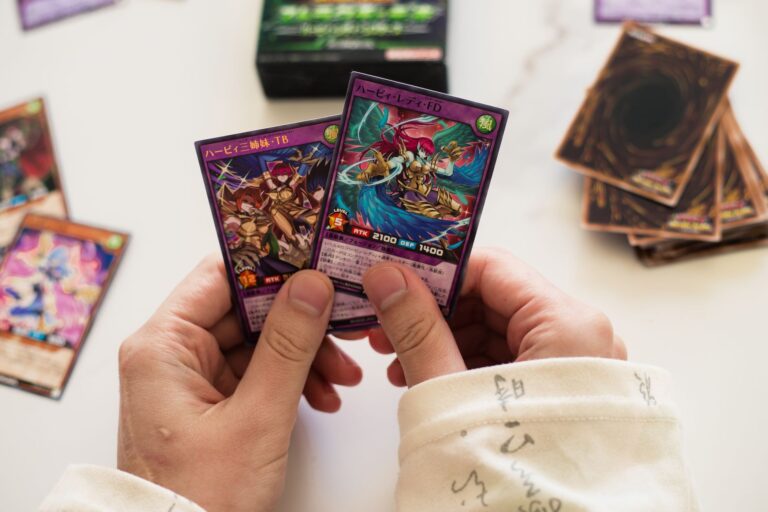
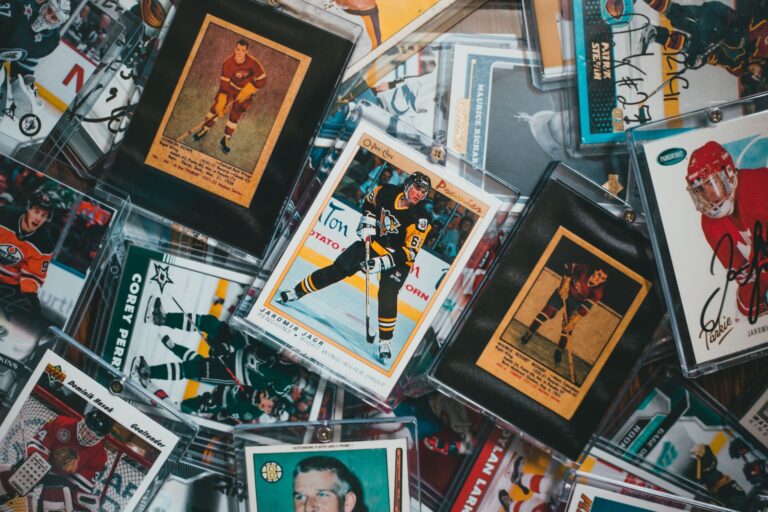
Yes, you can turn $1,000 into a functioning Pokémon card reselling business, but it requires strategic purchasing, realistic pricing, and consistent effort rather than quick flips for massive profits. Starting with $1,000 gives you enough capital to build initial inventory of moderate-value cards, establish market credibility through completed sales, and cover basic operational costs like sleeves, grading submissions, and shipping. For example, an investor could purchase 50 bulk lots of commons and uncommons for $300, allocate $400 toward buying 20-30 moderately played base set holos or ex-era cards, reserve $200 for grading and supplies, and keep $100 as buffer capital—creating a diversified inventory that generates sales at multiple price points.
The key distinction between a genuine business and hobby reselling is consistency and margin management. Most successful $1,000 starters focus on selling mid-range cards ($10-$100 each) rather than chasing base set PSA 9s or first editions, which require significantly more capital and carry higher risk. Within six months to a year, reinvesting profits allows scaling to $3,000-$5,000 in inventory, at which point you can access higher-margin cards and establish yourself as a reliable seller on platforms like TCGPlayer, eBay, or Cardsphere.
Table of Contents
- How Much Inventory Can $1,000 Actually Buy?
- Understanding Grading Costs and Their Impact on Margins
- Finding Cards Worth Reselling at Scale
- Platforms and Pricing Strategy for Maximum Turnover
- Avoiding Common Beginner Mistakes That Tank Margins
- Scaling Beyond $1,000: The Reinvestment Pathway
- Market Conditions and Future Outlook for New Resellers
- Conclusion
How Much Inventory Can $1,000 Actually Buy?
Your $1,000 breaks down into inventory, operational costs, and working capital, with each category competing for allocation. If you spend $800 on cards and $200 on supplies and fees, you can acquire roughly 150-300 cards depending on acquisition strategy. Buying sealed boxes of recent sets costs $90-$150 per box but carries the lowest margins unless you hit chase cards—most resellers avoid this path at the $1,000 stage. Purchasing singles from bulk lots, Facebook groups, or local collections typically yields better ROI; you might grab 200 commons for $20, 50 uncommons for $40, and 10 moderately valuable holos for $400, giving you a broad market to sell into at different price points.
The comparison between buying bulk online versus local matters significantly. Online bulk sellers on eBay often price defensively and already account for shipping, meaning lower margins. Local collections (found through Facebook groups, craigslist, or Discord) frequently offer 20-40% discounts compared to TCGPlayer market rates because sellers want quick liquidation. A $1,000 budget makes local sourcing practical since you can make multiple smaller purchases and test which card tiers sell fastest in your market.

Understanding Grading Costs and Their Impact on Margins
Grading represents your biggest operational expense and margin killer at the $1,000 stage. A psa or BGS grading submission costs $15-$50 per card depending on turnaround time, and grading can easily consume 20-30% of your budget if you’re not selective. The hidden cost is that grading takes 2-6 weeks minimum, tying up both capital and inventory. Many successful $1,000 starters avoid grading entirely for the first 3-6 months, focusing instead on raw card sales where margins are lower but cash flow is immediate.
Here’s the limitation: ungraded cards at $20-$100 price points barely move faster than graded equivalents, and often sell for 30-50% less. A raw PSA 8-quality 1st edition Jungle Pikachu might sell for $35-$50, while a graded copy brings $80-$120. However, risking $20-$30 per card on grading fees only makes sense if you’re confident of a $40+ margin after fees and shipping. Most beginners should stick to high-confidence grading targets—cards from known strong pulls, obvious gem-mint candidates, or bulk lots where you’ve already vetted condition. The warning here is that grading is addictive; many new resellers over-grade mediocre cards and watch their margins evaporate.
Finding Cards Worth Reselling at Scale
Success hinges on identifying categories that consistently move and hold 30-50% margins. Commons and uncommons from high-demand sets (Brilliant Stars, Scarlet & Violet base set, Jungle, Base Set) sell reliably at $0.10-$0.50 each through bulk lots. Moderately played holos from older sets—think non-shadowless base set holos, Jungle holos, or Fossil holos in LP condition—sit in the sweet spot of $5-$30 per card with steady buyer interest.
A specific example: a played 1st edition Jungle Hypno typically sells for $12-$18, requires minimal grading investment, and moves within 2-4 weeks on TCGPlayer because younger collectors actively seek them for decks and collectors just starting with older sets. Modern reverse holos and secret rares from the last 3-4 sets also perform well, especially if you catch them during price dips. Accumulating 30-40 reverse holos from a recent set you can acquire for $1-$3 each, then selling them at $3-$6, creates a volume strategy that generates consistent small sales. The key is avoiding the trap of buying expensive modern cards hoping for spikes; the Pokémon Company prints aggressively, and speculation on modern cards is a losing game for small operators.

Platforms and Pricing Strategy for Maximum Turnover
Your $1,000 business needs multiple sales channels because no single platform works for all card tiers. TCGPlayer dominates for $5-$100 singles where serious collectors shop, but their 12.5% fee eats margins. eBay works for bulk lots and high-value cards ($100+) where auction format or best-offer options attract dealers and casual buyers willing to pay a premium. Facebook groups and local Discord communities build direct relationships with collectors in your region, eliminating fees entirely but requiring more manual effort.
The tradeoff is pricing power versus liquidity. Pricing aggressively on TCGPlayer (undercutting competitors by 5-10%) moves inventory faster, recovering working capital for reinvestment, but sacrifices $0.50-$2 per card. Pricing conservatively holds margins but means cards sit for 4-8 weeks, tying up cash. Most $1,000 starters should price 10-15% above their cost basis on TCGPlayer to move volume, reinvest profits immediately into fresh inventory, and build seller reputation (which translates to faster sales over time). A comparison: $500 in inventory turning twice per quarter at 20% margin grosses $1,100 revenue annually, while $500 in inventory turning once annually at 50% margin grosses $750—velocity beats margin early on.
Avoiding Common Beginner Mistakes That Tank Margins
The biggest mistake is overpaying for bulk lots. New resellers see “500 cards for $50” and assume huge profits, not realizing 95% are bulk-value commons worth $0.01-$0.03 each. This inventory moves so slowly it depresses your average turnover rate. Always calculate the percentage of a bulk lot that’s actually sellable at $1+; if it’s under 30%, walk away. Another fatal error is buying too many expensive cards too early. Spending $600 on four high-graded base set holos ($150 each) leaves you capital-starved and creates risk concentration—if one doesn’t sell in 2-3 months, you’re cash-negative.
Grading cards on hope instead of certainty is the third major pitfall. Beginners often grade “probably 8” cards that come back as 6s, turning potential $30 sales into $12-$15 outcomes after fees. The warning: start with 10-20 grading submissions total in your first year, all on cards you’ve researched extensively and confirmed past sales data for. Shipping damage is also underestimated. Cheap sleeves, thin mailers, and inadequate padding result in DoA cards and chargebacks that quickly destroy a small margin business. Budget properly for supplies ($0.15-$0.50 per card for adequate protection) rather than racing to the bottom on shipping materials.

Scaling Beyond $1,000: The Reinvestment Pathway
After 3-6 months of consistent sales, your reinvested profits should push inventory to $2,000-$3,000, which opens access to higher-value cards and wholesale relationships. Local card shop owners and established group buys become viable suppliers at $2,000+ levels. You can also afford strategic grading submissions at this stage—5-10 cards per month instead of 1-2. At $5,000 inventory levels, you can approach buylist negotiations with shops or even purchase partial lots from estate sales and store liquidations.
An example of the scaling curve: Month 1-2, you invest $1,000 and generate $400 in profit from $1,400 revenue. Month 3-4, you’re at $1,400 inventory and $600 revenue (40% margins improving as inventory diversifies). By Month 6, you’ve hit $2,000 inventory, $1,000 monthly revenue, and can begin targeting the $50-$200 card tier where repeat customers exist. Most operators reach $5,000-$10,000 annual revenue by month 12 if they stay disciplined about reinvestment and quality control.
Market Conditions and Future Outlook for New Resellers
The Pokémon card market in 2026 has stabilized considerably after the 2020-2022 boom, which is actually good news for new $1,000 operators. Less irrational exuberance means inventory you buy today isn’t fighting artificial scarcity premiums, but it also means you’re competing primarily on knowledge and service rather than supply shock. Older set cards (base set through Diamond & Pearl) continue appreciating slowly as more players return to the hobby, making LP and MP versions of these cards reliable long-term holds if you can’t move them immediately.
The outlook for small resellers favors those who specialize. A reseller focused exclusively on PSA 7-8 holos from 2000-2010 sets will outcompete someone buying random bulk. Another succeeds by dominating a local market’s Discord as the fastest responder to buylist inquiries. The $1,000 stage is ideal for testing specialization before scaling—you can learn whether you enjoy playing the grading game, hunting modern chase cards, or building relationships selling reliable mid-range inventory.
Conclusion
Turning $1,000 into a Pokémon card reselling business is entirely achievable, but success requires treating it as a business rather than a get-rich-quick scheme. Allocate capital across inventory tiers, manage grading carefully, maintain 3-5 sales channels, and reinvest profits consistently. Expect 20-50% margins, 2-4 month payback periods, and the necessity of holding some inventory longer than you’d prefer. Within a year of disciplined operation, you’ll likely reach $5,000-$10,000 in annual revenue and $2,000-$3,000 in liquid inventory—solid foundation for a part-time or full-time card business. The path forward depends on what you enjoy.
If you like hunting deals and sourcing, build relationships with local sellers and estate liquidators. If you enjoy grading and authentication, become the expert in a specific era or card type. If you prefer consistency, buy established bulk at fair prices and focus on turnover velocity. Start by implementing one strategy for 2-3 months, track which cards actually sell and at what margins, then double down on what works while cutting what doesn’t. Your first $1,000 teaches you more about market dynamics than any forum post ever could.