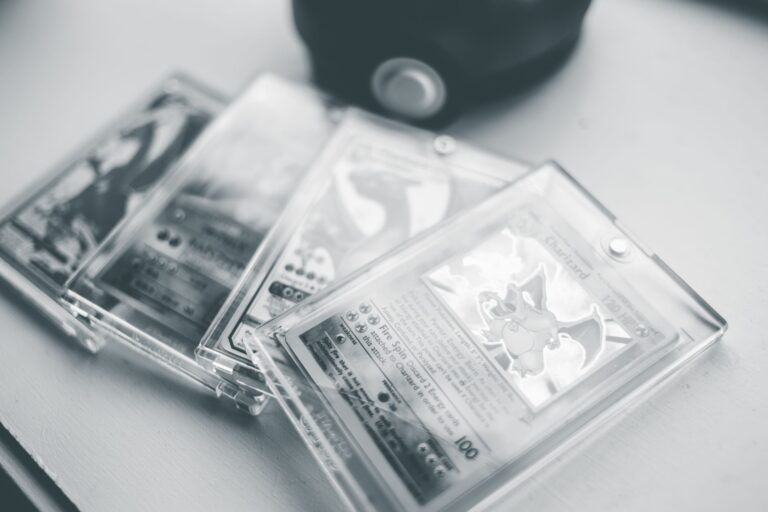
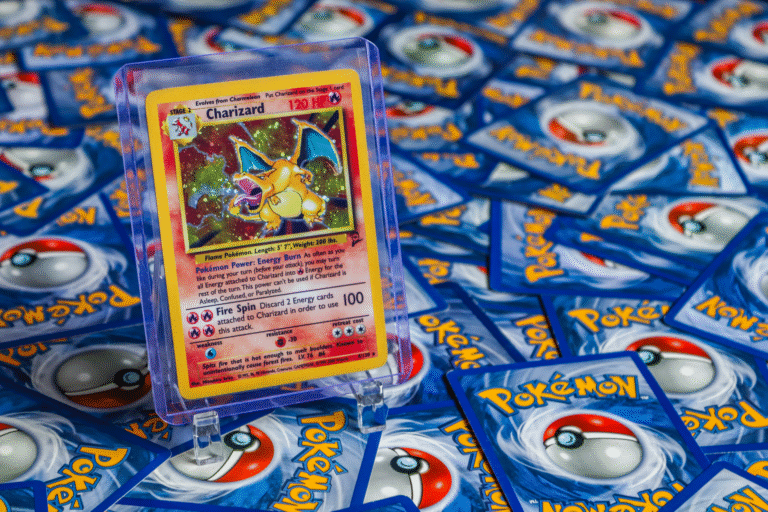
Starting a Pokémon card business from home is achievable for most people with minimal initial investment and setup. The core steps are straightforward: source inventory (purchase bulk lots, singles, or sealed products), establish pricing based on market data using tools like TCGPlayer or PSA comps, create an online presence through platforms like eBay or Etsy, and develop systems for grading, shipping, and customer communication. Someone with $500-$1,000 can reasonably start selling individual cards or unopened booster boxes while managing everything from a spare bedroom. The key difference between casual collecting and a profitable business lies in scale, consistency, and inventory management.
A collector might buy a few booster boxes for personal enjoyment and sell duplicates occasionally. A business operator buys inventory intentionally, tracks expenses and sales rigorously, and reinvests profits to grow stock. A person selling 50 cards per month is operating a side hustle; someone moving 500+ cards per month and treating it as primary income is running an actual business with tax and legal implications. Most home-based card sellers find their first profits 2-3 months in, after initial inventory investment settles and customer acquisition picks up. For example, a seller might purchase a $300 lot of vintage commons and uncommons, grade and list the best cards individually at $5-$15 each, and sell the remainder as bulk lots—potentially turning that investment into $600-$800 within six weeks while managing everything from their desk.
Table of Contents
- What Inventory Should You Source First as a Home-Based Card Seller?
- Pricing Strategy and Market Research for Competitive Selling
- Setting Up Your Online Sales Platform and Shipping Logistics
- Building a Sustainable Inventory Turnover System
- Grading, Authentication, and Quality Control Issues
- Legal, Tax, and Business Structure Considerations
- Scaling from Side Hobby to Full-Time Business
- Conclusion
- Frequently Asked Questions
What Inventory Should You Source First as a Home-Based Card Seller?
The best starting inventory depends on your capital and risk tolerance. New sellers typically choose one of three paths: buying sealed products (booster boxes, ETBs, or old stock), purchasing bulk lots of singles, or focusing on specific sets or cards you know well. Sealed product offers the lowest immediate complexity since you’re not grading or sorting hundreds of individual cards, but it requires more capital upfront and ties up cash longer.
Bulk lots are cheaper to acquire but demand significant time investment to sort, grade, and photograph. A common starter strategy is buying mixed bulk lots from Facebook Marketplace or local sellers, then cherry-picking the valuable cards for individual resale while bundling remainder into cheaper bulk listings. For instance, a $200 lot of 5,000 mixed cards from the 2000s might yield 20-30 cards worth $5-$20 each, plus 1,000-1,500 cards that sell as bulk for another $100-$150. The risk here is underestimating the time required to sort and identify cards—what should take two hours often takes four.

Pricing Strategy and Market Research for Competitive Selling
Pricing is where many new sellers struggle. Simply checking completed listings on eBay or TCGPlayer gives you price ranges, but successful sellers dig deeper into condition, demand trends, and market saturation. A Charizard card graded psa 8 might sell for $3,000 on average, but if 50 copies are listed at that grade right now, yours could sit for months—forcing you to either lower the price or wait out the market. Ungraded or lightly played versions of the same card might sell in days at $800.
The limitation of flat pricing is that it ignores market velocity. A card priced at market average might not sell for weeks, while one priced 10-15% below market often moves within days. New sellers frequently misprice cards by not accounting for condition grading, set symbol differences, or print-run variations. For example, two seemingly identical 1st Edition Shadowless Charizards might be worth $2,000 and $8,000 depending on whether they’re lightly played versus near-mint—a difference many new sellers miss because they don’t understand the grading scale.
Setting Up Your Online Sales Platform and Shipping Logistics
eBay and TCGPlayer are the two dominant platforms for Pokémon cards, each with different fee structures and audiences. eBay takes 12.9% final value fees plus payment processing, making it more expensive but offering exposure to casual buyers. TCGPlayer takes around 5.5% in seller fees but attracts serious collectors and players willing to pay for quality. Some sellers use both, listing identical inventory on each platform and delisting when one sells first—a strategy that requires careful inventory management but maximizes exposure.
Shipping logistics determine your profit margins more than many sellers realize. Ungraded singles under $3 can’t absorb $4-5 shipping costs. Heavier sealed products generate better margins since a $50 booster box can handle $6-8 shipping. A seller targeting bulk lots of 100 cards for $20-30 needs cheap media mail shipping or flat-rate Priority Mail to stay profitable. Consider that buyers expect 2-3 day delivery; anything slower tanks your ratings. The tradeoff is between cheap slow shipping (media mail, 5-7 days) and fast costly shipping (Priority, $5-8 per order), which cuts into your margin on lower-priced items.

Building a Sustainable Inventory Turnover System
The most successful home-based card sellers treat inventory like a grocery store: they expect stock to turn over in 30-60 days, reinvesting profits to buy new inventory. This requires tracking what sells, what doesn’t, and which categories or sets move fastest. A seller who buys $500 in inventory and sells it all in 45 days can reinvest that $500-700 profit into new stock, effectively doubling their buying power every 2-3 months if done consistently. A critical distinction is the difference between active and dead inventory.
Popular sets from the last three years typically move within 30-45 days; older or niche sets might sit for months. A common mistake is buying large lots of 1990s commons thinking they have value, then discovering bulk is worth maybe $0.02-0.05 per card. The warning here is that not all card inventory is equal—a pound of commons from 1997 Base Set might be worth $10, while a pound of modern commons is worth $2. New sellers often overestimate the value of bulk and underestimate storage space required for slow-moving inventory.
Grading, Authentication, and Quality Control Issues
Many new sellers avoid grading cards professionally (PSA, BGS, CGC) because third-party grading costs $10-100 per card and takes 1-3 months. Instead, they use their own condition assessment: near-mint, lightly played, moderately played, heavily played. This works fine for cards under $100, but for higher-value cards, professional grading is often necessary because buyers expect it. The limitation is that self-grading is subjective—what you grade as near-mint might look lightly played to a buyer, leading to returns and negative feedback.
A practical warning: counterfeit Pokémon cards are increasingly common in bulk lots and sealed products. New sellers often don’t spot fakes until they’ve already listed and sold them, leading to refunds, account warnings, or suspension from platforms. The safest approach is to familiarize yourself with legitimate products (real holofoil patterns, correct cardstock weight, accurate printing) before buying bulk inventory, or source directly from known trustworthy sellers with feedback histories. Even then, opening old sealed booster boxes is risky—some vintage boxes have been tampered with, resealed, and relisted multiple times.

Legal, Tax, and Business Structure Considerations
Running a card business from home requires you to register it as a legitimate business in most jurisdictions, even if it’s just a sole proprietorship or LLC. This involves obtaining an EIN (federal tax ID), potentially registering for sales tax, and filing business income on your personal tax return. The complexity and cost vary by location; some states have no sales tax while others require it on online sales. A comparison: running $5,000 in annual sales as a hobby with no business structure might incur no legal requirements, but doing $50,000+ annually demands proper registration and tax filing to avoid penalties.
Many new sellers underestimate their tax liability. If you make $20,000 in profit, you might owe $5,000-7,000 in taxes (depending on local rates and deductions). Setting aside 25-30% of profits for taxes prevents a costly surprise in April. Additionally, if you offer returns or accept PayPal/credit card payments, you’re responsible for chargeback disputes and refunds, which can quickly eat profits if your return rate is high.
Scaling from Side Hobby to Full-Time Business
Transitioning a card business from part-time to full-time requires reaching a consistent monthly revenue of $3,000-5,000 minimum to cover personal expenses, taxes, and reinvestment. This typically takes 6-12 months of consistent selling, depending on how much time and capital you invest. The market for Pokémon cards has matured considerably since 2020-2021, meaning slower growth overall but more stable demand from collectors and players.
The forward-looking reality is that the market has segmented. High-volume retailers using Amazon or large marketplaces compete on velocity and thin margins. Niche specialists who focus on graded vintage cards, specific sets, or undervalued cards tend to have better margins and more stable businesses. New sellers entering today find less opportunity in competing on volume, and more in building expertise and reputation in a specific category—whether that’s Japanese imports, ex-era cards, or modern tournament-staple singles.
Conclusion
Starting a Pokémon card business from home is viable with $500-1,000 initial capital, a basic understanding of pricing and market demand, and realistic expectations about timeline (3-6 months to profitable, 12+ months to full-time income). Success depends less on having perfect inventory or platform choice, and more on consistency, customer service, and willingness to reinvest profits to grow your operation.
The barrier to entry is low, but the barrier to profitability requires attention to sourcing, pricing, and operations details that many new sellers initially overlook. Before launching, spend 2-3 weeks researching: buy and sell one small lot on your target platform, familiarize yourself with grading standards and counterfeits, and calculate what profit margin you actually need per card after fees and shipping. The card market is established and transparent, which means there’s less room for luck but more opportunity for sustainable growth through deliberate execution.
Frequently Asked Questions
How much inventory should I buy to start?
Most successful sellers start with $300-800 in inventory. This is enough to source 100-500 cards or 2-5 booster boxes to list and test your platform and pricing strategy without massive capital risk.
Which platform is best for beginners—eBay or TCGPlayer?
eBay has more casual buyers and easier setup; TCGPlayer attracts serious collectors who understand grading and spend more per transaction. Many sellers use both simultaneously. Choose eBay if you want simpler shipping and faster sales velocity; choose TCGPlayer if you want higher margins and don’t mind slower, more technical buyers.
How long before I see profit?
Most sellers see their first sales within a week, but meaningful profit (after accounting for fees, shipping, and product cost) typically appears 4-8 weeks in after selling through initial inventory and adjusting prices based on actual market performance.
Should I grade cards with PSA before selling?
Only for cards worth $100+. For cards under $100, third-party grading costs exceed the value gain. Instead, use clear condition descriptions (near-mint, lightly played, etc.) and accept that you’ll handle more returns from misgraded cards.
How do I spot counterfeit cards in bulk purchases?
Learn to check holofoil patterns (real holos have specific light-reflection patterns), card weight and thickness, print quality and text clarity, and corner rounding patterns. Buy from sellers with positive feedback histories and test small lots before committing to large purchases.
Can I source inventory from other sellers to resell at markup?
Yes, but margins are thin. Most wholesalers and arbitrage sellers operate with 15-30% markups. This works if you can move volume quickly, but requires larger capital and can be undercut by competitors buying from the same wholesale sources.