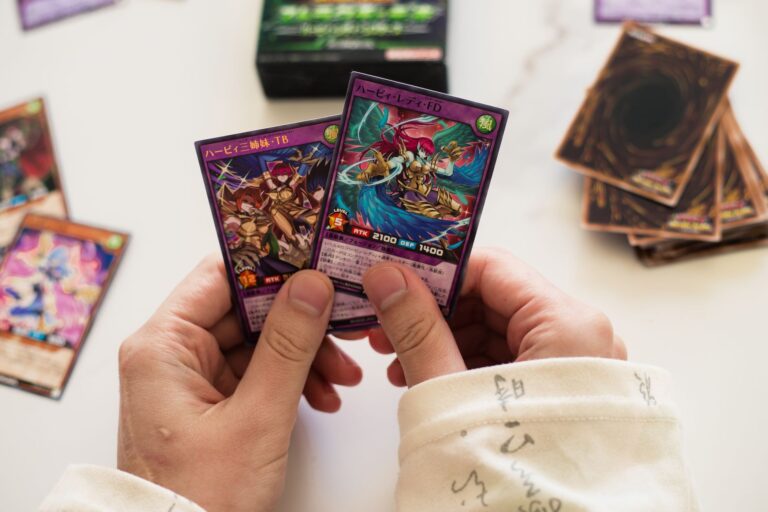
What makes a common-looking card suddenly valuable? The answer often lies in the print run—and savvy collectors have learned that a card appearing identical to thousands of others might actually be one of only a few thousand ever produced. The most dramatic examples come from early Pokemon TCG sets where print runs were poorly documented and varied wildly between production batches. A Base Set Charizard that looks no different from countless others at first glance can command dramatically different prices depending on whether it came from the first print run or a later unlimited printing. Collectors who noticed the subtle differences in dot patterns on the card back, ink saturation, or other telltale signs made the discovery that separated them from casual buyers.
The print run factor transforms how collectors approach card grading and authentication. When PSA, Beckett, or CGC grades a card, the print run identification doesn’t appear on the label, but it dramatically affects the card’s market value. A first edition card from 1999 might grade PSA 8, while an unlimited version of the same card in identical condition might be worth half as much—or less. This invisible characteristic has turned card collecting from a simple aesthetic hobby into a data-driven investigation where provenance and production history matter as much as surface condition.
Table of Contents
- How Hidden Print Run Differences Create Hidden Value
- The Authentication Challenge That Print Runs Created
- Real Examples of Print Run Premiums
- Learning to Spot Print Runs When Purchasing
- Grading Services and Print Run Blind Spots
- How Print Run Discovery Shifts Market Dynamics
- The Future of Print Run Transparency
- Conclusion
How Hidden Print Run Differences Create Hidden Value
print runs in the Pokemon TCG weren’t clearly marked until much later in the hobby’s history. Early base Set cards, released in 1999 and 2000, came from different manufacturing batches that had distinct physical characteristics. The most obvious marker is the edition stamp on the left side of the card—first edition, unlimited, or shadowless—but even cards with the same edition marking came from batches with different characteristics. A first edition Base Set Blastoise from the initial print run has noticeably different card stock weight, ink composition, and back printing dot patterns than a first edition from a later batch, even though both are technically “first edition.” The problem intensified with international releases.
Japanese first edition Base Set cards (known as Pocket Monsters) came from extremely limited production runs compared to unlimited versions. A Japanese first edition Charizard might be one of only 20,000 to 40,000 cards produced, while English unlimited versions numbered in the millions. Collectors who recognized Japanese holos from the scarcity markers—thinner cardstock, different gloss pattern, specific font characteristics in the Pocket Monsters text—began demanding premiums that reflected the actual rarity. A PSA 8 Japanese first edition Charizard might fetch $15,000 to $20,000, while an English first edition PSA 8 of the same card hovers around $4,000 to $6,000, not because of condition but because of production volume.

The Authentication Challenge That Print Runs Created
Identifying print runs requires more than comparing two cards side by side. The telltale signs involve examining the reverse side of the card with magnification—specifically the dot matrix pattern used in the card back printing. Early prints used larger, more visible dots spaced at different intervals than later prints. The holofoil pattern also varies: first run Base Set holos have a more prismatic, rainbow-like quality with larger refraction patterns, while later prints tended toward smoother, more uniform holos that some collectors describe as “duller.” Additionally, the typeface weight and spacing on the card text varied between batches, though this requires direct comparison to notice. A significant limitation is that these differences exist on a spectrum rather than in binary categories.
Some cards fall into grey areas where even expert authentication services disagree about the precise print run. A card might display characteristics of both an early and late print run—perhaps the holofoil matches first edition specs while the card text matches unlimited characteristics. This ambiguity can severely impact valuation. Collectors buying through marketplaces like TCGPlayer or eBay constantly discover cards mislabeled or misidentified. A seller might list a card as a “early run first edition” when magnification reveals it’s actually an unlimited printing, collapsing its value in the process.
Real Examples of Print Run Premiums
The Shadowless Base Set Charizard represents perhaps the most dramatic example of print run value separation. Shadowless cards, printed before early 1999, lack the black shadow border around the artwork and command premiums that can exceed 400-600% over unlimited versions. A PSA 9 Shadowless Charizard sold for $114,000 in 2021, while a PSA 9 Unlimited Charizard of the same card typically ranges from $15,000 to $25,000. The shadowless version isn’t necessarily in better condition—the value difference stems purely from production era and rarity. Another telling case involves first edition Blastoise and Venusaur. These two cards were printed in much lower quantities than Charizard during the initial Base Set release, making them even rarer in pristine condition. A PSA 10 first edition Blastoise has sold for upward of $50,000, yet most collectors hold the misconception that Charizard is the rarest of the three.
The confusion arises because Charizard received more print runs and more subsequent attention, flooding the market with mid-grade examples. Blastoise, printed more conservatively from the start, has fewer mid-grade specimens available, shifting the supply curve and creating unexpected price gaps. Japanese Pocket Monsters Charizard cards from the 1996 release showcase how international print runs compound the value factor. These cards preceded English Base Set by three years and were produced in Asia-only quantities. A PSA 9 Japanese Pocket Monsters Charizard regularly exceeds $25,000 to $35,000, despite being from the same franchise. The difference isn’t quality—it’s pure production numbers. A collector examining two identical-looking Charizards in the same PSA holder might be looking at a $5,000 price gap solely because one came from a Japanese press run of 15,000 copies while the other came from an English unlimited run of 2.5 million copies.

Learning to Spot Print Runs When Purchasing
The most practical approach for collectors involves developing a personal reference collection. Keeping at least one example of each print run variant allows you to make direct visual comparisons with cards you’re considering purchasing. Many collectors photograph their reference cards under LED lighting at high magnification specifically to aid future identifications. When evaluating a card online through photos alone, request close-up images of the back, the holofoil pattern, and the text. Legitimate sellers understand this request and will accommodate it; sellers who refuse or push back are exhibiting a warning sign.
Using a 10x jeweler’s loupe or USB microscope to examine the dot pattern on the card back is essential for confirming print run. The dots should be examined on the lower portion of the back, away from text where they’re most visible and distinct. First edition print runs typically show larger, more spaced dots (around 0.5mm-0.6mm diameter) with visible gaps, while later prints show smaller, denser dots more tightly packed. This single observation can confirm or refute a seller’s claims about timing. A significant downside is that this examination takes practice—casual collectors often misinterpret what they see or confuse print runs because they’re comparing under poor lighting or from too far away.
Grading Services and Print Run Blind Spots
Professional grading companies like PSA, Beckett, and CGC grade card condition but explicitly do not authenticate print run on their labels or in their database notes. This creates a perverse situation where a card might be authenticated by a major grading service yet sold under false print run claims. A PSA 8 card could be shadowless or unlimited—the label tells you nothing. Some collectors argue this represents a critical gap in the grading industry, particularly as print run becomes a larger value factor. BGS, in particular, has added notation options for some variants, but consistency across the industry remains lacking.
The limitation extends further: print run characteristics sometimes overlap in ways that confuse even experienced collectors. Some legitimate first edition cards show characteristics typically associated with unlimited printings, and vice versa. This occurs because certain production batches used mixed supply sources or transition periods when manufacturing standards changed. A card that displays 70% of the typical first edition markers but 30% of unlimited characteristics might reasonably be categorized either way depending on the evaluator. When such ambiguous cards are graded, they enter the market without clear print run designation, and subsequent resale often involves disputes about categorization.

How Print Run Discovery Shifts Market Dynamics
Periodic discoveries about print runs have created sudden value shifts in the market. In the early 2010s, when the Pokemon community developed more rigorous methods for identifying shadowless cards from unlimited printings, values for confirmed shadowless cards surged while the umbrella “first edition” category became less valuable overall. Sellers who had been unknowingly holding shadowless cards suddenly had 5x more valuable inventory. Conversely, sellers with unlimited printings they’d been pricing as first edition discovered they’d been overpricing their stock by 300-400%.
More recent print run analysis has focused on the 1999-2000 Japanese Pocket Monsters releases. As documentation about Japanese production numbers improved through community research and trading company archives, specific print runs from specific production months gained recognition and value. A collector who bought a Japanese Charizard five years ago for $8,000 based on general “first edition” categorization might discover it’s from a particularly scarce month-specific print run, suddenly worth $18,000 to $22,000. The market remains volatile because print run knowledge is still being developed and refined, meaning early adopters of new categorization systems can profit substantially.
The Future of Print Run Transparency
As the Pokemon TCG hobby continues to professionalize, expect print run authentication to become more standardized. Some grading companies are experimenting with print run notation options, though implementation remains inconsistent. The Pokémon Company itself has released some official documentation about production numbers for certain sets, which has already helped collectors validate long-standing community theories about relative scarcity. Future print run identification might involve spectral analysis or other forensic techniques that go beyond visual examination.
The broader trend points toward increased granularity in card categorization. Rather than simply “first edition,” collectors might eventually see notation for specific month-batch, specific manufacturing facility, or even specific production line within a facility, similar to how printed book editions are documented. This would require coordination between grading companies and community researchers, but the financial incentives are strong. As individual rare cards command five and six-figure prices, the level of precision that resolves print run disputes becomes economically justified.
Conclusion
The discovery that a common-looking card might be from a limited print run has fundamentally changed how serious collectors approach the hobby. Print run characteristics—visible only through careful examination and comparison—now determine price gaps that can exceed hundreds of thousands of dollars. Whether through shadowless markings, holofoil patterns, or dot matrix variations on the card back, these invisible factors represent tangible scarcity that rewards informed collectors and penalizes casual buyers.
Moving forward, successful collectors combine visual reference materials, magnification tools, and community documentation to make confident print run identifications. The market remains active and dynamic precisely because print run knowledge continues to develop. Starting your own reference collection for comparison, requesting detailed photos from sellers, and investing in proper examination equipment will position you to recognize hidden value before broader market awareness catches up. Print runs matter increasingly in Pokemon collecting, and understanding how to spot them represents one of the highest-leverage skills available to serious collectors.