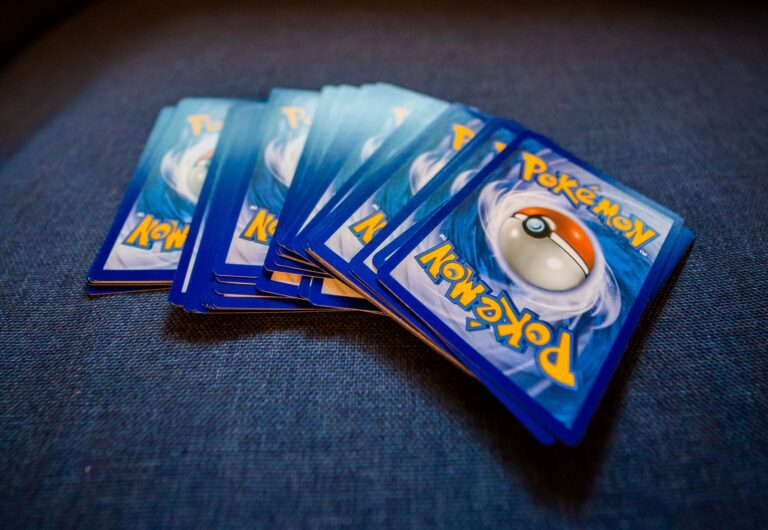
The vintage Pokémon rule every new collector learns too late is this: not all Base Set cards are created equal. Pokémon Base Set cards exist in three distinct print runs—1st Edition, Shadowless, and Unlimited—and the value differences between them are staggering. A 1st Edition Base Set Charizard can sell for over $16,000 when graded properly, while an Unlimited edition of the same card might sell for under $2,000. Most new collectors don’t discover this distinction until after they’ve already purchased cards, overpaid for “rare” cards that are actually just common Unlimited printings, or worse, sent cards to grading services without understanding the cost implications.
This rule encompasses more than just print runs. It’s about the entire ecosystem of hidden costs, storage requirements, and market traps that separate experienced collectors from those who entered the hobby excited but unprepared. New collectors learn the hard way that condition matters exponentially more than they thought, that grading costs can consume profits, and that even their most prized acquisitions might be counterfeits. By the time they understand these lessons, they’ve often already made expensive mistakes. The good news: knowing this rule now means you won’t be one of them.
Table of Contents
- What Are the Three Print Runs and Why Do They Matter So Much?
- The Identification Challenge That Costs Collectors Money
- Grading Service Impact and the Value Multiplication Effect
- Understanding Grading Costs and When It Makes Financial Sense
- Storage and Condition Degradation Happen Faster Than You Think
- Counterfeit Cards Are More Common Than Most New Collectors Realize
- The Hobby Evolves, But These Rules Remain Constant
- Conclusion
What Are the Three Print Runs and Why Do They Matter So Much?
The three print runs of pokémon Base Set cards represent different manufacturing batches spanning from 1995 to 1999, and their differences are baked into the card’s design itself. The 1st Edition cards carry a special “Edition 1” logo on the left side below the card art—this is the immediate identifier. Shadowless cards have no drop shadow on the artwork, which you’ll notice once you know what to look for. Unlimited cards, the most common and least valuable, feature a drop shadow around the artwork and lack the Edition 1 stamp.
1st Edition cards command substantially higher prices because fewer were printed before the edition stamp was removed. A 1st Edition Base Set card might be worth 5-10 times more than an Unlimited version of the exact same card. This isn’t subjective or market-dependent—it’s a hard fact reflected across every pricing guide and completed sale. For context, a 1st Edition Base Set Charizard worth approximately $1,900 ungraded sold for $16,270 when graded PSA 10, demonstrating how the print run designation compounds with professional grading. The gap between print runs is one of the most consequential mistakes new collectors make because it determines the actual value of their cards before any other factor comes into play.

The Identification Challenge That Costs Collectors Money
Identifying print runs sounds straightforward until you’re holding cards in hand, and the differences become far more subtle than photos suggest. Many new collectors confuse these variants because they don’t know the specific markers to check. Shadowless cards, for instance, can look similar to Unlimited cards at a glance, but the absence of that drop shadow around the artwork is the key. First Edition cards have the edition stamp, but even that requires knowing what to look for on the left side of the card.
The real cost of this confusion is that new collectors regularly overpay for Unlimited cards thinking they’re rarer, or they accidentally send Unlimited cards to expensive grading services believing they’re submitting valuable 1st Edition cards. A single mistake here can mean spending $25-$50 on grading a card that’s only worth $50-$100 ungraded, eliminating any profit potential. The limitation is that even experienced collectors sometimes need to compare cards side-by-side or consult high-quality reference images to be certain about print runs, especially with worn or played-condition cards. This is why many serious collectors use magnification tools and reference databases before committing to any purchase over a certain price point.
Grading Service Impact and the Value Multiplication Effect
Professional grading through services like PSA fundamentally changes the economics of vintage Pokémon collecting. A single grade point difference can mean the difference between breaking even and turning a significant profit. PSA 10 graded vintage Pokémon cards command 5-10 times their ungraded value, while a PSA 9 card—just one grade point lower—sells for only 30-50% of the PSA 10 price. This isn’t a smooth curve; it’s a cliff where collectors discover that the difference between near-perfect and perfect is the difference between a worthwhile collection and an investment that barely breaks even.
The Charizard example illustrates this perfectly: ungraded at roughly $1,900, but $16,270 in a PSA 10 slab. The multiplication factor is 8.5x. However, this dramatic increase comes with a critical caveat—only cards in genuinely high condition can achieve PSA 10 grades. Cards with even minor creases, edge whitening, or handling damage will grade much lower, meaning many collectors who send cards in believing they’ll achieve top grades end up with PSA 7 or PSA 8 slabs that barely recoup the grading cost. The hidden lesson is that grading only makes financial sense if you’re confident your card is in exceptional condition, and most new collectors severely overestimate their cards’ condition quality.

Understanding Grading Costs and When It Makes Financial Sense
Grading costs are where the economics become brutal for unprepared collectors. Economy PSA grading starts around $25 per card as of 2025, with expedited options reaching $50-$300 or more depending on speed and turnaround time. When a new collector receives a quote for grading ten cards at $30 each, that’s $300 in sunk costs before knowing the results.
If those cards grade as PSA 7 or PSA 8 instead of the hoped-for PSA 9 or 10, the grading cost might represent half the card’s entire value. The practical rule many experienced collectors follow is this: only grade cards worth at least $300-$500 ungraded, where even a lower-than-expected grade still provides a return above the grading cost. This tradeoff means that bulk collections of lower-value Unlimited cards often stay raw (ungraded) because the economics simply don’t work. Many new collectors don’t learn this threshold until they’ve already committed to grading a batch of cards that won’t justify the expense, making grading one of the most expensive lessons in the hobby.
Storage and Condition Degradation Happen Faster Than You Think
Condition is the invisible force that determines whether your cards maintain or lose value, and poor storage causes degradation almost immediately. Cards stored without sleeves, exposed to moisture, humidity fluctuations, or regular handling will develop creases, edge whitening, and surface wear that drop them from premium to lower-grade status in weeks. Even cards stored in basic plastic sleeves without temperature control will yellow and develop handling marks. Professional graders can spot evidence of poor storage, and it permanently reduces the card’s grade potential.
The harsh limitation here is that condition degradation is largely irreversible. A card that arrives at PSA 9 quality will never grade higher, even if properly stored from that point forward. Many new collectors discover this rule too late—they’ve already handled their vintage cards without sleeves, stored them in basements with moisture, or kept them in direct sunlight. Once damage occurs, the card’s maximum potential grade is capped. Experienced collectors store valuable cards in archival-quality sleeves, temperature-controlled environments, and protective cases, treating mint-condition cards almost like museum pieces rather than objects to handle or display regularly.
Counterfeit Cards Are More Common Than Most New Collectors Realize
Fake Pokémon cards flood online marketplaces, including eBay, sketchy websites, and even some secondary platforms. Counterfeits range from obviously terrible fakes to sophisticated copies that can fool casual buyers. New collectors often unknowingly purchase counterfeits when buying from unverified sellers, especially when acquiring large lots at seemingly unbeatable prices.
The counterfeit risk is highest for high-value cards like first-edition Charizards, where a fake card costing $5 to produce can be sold for hundreds or thousands. Red flags include prices significantly below market value, sellers with no established feedback history, and photo quality that looks suspiciously professional (authentic sellers often use casual phone photos). Experienced collectors develop an instinct for spotting fakes through text and print quality, but the safest approach is buying from established dealers with reputation to protect, or from graded cards in authenticated slabs. The lesson most new collectors learn too late is that the cheapest deal online is often too good to be true, and discovering you’ve purchased counterfeits after already investing in them is demoralizing and costly.
The Hobby Evolves, But These Rules Remain Constant
The vintage Pokémon market continues evolving with new grading services emerging, pricing fluctuations based on cultural moments, and shifting collector demographics. However, the fundamental rules—that print run designation determines baseline value, that condition compounds over time, and that grading costs require careful calculation—remain constant. What changes is the price attached to these factors, not the factors themselves.
Looking forward, new collectors entering the hobby will face the same learning curve. The difference between reading this article and learning through expensive mistakes is the difference between joining an informed community and joining as an uninformed buyer. Knowing these rules ahead of time doesn’t guarantee perfect collecting decisions, but it eliminates the most costly blind spots that new collectors typically encounter.
Conclusion
The vintage Pokémon rule every new collector learns too late is actually a collection of interconnected lessons: print runs determine baseline value, condition is nearly irreversible, grading costs can eliminate profits, and counterfeits are commonplace. These lessons aren’t obscure or debatable—they’re the consistent patterns observed across thousands of transactions and documented across the collecting community. The collectors who avoid the most expensive mistakes are those who research these rules before making their first purchases, not after. Starting your vintage Pokémon collection with this knowledge gives you an enormous advantage. Before buying, identify the print run.
Before grading, confirm the card’s condition justifies the cost. Before storing, invest in archival materials. Before purchasing from unknown sellers, verify their reputation. These simple steps transform you from a new collector destined to learn expensive lessons into an informed buyer who makes deliberate decisions. The vintage Pokémon market rewards patience and knowledge far more than it rewards enthusiasm and luck.