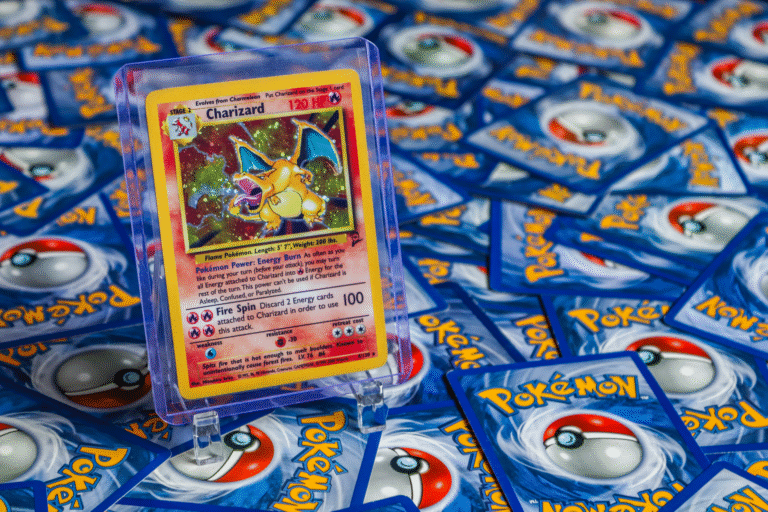
The most important Neo Destiny cards to watch before the next price spike are Shining Charizard, 1st Edition Shining Tyranitar, Dark Gengar, and Shining Raichu—the core pillars of this 2002 WOTC set that have consistently demonstrated value retention and upside potential. Shining Charizard alone commands $1,573 for standard graded copies, with pristine 1st Edition versions reaching $23,999, while 1st Edition Shining Tyranitar trades at $12,324, signaling strong collector demand in an era when Pokemon cards generally climbed in price as of March 31, 2026. Understanding which cards matter before market momentum shifts is essential for collectors looking to position themselves strategically, as these cards operate in the thin intersection of vintage rarity, iconic Pokemon, and WOTC-era prestige.
Neo Destiny’s 111 to 113-card composition contains far fewer pumped-up chase cards than modern sets, which means scarcity naturally works in the favor of graded early printings. The set’s bonus foil prints on rare cards create additional collector tiers that drive competitive bidding, especially for 1st Edition versions of the key Shining Pokemon. Watching these particular cards now matters because market cycles reward those who identify value before demand spikes accelerate pricing.
Table of Contents
- Which Neo Destiny Cards Hold the Most Collector Demand?
- Understanding the Grading Gap in Neo Destiny Valuations
- Dark Pokemon as the Undervalued Neo Destiny Opportunity
- Building Your Neo Destiny Watch List Before Market Momentum Shifts
- Grading Submission Risk and Market Timing Misalignment
- Foil Prints and Bonus Cards Worth Monitoring
- The WOTC Vintage Market Outlook and Neo Destiny’s Position
- Conclusion
Which Neo Destiny Cards Hold the Most Collector Demand?
The hierarchy of Neo Destiny card values reveals clear favorites: Shining Charizard anchors the top tier, followed closely by 1st Edition Shining Tyranitar and Dark Gengar, which commands the highest price of any non-Shining card in the set. Shining Raichu rounds out the core four, distinguished as a perennial collector favorite that consistently holds value across market cycles. This concentrated demand around five to six key cards reflects collector psychology—players gravitate toward recognizable Pokemon with aesthetic appeal and competitive history, which means newer entrants to Neo Destiny collecting often chase the same targets, reinforcing their price floors.
What separates these top cards from the rest of the set is the combination of art quality, Pokemon popularity, and print rarity. Shining Charizard’s art treatment makes it immediately recognizable even in a stack of graded slabs, while Dark Gengar appeals to players nostalgic for the competitive dark Pokemon era. The difference in value between a standard Shining Charizard ($1,573) and a 1st Edition version ($23,999) illustrates how print edition affects even the most desirable cards—a 15x premium for an early printing demonstrates that rarity multipliers still drive collector behavior in the vintage market.

Understanding the Grading Gap in Neo Destiny Valuations
Grading quality creates vast pricing chasms within the same card, and Neo Destiny examples amplify this effect because the set’s age and production methods mean finding high-grade raw copies becomes increasingly difficult. A Shining Charizard graded at PSA 9 carries fundamentally different economic weight than the same card at PSA 8, and crossing into PSA 10 territory can double or triple valuation. The 1st Edition Shining Tyranitar at $12,324 represents a fully graded, market-ready specimen; pull the same card raw from a collector’s binder, and its value might range from $2,000 to $5,000 depending on visible wear, centering, and corner condition.
This grading dependency creates a real risk for collectors chasing Neo Destiny cards before the next spike: buying raw copies gambling on future grading results ties up capital with no guaranteed return. If you submit a Shining Raichu expecting a PSA 9 and receive a PSA 7, the turnaround profit evaporates. Additionally, grading fees (which can exceed $100 per card for older submissions) eat into margins on cards valued under $500 raw, which means the $2,000 card you’re eyeing needs to appreciate significantly just to justify the grading bet.
Dark Pokemon as the Undervalued Neo Destiny Opportunity
While Shining cards dominate collector conversations, Dark Gengar’s position as the highest-priced non-Shining Neo Destiny card suggests a secondary layer of value accumulation happening outside the obvious chase cards. Dark Gengar appeals to a different cohort—players who collected during the dark pokemon era of the late 90s and early 2000s, and who value competitive legacy over pure rarity. This card trades at meaningful premiums, yet rarely receives the same market attention as Shining Charizard, which creates inefficiency.
Collectors positioning for a price spike should monitor other dark-type entries from Neo Destiny as potential upside vehicles. Cards like Dark Hydreigon, Dark Muk, and Dark Ariados command lower absolute prices but share the same rarity metrics and WOTC-era credibility as their flashier siblings. The comparison is useful: while everyone watches Shining Charizard climb incrementally, a strong market cycle that elevates dark Pokemon could unlock faster appreciation in cards trading at $200–$500 raw, where absolute gains translate to higher percentage returns. However, this strategy requires conviction that dark-type popularity will resurge, which is an assumption rather than a guarantee.

Building Your Neo Destiny Watch List Before Market Momentum Shifts
A practical strategy for collectors involves tiering the Neo Destiny set into three categories: immediate buys (Shining Charizard, 1st Edition Shining Tyranitar, Dark Gengar, Shining Raichu), secondary monitors (other Shining Pokemon like Shining Mewtwo and Shining Blastoise), and opportunistic additions (non-Shining rares and holographic cards with strong centering). The advantage of this approach is that it forces prioritization—attempting to buy every Neo Destiny card before prices spike is capital-inefficient and emotionally exhausting. Current market conditions as of March 31, 2026 showed Pokemon cards generally climbing, which suggests the macro environment may already be warm for vintage WOTC buying.
The tradeoff is between buying now while prices are rising (securing inventory in a favorable market but paying higher entry prices) or waiting for a correction (potentially capturing better per-card value but risking further appreciation). Historical precedent suggests that once a set like Neo Destiny enters mainstream collector awareness, prices stabilize at higher floors—meaning early buyers often outperform those who delay. Tracking prices across TCGPlayer, the price guide, and TCGSTATS provides three independent data sources to validate whether Neo Destiny cards are experiencing organic demand growth or temporary hype.
Grading Submission Risk and Market Timing Misalignment
The biggest blind spot for collectors chasing Neo Destiny cards before a price spike is the lag time between buying raw cards, submitting for grading, and reselling. If you purchase a $3,000 raw Shining Charizard expecting to grade it and flip it at $7,000, you’ve locked that capital for 4 to 8 weeks (depending on grading service queue times) during which the market may have cooled, competitors may have flooded inventory, or your graded copy may hit the market during a dip. This timing misalignment has burned many collectors who bought Pokemon cards speculatively near market peaks. A realistic limitation is that market spikes are unpredictable and often driven by external catalysts—a celebrity purchase, a viral auction result, or media coverage of Pokemon nostalgia.
Neo Destiny cards may not spike next month, next quarter, or even next year. The cards will eventually appreciate due to absolute scarcity and aging out of the collector pool, but “before the next price spike” assumes you can time the market, which is a losing assumption for most. Professional dealers manage this risk by maintaining standing inventory and accepting lower per-card spreads in exchange for capital efficiency. Individual collectors should focus on buying cards they genuinely want to hold long-term, rather than chasing speculative timing.

Foil Prints and Bonus Cards Worth Monitoring
Neo Destiny’s bonus foil prints create a secondary collector layer that often gets overlooked in discussions dominated by 1st Edition versions. Standard unlimited foil copies of top cards trade at meaningful discounts to 1st Edition, yet remain scarce relative to modern printings. If you cannot afford a $23,999 1st Edition Shining Charizard, a graded unlimited foil version ($2,500–$4,000 range) offers exposure to the same card with lower capital requirements.
The tradeoff is visual clarity—unlimited copies lack the print date and 1st Edition stamp, which some collectors view as a downgrade. Secondary cards in Neo Destiny that deserve watch-list consideration include rainbow rare holos and cards with exceptional artwork from the set’s pool of 111–113 total cards. Knowing which non-Shining, non-Dark Gengar rares hold collector interest requires following community forums and auction results on platforms like TCGPlayer and Heritage Auctions to spot emerging demand patterns early.
The WOTC Vintage Market Outlook and Neo Destiny’s Position
The WOTC vintage market has matured considerably since the initial Pokemon TCG resurgence of 2020–2021, which means Neo Destiny’s appreciation is now driven by genuine scarcity rather than speculative fever. Cards from 2002 have exited modern player circulation, meaning raw mint copies are functionally non-existent, which creates a natural price floor that continues to rise as remaining supply finds permanent collector homes. This dynamic suggests Neo Destiny cards will appreciate steadily rather than dramatically, rewarding patient collectors over market speculators.
Looking forward, the most important question for collectors is whether Pokemon card popularity sustains long enough for a new generation of players to discover Neo Destiny’s historical significance. If Pokemon remains a cultural fixture through 2027 and beyond, vintage WOTC cards will continue appreciating as young players age into disposable income and seek the cards they saw online. The cards to watch now—Shining Charizard, 1st Edition Shining Tyranitar, Dark Gengar, and Shining Raichu—will remain the foundational pillars of the set regardless of how the broader market moves.
Conclusion
The most important Neo Destiny cards to watch before the next price spike are those with proven collector demand, limited supply, and historical pedigree: Shining Charizard and 1st Edition Shining Tyranitar at the peak tier, Dark Gengar as the strongest non-Shining option, and Shining Raichu as a consistent value holder. Understanding the grading premium, print edition impact, and timing risks will help you position strategically rather than emotionally, and tracking these cards across multiple price guides ensures you’re buying into genuine demand rather than speculation.
Start by setting target prices for your top-priority cards on TCGPlayer and TCGSTATS, then monitor them monthly to identify when organic market growth accelerates. The spike may come tomorrow or in two years, but collectors who own the right cards before momentum shifts will outperform those chasing after headlines appear. Building a Neo Destiny collection now, while the set is accessible but clearly scarce, remains one of the more rational vintage Pokemon investments available to collectors willing to hold for the long term.