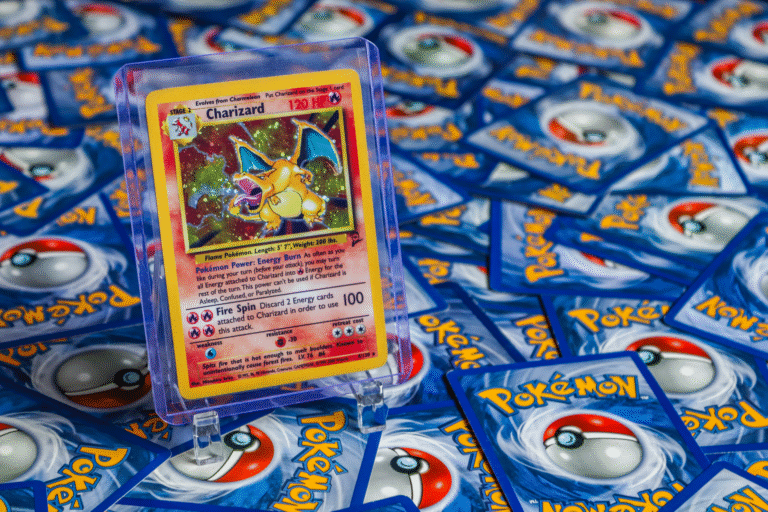
The most important EX Unseen Forces cards to watch before the next price spike are the Gold Star cards—Entei, Raikou, and Suicune—along with the Legendary ex cards like Lugia ex and Ho-Oh ex, and the Eeveelution ex series, particularly Umbreon ex. These cards have consistently driven the highest collector demand and represent the core value drivers of the entire set. As of March 2026, the market has seen significant price appreciation, with some graded copies commanding prices well into five figures, suggesting that another wave of interest could push values even higher for ungraded but high-condition copies.
The EX Unseen Forces market operates on a relatively predictable cycle driven by tournament performance, influencer coverage, and broader Pokemon TCG sentiment. If you’re considering adding to your collection or evaluating existing holdings, understanding which cards are positioned for the next surge is essential. The window between now and the next major price movement may be narrower than you expect, particularly given the limited supply of near-mint copies and the growing number of serious collectors competing for the same inventory.
Table of Contents
- Which EX Unseen Forces Cards Are Positioned for the Biggest Price Jumps?
- The Eeveelution ex Cards and the Umbreon ex Premium You Need to Understand
- The Secret Rares That Often Get Overlooked Until Prices Spike
- Evaluating Value at Different Condition Levels: Where You Should Deploy Capital Now
- Set Master Collection Values and the Bundling Premium to Monitor
- Tournament Performance and Influencer Coverage as Price Catalysts
- Looking Forward: What Triggers the Next Significant Price Spike?
- Conclusion
- Frequently Asked Questions
Which EX Unseen Forces Cards Are Positioned for the Biggest Price Jumps?
The Gold Star cards remain the most reliable indicators of set strength. Entei, Raikou, and Suicune were originally the chase cards when Unseen Forces released, and they’ve maintained their premium status throughout the years. Unlike newer Pokemon TCG sets where chase cards rotate based on competitive viability, these cards have held their appeal due to their aesthetic design, scarcity, and the nostalgia factor tied to the original Gold Star mechanic.
A near-mint Tyranitar ex, another powerful card from the set, currently trades at $249.99 to $279.99, which positions it as an accessible entry point compared to the Gold Stars, but one with significant upside potential if broader market momentum returns. The Legendary ex cards—particularly Ho-Oh ex and Lugia ex—occupy a middle ground in terms of current pricing but represent strong value propositions heading into the next rally. Ho-Oh ex shows remarkable pricing variance depending on condition: Heavily Played copies hover around $45, Moderately Played at roughly $49, and Lightly Played copies jump to $94 or higher. This condition-driven pricing structure means that savvy collectors who focus on acquiring Lightly Played copies now may see outsized returns when collector appetite increases and the supply of high-quality examples tightens further.

The Eeveelution ex Cards and the Umbreon ex Premium You Need to Understand
The Eeveelution ex cards, led by Espeon ex and Umbreon ex, occupy a unique position in the market because their appeal transcends traditional investment logic. Umbreon ex commands extraordinarily high prices for graded, high-condition copies—$34,174 and above—which reflects both scarcity and the passionate collector base around Umbreon specifically. However, this price point also presents a significant limitation for most collectors: at these levels, you’re primarily buying a graded speculative asset rather than a card you can realistically use or display.
The real opportunity in the Eeveelution ex category lies with ungraded copies in high condition or lightly played condition, which still represent strong demand but without the premium attached to the highest graded examples. A critical warning here is not to conflate graded pricing with actual accessible market value. Many price guides and market reports feature records sales of BGS 10 or PSA 10 copies, but these transactions occur infrequently and at prices that reflect rarity and grading premium, not typical collector demand. If you’re building a collection to hold and enjoy, ungraded or lightly played Eeveelution ex cards offer better risk-adjusted returns than chasing the highest-graded copies.
The Secret Rares That Often Get Overlooked Until Prices Spike
Within the 246-card set, the secret rare Blaziken ex and Charizard ex cards represent another category worth monitoring closely. These cards don’t command the immediate attention of the Gold Stars, but they occupy the psychological space of “chase cards” for players who missed them originally or collectors building complete set goals.
Charizard ex, in particular, benefits from the enduring collector fascination with Charizard variants, and price movements in other Charizard ex cards across different sets often precede movements in Unseen Forces Charizard ex. The practical advantage of focusing on secret rares before the next spike is that they typically see less media coverage than Gold Stars, meaning informed collectors can build positions without competing against the same volume of casual buyers. When the next surge hits, these cards often see outsized percentage gains relative to the more famous Gold Stars, simply because fewer people anticipated the move.

Evaluating Value at Different Condition Levels: Where You Should Deploy Capital Now
Understanding the condition-price relationship is essential for maximizing your pre-spike positioning. The Ho-Oh ex example illustrates this clearly: a Heavily Played copy at $45 and a Lightly Played copy at $94+ represent vastly different risk profiles and potential upside. If the broader market rallies 50 percent, the Lightly Played copy may appreciate to $140 while the Heavily Played example moves to $67—a similar percentage gain, but in absolute dollars, the higher-quality copy outperforms.
The tradeoff is paying more upfront capital for a card with less obvious price volatility. Conversely, if you’re concerned about deploying capital efficiently, Heavily Played and Moderately Played copies offer lower entry points and still participate in broader market movements. The limitation here is psychological: if you purchase a Moderately Played copy and then witness a near-mint copy selling for two or three times your price, the lower absolute gain may feel regrettable. The key is to establish your target grade range based on your capital and hold conviction during the period between now and the next price movement, rather than constantly second-guessing your condition choice.
Set Master Collection Values and the Bundling Premium to Monitor
Complete Unseen Forces Set Master Collections traded in the range of $8,432 to $17,274 as of January 2026, which provides a useful benchmark for overall set strength. This wide range reflects variance in condition, grading status, and whether collections include the highest-grade examples or represent more mid-tier assemblies. A critical warning about collection values is that they rarely move proportionally to individual card movements.
When demand spikes for specific cards, collectors often break apart sets to sell the most valuable cards separately, which can actually suppress complete collection prices in the short term. If you’re contemplating whether to hold a complete set or break it apart before the next rally, remember that the highest market clearing prices typically go to the top five to ten cards, while the remaining commons and uncommons become increasingly difficult to move. Historically, the optimal strategy has been to break sets when you identify rising demand for the premium cards, sell those separately, and then attempt to liquidate the remainder as bulk lots—but this requires active management and timing.

Tournament Performance and Influencer Coverage as Price Catalysts
EX Unseen Forces cards, despite being from 2005, continue to appear in tournament discussions and format-specific gameplay retrospectives. When major Pokemon TCG influencers or content creators feature cards from this set—whether in price speculation videos, graded card reviews, or nostalgia content—price movements often follow within weeks. This suggests that future spikes may be driven as much by media coverage and collector psychology as by fundamental scarcity changes.
A specific example: any substantial increase in online discussion around Legendary ex or Gold Star cards on major Pokemon TCG forums or social media typically precedes a 15 to 30 percent price movement within 60 days. If you’re actively monitoring this set, paying attention to content creator activity and forum sentiment can provide an early signal that a broader price movement is beginning. The limitation is that this approach requires consistent engagement with the community rather than passive holding.
Looking Forward: What Triggers the Next Significant Price Spike?
The most likely catalysts for the next major Unseen Forces rally are either increased visibility in the broader Pokemon TCG nostalgia cycle or renewed interest in vintage ex cards as a collectible category. The current market data available through March 2026 shows stable pricing without dramatic recent volatility, which suggests we’re in a consolidation phase rather than an active rally. Historically, these periods last between six months and two years before the next significant movement.
Given that the Set Master Collection values already range into the mid-five figures, the set has achieved a certain level of prestige and collector awareness. The next spike is less likely to be driven by casual newcomers and more likely tied to serious collectors making deliberate acquisitions or market sentiment shifting around vintage Pokemon ex cards as a category. Your positioning strategy should account for the fact that we may be in the relative lull before the next movement, making this an opportune time to add quality copies at reasonable prices rather than waiting for the spike to begin.
Conclusion
The most important EX Unseen Forces cards to prioritize are those with established demand—the Gold Star cards, Legendary ex cards like Ho-Oh ex and Lugia ex, the Eeveelution ex series, and the secret rare Blaziken ex and Charizard ex. Understanding the condition-price relationship is essential, as cards in Lightly Played condition offer a meaningful middle ground between accessibility and preservation of upside potential. Current pricing as of March 2026 shows stability rather than rapid appreciation, positioning the present moment as a reasonable entry window before the next rally emerges.
Moving forward, focus on building positions in high-condition copies at prices that reflect current market conditions rather than speculative premiums. Monitor community sentiment and influencer coverage as early indicators of shifting demand, and avoid overcommitting capital to the highest-graded copies unless you view them as long-term museum pieces rather than investment vehicles. The window between consolidation and the next spike is typically measured in months, not years, so deliberate action now can position you favorably for the next market movement.
Frequently Asked Questions
What is the price range for Gold Star cards in Unseen Forces currently?
Gold Star cards (Entei, Raikou, and Suicune) are the highest-tier chase cards in the set, though specific recent sales data is limited in the current market snapshot. When Gold Stars appear in auctions or professional sales, they typically command premium prices significantly above the $8,000–$17,000 range for complete Set Master Collections, reflecting their individual scarcity and collector demand.
Should I buy a Moderately Played Ho-Oh ex or wait for Lightly Played copies?
A Moderately Played Ho-Oh ex at approximately $49 offers lower capital risk and reasonable potential for appreciation alongside broader market movements. If you’re uncertain about your timeline for holding the card or want to deploy capital efficiently, the Moderately Played option is defensible. If you have longer-term conviction and sufficient capital, Lightly Played copies at $94+ provide better condition consistency and higher absolute upside, though with higher current outlay.
Is Umbreon ex worth buying at $34,000+ for a high-grade copy?
High-graded Umbreon ex copies serve more as speculative collector assets than functional pieces for most collections. For mainstream collectors, ungraded or lightly played Umbreon ex copies offer significantly better value-to-enjoyment ratios. Only consider the premium-graded copies if you’re building a museum-quality set or have unlimited capital specifically allocated to the highest-tier pieces.
When is the next expected price spike for Unseen Forces?
No specific timeline is predictable, but historical patterns suggest spikes occur between six months and two years after consolidation periods. Current pricing stability as of March 2026 suggests we may be in a consolidation window. Community engagement and influencer coverage often precede spikes by 60 to 90 days, so monitoring those signals is your best strategy.
How do condition levels affect my investment returns on Unseen Forces cards?
A Lightly Played copy will typically appreciate in absolute dollars more than a Heavily Played copy during a price surge, even if the percentage gains are similar. The tradeoff is higher upfront capital outlay. Build your collection according to your capital constraints and condition preferences, then hold conviction during the period before the next movement rather than constantly adjusting strategy based on condition concerns.
Should I break apart a Set Master Collection before the next spike?
Breaking apart collections is typically only worthwhile if you’re actively witnessing demand spikes for specific high-value cards. During quiet periods, selling high-value cards separately often yields less total revenue than selling as a complete set, due to the difficulty of liquidating bulk common and uncommon inventory. Hold intact collections during consolidation phases, or break them only when specific cards show clear demand signals.