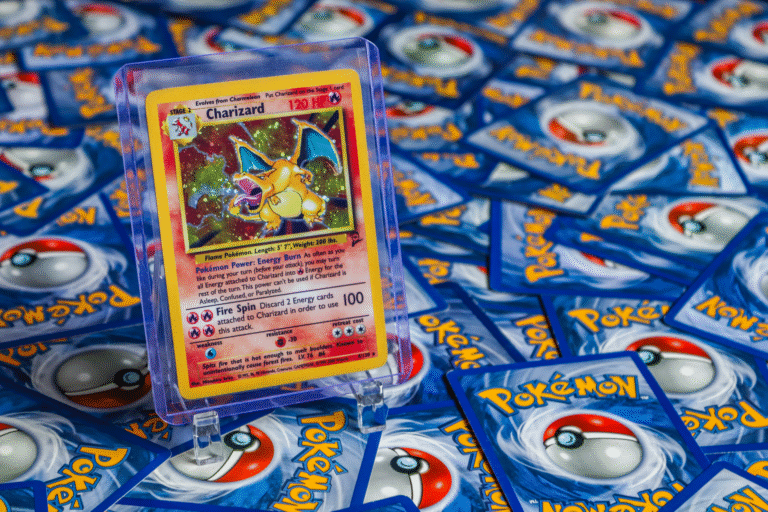
The Neo Revelation Ampharos Holo card currently trades in a price range reflecting both its vintage status and moderate collector demand. As of June 2026, the Unlimited Holo version is priced at $64.69 on the market, while 1st Edition versions command higher premiums, with recent sales showing $60.00 for raw moderately played copies. This 2001 Pokémon Neo Revelation #1/64 holographic card occupies an interesting middle ground in the Pokémon TCG market—valuable enough to warrant serious collection considerations, yet affordable compared to first-edition Base Set holos or other iconic vintage cards.
Pricing for this specific card fluctuates based on condition, edition, and whether the copy is raw or professionally graded. An Unlimited Holo in Near Mint raw condition recently sold for $42.93, while a Lightly Played copy brought $48.02, representing a notable 20.1% price increase over the preceding 30 days. This upward momentum suggests growing collector interest in Neo-era cards, making price tracking essential for anyone considering purchase or sale.
Table of Contents
- What Factors Drive Neo Revelation Ampharos Holo Pricing?
- Understanding 1st Edition vs. Unlimited Printings and Their Price Impact
- How Condition Grading Shapes Market Values for This Card
- Tracking Price Momentum and the Recent 20.1% Increase
- Raw Cards Versus Professionally Graded Copies—Understanding the Premium
- Market Data Sources and How to Track Ampharos Holo Pricing
- Investment Outlook and Long-Term Collector Strategy for Neo Revelation Cards
- Conclusion
What Factors Drive Neo Revelation Ampharos Holo Pricing?
Multiple variables influence where a specific Ampharos Holo listing ultimately settles. Edition status is the primary driver—1st Edition copies typically command 30-50% premiums over Unlimited printings due to lower print runs and perceived scarcity. A 1st Edition Unlimited version selling for $60 in moderately played condition demonstrates this gap clearly, as equivalent Unlimited copies in similar condition are listed lower on the market. Holographic pattern wear, centering quality, and corner condition substantially impact raw card values, which is why the same card can range from $42.93 in Near Mint to lower figures in played conditions.
Collector psychology also matters. neo Revelation released in 2001, placing it firmly in the beloved neo-era window that many experienced collectors grew up with. Ampharos itself carries popular appeal as an electric-type evolution line favorite, which doesn’t hurt demand. However, this card wasn’t a chase secret rare or particularly limited chase card within its set, preventing it from reaching the stratospheric prices commanded by truly rare variants.

Understanding 1st Edition vs. Unlimited Printings and Their Price Impact
The gap between 1st Edition and Unlimited versions represents one of the most fundamental pricing considerations in vintage Pokémon cards. For Neo Revelation Ampharos, this distinction shows clearly in current market data. The 1st Edition Holo sold for $60 in moderately played condition, while comparable Unlimited copies float lower in pricing—the Near Mint Unlimited at $42.93 sits notably beneath the 1st Edition moderately played price point. This inversion illustrates how powerfully collectors value that small “1st Ed.” stamp on the card’s left side.
Understanding why this premium exists helps explain price movements. 1st Edition printing runs were smaller across all Neo sets, and surviving high-grade copies become rarer as time passes. However, one limitation to overestimating 1st Edition premiums: Neo Revelation is not among the most sought vintage sets, so the premium gap won’t reach the 200-300% multiples seen with 1st Edition Base Set holos. For serious collectors prioritizing value preservation over edition status, Unlimited Near Mint copies represent the better entry point at lower cost while maintaining strong condition and appeal.
How Condition Grading Shapes Market Values for This Card
Condition stands as the second-most impactful pricing factor after edition, and raw card pricing demonstrates this clearly. The same Unlimited Holo version sold for $48.02 in Lightly Played condition versus $42.93 in Near Mint—a 12% gap for what amounts to minor additional wear. Jump to Moderately Played, and prices drop further. This sensitivity means that collector assessment of card condition directly translates to holding or losing money during resale.
One critical limitation affects raw card buyers: condition assessment varies significantly between sellers and buyers. A card described as “Lightly Played” by one grader might receive “Moderately Played” from another evaluator. This subjectivity creates risk for raw card purchases, which is why professionally graded copies—PSA, BGS, or Sportscard Grader—command premium prices despite the grading fee cost. A PSA 8 (Near Mint-Mint) Unlimited Holo would likely trade $20-30 higher than a raw Near Mint copy, but absolute certainty of grade removes resale friction and uncertainty.

Tracking Price Momentum and the Recent 20.1% Increase
The Unlimited Holo Lightly Played version jumped 20.1% in value over the last 30 days, signaling meaningful collector interest picking up. This price momentum reflects broader market trends toward vintage neo-era Pokémon cards as the original TCG generation ages into established collector status with disposable income. Understanding what drives such movements helps collectors recognize buying and selling windows.
Price tracking platforms like the price guide, PokeData, and TCGPlayer aggregate sales data and historical pricing to identify these trends. When a card shows consistent upward momentum like Ampharos Holo currently does, it suggests limited supply meeting increasing demand—exactly the scenario where collector demand remains genuine rather than speculative bubble territory. The tradeoff, however: yesterday’s hot uptrend can reverse quickly if market sentiment shifts or new stock enters circulation. Collectors should view a single month’s 20.1% gain as an encouraging signal but not certainty of continued appreciation.
Raw Cards Versus Professionally Graded Copies—Understanding the Premium
The pricing data provided reflects primarily raw TCG sales, which typically trade 15-30% lower than equivalent professionally graded copies. A raw Unlimited Holo in Near Mint condition at $42.93 would likely approach $55-65 if that same card received a PSA 8 grade. The grading fee (typically $15-25 for economical turnaround) explains only part of this gap; buyers willingly pay more for the authentication and guaranteed condition assessment that eliminates buyer uncertainty.
One warning applies here: not every card justifies grading expense. For a card currently around $40-60 in raw form, grading costs eat 30-40% of the card’s value if the result grades lower than expected. A Near Mint card that grades PSA 7 instead of 8 becomes substantially less valuable, and grading fees don’t get refunded. Only grade cards that already command sufficient value to absorb grading costs while remaining profitable—generally $75+ for modern submissions, or established rare vintage cards where grade confidence runs high.

Market Data Sources and How to Track Ampharos Holo Pricing
Several reliable sources track Neo Revelation Ampharos Holo pricing and historical data. The price guide aggregates completed sales and current listings, providing both current market prices and long-term price charts. PSA’s auction price database tracks professionally graded sales, showing what high-condition copies command.
PokeData and Sports Card Investor offer pricing guides and trend analysis specifically for TCG cards, while TCGPlayer functions as a live marketplace where numerous sellers list current inventory. Effective price tracking requires monitoring multiple sources because prices vary by venue, condition representation, and whether the listing represents actual sales or asking prices. A card listed for $75 doesn’t equal a card actually selling for $75. Completed sales data from eBay, PSA auctions, and TCGPlayer’s sold listings provide authentic market information, while current asking prices help establish realistic selling expectations but shouldn’t be mistaken for actual market clearing prices.
Investment Outlook and Long-Term Collector Strategy for Neo Revelation Cards
Neo Revelation Ampharos Holo’s recent price momentum reflects the broader maturation of first-generation Pokémon collectors entering their peak spending years. Unlike base set first editions or other immediate chase cards, Neo Revelation cards appreciate more modestly but steadily as supply gradually tightens through collection, damage, and loss. The 20.1% monthly increase, while notable, shouldn’t be extrapolated to annual predictions—volatility remains inherent to card collecting markets.
Long-term collectors should view Ampharos Holo as a solid collection anchor rather than speculative investment. Its moderate price point ($40-65 depending on condition and edition) remains accessible to serious collectors without requiring five-figure commitments. The card holds cultural appeal as a popular Pokémon from a beloved set era, meaning demand likely persists even if pricing momentum cools. For portfolio diversification within Pokémon collecting, this card complements higher-tier chase investments while providing aesthetic and sentimental value independent of resale considerations.
Conclusion
Neo Revelation Ampharos Holo pricing currently reflects healthy collector demand balanced against accessible supply for near-mint copies. Current market pricing spans $42.93 for raw Unlimited Near Mint through $64.69 for recent market averages, with 1st Edition copies commanding premiums approaching or exceeding $60 in comparable conditions. The recent 20.1% price appreciation indicates strengthening collector interest in neo-era cards, though this momentum should be monitored rather than assumed as permanent.
For collectors or investors considering purchase, emphasize condition assessment and edition status when comparing listings. Raw near-mint Unlimited copies represent the best value entry point, while 1st Edition copies justify premium pricing only if budget accommodates and authenticity remains certain. Monitor multiple price tracking sources monthly to identify genuine market trends versus temporary volatility, and remember that Ampharos Holo’s ultimate value depends on maintaining condition, because a card is only worth what someone else will actually pay for it.
You Might Also Like
- verified sold listings across major TCG marketplaces for Neo Discovery Wobbuffet Holo
- verified sold listings across major TCG marketplaces for Neo Discovery Vaporeon Holo
- verified sold listings across major TCG marketplaces for Neo Discovery Unown Holo
Frequently Asked Questions
How much is a PSA 10 Neo Revelation Ampharos Holo worth?
Neo Revelation Ampharos Holo PSA 10 value is tracked from verified sold listings across eBay, TCGplayer, Goldin, and Fanatics Collect. Recent sales determine the current market price, which shifts month to month based on supply, condition, and demand.
Is Neo Revelation Ampharos Holo a good investment?
Long-term trend data for Neo Revelation Ampharos Holo is on this page. Vintage Pokemon cards in PSA 10 condition have historically appreciated, but performance varies by set, popularity, and grading population. Compare the monthly trend on this chart to similar cards before deciding.
Where can I see Neo Revelation Ampharos Holo sold listings?
We aggregate verified sales from eBay, TCGplayer, Goldin Auctions, and Fanatics Collect. The recent-sales section on this page shows individual transactions with date and price.