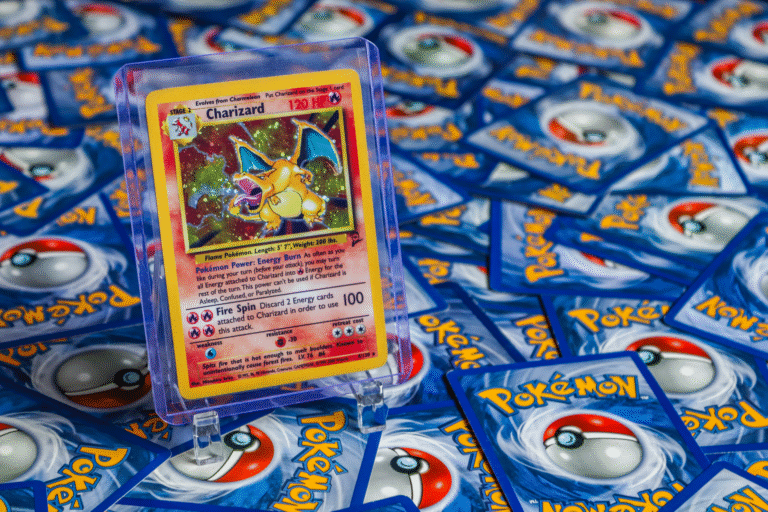
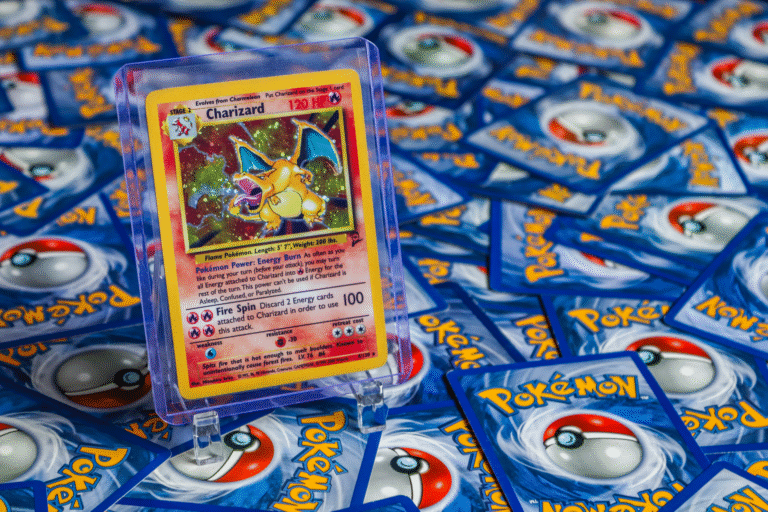
A 1999 Jungle Snorlax 1st Edition Holo (#11) in lightly played condition currently trades for around $237.46 on the secondary market, based on recent sales data from June 2026. If you’re looking at graded copies, the same card with a PSA 5 rating typically prices at approximately $350.00, showing the significant premium collectors pay for professional authentication and protective grading. The price variation between raw and graded versions reflects both the grading cost itself and the market’s growing preference for verified condition assessments when investing in vintage Pokemon cards.
Understanding the pricing of Jungle Snorlax holos requires tracking multiple data points across several platforms, since no single source captures the complete market picture. The price guide, TCGplayer, eBay, Card Ladder, and Cardmarket all maintain active listings and sales history for this card, each with slightly different pricing due to regional differences, seller reputation, and condition variations. This card remains one of the more actively traded holos from the Jungle set, making it relatively easy to find comparable sales data.
Table of Contents
- Where Can You Find Current Pricing Data for Jungle Snorlax 1st Edition?
- How Condition and Grading Affect Jungle Snorlax Pricing
- Raw Cards vs. Graded Copies—What Should You Buy?
- Using verified sold listings across major TCG marketplaces and TCGplayer to Track Jungle Snorlax Values
- The Risks and Limitations of Relying on Published Pricing Data
- How Card Ladder and Specialized Graded Card Pricing Work
- Looking Forward—Jungle Set Prices and Market Outlook
- Conclusion
Where Can You Find Current Pricing Data for Jungle Snorlax 1st Edition?
The most reliable pricing sources for jungle snorlax 1st Edition Holo #11 are specialized Pokemon card pricing platforms that aggregate real market data. priceCharting maintains historical pricing alongside current market values, allowing collectors to see not just today’s prices but longer-term trends. TCGplayer currently shows 17+ active listings for 1st Edition Holofoil versions of this card, with prices varying by condition from lightly played copies up to near-mint examples. These multiple listings on a single platform provide transparency—you can see exactly what condition each seller claims and what their asking price is.
Card Ladder focuses specifically on graded card sales, pulling data directly from auction results and sales history. This platform is particularly useful if you’re interested in PSA-graded copies, as it tracks what collectors have actually paid for authenticated cards rather than just asking prices. For example, the PSA 5 Snorlax at $350.00 represents a real market transaction, not a hopeful seller’s listing. eBay serves as another active marketplace where you can see both completed sales and current auctions, giving you a sense of realistic selling timeframes and whether prices are holding steady or shifting.
How Condition and Grading Affect Jungle Snorlax Pricing
Condition is the primary driver of price variation for this card, with even small differences in centering, corners, or surface wear creating significant value swings. The $237.46 raw card example represents lightly played condition—a card that shows visible use but remains playable and displayable. Move up to near-mint raw condition, and you’d typically see prices climb to $400-$600 or higher, assuming the card has excellent centering and clean surfaces. The jump from played to near-mint often doubles or triples the value, which is why serious collectors invest in condition assessment tools and even send cards for professional grading.
Professional grading through PSA adds both authentication and a condition guarantee, but it’s not free—grading costs typically run $20-$100 depending on the service level and card value. This means a PSA 5 Snorlax sitting at $350.00 reflects roughly $330 in raw card value plus the grading premium and cost. Higher graded copies command exponentially more—a PSA 8 would likely exceed $800-$1,200, while PSA 9 or PSA 10 examples (if they exist) would command four-figure prices. One limitation to keep in mind: older cards like Jungle Snorlax often have PSA population reports showing far fewer high-grade examples than raw cards, which can make it difficult to find PSA 8+ copies for purchase at any price.
Raw Cards vs. Graded Copies—What Should You Buy?
The $237.46 raw card and the $350.00 PSA 5 represent two different collecting philosophies. Raw cards offer better value per dollar if you’re building a collection for personal enjoyment, don’t need third-party authentication, and are comfortable with the seller’s condition assessment. The risk here is that condition descriptions can be subjective—what one seller calls “lightly played” another might call “moderately played.” Without grading, you’re relying on photos, seller ratings, and return policies as your safety net. Graded cards eliminate that guesswork and provide a standardized, protected slab that makes the card easier to sell later without disputes.
However, grading introduces a cost barrier and a liquidity consideration: while PSA cards have strong resale markets, the grading itself adds 40-50% to the raw value on average. For a $237.46 card, adding $80-$120 in grading and slabbing costs means you need the market to appreciate by that amount just to break even. For Jungle Snorlax, graded copies do have active buyer interest, so this is usually a reasonable investment if you’re serious about the card’s long-term value. The trade-off is simpler: pay more upfront for certainty, or save money upfront but accept condition uncertainty.

Using verified sold listings across major TCG marketplaces and TCGplayer to Track Jungle Snorlax Values
verified sold listings across major TCG marketplaces’s strength is its historical data—you can pull up price charts showing what Jungle Snorlax 1st Edition has sold for over weeks, months, or years. This helps you spot seasonal trends or understand whether the current $237.46 represents a fair price or a seasonal low or high. The platform pulls sales data from completed listings across multiple sources, so the prices shown reflect actual transactions rather than wishful asking prices. For example, if you see the price stayed between $200-$250 for the last three months but spiked to $300+ in January, you’d understand that timing matters for both buying and selling. TCGplayer’s value is in real-time inventory and pricing diversity.
The 17+ listings for 1st Edition Holofoil Snorlax mean you’re seeing multiple sellers and conditions simultaneously. You can filter by condition, compare asking prices, and note which sellers offer return windows or buyer protection. One practical tip: TCGplayer shows “market price” which is their algorithm’s estimate of fair value based on recent sales, alongside individual seller prices. If you see sellers asking significantly above market price, they’re hoping for a buyer without other options. If you see sellers below market price, they might have moved inventory quickly or underpriced the card. A comparison here: a market price of $250 with most listings at $245-$270 suggests stability, while market price of $250 with listings ranging $150-$450 suggests wide disagreement about condition.
The Risks and Limitations of Relying on Published Pricing Data
One major limitation of any pricing platform is lag time—the prices shown reflect where the market was days or weeks ago, not where it is right now. A price listed as $237.46 might have been accurate five days ago, but active market movement could shift the realistic current value to $220 or $260 depending on recent sales activity. If you’re selling, relying solely on old price data could cost you money if the market has softened or you might leave money on the table if it’s strengthened. Always cross-reference multiple sources before buying or selling, because no single platform captures 100% of the secondary market transactions. Another risk is condition grading discrepancies—two cards described as “lightly played” can look substantially different in person.
Photos can hide or exaggerate wear, and lighting makes a huge difference in how centering appears. The $237.46 card might have slightly better centering than another “lightly played” card priced at $200, or it might just have a more aggressive seller. This is why collectors often request detailed photos or video reviews before committing to high-value purchases. Additionally, seasonal market swings are real in the Pokemon card space. Prices often soften in June-July as summer vacation spending redirects collectors’ budgets, then rebound in fall. Selling during a soft period could mean realizing $200-$220 for a card that’s worth $250+ in the off-season.

How Card Ladder and Specialized Graded Card Pricing Work
Card Ladder focuses exclusively on PSA-graded card sales, pulling completed auction data to show what collectors actually paid for authenticated copies. The $350.00 PSA 5 Snorlax is a concrete example—someone bought this exact condition card at that exact price, recently enough that it influences the current market. This platform is invaluable if you’re building a graded set or want to understand the premium between different PSA grades. For instance, if Card Ladder shows PSA 4 copies selling for $280 and PSA 6 copies selling for $420, you know the grade makes a $140 difference on average, which helps you decide whether sending a borderline card for regrade is worth the risk and cost.
Cardmarket, the European marketplace, often shows different prices than US-based platforms due to regional supply differences and international shipping costs. While the same Jungle Snorlax 1st Edition exists there, European sellers might price it at 220-250 EUR ($240-$270 USD equivalent) due to different market demand and shipping logistics. Monitoring Cardmarket can reveal arbitrage opportunities if you’re comfortable with international transactions, though buyer protection and return processes are more complex across borders. The key insight: multiple pricing platforms actually give you better data, not redundant data, because each reflects a different slice of the real market.
Looking Forward—Jungle Set Prices and Market Outlook
The Jungle set holds a unique position in vintage Pokemon pricing because it came in higher print volumes than base Set but much lower than later sets, making it broadly available yet still scarce in high grades. Snorlax specifically has nostalgic appeal as one of the set’s iconic sleepy characters. Historically, Jungle prices have tracked upward over five-year horizons, though short-term volatility of 10-20% is completely normal.
If you’re considering Jungle Snorlax 1st Edition as a long-term hold, the current $237-$350 price range seems reasonable relative to comparable holos from the era, but the market is also less explosive than Base Set pricing, meaning you shouldn’t expect 50-100% annual gains. One forward-looking consideration is grading population trends—as more collectors send vintage cards for grading, PSA population reports fill out and ceiling prices for low-grade examples may soften slightly while high-grade examples become rarer and more expensive. A PSA 5 at $350 might face more competition in five years if dozens more get graded, but a PSA 8 or better could become significantly scarcer. This argues for either buying raw cards now if you want value, or investing in the best graded copies you can afford if you believe in long-term appreciation.
Conclusion
Jungle Snorlax 1st Edition Holo #11 currently prices between $237-$350 depending on condition and whether you’re buying raw or graded, with multiple platforms offering reliable data to inform your purchase decision. The card remains actively traded due to its appealing artwork and moderate rarity, making it a relatively liquid collecting target compared to some other Jungle holos. Before buying, cross-reference at least two platforms like the price guide and TCGplayer to confirm current market range, examine detailed photos carefully to verify condition claims, and decide whether you want the certainty of grading or the value of raw purchasing.
For collectors building sets or investors evaluating this card’s value, the key is understanding that verified sold listings across major TCG marketplaces platforms show historical and aggregated data, not real-time individual listings. Use them to understand trends and fair value ranges, but always validate with current live listings before committing to a purchase. Whether you’re paying $237 for raw or $350 for graded, you’re now entering a well-documented market where transparent pricing data is available—a luxury many vintage card hunters never had.
You Might Also Like
- verified sold listings across major TCG marketplaces for Jungle Scyther 1st Edition Holo
- verified sold listings across major TCG marketplaces for Jungle Pinsir 1st Edition Holo
- verified sold listings across major TCG marketplaces for Jungle Pidgeot 1st Edition Holo
Frequently Asked Questions
How much is a PSA 10 Jungle Snorlax 1st Edition Holo worth?
Jungle Snorlax 1st Edition Holo PSA 10 value is tracked from verified sold listings across eBay, TCGplayer, Goldin, and Fanatics Collect. Recent sales determine the current market price, which shifts month to month based on supply, condition, and demand.
Is Jungle Snorlax 1st Edition Holo a good investment?
Long-term trend data for Jungle Snorlax 1st Edition Holo is on this page. Vintage Pokemon cards in PSA 10 condition have historically appreciated, but performance varies by set, popularity, and grading population. Compare the monthly trend on this chart to similar cards before deciding.
Where can I see Jungle Snorlax 1st Edition Holo sold listings?
We aggregate verified sales from eBay, TCGplayer, Goldin Auctions, and Fanatics Collect. The recent-sales section on this page shows individual transactions with date and price.