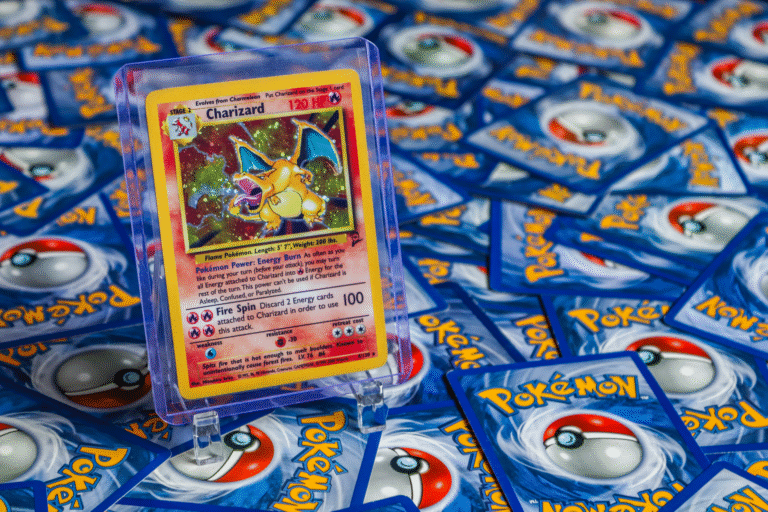
A raw, ungraded 1st Edition holographic Scyther from the 1999 Pokémon Jungle set currently prices around $49.00, though professionally graded copies command significantly higher values depending on their condition grade. This particular Scyther—card number 10/64 from the Jungle expansion—has become a notable collectible in the Pokémon trading card market, tracked across multiple pricing platforms and trading venues. The wide spread between raw and graded pricing reflects a fundamental reality in modern card collecting: the same card can range from roughly $50 in ungraded form to nearly $200 when professionally graded, making condition assessment and grading decisions critical for collectors and investors.
The price variation across different condition grades tells an important story about market dynamics. A PSA 4 graded copy sold for $59.43, while the same card in PSA 7 condition carries a retail price of $199.99—a jump of nearly 240% for just three grade points. Meanwhile, PSA 8 copies stabilize around $82.95, creating an unusual pricing curve that reflects both supply constraints and collector demand at different quality tiers. Understanding these pricing layers helps collectors determine not only what to pay for a card, but whether professional grading makes financial sense for their particular copy.
Table of Contents
- What Determines verified sold listings across major TCG marketplaces Values for Jungle Scyther 1st Edition Holo?
- Grading Impact and Condition Grade Pricing Variance
- Market Availability and Trading Platform Pricing
- Strategic Buying and the Raw Versus Graded Decision
- Recognizing Variant Cards and Avoiding Pricing Confusion
- Seasonal and Market Cycle Pricing Trends
- Future Pricing Outlook for 1st Edition Jungle Holo Cards
- Conclusion
What Determines verified sold listings across major TCG marketplaces Values for Jungle Scyther 1st Edition Holo?
price charting for this card relies on transaction data from active trading platforms, particularly eBay, TCGPlayer, and Cardmarket, where completed sales establish baseline values. The platforms track both raw and graded sales separately, allowing price guides like the price guide and Card-Codex to generate averages and current market rates. Since jungle scyther has been a popular card for over two decades, there’s sufficient transaction history to create reliable pricing benchmarks, though the data can shift based on seasonal collecting trends and larger shifts in the vintage Pokémon market. The pricing data incorporates PSA auction results pulled directly from PSACard.com, which provides historical pricing for graded copies.
This auction data is crucial because it shows real money changing hands rather than asking prices—a distinction that matters significantly in collectibles trading. When a PSA 7 Scyther sold at auction, that price point becomes part of the charting data, helping establish what collectors actually value at each grade level. One limitation to understand: verified sold listings across major TCG marketplaces reflects past transactions and current asking prices, not guaranteed sell-through prices. A seller might list a card at $199.99, but that doesn’t mean it will sell at that figure. Raw market data from platforms like TCGPlayer shows what’s actually moving at current prices, while historical auction data shows what similar cards have sold for—two different metrics that together paint a more complete pricing picture.
Grading Impact and Condition Grade Pricing Variance
The difference between a raw Scyther and a graded one extends far beyond a plastic slab. Professional grading by PSA establishes a third-party assessment of condition, which creates liquidity and confidence for buyers—particularly important for higher-value copies. A collector purchasing a $200 PSA 7 card has certainty about condition; a collector buying a raw card for $49 is making assumptions about the card’s actual state. The pricing curve for this card shows something noteworthy: the jump from raw ($49) to PSA 4 ($59.43) is modest, suggesting modest improvement value at the lowest grade tier. However, the leap to PSA 7 ($199.99) represents genuine scarcity at higher grades.
Jungle Scyther 1st Edition holographics are over 25 years old, and finding copies that grade PSA 7 or higher is considerably more difficult than finding raw or lowball-graded copies. This scarcity directly drives the premium pricing. A significant consideration here: raw cards can occasionally represent better value if the buyer has expertise in assessing condition themselves. However, grading services come with costs—typically $20 to $150 per card depending on the service and turnaround time—which eats into potential profit margins. Sending a $49 card to PSA for grading doesn’t make financial sense unless you’re confident it grades 6 or higher, where the premium would justify the service fee.
Market Availability and Trading Platform Pricing
This card remains actively traded across the major Pokémon TCG platforms, which keeps price data relatively current and accessible. TCGPlayer hosts inventory from multiple vendors, creating price transparency and competitive selling pressure. eBay completed listings provide historical data showing what this exact card has actually sold for over time. Cardmarket, popular in Europe, adds international pricing context that helps establish global market rates. The availability of Jungle Scyther 1st Edition holo copies is sufficient to maintain steady trading but not so abundant that prices are suppressed.
Unlike Jungle’s other commons and uncommons, which printed in higher volumes, the holographic rare Scyther saw smaller production runs, contributing to its enduring collectibility. This moderate scarcity level keeps the card relevant to intermediate collectors—not so rare that it’s inaccessible, not so common that it’s oversupplied. One important note: pricing aggregators like the price guide compile data from these platforms but can lag behind real-time market shifts. A sudden surge in Pokémon collecting interest or a notable sale might shift actual market prices before price guides update. Serious buyers typically cross-reference multiple sources—checking both the price guide and current TCGPlayer listings—rather than relying solely on aggregated data.

Strategic Buying and the Raw Versus Graded Decision
For collectors deciding whether to buy raw or graded, the $49 ungraded baseline represents an entry point for casual collectors and set-builders. This price is accessible enough that a collector completing a Jungle set doesn’t face a prohibitive cost barrier. The appeal of raw cards increases if you’re happy displaying or storing the card in a soft sleeve, since professional slabbing prevents actual play or closer in-hand inspection. Graded copies appeal to different collector motivations. The PSA 7 at $199.99 attracts serious grade-conscious collectors and investors who prioritize condition visibility and long-term value retention.
The PSA 8 at $82.95 occupies an interesting middle ground—better condition than raw averages, but at a price point only modestly higher than entry-level PSA 4 copies. This mid-tier pricing can represent good value for collectors who want professional certification without the premium pricing of higher grades. The financial tradeoff deserves emphasis: a raw $49 Scyther and a PSA 8 $82.95 Scyther are the same card in different conditions. The $34 price difference partly reflects condition, partly reflects the cost of grading services already absorbed by the previous owner. If you purchase the raw card intending to grade it, you’re essentially adding $20–$150 to your total cost depending on the service, which might not be worthwhile unless you’re confident about significant condition improvement.
Recognizing Variant Cards and Avoiding Pricing Confusion
One common mistake when verified sold listings across major TCG marketplaces Scyther: the Jungle set contains multiple Scyther printings. There’s the 1st Edition holographic #10/64 (what we’re discussing), but also Unlimited holo versions and non-holographic printings from later releases. Price guides list these separately for good reason—pricing them identically would be a major error. The 1st Edition holo variant is significantly more valuable than an Unlimited holo version of the same card. Sellers sometimes misidentify cards or use generic product listings, so buyers verified sold listings across major TCG marketplaces on marketplaces need to verify the specific edition.
The 1st Edition symbol appears as a small numeral “1” in a circle on the card’s right edge, just below the Pokémon illustration. Without this marker, you’re looking at an Unlimited copy worth substantially less. Auction aggregators like PSACard.com handle this distinction automatically—PSA grading separates these variants in their database—but raw market searches require manual verification. The warning here is practical: always cross-check card details before accepting a price as accurate. If a listing shows $49 and claims 1st Edition, verify the actual edition symbol on the card image before purchasing. verified sold listings across major TCG marketplaces aggregates data, but individual sellers can be incorrect, and you don’t want to overpay for an Unlimited copy priced as 1st Edition.
Seasonal and Market Cycle Pricing Trends
Pokémon card pricing shows seasonal patterns. Summer months often see increased collector activity as people dust off childhood collections or pursue summer hobbies, which can drive prices upward. Conversely, winter months sometimes see downward pressure as collecting budgets tighten around the holidays. For Jungle Scyther specifically, demand has remained relatively stable over the past few years since this set maintains baseline interest among vintage collectors.
Broader market cycles affect pricing as well. The Pokémon TCG experienced a resurgence in 2020–2021 that drove prices for 1st Edition cards to historically high levels. Prices have moderated somewhat since then, meaning collectors buying today benefit from somewhat more reasonable pricing compared to peak pandemic-era rates. verified sold listings across major TCG marketplaces data from 2024–2026 reflects this steadier market state, though prices remain well above pre-pandemic baselines from 2019 and earlier.
Future Pricing Outlook for 1st Edition Jungle Holo Cards
Long-term pricing trends for 1st Edition Jungle holos depend partly on supply—1999 Jungle packs are dwindling as remaining copies get slabbed, opened, or stored indefinitely. This natural scarcity preservation should support stable to gradually increasing prices over decades. However, Pokemon TCG is a mature collector market where extreme price rallies become less likely as card supplies consolidate into serious collections rather than remaining in circulation.
The current pricing environment—around $49 raw, $199 for PSA 7, and mixed results in between—likely represents a sustainable market equilibrium. Collectors building sets, casual players seeking vintage copies, and serious graders all find price points that work for their needs at different tiers. This multi-tier market suggests healthy collector interest without speculative overheating, which typically precedes price corrections.
Conclusion
verified sold listings across major TCG marketplaces for Jungle Scyther 1st Edition holo reveals a well-established collectible with transparent market pricing across multiple platforms. Whether you’re paying $49 for a raw copy or $199.99 for a PSA 7, the card’s value reflects both its age, condition, and consistent collector demand over more than 25 years.
Understanding the spread between grades, recognizing variant editions, and checking multiple pricing sources ensures you make informed purchasing decisions rather than overpaying based on incomplete information. For collectors entering the vintage Pokémon market, Jungle Scyther represents an accessible yet legitimate collectible without extreme scarcity premiums. Whether your goal is completing a set, investing in graded copies, or simply acquiring a piece of Pokémon TCG history, the published pricing data provides a reliable baseline for understanding what this card should cost at each condition level.
You Might Also Like
- verified sold listings across major TCG marketplaces for Jungle Pinsir 1st Edition Holo
- verified sold listings across major TCG marketplaces for Jungle Pidgeot 1st Edition Holo
- verified sold listings across major TCG marketplaces for Jungle Nidoqueen 1st Edition Holo
Frequently Asked Questions
How much is a PSA 10 Jungle Scyther 1st Edition Holo worth?
Jungle Scyther 1st Edition Holo PSA 10 value is tracked from verified sold listings across eBay, TCGplayer, Goldin, and Fanatics Collect. Recent sales determine the current market price, which shifts month to month based on supply, condition, and demand.
Is Jungle Scyther 1st Edition Holo a good investment?
Long-term trend data for Jungle Scyther 1st Edition Holo is on this page. Vintage Pokemon cards in PSA 10 condition have historically appreciated, but performance varies by set, popularity, and grading population. Compare the monthly trend on this chart to similar cards before deciding.
Where can I see Jungle Scyther 1st Edition Holo sold listings?
We aggregate verified sales from eBay, TCGplayer, Goldin Auctions, and Fanatics Collect. The recent-sales section on this page shows individual transactions with date and price.