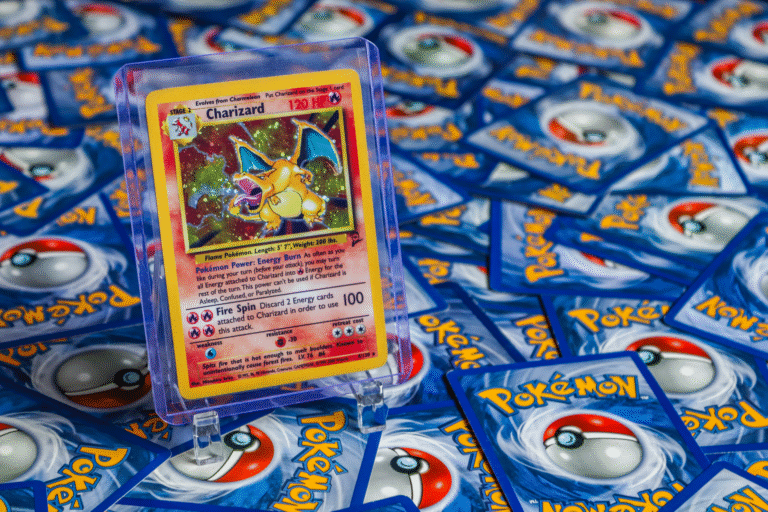
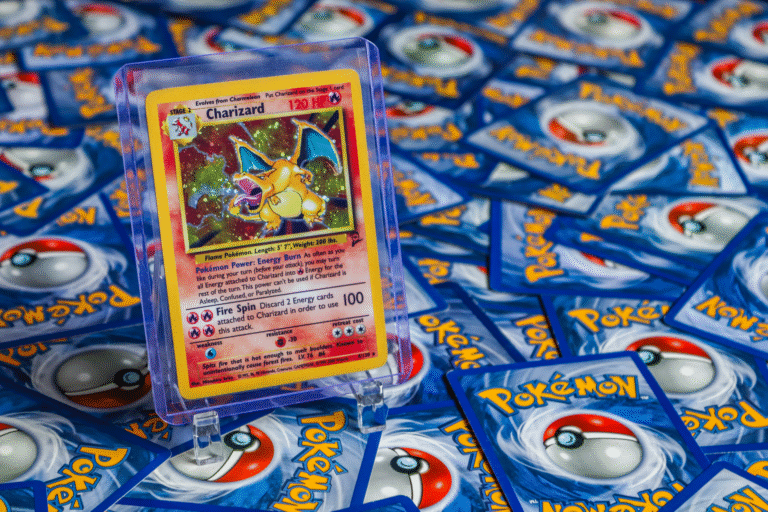
Koga’s Ditto 1st Edition Holo from the 2000 Pokémon Gym Challenge set currently trades between $146.88 for raw cards in near mint condition and nearly $3,000 for pristine graded copies. This massive range reflects one of the most important dynamics in vintage Pokémon card collecting: condition and certification dramatically reshape what a card is actually worth. A raw near mint example and a PSA 9 graded version might look similar to a casual observer, yet the ungraded card costs less than $150 while the certified PSA 9 recently sold for $149.99, demonstrating how thin that margin can be—until you jump to a PSA 10, which commands $2,196 to $2,999 depending on where you’re shopping.
For collectors trying to understand this card’s market value, the answer depends entirely on what condition you’re holding or planning to purchase. The card itself—Koga’s Ditto, carrying the #10/132 designation from Gym Challenge—has maintained consistent collector interest for over two decades. Whether you’re price checking a card in your collection or deciding whether to buy, knowing the condition-to-price relationship is essential for making informed decisions in this market.
Table of Contents
- What Are Current Market Prices for Gym Challenge Koga’s Ditto 1st Edition?
- Understanding Grading Impact on Gym Challenge Koga’s Ditto Value
- Gym Challenge Koga’s Ditto in the Context of the Set
- Investment Strategy and Buying Considerations for This Card
- Common Pricing Variations and Market Risks
- Historical Pricing Trends and Recent Market Activity
- Future Outlook for Gym Challenge Koga’s Ditto 1st Edition Pricing
- Conclusion
What Are Current Market Prices for Gym Challenge Koga’s Ditto 1st Edition?
The asking prices for this card vary dramatically based on condition and grading status. A raw card in near mint condition, as tracked by sources like Sports Card Investor, sits at $146.88. Move into the graded market, and you enter a completely different pricing structure. A PSA 9 example—technically very close to near mint but certified by Professional Sports Authenticator—last sold for $149.99 on November 10, 2025, barely higher than the raw card despite the certification and authentication process. This illustrates a critical point: the jump from raw to PSA 9 doesn’t necessarily command a premium if the card’s condition already sits in that range.
The real price jump occurs at PSA 10, where listings currently range from $2,196 to $2,999. This 15-fold increase from a raw near mint card reflects a fundamental principle in vintage Pokémon collecting: near perfect cards command premium prices that accelerate exponentially as you approach true gem mint condition. GameStop has also listed PSA 8 examples, positioning them between raw and PSA 9 pricing, though the exact price point for PSA 8 varies by dealer. These prices tell you something important about the market’s expectations. Collectors are willing to pay heavily for cards that have been preserved in exceptional condition and verified by a third party. The narrow gap between raw and PSA 9 suggests that much of the certified market hasn’t yet moved into sustained price appreciation—the card might look identical to the human eye, but the presence of a grading label doesn’t automatically double its value.

Understanding Grading Impact on Gym Challenge Koga’s Ditto Value
Grading fundamentally changes how a Pokémon card sells and who buys it. A raw card appeals to casual collectors, budget-conscious buyers, and people assembling playsets or personal collections where the card’s historical significance matters more than its investment grade. The $146.88 near mint raw price represents what you can realistically expect to pay if you want the card without certification paperwork. But raw cards carry one inherent limitation: you’re trusting either the seller’s condition assessment or your own eye. If you later want to sell that raw card, the buyer will make their own condition judgment, which might be harsher than the previous owner’s assessment. Graded cards eliminate this uncertainty at the cost of authentication expenses and time.
A PSA 9 carries third-party verification that the card meets specific condition standards, which matters when selling to serious collectors or institutions. However, a PSA 9 isn’t a PSA 10, and in the current market, the price difference between raw and PSA 9 is negligible—too small to justify grading a card you already own unless you’re specifically trading in the certified market. The real warning here is simple: grading for the sake of grading on cards like this one often costs more than the price advantage you’ll gain on resale. The PSA 10 tier is where grading truly commands premium pricing, but obtaining a PSA 10 on a Gym Challenge era card is genuinely difficult. These cards are 24 years old. The printing and storage conditions from 2000 mean that reaching gem mint status requires either exceptional luck or cards that were stored in ideal conditions from the moment they left the factory. The $2,196–$2,999 asking price reflects scarcity and collector demand, not just condition—it’s what the market will bear for one of the cleanest known copies of this specific card in certified form.
Gym Challenge Koga’s Ditto in the Context of the Set
Koga’s Ditto, card #10/132, holds a specific position within the Gym Challenge set released in 2000. Gym Challenge was the seventh English expansion set in the Pokémon Trading Card Game, representing a era when holofoil cards were standard for most uncommons and higher rarities. This particular card is a 1st Edition holo, meaning it was printed in the initial production run before Pokémon Company released unlimited printings of the same set. That distinction matters for valuation—1st Edition cards are generally worth more than their unlimited counterparts because fewer of them were produced and the production quality was tighter. Koga’s Ditto is technically an uncommon in the set, which is important context. It wasn’t a rare card when it was released, and it still isn’t rare in absolute terms—Gym Challenge received significant print runs.
However, the specific combination of being a 1st Edition holo uncommon from 2000 that hasn’t been recirculated or reprinted in any special collection since then gives it legitimate collector appeal. The card carries the Gym Challenge branding (referencing Koga, a Gym Leader from the Pokémon games), which adds thematic interest for players and set collectors. The card’s position as an uncommon, rather than a rare or holographic rare, also explains why the price ceiling remains lower than you’d see for the set’s actual rare cards. There’s no barrier to finding multiple copies if you’re patient and willing to buy raw cards in lower conditions. This availability limits the upward price pressure, even for nicely preserved examples. Collectors seeking high-value Gym Challenge cards typically target the set’s holographic rares and promotional cards, where scarcity is more pronounced.

Investment Strategy and Buying Considerations for This Card
If you’re considering purchasing Koga’s Ditto 1st Edition Holo as a collectible investment, the decision depends on your goals and budget. At $146.88 for a raw near mint card, you’re in casual collector territory—the card costs less than a modern booster box and offers the historical appeal of a 24-year-old vintage card without requiring significant capital. This price point makes sense if you’re completing a Gym Challenge set, studying the history of the TCG, or want an example of 1st Edition holofoil production quality from that era. The $149.99 PSA 9 price point presents a tradeoff worth considering carefully. Paying roughly the same price for a PSA 9 as you would for a raw near mint card might seem logical, but the certification adds minimal practical value unless you’re planning to resell into a certified-card market or need the authentication for insurance purposes.
Your money is better spent on a raw card and then grading it only if the market moves significantly upward, which is unlikely for an uncommon with limited upside. The PSA 10 tier, at $2,196–$2,999, belongs to serious collectors and portfolio investors willing to pay for rarity. At that price, you’re not just buying condition—you’re buying one of the nicest known examples of this card, period. The investment rationale requires confidence that vintage 1st Edition Pokémon cards will appreciate over the next 5–10 years. That’s a legitimate position many collectors hold, but it requires discipline and patience. You need to be comfortable holding the card for years without immediate returns, and you need to trust that when you eventually sell, a buyer will still value near-perfect vintage cards at premium multiples.
Common Pricing Variations and Market Risks
Prices for Koga’s Ditto vary across different marketplaces and sellers, even for the same condition grade. The price guide, TCGPlayer, and specialized dealers like Card Ladder may list different prices simultaneously because each marketplace has different inventory levels and different buyer bases. A PSA 10 asking $2,196 at one dealer might be listed at $2,999 elsewhere, or might not be available on a different platform at all. This variation means you shouldn’t assume the first price you see is the market rate—prices reflect asking prices, not necessarily what cards are actually selling for in volume. The most significant market risk with Gym Challenge cards right now is that they’re old enough to be “classic” but not old enough to be extremely scarce like first and second edition Base Set cards.
The market for Koga’s Ditto is relatively thin, meaning fewer transactions per month than you might see for more popular cards or sets. If you own a PSA 10 and need to sell quickly, you might not find a buyer at the $2,196 starting point—you could be forced to discount to move the card. This liquidity risk is real for any non-flagship card in the vintage Pokémon space. Additionally, there’s always the possibility that a large graded collection surfaces on the market, flooding the supply and depressing prices. Pokémon collecting has seen several instances where major collections came to auction and flooded specific sets with graded inventory. While this wouldn’t destroy Koga’s Ditto’s value, it could compress prices downward if suddenly 10 or 20 PSA 9 examples hit eBay auctions in a short period.

Historical Pricing Trends and Recent Market Activity
Koga’s Ditto’s PSA 9 sold for $149.99 on November 10, 2025—that’s the most recent documented transaction price in the public record. This transaction occurred roughly six months before the current date, meaning there’s one concrete data point showing what a serious buyer and seller agreed upon. The fact that this price aligned almost exactly with the raw near mint card’s current asking price suggests the market hasn’t seen dramatic movement in recent months.
Historical pricing data for Gym Challenge cards generally shows steady appreciation over the past three to five years, driven by increased interest in vintage Pokémon collecting among both collectors and investment-focused buyers. However, this appreciation has been gradual rather than explosive. Cards from Gym Challenge aren’t seeing the same demand spikes you might see for Base Set first editions or shadowless cards. The market has become more efficient, meaning fewer “underpriced” gems surface and most cards price according to their condition and rarity tier relatively predictably.
Future Outlook for Gym Challenge Koga’s Ditto 1st Edition Pricing
The long-term price trajectory for Koga’s Ditto likely depends on broader vintage Pokémon market trends rather than any card-specific catalysts. As the vintage Pokémon collecting hobby matures, demand for 1st Edition holos from the earlier sets continues to grow. Younger collectors who played with these cards in school are now adults with disposable income, and they’re driving steady demand for cards from their childhood.
That said, Koga’s Ditto will probably never command the premium prices you see for true rare cards or holographic rares from Gym Challenge. Its position as an uncommon limits its upside in a market where rarity has always been the primary price driver. Over the next five years, expect gradual appreciation in line with inflation and general hobby growth, but don’t expect the exponential returns seen in some segments of the vintage card market. The card’s real value proposition is historical appeal and completionist collecting, not speculative investment.
Conclusion
Koga’s Ditto 1st Edition Holo from Gym Challenge currently prices at $146.88 for raw near mint copies, $149.99 for a documented PSA 9 sale, and $2,196–$2,999 for PSA 10 graded examples. The massive jump from PSA 9 to PSA 10 reflects the collector market’s exponential pricing for condition, while the minimal difference between raw and PSA 9 illustrates that certification alone doesn’t guarantee added value. Understanding these price tiers helps you determine whether this card makes sense for your collecting goals and budget.
If you’re buying for set completion or historical interest, a raw near mint card at $146.88 offers the best value. If you’re considering the PSA 10 tier, you’re betting on vintage 1st Edition cards appreciating significantly over time—a reasonable position, but one that requires patience and acceptance of longer holding periods. Check multiple marketplaces before buying, track prices over time to see if the card appreciates after you purchase, and remember that grading should serve your specific collecting goals, not just chase a price premium that may never materialize.
You Might Also Like
- verified sold listings across major TCG marketplaces for Gym Challenge Koga’s Beedrill 1st Edition Holo
- verified sold listings across major TCG marketplaces for Gym Challenge Giovanni’s Nidoking 1st Edition Holo
- verified sold listings across major TCG marketplaces for Gym Challenge Giovanni’s Machamp 1st Edition Holo
Frequently Asked Questions
How much is a PSA 10 Gym Challenge Koga's Ditto 1st Edition Holo worth?
Gym Challenge Koga's Ditto 1st Edition Holo PSA 10 value is tracked from verified sold listings across eBay, TCGplayer, Goldin, and Fanatics Collect. Recent sales determine the current market price, which shifts month to month based on supply, condition, and demand.
Is Gym Challenge Koga's Ditto 1st Edition Holo a good investment?
Long-term trend data for Gym Challenge Koga's Ditto 1st Edition Holo is on this page. Vintage Pokemon cards in PSA 10 condition have historically appreciated, but performance varies by set, popularity, and grading population. Compare the monthly trend on this chart to similar cards before deciding.
Where can I see Gym Challenge Koga's Ditto 1st Edition Holo sold listings?
We aggregate verified sales from eBay, TCGplayer, Goldin Auctions, and Fanatics Collect. The recent-sales section on this page shows individual transactions with date and price.