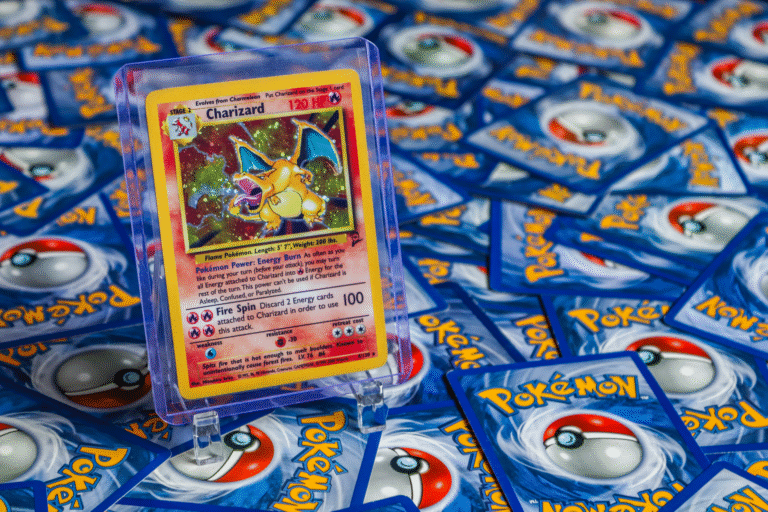
The Fossil Gengar Holo card (Gengar #5/62 from the 1999 Pokémon Fossil set) carries significant market value that varies dramatically depending on edition and condition. For unlimited edition copies in near mint condition, expect to pay around $160.50, while raw ungraded copies on TCGPlayer start as low as $49.99. The 1st edition versions command premium pricing, with near mint examples reaching $308.25—roughly double the price of their unlimited counterparts.
For a concrete example, if you’re hunting for a lightly played unlimited copy to fill a gap in your collection, you’re looking at approximately $144.50, while the equivalent 1st edition would cost $277.50. Understanding the pricing structure of this particular card requires attention to edition status and condition grade, as these factors create the most significant price variations in the market. The Fossil Gengar has remained consistently desirable among collectors for nearly two decades, and its pricing reflects both its historical significance and current collector demand. Whether you’re buying to complete your Fossil set or considering an investment piece, knowing the realistic price ranges across condition grades will help you make informed purchasing decisions.
Table of Contents
- WHAT AFFECTS FOSSIL GENGAR HOLO PRICING?
- UNDERSTANDING CONDITION GRADES AND THEIR PRICE IMPACT
- 1ST EDITION VS. UNLIMITED—THE PREMIUM BREAKDOWN
- CHOOSING BETWEEN RAW AND PROFESSIONALLY GRADED COPIES
- MARKET VOLATILITY AND GRADING SERVICE FLUCTUATIONS
- SEASONAL AND PLATFORM-SPECIFIC PRICING VARIATIONS
- FUTURE OUTLOOK AND MARKET CONSIDERATIONS
- Conclusion
- Frequently Asked Questions
WHAT AFFECTS FOSSIL GENGAR HOLO PRICING?
Several key variables determine where a Fossil Gengar Holo will fall within the price ranges. Edition status is the primary driver—1st edition stamped cards consistently command 90 to 100 percent premiums over unlimited versions, and this gap rarely narrows regardless of market conditions. Condition grading creates equally dramatic price swings; the difference between a lightly played copy and a moderately played copy amounts to roughly $24 for unlimited editions and $46 for 1st editions. This demonstrates why professional grading services like PSA, BGS, and CGC play such an important role in determining fair market value.
The market itself has fragmented across multiple platforms, each with slightly different pricing. TCGPlayer listings for raw cards often start lower—in the $49.99 range—because they lack the authentication and numerical grading that specialized grading companies provide. However, these same platforms show a significant jump when you filter for professionally graded copies or purchase from dealers with strong seller ratings. For comparison, a PSA 8 (near mint) 1st edition Gengar #5 and a raw lightly played 1st edition of the same card could differ by $30 to $50 depending on the buyer’s confidence in the seller’s condition assessment.
UNDERSTANDING CONDITION GRADES AND THEIR PRICE IMPACT
Condition grading systems can feel abstract until you compare actual prices, which is where the real value differences become obvious. The jump from damaged ($75.50 unlimited) to heavily played ($99.50 unlimited) represents a roughly 30 percent increase for just moving up one condition tier. Similarly, moving from heavily played ($191.25 for 1st edition) to moderately played ($231.25) adds another $40 to the price—money you’re paying specifically for visible improvements in the card’s corners, edges, and surface. This demonstrates the important limitation that you cannot extrapolate prices linearly; small condition improvements in lower tiers don’t command the same premiums as condition improvements in higher tiers.
One critical warning: self-assessed condition grades frequently misrepresent the actual state of a card, which is the primary reason many collectors prefer purchasing professionally graded copies despite the additional cost. A card you believe is “lightly played” might receive a professional grade of “moderately played,” instantly costing you $20-$25 in value. Vintage cards like the Fossil Gengar are especially susceptible to condition ambiguity because printing inconsistencies from the 1999 era can make cards appear slightly off-color or have subtle surface wear that casual inspection misses. When purchasing raw cards, assume the seller’s condition assessment may be optimistic by one full grade.
1ST EDITION VS. UNLIMITED—THE PREMIUM BREAKDOWN
The premium for 1st edition status on this card remains consistently strong, sitting right at that 90-100 percent mark across all condition grades. A near mint unlimited copy at $160.50 becomes a near mint 1st edition at $308.25—almost exactly a 92 percent increase. This consistency across grades reveals something important about collector psychology: the first edition designation matters more than the absolute condition in many cases, which explains why even damaged 1st edition copies ($145.00) command higher prices than moderately played unlimited versions ($120.25).
Understanding this dynamic helps you identify value opportunities or potential traps in the secondary market. If a seller is offering a 1st edition copy at only a 40-50 percent premium over unlimited pricing, you’ve likely found either a misgraded card, a misleading listing, or a genuine opportunity. Conversely, if you encounter 1st edition copies commanding 150 percent premiums, you’re probably looking at exceptional condition examples or seller premium pricing rather than a true market reflection. For practical purchasing, this means comparing specific condition grades across multiple platforms before committing; a moderately played 1st edition at $231.25 might represent better value than a lightly played unlimited at $144.50 depending on your collecting goals.

CHOOSING BETWEEN RAW AND PROFESSIONALLY GRADED COPIES
Collectors frequently face the decision between purchasing raw ungraded cards and paying the premium for professionally graded examples. Raw copies start at approximately $49.99 on TCGPlayer, while even modestly graded versions can exceed $100 depending on the assigned grade. The cost difference essentially represents the grading service fee, the authentication assurance, and the market confidence that comes with a numerical grade backing the condition assessment. For a 1st edition copy in particular, the grading cost might range from $30 to $50 depending on the service, making that premium between $49.99 and $100+ feel substantial for budget-conscious collectors.
The tradeoff here involves risk tolerance and intended use of the card. If you’re building a personal collection for enjoyment and you’re confident in your ability to assess card condition accurately, raw copies offer better immediate value. However, if you ever plan to resell, trade, or want insurance coverage for a valuable card, the professional grade becomes crucial documentation. A PSA-graded 1st edition Fossil Gengar commands both certainty and liquidity; someone buying from you knows exactly what they’re getting rather than relying on your assessment. Many collectors find that a professionally graded moderately played copy provides more peace of mind and better long-term value than a raw lightly played copy where condition assumptions are uncertain.
MARKET VOLATILITY AND GRADING SERVICE FLUCTUATIONS
The Fossil Gengar pricing you see today reflects current market demand, but this particular card has experienced notable fluctuations over the years as grading service populations and collector preferences shift. Increased PSA 9 and PSA 10 populations, for example, can gradually depress the prices of cards graded PSA 8, as collectors increasingly chase the higher grades. This demonstrates a common limitation: the card prices listed on price guides represent a single moment in time and don’t account for how vintage Pokemon prices are constantly reassessing based on new comparable sales.
Be cautious about purchasing large quantities of this card as an investment hoping for dramatic appreciation. The vintage Pokemon market has cooled significantly from its 2020-2021 peak, and while the Fossil set remains beloved, oversaturation and reprinting discussions have kept many players from aggressively bidding on base-era holos. Additionally, if you’re comparing prices across different professional grading services—PSA versus BGS versus CGC—understand that market acceptance varies by brand, condition grade, and specific card. A BGS 8 and a PSA 8 of the same card might genuinely command different prices in the current market despite representing ostensibly equivalent grades.

SEASONAL AND PLATFORM-SPECIFIC PRICING VARIATIONS
Prices for vintage Pokemon cards, including the Fossil Gengar, fluctuate based on seasonal demand spikes and which platform you’re purchasing from. eBay listings, local Facebook groups, and Discord trading communities often show different price distributions than centralized platforms like TCGPlayer or the price guide.
For example, you might find raw copies ranging from $40 to $120 on eBay depending on the seller’s reputation and willingness to field offers, whereas TCGPlayer standardized pricing typically shows tighter ranges around the $49.99 mark. International shipping availability also affects pricing, particularly for 1st edition copies where collector pools expand considerably when considering global markets. A moderately played 1st edition Gengar might cost $231.25 domestically but could see different pricing if you’re willing to import from collectors in Europe or Asia where the print run and collector base differs.
FUTURE OUTLOOK AND MARKET CONSIDERATIONS
The Fossil set continues to attract new and returning collectors, particularly as Pokemon TCG nostalgia-driven cycles bring 30-something collectors back to their childhood sets. The Fossil Gengar’s iconic status as one of the set’s more recognizable holos means it’s unlikely to ever become a bulk-commodity card, but dramatic appreciation also seems unlikely given the current market stabilization. Real-world price discovery for this card will likely remain steady within the ranges currently quoted, with gradual inflation matching the broader Pokemon card market’s maturation.
Collectors purchasing in 2026 should view the Fossil Gengar more as a collectible piece of Pokemon history rather than a speculative asset. Whether you pay $160 for an unlimited near mint copy or $308 for its 1st edition equivalent, you’re acquiring a genuinely rare card from one of the franchise’s most important early sets. The solid current pricing across multiple platforms suggests the card has found genuine demand equilibrium rather than sitting in an artificial bubble waiting to burst.
Conclusion
The Fossil Gengar Holo maintains robust market value ranging from under $50 for raw ungraded copies to over $300 for near mint 1st editions, with clear price stratification across edition type and condition grade. The approximately 90-100 percent premium commanded by 1st edition versions over unlimited copies remains consistent across all condition levels, providing reliable pricing guidance for both buyers and sellers. Understanding these baseline values equips collectors to recognize genuine opportunities versus overpriced listings and to make purchasing decisions aligned with their collecting goals and budget.
Before purchasing, compare prices across multiple platforms including TCGPlayer, eBay, and specialty dealer sites to ensure you’re paying market rate rather than premium pricing. If buying raw copies, assume conservative condition assessments rather than optimistic ones, and seriously consider professional grading for any first edition purchase above $150 to secure the documentation and liquidity that authenticated grades provide. The Fossil Gengar Holo deserves a place in serious collections, and now you have the pricing framework to acquire it strategically.
Frequently Asked Questions
Why does the 1st edition Fossil Gengar cost almost twice as much as the unlimited version?
The 1st edition designation is a formal indication that the card was from the first printing of the Fossil set in 1999, making it genuinely rarer than unlimited reprints. Collectors value this historical specificity, and it commands a consistent 90-100 percent premium across all condition grades.
Is a raw card purchased for $50 a better deal than a professionally graded card for $120?
Not necessarily. The graded card provides authentication, condition documentation, and resale certainty that the raw card lacks. For a vintage card like this, professional grading often protects your investment better than the cost difference might suggest.
Do Fossil Gengar prices vary by professional grading service?
Yes. PSA, BGS, and CGC grades are not perfectly interchangeable in the market, and the same numerical grade from different services may command slightly different prices depending on current collector preference and population data.
What condition grade should I aim for if I’m on a budget?
Moderately played copies ($120.25 for unlimited, $231.25 for 1st edition) offer reasonable visual appeal while costing significantly less than lightly played grades. Many collectors find this the “sweet spot” for vintage cards they intend to keep.
Has the Fossil Gengar appreciated in value over time?
The card has remained relatively stable in recent years after significant appreciation from 2020-2021. Current market prices suggest equilibrium rather than bubble pricing, making it a legitimate collectible rather than a speculative asset.
Should I buy now or wait for prices to drop?
Prices have stabilized at current levels, and significant drops seem unlikely given consistent collector demand. If you want the card, current pricing represents fair market value; waiting could mean missing good-condition examples while prices potentially drift upward with inflation.
You Might Also Like
- verified sold listings across major TCG marketplaces for Fossil Dragonite Holo
- verified sold listings across major TCG marketplaces for Fossil Ditto Holo
- verified sold listings across major TCG marketplaces for Fossil Articuno Holo
Frequently Asked Questions
How much is a PSA 10 Fossil Gengar Holo worth?
Fossil Gengar Holo PSA 10 value is tracked from verified sold listings across eBay, TCGplayer, Goldin, and Fanatics Collect. Recent sales determine the current market price, which shifts month to month based on supply, condition, and demand.
Is Fossil Gengar Holo a good investment?
Long-term trend data for Fossil Gengar Holo is on this page. Vintage Pokemon cards in PSA 10 condition have historically appreciated, but performance varies by set, popularity, and grading population. Compare the monthly trend on this chart to similar cards before deciding.
Where can I see Fossil Gengar Holo sold listings?
We aggregate verified sales from eBay, TCGplayer, Goldin Auctions, and Fanatics Collect. The recent-sales section on this page shows individual transactions with date and price.