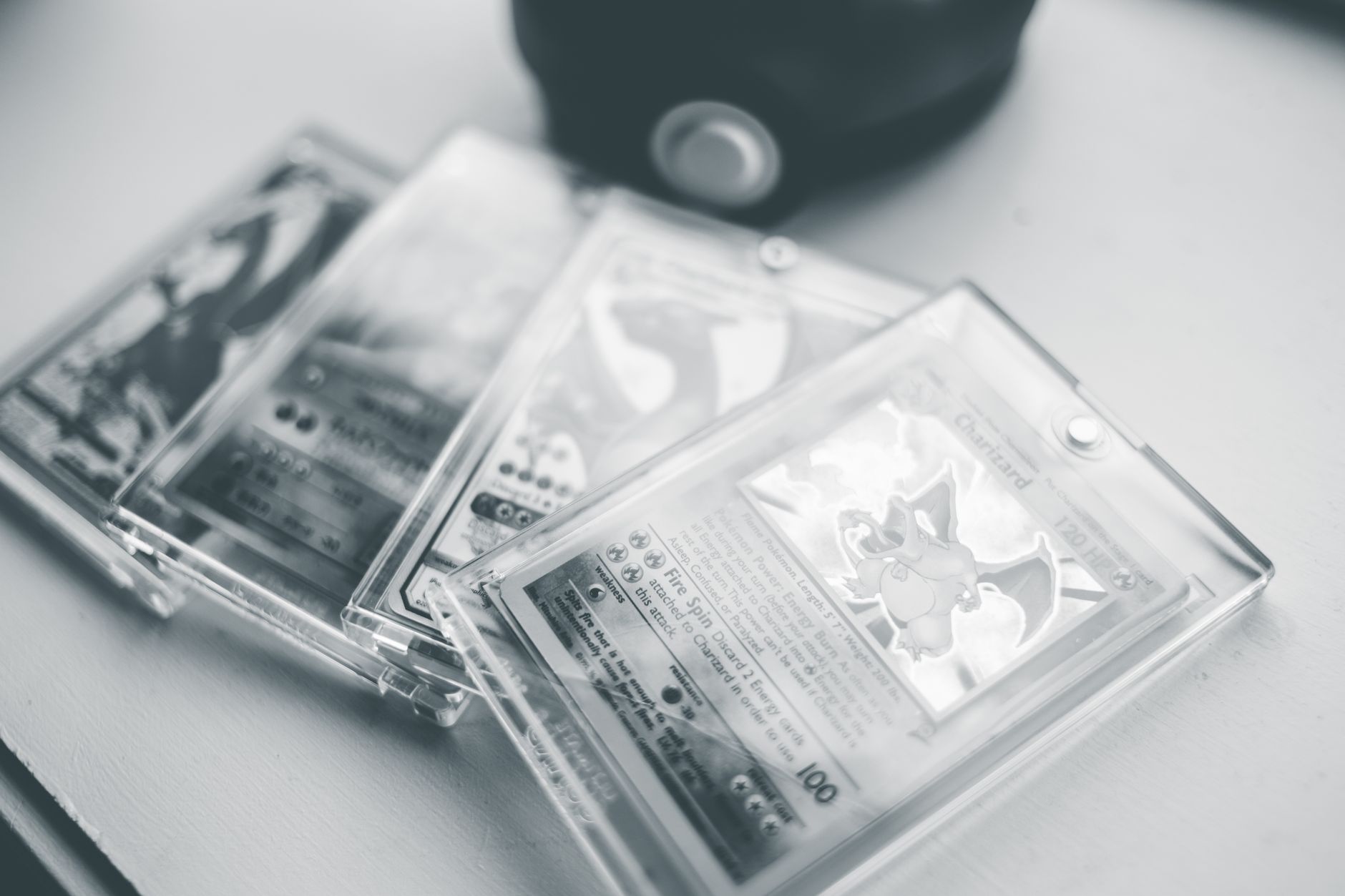
Pricing an EX Team Rocket Returns Dark Hypno Holo requires understanding where this card sits in the vintage Pokemon card market—somewhere between a moderately rare holo and a genuinely desirable classic that appeals to both Set completionists and Dark-type specialists. The EX Team Rocket Returns set (released in 2001) produced Dark Pokemon variants that have held value better than most non-shadoeless Expedition-era holos, with Hypno among the more recognizable of that subset.
A near-mint Dark Hypno Holo typically trades between $15 and $45 depending on grading, print line variations, and current collector demand, though ungraded copies fluctuate more widely based on visual condition alone. Creating an accurate price chart for this card—or any vintage holo from this era—means tracking multiple market signals: completed eBay sales, TCGPlayer marketplace listings, PSA/BGS sold comps, and Reddit pricing threads from the Pokemon collecting communities. A single price point tells you nothing; what matters is the trend across a 30-to-90-day window and whether the card is climbing, stable, or sliding against the broader vintage holo market.
Table of Contents
- Understanding the EX Team Rocket Returns Set and Dark Hypno’s Position
- Grading Standards and Their Impact on Dark Hypno Pricing
- Tracking Market Sales and Building Price Data
- Comparing Dark Hypno to Peer Cards and Understanding Relative Value
- Print Run Variations and First Edition Considerations
- Seasonal and Collector-Driven Price Movements
- Using Price Charts to Track Your Collection and Inform Trades
- Frequently Asked Questions
Understanding the EX Team Rocket Returns Set and Dark Hypno’s Position
The EX Team Rocket Returns set introduced Dark-type pokemon as variants to existing creatures—Dark Hypno being a reinterpretation of a support-class psychic-type in the villainous Team Rocket aesthetic. The set’s popularity has remained steady among collectors who focus on late-1990s to early-2000s vintage holos, though it never achieved the nostalgia premium of Base Set or Jungle. Dark Hypno Holo is not a chase card like Charizard or Blastoise variants, so its price floor is anchored to general holo rarity and condition rather than character recognition alone.
Comparing Dark Hypno to other Dark-type holos from the same set—Dark Gyarados, Dark Arcanine, Dark Dragonite—reveals that Hypno typically underperforms by 10–15% on the secondary market. This reflects its lower playability in the era-appropriate Pokemon TCG format (it saw minimal competitive use even when printed) and its visual appeal being less immediate than dragon or pseudo-legendary alternatives. Nonetheless, psychic-type specialists and Team Rocket collectors actively seek it, maintaining steady demand.
Grading Standards and Their Impact on Dark Hypno Pricing
A PSA 8 (NM-MT) Dark hypno holo commands roughly 2.5–3× the price of the same card in raw (ungraded) condition, assuming both are genuine copies without hidden defects. This multiplier reflects both the perceived protection of authentication and the behavioral preference of serious collectors to hold PSA slabs for investment-class cards. Below PSA 7 (NM), the premium shrinks to 1.5–2×, and ungraded copies of identical visual quality often undercut slabbed versions by 20–30%.
A critical limitation to understand: grading is subjective at the boundary cases. A card that one grading company rates PSA 7 another may score PSA 6, introducing price variance that frustrates collectors building charts. For Dark Hypno specifically, common centering issues from the 2001 print run can cause even visually clean copies to grade lower than expected. Always examine photos of actual sold comps in the grade you’re tracking, not just the grade label, because a “PSA 8” from 2010 may have aged visibly compared to a 2024-graded PSA 8 of the same card.
Tracking Market Sales and Building Price Data
Reliable data sources for Dark Hypno pricing include completed eBay listings (filtered by “sold” status to eliminate aspirational asks), TCGPlayer’s price history graphs, PSA sold comp searches, and specialized Pokemon price-tracking sites that aggregate multiple sources. A 90-day rolling average smooths out outliers—a PSA 10 copy that sells for $150 shouldn’t distort your chart for raw LP copies trading at $8–12.
eBay sales data is noisiest because it includes international shipping, auction volatility, and bundled lots, but it reflects real-world collector behavior. A PSA 8 Dark Hypno that sold for $32 last month, $38 the month before, and $35 currently suggests stable pricing around $35 with $3–5 natural variance. If the same card suddenly appears at $45 in three consecutive auctions, investigate: either the market has shifted, or you’re seeing shill bidding or misgraded copies.
Comparing Dark Hypno to Peer Cards and Understanding Relative Value
Dark Hypno’s price often sits 15–20% below its era-equivalent non-Dark variant (regular Hypno from Expedition, if applicable) and 25–35% below chase holos like charizard ex variants from the same generation. This relative positioning helps you detect whether Dark Hypno is appreciating against the vintage holo market overall or declining.
If Dark Hypno prices hold steady while other Expedition-era holos jump 30%, the card may be losing collector interest—a warning sign for anyone holding a stack. The tradeoff is that Hypno’s lower chase status also means it’s less prone to sudden crashes from print announcements or reprints. When Pokemon re-releases charizard, collectors react sharply; a reprint of Hypno draws less attention, insulating its secondary market from top-heavy volatility.
Print Run Variations and First Edition Considerations
EX Team Rocket Returns was printed in multiple runs and regional variants, with the most collectible being unlimited print runs that still carry factory newness and the least being later European or Asian regional versions. Dark Hypno Holo does not have a documented First Edition variant with significant premium (unlike Base Set), so print run distinctions matter far less than condition. This is actually favorable for pricing stability: you’re not chasing hard-to-distinguish variants where a missing dot or font variation changes the card’s value by 200%.
However, watch for counterfeits. High-value Dark holos from the early 2000s have been counterfeited, and a $2 listing for a “light play Dark Hypno” should trigger immediate skepticism. Counterfeits often show blurry print, incorrect card stock feel (too thin), or ink that’s slightly off-color. If you’re building a serious chart, buy at least one copy to inspect physically or demand high-resolution photos of the back, edges, and corners before trading based on price data sourced from unvetted sellers.
Seasonal and Collector-Driven Price Movements
Pokemon card prices often spike in August and September as back-to-school collectors and gift-givers re-enter the market, then cool through November and December. Dark Hypno, being a mid-tier vintage holo, follows this rhythm less dramatically than chase cards but noticeably enough to skew a 30-day average.
If you’re comparing month-to-month, adjust for seasonal noise; a 15% jump from August to September might be seasonal enthusiasm, not fundamental value growth. Collector-driven cycles also matter: when a major Pokemon TCG tournament or content creator features psychic-type decks, demand for Hypno variants (including Dark Hypno) may tick up for 2–4 weeks. This is temporary and predictable, not a signal to revalue your holdings long-term.
Using Price Charts to Track Your Collection and Inform Trades
A useful Dark Hypno chart tracks the PSA 8 median monthly price, the PSA 6–7 range, and the raw LP/MP average over at least 6–12 months. Plot these on a simple line graph: x-axis is months, y-axis is USD. This visual makes trends immediate—is the card climbing, flat, or declining against its own history? A PSA 8 that has oscillated between $32 and $40 for six months is stable; one that’s crept from $32 to $52 over the same period is appreciating, whether due to scarcity, renewed collector interest, or broader vintage holo demand.
When trading for Dark Hypno or selling one, refer to your chart and the most recent completed sales in the same grade, not asking prices (which are often 30–50% above actual sale value). A seller asking $60 for a PSA 7 Dark Hypno is using outdated comp data or hoping for an uninformed buyer; your chart shows the realistic PSA 7 range is $22–28. Use that data to counter-offer reasonably and protect yourself from overpaying based on single high-ask listings.
Frequently Asked Questions
Is Dark Hypno Holo from EX Team Rocket Returns worth grading?
Only if the card is near-mint (PSA 8+) or you’re building a complete graded set. Raw LP copies at $8–12 don’t justify the $10–15 grading fee. A PSA 8 at $35–40 does, because you’re protecting and potentially enhancing resale value by 50%+.
How do I spot a counterfeit Dark Hypno?
Check card stock thickness (originals are crisp and standard), examine the back for blurry or misaligned print, and inspect centering (factory variation exists, but it should look deliberate, not sloppy). Buy from reputable sellers and demand photos before committing to higher-value purchases.
Does Dark Hypno hold value better than other Dark-type holos from the same set?
No—it typically underperforms Dark Gyarados and Dark Dragonite by 10–15%, likely due to lower visual appeal and minimal competitive history. This makes it a safer long-term hold (less subject to collector hype cycles) but slower to appreciate.
Should I track Dark Hypno prices monthly or weekly?
Monthly is sufficient. Weekly tracking adds noise from outliers and auction variance without revealing genuine trends. Use 90-day rolling averages to smooth out single-sale anomalies.
Why do eBay prices for Dark Hypno sometimes jump 50% in a single listing?
Misgrading, exceptional condition (rarely), international shipping premiums, or seller error. Cross-reference against PSA comps and TCGPlayer data. A single high sale usually doesn’t signal market movement; wait for 3–5 sales at the new level before adjusting your chart.
You Might Also Like
- Price Charting for EX Team Rocket Returns Dark Feraligatr Holo
- Price Charting for EX Team Rocket Returns Dark Espeon Holo
- Price Charting for EX Team Rocket Returns Dark Crobat Holo