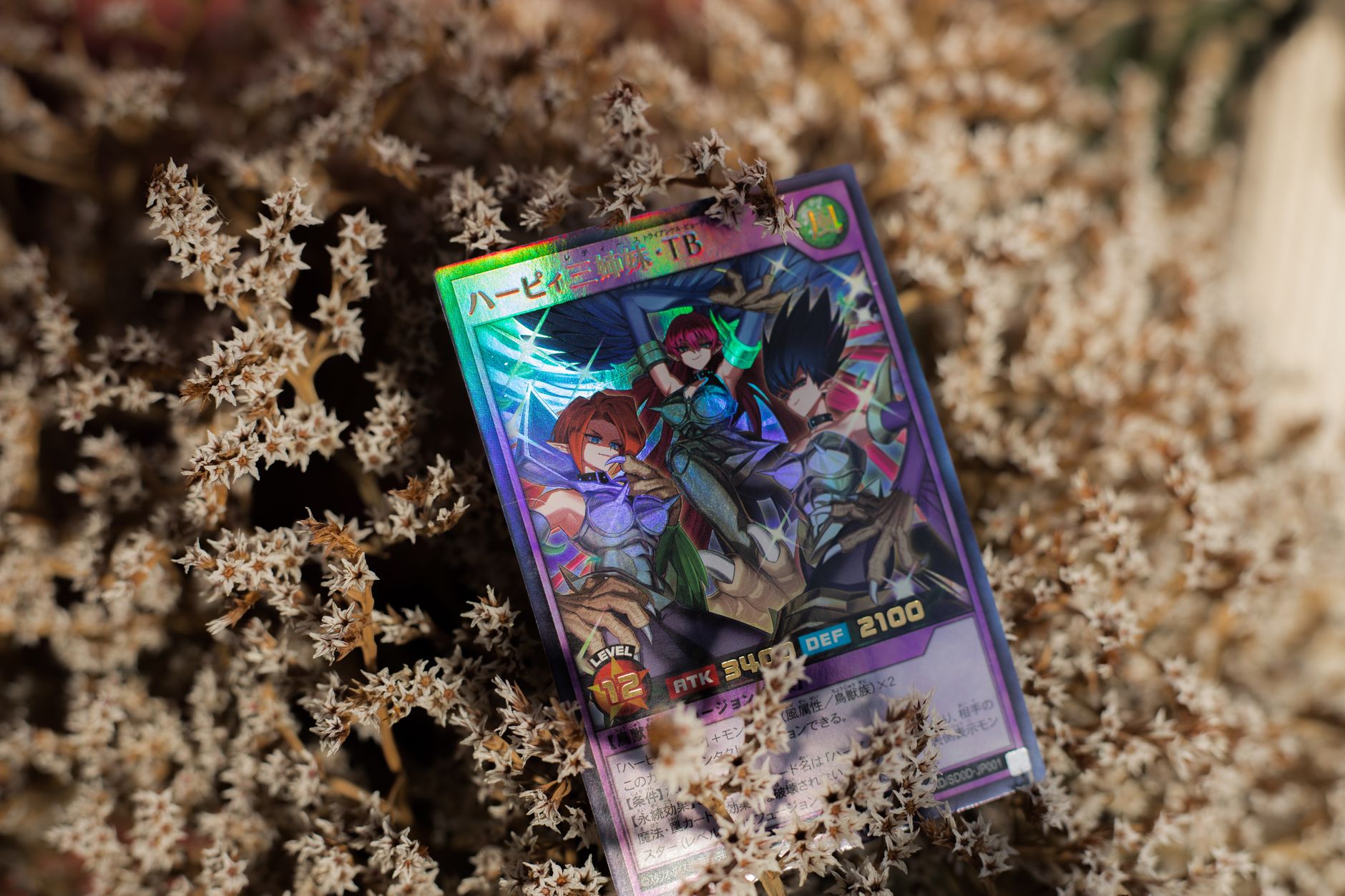
Japanese Pokemon trading cards are among the most valuable and sought-after collectibles in the trading card market, commanding significant premiums over their English-language equivalents. In February 2026, a Pikachu Illustrator card graded PSA 10 sold for $16,492,000 at Goldin Auctions, setting the all-time record for any trading card ever sold. This extreme valuation is not an anomaly but rather the peak of a market where Japanese cards have consistently demonstrated their position as premium investments, driven by superior print quality, sharper textures, cleaner holographic patterns, and better centering consistency.
The value differential between Japanese and English cards is substantial and consistent. Japanese Pokemon cards trade at a 15–40% premium over English equivalents for the same card, according to grading and market data from 2026. This premium reflects tangible quality advantages in the physical card stock and production standards that Japanese manufacturers maintain, making Japanese cards not just nostalgia-driven purchases but investments backed by measurable material superiority. For collectors evaluating whether to pursue Japanese or English versions of rare cards, the quality gap often justifies the additional cost, particularly for cards being graded and held as long-term investments.
Table of Contents
- Why Japanese Pokemon Cards Command Consistent Market Premiums
- The Impact of Holographic Quality on Card Grading and Collector Value
- Base Set Charizard as the Benchmark for Japanese Mint-Condition Investment Value
- Condition Grading and the PSA 10 Multiplication Factor for Investment Returns
- Print Defects and Quality Control Issues That Reduce Japanese Card Investment Returns
- Market Stabilization and Organic Demand in Japanese Card Investment
- Modern Japanese Cards as Emerging Collectible Assets
- Frequently Asked Questions
Why Japanese Pokemon Cards Command Consistent Market Premiums
The 15–40% premium that Japanese pokemon cards maintain over English versions is rooted in production quality rather than market hype. Japanese manufacturers use higher-quality card stock that resists wear, maintains sharper textures, and produces cleaner holographic patterns without the clouding or inconsistent finish that sometimes appears on English cards. These quality differences are especially visible under grading scrutiny, where light angle reveals cleaner centering and more uniform holo patterns on Japanese cards.
Modern Japanese cards demonstrate this quality advantage as clearly as vintage ones. The Lillie SR card from GX Battle Boost (2017), known as “Ganba Lillie,” represents the most valuable modern Japanese Pokemon card at approximately $14,009 in PSA 10 condition as of 2026. This premium valuation for a relatively recent card—less than a decade old—shows that the market recognizes quality and rarity in Japanese production even when comparing modern releases side by side with English versions from the same era. Collectors who have handled both Japanese and English versions of the same card from recent sets often note that the Japanese versions feel more durable and display sharper detail in the holographic foil pattern.
The Impact of Holographic Quality on Card Grading and Collector Value
Holographic quality is not a subjective aesthetic preference but a measurable factor that directly influences professional grading outcomes and secondary market prices. Print quality issues affecting the holo pattern, such as visible print lines under angled light, typically result in PSA 9 or below grades, creating a significant valuation cliff. Swirl gaps (missing holofoil in areas where it should be present) and clouding in the holo pattern similarly reduce grades substantially, demonstrating that the holographic finish is not peripheral to value—it is central.
The grading standards for holographic quality are rigid because collectors and investors understand that mint-condition cards demand perfect or near-perfect holo presentation. A card with minor swirls or holo clouding that might seem cosmetically acceptable to a casual observer will drop from PSA 10 potential into PSA 9 territory, creating a valuation spread of hundreds or thousands of dollars depending on the card’s underlying rarity. This means that collectors pursuing japanese cards specifically for their holographic superiority must still evaluate each individual card under proper lighting before purchasing or submitting for grading, as print defects are unpredictable even within a single production run.
Base Set Charizard as the Benchmark for Japanese Mint-Condition Investment Value
The Base Set charizard 1st Edition stands as the benchmark card for understanding Japanese premium pricing and the impact of mint condition on investment returns. In February 2026, a PSA 10 graded copy sold for $954,800, representing an 87% increase from January 2026’s $510,000 sale—a dramatic jump in just one month that underscores both the scarcity of gem mint copies and the sharp pricing tiers within the same grade level. This volatility in high-end sales reflects the reality that even within “PSA 10” there is considerable variation in eye appeal and desirability.
Ungraded 1st Edition Charizard cards trade in the $3,000–$6,000 range, depending on condition assessment. PSA 10 copies command between $300,000–$550,000, representing a value multiplication of 50–150x over ungraded examples. The rarity underlying these prices is extreme: only 124 PSA 10 grades exist out of 4,993 total 1st Edition Charizard gradings, meaning fewer than 2.5% of all graded 1st Edition Charizards achieve gem mint status. This scarcity is not arbitrary but reflects the difficulty of producing or preserving a 25-year-old card in perfect condition—a lesson that applies directly to understanding why Japanese cards command premiums, since mint preservation is exponentially more valuable than average condition.
Condition Grading and the PSA 10 Multiplication Factor for Investment Returns
Professional grading dramatically amplifies card value, but the multiplier effect varies dramatically between modern and vintage cards. Modern cards in PSA 10 condition typically sell for 2–5x their ungraded price, while vintage cards can fetch 5–10x their ungraded value. This wide range reflects both the rarity of mint condition in older cards and the collector market’s preference for authenticated grading on high-value purchases.
A near mint vintage Japanese card can be worth 2–10x more than a moderately played copy of the same card, according to 2026 market data. The decision to grade a card should be made strategically, as grading costs (typically $20–$100 per card depending on speed and service level) can be significant relative to the card’s ungraded value. Cards worth grading should have clean condition, demonstrated PSA 10 demand, and raw value above $50; PSA submission is generally worth evaluating for cards above $80 in raw value. This threshold exists because a card that costs $30 ungraded does not benefit from a $50 grading fee, even if grading might triple its value—the math requires sufficient base value to justify submission costs and waiting time.
Print Defects and Quality Control Issues That Reduce Japanese Card Investment Returns
Even Japanese cards, despite their reputation for superior quality, are subject to production defects that can significantly impact grading outcomes and prevent a card from achieving investment-grade status. Print lines visible under angled light represent the most common defect affecting grades, consistently resulting in PSA 9 or below ratings rather than the PSA 10 needed for maximum investment value. Collectors inspecting Japanese cards before purchase should use angled lighting to check for these fine print lines, which are difficult to spot under normal overhead light but become obvious under proper grading examination.
Swirl gaps and holo clouding are additional quality issues that Japanese production occasionally produces, particularly in early set releases or cards that experience storage degradation over decades. These defects are irreversible—a clouded or swirled holo pattern cannot be cleaned or restored without destroying the card’s authenticity. This reality means that collectors investing heavily in Japanese cards must factor in the risk that even “high-quality” Japanese cards may have latent defects not visible on casual inspection, justifying the cost of professional grading for cards intended as long-term investments.
Market Stabilization and Organic Demand in Japanese Card Investment
The 2026 Pokemon card market has stabilized at elevated price levels, reflecting more organic and less speculative demand compared to the hype-driven cycles of earlier years. This stabilization is important context for collectors considering Japanese cards as investments, because prices are no longer inflated by pure speculation but rather supported by genuine collector demand, scarcity, and demonstrated quality premiums.
Cards like the Base Set Charizard have held their value at high levels even as market enthusiasm has moderated, suggesting that the prices are sustainable rather than bubble-level valuations. The shift toward organic demand means that Japanese cards are now competing primarily on their actual merits—quality, rarity, and collectibility—rather than on FOMO or speculative momentum. This environment favors informed collectors who understand the material differences between Japanese and English cards and can justify the premium prices through direct comparison of quality, condition, and historical performance.
Modern Japanese Cards as Emerging Collectible Assets
While vintage Japanese cards like Base Set Charizard represent the apex of trading card investments, modern Japanese releases are establishing themselves as serious collectible assets with genuine value appreciation potential. The Lillie SR from GX Battle Boost demonstrates that modern Japanese cards can command thousands of dollars in PSA 10 condition, creating investment opportunities for collectors who identify high-demand cards before they appreciate significantly. Modern Japanese cards offer a lower entry point than vintage options—raw copies trade for far less than graded vintage counterparts—but retain the quality advantages and premium market positioning of Japanese production.
Frequently Asked Questions
Why are Japanese Pokemon cards more valuable than English cards?
Japanese cards use higher-quality card stock, produce sharper textures, and maintain cleaner holographic patterns. They trade at 15–40% premiums over English equivalents due to these tangible quality advantages that persist through decades of storage.
What is the most valuable Japanese Pokemon card?
The Pikachu Illustrator sold for $16,492,000 in February 2026, setting the all-time record for any trading card. For modern Japanese cards, the Lillie SR from GX Battle Boost reaches approximately $14,009 in PSA 10 condition.
How much does grading multiply a card’s value?
Modern cards in PSA 10 typically sell for 2–5x their ungraded price; vintage cards can fetch 5–10x. However, grading costs must be justified, which is why cards above $80 raw value are generally worth submitting.
Should I grade my Japanese Pokemon card?
Cards need clean condition, demonstrated market demand for PSA 10 examples, and raw value above $50 to make grading worthwhile. The Base Set Charizard 1st Edition demonstrates that even cards worth $3,000–$6,000 ungraded benefit dramatically from PSA 10 grading (reaching $300,000–$550,000), but most cards will not see proportional returns.
What print defects reduce Japanese card grades?
Print lines visible under angled light, swirl gaps in the holofoil, and clouding in the holo pattern all result in PSA 9 or below grades, preventing cards from reaching investment-grade PSA 10 status. These defects are irreversible and should be checked before purchase.
Is the Pokemon card market still experiencing price increases?
The 2026 market has stabilized at elevated price levels, reflecting organic demand rather than speculation. Cards like the Base Set Charizard have held value, but the era of rapid appreciation has moderated.
You Might Also Like
- First Edition Pokemon Trading Cards 1999 Vintage Series Collectible Mint Rare
- Pokemon trading card Pitch Black ETB preorder lowest price recorded history
- Heat Wave Arena Pokemon booster box 30 sealed Japanese packs vendor