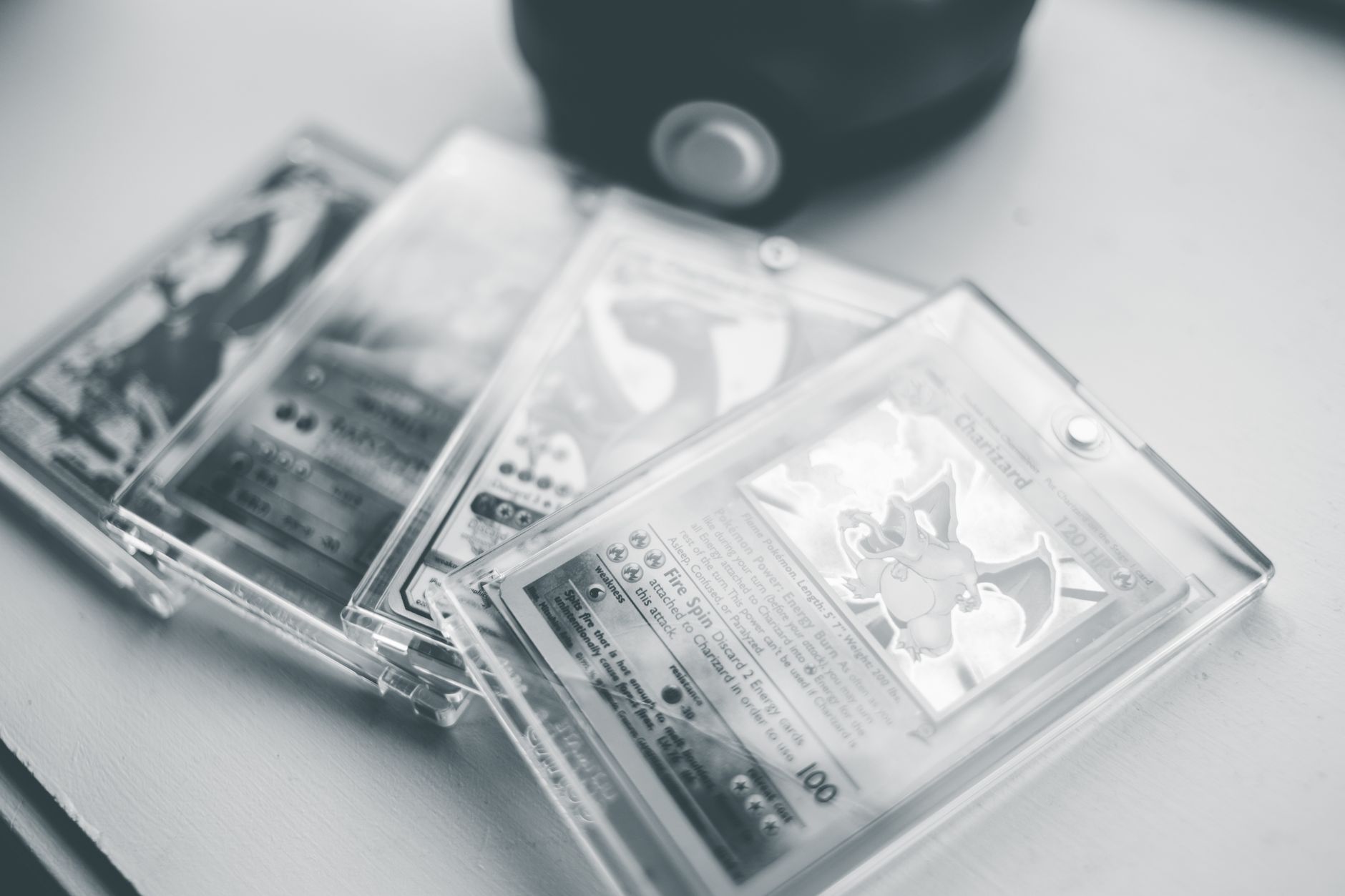
The EX Legend Maker Gengar Holo typically ranges from $65 to $130 for ungraded copies in good condition, with market averages hovering around $130.66 as of mid-2026. However, this card’s price is far more complex than a single number—a PSA 8 graded copy might fetch $40 at retail while a PSA 10 of the same card sold for $2,750 in late 2025, meaning condition determines value with brutal precision.
This is card #5/92 from the 2006 EX Legend Maker set, a Psychic-type Holo Rare that has appreciated 2,284% since its original release two decades ago. The extreme price variation reflects what makes Gengar from Legend Maker genuinely collectible: it’s old enough to have real scarcity, graded examples have heavy collector demand, and the card saw moderate print runs even in 2006. You cannot shop for “the Gengar price”—you shop for condition, grading status, and platform, each of which swings the asking price by factors of 10 or more.
Table of Contents
- Why EX Legend Maker Gengar Commands Premium Pricing
- Grading Impact and the PSA Cliff
- Where to Find and Buy EX Legend Maker Gengar
- Evaluating Condition When No Grading Is Present
- Common Pricing Traps and Mistakes
- Comparing Gengar to Other EX Legend Maker Holo Rares
- Timing and Market Seasonality in Card Pricing
- Frequently Asked Questions
Why EX Legend Maker Gengar Commands Premium Pricing
The EX legend Maker set released in 2006 represents a specific era of Pokémon tcg production—after the Base Set boom but before modern reprinting strategy made vintage cards abundantly available. Gengar, as a Holo Rare (the premium non-secret-rare of that era), was printed in smaller quantities than common or uncommon cards, but far more than secret rares or full-art variants. This creates genuine scarcity without rarity-chase pricing; plenty of copies exist, but not casually. Collector demand for Gengar specifically stems from multiple sources. The card features one of the most recognizable Pokémon, has clean artwork by the standards of 2006 printing, and came from a set that has aged well in the collector market.
Unlike chase cards that spike in value because they’re the “hardest to pull,” Gengar achieves value through age, playability in its era (it saw actual tournament use), and appeal as a stand-alone vintage piece. A player who started collecting in the early 2000s often remembers pulling or trading for this specific card. The set itself has no reprints of the Gengar Holo in English—no reissue, no modern collection box version. That closure makes 2006 copies the only official source, hardening the value floor. Compare this to modern cards where reprinting can crater prices; this Gengar will never be casually reprinted as a $5 bulk card because Pokémon’s modern strategy avoids that playability.
Grading Impact and the PSA Cliff
Grading creates a price cliff that buyers often underestimate. A psa 8 (Very Good-Excellent) copy of this card has sold for prices ranging from $39.99 at GameStop to $469.00 at auction—the same grade, same card, but context (platform, timing, exact copy) shifted value by a factor of 12. However, jumping to PSA 9 (Mint Condition) doubles or triples the price into the $120+ range, and a single step up to PSA 10 (Gem Mint) pushes the same card to $2,750. That 26× multiplier between PSA 8 and PSA 10 is not unusual for 20-year-old cards; it reflects how few copies have survived in true gem condition. The trap: sellers often claim a card is “near PSA 9” or “looks like a 9” without submission. When that card reaches the grading company and returns as a PSA 7 or PSA 8, the seller’s expectation ($150–$200) collapses against reality ($40–$120).
PSA grading costs $30–$200 per card depending on turnaround time, so committing grading costs on a card you think might be an 8 is a real financial decision. A PSA 3 copy (Poor-Fair condition) sold for $110, which is higher than a PSA 8 at the low end—that happened because PSA grading itself adds collectibility value, so even a heavily played copy attracts graded-card collectors. Ungraded copies occupy the $65–$130 range, but within that spread is invisible condition variance. A “near mint” ungraded copy might deserve $120, while a “lightly played” copy at $75 is fair. The problem: without professional grading, you rely entirely on the seller’s subjective description. Buying ungraded is a cost-saving move that introduces risk; you save $30–$50 on grading costs but expose yourself to condition surprises when the card arrives.
Where to Find and Buy EX Legend Maker Gengar
This card actively lists on four major platforms: TCGPlayer (largest U.S. inventory), eBay (auction and fixed-price options), CardMarket (European focus but ships to U.S.), and CardTrader (peer-to-peer, slower fulfillment). GameStop has restocked graded copies through distributor channels, which is unusual—most vintage cards don’t appear at retail. Each platform has different fee structures, shipping costs, and seller credibility signals. TCGPlayer aggregates multiple seller listings at different price points, making it useful for benchmarking. A search for “Gengar EX Legend Maker” shows the full range from $65 ungraded copies (played condition) to $300+ for PSA 8s, allowing side-by-side comparison.
eBay auctions create price discovery through bidding but introduce timing risk—you might lose to a higher bidder at the last second, or you might snipe a deal if sellers mislist condition. CardMarket is quieter for this specific card but sometimes carries European seller inventory at different prices; shipping from Europe typically adds $15–$30 cost. A practical limitation: shipping a $100 card in a soft sleeve risks damage and theft. Ungraded copies should ship in a bubble mailer with tracking; graded PSA copies come in hard cases, so shipping is protective but more expensive. A $40 card with $8 shipping is still a $48 transaction, and if it arrives damaged, recovery depends on platform dispute policies. eBay and TCGPlayer both protect buyers, but CardTrader relies on seller goodwill.
Evaluating Condition When No Grading Is Present
Condition assessment without professional grading requires understanding Pokémon card grading terminology. Near Mint (8–9 equivalent) shows minimal wear, visible only under close inspection—sharp corners, clean surface, crisp text. Very Good-Excellent (7 equivalent) has light play wear, visible corner rounding, possible light creasing. Good (6 equivalent) shows obvious play—rounded corners, surface scuffs, possible light stains or marks. Fair (5 equivalent) means heavy play—visible creases, discoloration, bent corners. For this 20-year-old card, context matters.
A copy that’s been in a binder for two decades in dry storage might genuinely be near mint despite age. A copy that was played in tournaments in 2006 and sat in a shoebox with other cards is probably very good at best. Look for specific wear points: the holo surface (reflective layer) scratches easily and shows play immediately, the top and bottom edges (most handled) wear first, and the back corners are vulnerable to bending. Gengar’s artwork is centered, so off-center printing would be immediately visible and justifies a discount. A concrete example: two “lightly played” copies on TCGPlayer might both be $85, but examining photos reveals one has light corner wear and a clean holo surface (likely a 7 or 8), while the other shows visible holo scratches and edge wear (likely a 6). The first is a reasonable buy if you value protection; the second should be cheaper because the damage is visible. Many sellers don’t provide close-up photos of the card back or holo surface, so asking for additional photos before purchase is fair—a legitimate seller will provide them.
Common Pricing Traps and Mistakes
The biggest trap is assuming graded copies are always better value. A PSA 8 at $469 looks expensive until you consider that an ungraded “mint” copy you buy for $120 might arrive as a clear 6 or 7 due to hidden wear, light damage during shipping, or the seller’s overly generous condition estimate. The $469 PSA 8 is actually the safer buy if you want certainty—you paid for expertise that removes guesswork. Conversely, buying a PSA 3 for $110 makes sense if you collect played copies or want the card primarily for art, not investment. Currency and platform traps also exist. CardMarket prices are listed in euros, and conversion plus international shipping can make a seemingly cheap European copy more expensive than a U.S.
domestic purchase. CardTrader requires waiting for peer-to-peer sales to complete, so a “cheaper” copy might take weeks to arrive if the seller is inactive. eBay auction pricing is driven by bidding behavior, not fair market value—a card that auctions at $250 might list as fixed-price for $150 on TCGPlayer the same week, meaning auction winners overpaid. A final trap: assuming vintage cards only appreciate. The Gengar Holo has appreciated 2,284% since 2006, but that timeline includes decades of scarcity and growing collector demand. If Pokémon reprints Legend Maker in a modern set (unlikely but possible), or if the collector market contracts, recent buyers at $130+ could face price stagnation or declines. This card is not a guaranteed investment—it’s a collectible that has performed well historically but faces no guarantee of future growth.
Comparing Gengar to Other EX Legend Maker Holo Rares
The EX Legend Maker set includes 92 cards, with four Holo Rares besides the secret rares. Gengar’s $130 average pricing is high for the set but not exceptional—Blissey Holo (#1/92) commands similar or higher prices depending on grading, as does Medicham Holo (#3/92). Alakazam Holo (#2/92) sometimes fetches premium prices because psychic types and stage-two Pokémon appeal to different collector segments.
The non-Holo uncommons and commons from the same set trade for $1–$10, showing how rarity within the set drives pricing. Outside the set, Gengar has received reprints—Gengar Holo from various other sets (Diamond & Pearl, Black & White, etc.), some of which are cheaper, some more expensive depending on era and rarity. The 2006 original is specifically sought by collectors pursuing the “first official Gengar Holo in modern TCG,” making it distinct from later versions. This specificity keeps it from competing with budget Gengar copies; collectors choosing between a $30 Gengar from a 2015 set and a $130 EX Legend Maker Gengar are shopping two different collecting goals.
Timing and Market Seasonality in Card Pricing
Pokémon card prices fluctuate with collector interest cycles. Summer months (June–August) typically see lower trading volume as collectors take breaks, which can depress prices or stabilize them. Holiday seasons (November–December) bring increased buying from gift-givers and collectors with year-end budgets, which can spike prices. The December 2025 sale of a PSA 10 Gengar for $2,750 likely benefited from end-of-year buyer activity.
Recent sales data shows PSA 8 copies moving between $39.99 (GameStop, June 2026) and $469.00 (auction, June 2026) within the same month, indicating platform and timing matter as much as condition. A PSA 8 that sold for $40 at retail was likely a clearance or discounted listing; the same copy might fetch $150–$200 on a collector-focused platform. If you’re selling, eBay auctions during peak seasons or specific collector events (Pokémon TCG anniversaries, release hype) tend to draw higher bids. If you’re buying, off-season purchases or bulk listings from dealers clearing inventory sometimes offer better pricing than specialty platforms.
- —
Frequently Asked Questions
What is the current market price for an ungraded EX Legend Maker Gengar Holo?
Ungraded copies in good condition range from $65–$130, with an average market price around $130.66 as of mid-2026. Specific pricing depends on visible wear, holo clarity, and corner condition.
How much is a PSA 8 Gengar worth?
PSA 8 copies have sold from $39.99 to $469.00 in 2026, depending on platform and timing. Most settle around $100–$200 on mainstream platforms.
Why is grading so important for this card?
A PSA 10 sold for $2,750 while a PSA 8 fetches $100–$200, a 13–27× difference. Collectors heavily favor gem mint examples, so certification removes guesswork and justifies premium pricing.
Should I buy an ungraded copy or pay for grading?
Ungraded saves $30–$120 upfront but introduces condition risk; graded removes uncertainty at higher cost. For copies you plan to keep long-term, grading protects value; for play copies, ungraded is reasonable.
Where is the best place to buy this card?
TCGPlayer offers the widest domestic inventory and price comparison; eBay provides auctions and fixed prices; CardMarket reaches European sellers; GameStop occasionally restocks graded copies. Compare shipping costs and seller ratings across platforms.
Has this card appreciated in value over time?
Yes—it has appreciated 2,284% since its 2006 release. However, this performance reflects past scarcity and collector interest; future appreciation is not guaranteed if reprints occur or collector demand shifts. —
You Might Also Like
- Price Charting for EX Legend Maker Flygon Holo
- Price Charting for EX Legend Maker Flareon Holo
- Price Charting for EX Legend Maker Entei Holo