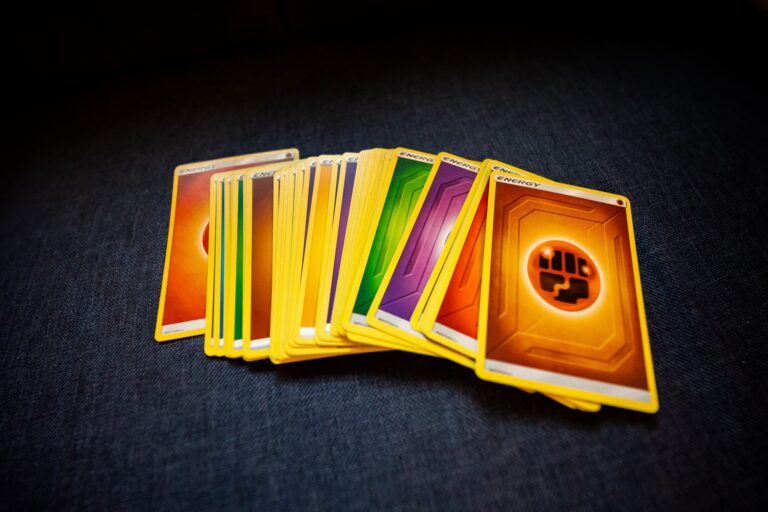
The Unlimited Base Set Fire Energy card (#98/102) currently trades in the $0.09 to $0.41 USD range, with typical market pricing around $0.41 according to the price guide and similar tracking platforms. This modest price point reflects what collectors have known for decades: basic energy cards, regardless of edition or set, hold minimal collectible value compared to their holographic or rare counterparts. A Fire Energy from an Unlimited Base Set won’t fund your collection rebuild, but understanding its pricing tells you something important about the broader Pokemon card market—bulk commonality has a floor, not a ceiling.
For newcomers to Pokemon card pricing, this card serves as a useful benchmark. If you’re checking the going rate for Fire Energy on TCGplayer or Cardmarket and seeing listings below fifty cents, you’re seeing normal market behavior, not a sign of damage or misrepresentation. Condition matters here too—a near-mint Fire Energy might fetch the upper range of that spread, while play-worn copies land closer to nine cents. The card’s simplicity as a common utility piece means collectors aren’t paying premiums for nostalgia or gameplay value; they’re paying for the physical card itself and its condition.
Table of Contents
- Why Base Set Fire Energy Prices Remain Consistently Low
- Understanding Card Grading and Its Impact on Energy Card Values
- The Broader Market for Pokemon Energy Cards and Print Runs
- Best Practices for Buying and Selling Fire Energy
- Common Pricing Pitfalls and Marketplace Misconceptions
- Collecting Unlimited Base Set Energy Cards as a Subset
- The Long-Term Outlook for Common Energy Cards
- Conclusion
Why Base Set Fire Energy Prices Remain Consistently Low
Fire Energy’s low valuation stems from its role as a basic utility card rather than a collectible asset. Unlimited base Set prints exist in vast quantities because Energy cards were printed in enormous volumes—every booster box from 1999 and 2000 contained multiple Energy cards per pack. The Unlimited set, released after the initial Limited print run sold out, was produced with even fewer restrictions, flooding the secondary market with copies. Compared to rare holos or first editions, Unlimited Base Set energies were never scarce. The pricing data from multiple sources—the price guide shows a similar range to TCGplayer and Pokemon Wizard—reveals that even dedicated platform aggregation hasn’t inflated these prices.
You could monitor Fire Energy pricing weekly and likely see it stay within the same twenty to thirty-cent band throughout the year. The only exception would be a significant shift in demand, such as a sudden resurgence in Base Set booster box openings or a collector trend toward completing pristine unlimited playsets. Condition is the practical variable in Fire Energy pricing. A near-mint copy graded by PSA or Beckett might command a premium within that range, potentially reaching the forty-cent ceiling. A well-played copy with visible edge wear or corner damage could sit at the lower end or below, depending on the severity. For bulk lots, you’ll often see Fire Energy bundled with other commons at a fraction per card, sometimes moving for just a few cents when sold in quantity.
Understanding Card Grading and Its Impact on Energy Card Values
Condition grading directly affects what buyers will pay, even for a common like Fire Energy. Cards are typically graded on a scale from 1 to 10, with 10 being gem mint (flawless), 9 being near mint to mint, and anything below 7 showing visible wear. For a card worth forty cents at near-mint, a graded PSA 8 might actually cost more to grade than the card itself—you’d be paying ten to twenty dollars for a grading fee on a card worth less than a dollar. This economic reality means you’ll rarely see Fire Energy submitted for professional grading unless it’s bundled with high-value cards in a bulk order. The practical takeaway: when shopping for Fire Energy on the price guide or Cardmarket, you’re almost always buying raw, ungraded copies. Sellers describe condition in written terms like “near mint,” “lightly played,” or “moderately played.” A buyer paying the full forty-one cents expects a card with minimal visible defects—sharp corners, clean edges, no creasing.
A card listed at fifteen cents likely has noticeable wear from casual play or storage that would drop its grade to 5 or 6 if submitted to PSA. Many collectors make the mistake of assuming all “unlimited” copies of a common are identical in value. They’re not. A Fire Energy pulled from a booster pack in 2000 and kept in a sleeve ever since could look dramatically different from a copy that spent two decades in a bulk bin. If you’re building a collection and Fire Energy fills a role in your gathering, buying the lowest-priced copy makes financial sense. If you’re hunting for one pristine copy to complete a graded set, you’ll pay the premium and accept the irony that your grading cost exceeds the card’s nominal value.
The Broader Market for Pokemon Energy Cards and Print Runs
Fire Energy’s price exists within a ecosystem of energy card pricing that spans all sets and editions. First Edition Base Set energies command higher prices due to scarcity—a First Edition Fire Energy might sell for fifty cents to a dollar depending on condition, a meaningful jump from unlimited pricing. But even first editions of common energies don’t attract serious collector investment; the premium exists relative to unlimited, not relative to other Pokemon cards. Newer sets introduce modern reprints of energy cards with different artwork and layouts, which can sometimes fetch small premiums if collectors prefer the aesthetic. But the overarching trend is that energy cards decline in value as print runs increase and new sets emerge.
An energy card’s utility is entirely functional—you need them to play the game, not collect them. Once the Pokemon TCG player base moves to a new set season, older energy cards circulate primarily as bulk filler. This dynamic means Fire Energy pricing is unlikely to spike dramatically unless something unprecedented occurs. A shortage of booster box production, a surge in Base Set revival competitions, or a celebrity-driven nostalgia wave could push prices up slightly. More realistically, Fire Energy will remain a fifty-cent card, give or take, because millions of copies exist and the card’s only value prop is its existence.

Best Practices for Buying and Selling Fire Energy
If you’re selling Fire Energy, list it on TCGplayer, Cardmarket, or eBay at or near the market rate shown on the price guide—currently around thirty-five to forty-one cents for near-mint copies. Pricing significantly above the market range guarantees no sales; pricing below market might move the card quickly but sacrifices margin you don’t need to. Bundling Fire Energy with other commons or energy cards can accelerate sales if you’re clearing inventory; many buyers appreciate the convenience of one transaction for multiple low-value cards. Condition descriptions matter more for Fire Energy than you’d expect. A “near mint” listing with photos showing sharp corners and clean backs will sell faster than an unlabeled copy even at the same price, because buyers want assurance they’re not receiving a damaged card.
Include clear photos of the back if possible; energy cards are occasionally marked or bent during storage, and transparency about condition builds trust. For buyers, shopping on the price guide or TCGplayer gives you access to dozens of listings in real time. The beauty of a commodity card like Fire Energy is that you can be selective without penalty. If a seller is asking forty-one cents and another is asking thirty-five, the gap is small enough that either purchase is reasonable. However, watch out for shipping costs that exceed the card’s value—a fire energy that costs nine cents with eight dollars shipping is a bad deal. Look for bulk purchases or free shipping thresholds that economically justify the order.
Common Pricing Pitfalls and Marketplace Misconceptions
One frequent mistake is confusing different Fire Energy cards as identical. Pokemon has printed Fire Energy across multiple sets with different card numbers and artwork. A Fire Energy from Unlimited Base Set is distinct from Fire Energy cards in other Base Set printings or completely different sets. When you search the price guide or TCGplayer, verify you’re viewing the correct card number (#98 from Base Set) and set. Searching for just “Fire Energy unlimited” can return results from various energy cards, causing price confusion. Another pitfall is overvaluing unlimited copies relative to first editions due to price lists that haven’t updated.
Some older price guides or personal collections might list Unlimited Fire Energy higher than current market data, leading collectors to misprice their own copies. Always cross-reference with live the price guide data or active TCGplayer listings; that’s where real buyers are bidding, not in outdated guides. Beware also of graded copies sold at auction that seem anomalously expensive. A Fire Energy might occasionally sell at a Pokemon card auction for several dollars if it’s bundled with other cards, heavily graded, or part of a themed lot. That single sale doesn’t reflect the market price for ungraded copies. Stick with the price guide’s aggregate data or average your observations across five to ten current listings to understand true market value.

Collecting Unlimited Base Set Energy Cards as a Subset
Some collectors pursue complete energy sets from specific printings as a micro-collecting goal. An Unlimited Base set energy set includes various energy types—Fire, Water, Grass, Lightning, Psychic, and Fighting—each with card number 98 through 104. Assembling a full set of near-mint unlimited energy cards would cost roughly four to five dollars total, a modest investment that appeals to purists aiming for visual completeness.
The challenge with this subset is that energy cards see heavy play use, meaning near-mint examples are genuinely harder to find than their low prices suggest. You might search multiple sellers before locating an entire set in consistent near-mint condition. Cardmarket, which aggregates European and international sellers, sometimes offers better selection for older common cards than TCGplayer, making it worth checking both platforms for a complete set purchase.
The Long-Term Outlook for Common Energy Cards
Energy card pricing will likely remain stable and low indefinitely. Unless the Pokemon Company restricts production dramatically or energy cards are removed from the game design, supply will continue to exceed demand by orders of magnitude. That stability actually benefits collectors—you know Fire Energy won’t appreciate significantly, but you also know you can reliably purchase copies at a consistent price without fear of missing out.
For newer collectors entering the hobby, understanding energy card pricing is instructive. It teaches that card value derives from scarcity, demand, and collectibility, not from age or set membership alone. A 1999 Base Set Fire Energy costs less than a holographic card from a set printed a year ago because abundance matters more than vintage. That lesson applies to your entire collection strategy.
Conclusion
Base Set Unlimited Fire Energy trades consistently around $0.41 for near-mint copies, with played condition dropping that price to the $0.09 to $0.20 range. This pricing reflects the abundance of common energy cards from the early Pokemon TCG era and their limited collectible appeal compared to rares or holos. You can verify current prices on the price guide, TCGplayer, or Cardmarket at any moment, and you’ll find the card lands in a narrow, stable band that rarely fluctuates.
When buying or selling Fire Energy, focus on condition description accuracy and shopping across multiple platforms to find the best value. For collection purposes, energy cards are inexpensive tools to round out sets, not investment vehicles. Use that knowledge to avoid overpaying while building exactly the collection you want.
You Might Also Like
- verified sold listings across major TCG marketplaces for Base Set Super Energy Removal Unlimited
- verified sold listings across major TCG marketplaces for Base Set Energy Retrieval Unlimited
- verified sold listings across major TCG marketplaces for Base Set Double Colorless Energy Unlimited
Frequently Asked Questions
How much is a PSA 10 Base Set Fire Energy Unlimited worth?
Base Set Fire Energy Unlimited PSA 10 value is tracked from verified sold listings across eBay, TCGplayer, Goldin, and Fanatics Collect. Recent sales determine the current market price, which shifts month to month based on supply, condition, and demand.
Is Base Set Fire Energy Unlimited a good investment?
Long-term trend data for Base Set Fire Energy Unlimited is on this page. Vintage Pokemon cards in PSA 10 condition have historically appreciated, but performance varies by set, popularity, and grading population. Compare the monthly trend on this chart to similar cards before deciding.
Where can I see Base Set Fire Energy Unlimited sold listings?
We aggregate verified sales from eBay, TCGplayer, Goldin Auctions, and Fanatics Collect. The recent-sales section on this page shows individual transactions with date and price.