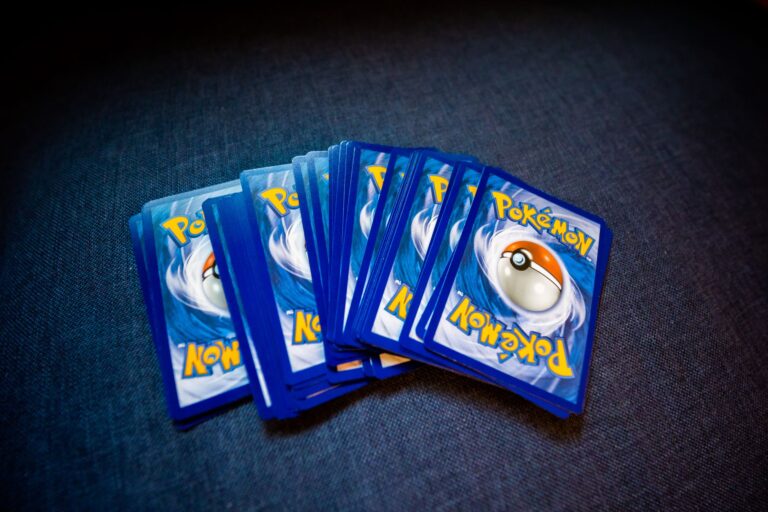
Yes, Pokémon cards will almost certainly remain valuable after millennials age out of the hobby, but the nature of that value will shift. The market isn’t built on a single generation—it’s evolving into a multi-generational ecosystem where Gen X nostalgia meets Gen Z social media culture, and younger players are discovering the game through digital touchpoints like Pokémon TCG Pocket. The $16.4 million sale of a PSA 10 Pikachu Illustrator in February 2026 demonstrates that collector-grade cards have transcended generational trends and entered the realm of alternative assets, similar to fine art or vintage collectibles. What matters isn’t whether millennials stick around, but whether demand remains robust enough to sustain the market’s infrastructure.
The evidence suggests it will. The Pokémon card market is projected to grow from $52.1 billion in 2026 to $90.2 billion by 2034, representing a steady 7.1% compound annual growth rate. This expansion isn’t being driven by nostalgic millennials alone—it’s being fueled by Gen Z players engaging through social media platforms like TikTok and YouTube, returning players drawn to the Mega Evolution mechanics that appeal to X&Y-era collectors, and a flood of new players entering through digital games that convert to physical card purchases. The market has fundamentally matured beyond a single demographic dependency.
Table of Contents
- WHAT HAPPENS WHEN A GENERATION AGES OUT OF COLLECTING?
- THE MARKET TRANSITION FROM SPECULATION TO COLLECTOR FOCUS
- GEN Z IS ALREADY GENERATING THE NEXT VALUE CYCLE
- PRACTICAL VALUE PRESERVATION ACROSS GENERATIONAL SHIFTS
- THE RISKS TO VALUE IF THE PLAYER BASE ACTUALLY SHRINKS
- DIGITAL-TO-PHYSICAL CONVERSION AS A VALUE DRIVER
- THE LONG-TERM MARKET MATURATION OUTLOOK
- Conclusion
- Frequently Asked Questions
WHAT HAPPENS WHEN A GENERATION AGES OUT OF COLLECTING?
Generational shifts in collecting have happened before, and they rarely destroy markets—they transform them. Comic books survived the decline of the Silver Age, baseball cards outlasted the original card-collecting generation, and vinyl records proved that generational attachment to media formats can persist or even rebound. The difference with Pokémon cards is timing and access. Millennials may eventually age out, but by then, Gen Z collectors will be in their 40s and 50s, holding substantial wealth and established collecting habits.
The data confirms this overlap: Target reported a 70% increase in Q2 trading card sales driven by Pokémon in 2026, with expectations of $1 billion in annual revenue, suggesting the market is growing faster than any single generation could be leaving it. The reintroduction of Mega Evolution mechanics represents a specific example of how the game stays relevant across generational lines. Players who enjoyed the X&Y era (2013-2016) are returning as adults with disposable income, creating demand for both contemporary products and nostalgia-tinged releases. This isn’t just millennials buying back into their childhood—it’s older Gen X players and younger millennial parents introducing the game to children, creating a three-generational collector base. The January 2026 price surge (46% year-over-year) and record-breaking sales counts over 1,000 units per pack type indicate the market is stronger now than it has been, despite being well past the initial millennial nostalgia wave.

THE MARKET TRANSITION FROM SPECULATION TO COLLECTOR FOCUS
A critical shift has already happened in the Pokémon card market that changes the value equation after millennials age out. The market has transitioned from speculation-driven to collector-focused, with speculators leaving the ecosystem and professionals entering it. This is actually a healthy development. Speculators create artificial bubbles and volatility; collectors create stable, long-term demand floors. When speculators exited during past market corrections, they created a purification event—prices dropped, but the cards in hands of genuine collectors held relatively steady value.
This structural change matters because it insulates future value from generational demographics. A collector buying a psa 10 Charizard Base Set 1st Edition for $550,000 in late 2025 isn’t counting on future millennials to drive value—they’re banking on the permanent scarcity of the card, the competitive depth of the game itself, and the existence of wealth-holding collectors across multiple generations. The warning here is important: raw vintage cards will always hold more value than modern packs opened for speculation. If you’re holding unopened booster boxes from 2020-2024 that you bought for investment purposes rather than actual collecting, there’s risk that value won’t scale as predicted. But graded, first-edition, or mechanically significant cards? Those operate in a different market.
GEN Z IS ALREADY GENERATING THE NEXT VALUE CYCLE
Don’t assume Gen Z will abandon Pokémon cards when millennials decline. Gen Z is actively driving demand right now through “pull culture”—the social media phenomenon of filming yourself opening packs and sharing rare pulls on TikTok, Instagram, and YouTube. This generation came of age with digital entertainment fully integrated into their social lives, so they view physical card pulls as both collectibles and content. Pokémon TCG Pocket, the digital game released recently, generated $1.25 billion in its first year—and a significant portion of that engagement is converting directly into physical card purchases. This creates a demand engine that’s actually more durable than millennial nostalgia.
Millennials bought Pokémon cards because they remembered the games and TV show from childhood. Gen Z is buying Pokémon cards because their peers are doing it, it’s happening in real-time on social media, and there’s both collecting appeal and social currency involved. The game mechanics are stronger than they were during the original trading card game launch, and the competitive scene has matured significantly. A 16-year-old Gen Z collector in 2026 will likely still be engaged with Pokémon in some form in 2040—as a 30-year-old with higher income and more selective collecting habits. Their demand floor may actually be higher than the millennial generation’s because it’s rooted in social engagement, not just nostalgia.

PRACTICAL VALUE PRESERVATION ACROSS GENERATIONAL SHIFTS
The strategic approach to maintaining card value doesn’t change with generational demographics—it changes with grading, condition, and scarcity. A PSA 10 1999 Base Set Charizard maintains value because there are only a finite number of cards that grade that high, regardless of who’s collecting them. January 2026 data showed booster pack and starter box sales at their highest average count, yet specific graded cards continued climbing. This suggests the market is bifurcating: mass-market product has commodity risk (it appeals to speculators and casual buyers), while graded vintage cards and limited printings have collector resilience. The trade-off to understand: modern cards opened today have downside risk because supply can expand if Pokémon prints more.
Vintage cards from Base Set through the early 2000s have built-in scarcity because many were opened, played, and damaged. The investment case for future value relies on scarcity preservation, not demographic momentum. If you’re buying 2026 booster boxes hoping they’ll appreciate 10x in 15 years, generational shifts matter—you’re betting on sustained demand. If you’re acquiring graded 1999-2005 cards in PSA 9 or 10 condition, demographic shifts are nearly irrelevant. You’re buying a finite asset that won’t be printed again.
THE RISKS TO VALUE IF THE PLAYER BASE ACTUALLY SHRINKS
There are legitimate downside scenarios worth acknowledging. If Pokémon releases a major rules update that alienates the competitive player base, or if a new trading card game emerges and fragments collector attention, the demand foundation could weaken. This happened partially with the Pokémon Trading Card Game itself during the 2000s when it faded after the original craze. However, the current structural environment is different: the competitive circuit is international and well-organized, the design team appears competent at balancing the game, and the parallel engagement through digital platforms creates multiple entry points. Another specific risk involves condition grading standards.
If PSA or Beckett change their grading criteria in future years (they have done this before), it could revalue large portions of collections. A card graded PSA 9 today might grade differently under revised standards, affecting its marketability. Additionally, authentication and counterfeiting risks will increase as card values climb—the $16.4 million Pikachu Illustrator sale demonstrates that high-value cards attract forgers. Collectors after millennials age out will need to be more sophisticated about third-party grading and provenance tracking. The implication: raw ungraded cards have more demographic-dependent value, while professionally graded cards in a consistent system will hold value longer.

DIGITAL-TO-PHYSICAL CONVERSION AS A VALUE DRIVER
The emergence of Pokémon TCG Pocket generating $1.25 billion annually creates a new mechanism for generating future demand independent of millennial nostalgia. Every player who discovers Pokémon through the digital game has a potential conversion pathway to physical collecting. Young players in Asia, Latin America, and other regions where Pokémon was less dominant culturally now have accessible entry points through digital play. When these players turn 18-25 with spending power, they may transition into physical collecting.
This is a bottom-up demand generation mechanism that doesn’t depend on aging millennials—it depends on expanding the player base. This also affects what cards will be valuable. Cards with competitive relevance or that represent milestone moments in digital-to-physical conversion cycles will outperform pure nostalgia plays. A card that was prominent in TCG Pocket or in a recent World Championship has cross-generational appeal beyond “I remember this from my childhood.” The Mega Evolution reintroduction worked because it bridged digital and physical nostalgia, appealing to both X&Y-era players and current competitive players simultaneously.
THE LONG-TERM MARKET MATURATION OUTLOOK
The trajectory from now through 2034 (when the market is projected to reach $90.2 billion) tells a clear story: the Pokémon card market is consolidating around core value drivers rather than speculative excitement. The 7.1% compound annual growth rate is substantial but measured—it’s not a bubble trajectory, it’s a mature collectibles market trajectory, similar to comic books or sports cards at their mature phases. This stability actually supports value retention across generational transitions. Markets that grow too fast on speculative momentum tend to crash hard when sentiment shifts.
Markets that grow steadily based on genuine collecting behavior and expanding player bases tend to retain value. The forward-looking insight: by the time millennials have significantly aged out of the hobby (2030s-2040s), the market will have already incorporated multiple generations of collectors as permanent participants. Today’s Gen Z collector of 2026 will be 30-35 years old in 2040, possibly with children of their own, potentially becoming a parent collector introducing the game to a fourth generational wave. Pokémon cards will have evolved from a millennial nostalgia asset to a genuinely multi-generational collecting category, more similar to baseball cards or comic books in structure. That shift from demographic dependent to structurally diverse is what enables values to persist.
Conclusion
The answer to whether Pokémon cards will remain valuable after millennials are gone is yes, with an important caveat: value persistence depends on which cards you hold and what assumptions you’ve made. Graded vintage cards with built-in scarcity (1999-2005 Base Set and related sets in PSA 9-10 condition) are highly likely to maintain or appreciate in value because their scarcity is permanent and their appeal transcends any single generation. Mass-market modern booster boxes and unsealed products have more demographic risk because their value depends on sustained demand from new generations of collectors. The market fundamentals are strong: growth projections to $90.2 billion by 2034, cross-generational demand drivers (Mega Evolution for X&Y players, Gen Z social media culture, digital game conversions), and a transition away from speculation toward collector-focused accumulation.
What matters most isn’t your favorite generation’s participation—it’s the structural integrity of the market and the scarcity profile of the specific cards you own. If you’re collecting graded vintage Pokémon cards, demographic shifts are almost irrelevant to your value case. If you’re speculating on 2023-2026 booster boxes, you’re making a demographic bet that future generations will want what you’re holding. The Pokémon card market has matured enough that the latter strategy is considerably riskier than the former, regardless of which generation ends up holding the cards.
Frequently Asked Questions
Will Pokémon cards lose value when millennials stop collecting?
Unlikely, if the underlying market structure remains strong. The market is already transitioning from millennial-driven nostalgia to multi-generational participation, with Gen Z representing 20-30% of current demand and expected to grow. The key risk applies to speculative modern products, not to graded vintage cards with built-in scarcity.
Which Pokémon cards are most likely to hold value long-term?
Graded vintage cards from 1999-2005 (especially Base Set, Jungle, Fossil) in PSA 8 or higher condition have the strongest value retention because supply is permanently limited. Competitive-format cards with mechanical significance also hold value better than pure novelty cards. Mass-market modern booster boxes have the most demographic-dependent risk.
Is it too late to start collecting Pokémon cards as an investment?
That depends on your time horizon and risk tolerance. Graded vintage cards are already expensive but have proven scarcity and value stability. Modern products offer lower entry costs but higher speculation risk. For long-term holds (15+ years), vintage is lower risk; for shorter-term trading, modern products have more upside volatility.
Will new Pokémon games or rule changes damage the card market?
Potentially, if changes alienate the competitive base or fracture player communities. However, the market has diversified enough (competitive play, casual collecting, investment collectors, digital integration) that a single misstep by The Pokémon Company is unlikely to crater the entire market. The bigger risk is market fragmentation if a competitor emerges.
How does Pokémon TCG Pocket affect physical card values?
Positively, in most cases. TCG Pocket generates new players and engagement that converts to physical card purchases. Cards featured prominently in digital play or that bridge digital-to-physical relevance tend to outperform pure nostalgia cards. This creates demand independent of aging millennial collectors.
Should I buy unopened booster boxes as a long-term investment?
Only if you believe demand from Gen Z and younger players will remain strong. Unopened products are more speculative because The Pokémon Company can increase supply in future years. Graded individual cards with permanent scarcity (1st Edition Base Set, rare artisan variations, championship promos) offer more certainty of value retention over 10+ year periods.