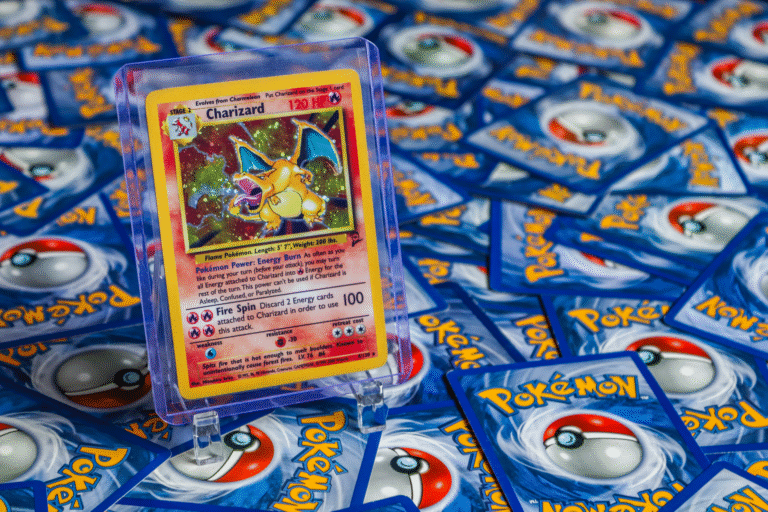
If a Pokémon card seller won’t negotiate, your best recourse is to walk away and find the card elsewhere. The power in any transaction ultimately rests with the buyer—if you won’t pay the asking price, there’s no deal, and no amount of persuasion will change a seller’s mind if they’ve decided their price is final. This is particularly true in 2026’s Pokémon card market, where the massive price corrections from the 2021-2022 boom mean some sellers are still adjusting to new market realities.
For example, if you encounter a seller asking $450 for Team Rocket’s Mewtwo ex when current market data shows it trading at $376+, a firm “no negotiation” response often signals they’re either unwilling to accept current valuations or have already priced their inventory at their lowest acceptable point. The good news is that refusing to negotiate with one seller doesn’t mean you can’t find better deals elsewhere. With card show attendance up 25% in 2025 and multiple online platforms offering different pricing dynamics, you have options. Rather than spend energy trying to convince an intransigent seller to budge, your time is better spent researching comparable prices across TCGPlayer, eBay sold listings, and local venues, then deciding whether to buy at that seller’s price or move on.
Table of Contents
- When Should You Accept That a Seller Won’t Negotiate?
- Understanding the 2026 Pokémon Card Market Context
- Using Market Data to Inform Your Response
- Finding Better Deals on Other Platforms
- The Risks and Limitations of Limited Negotiation
- High-Value Cards and Extreme Price Variance
- The Future of Pokémon Card Pricing and Negotiation
- Conclusion
- Frequently Asked Questions
When Should You Accept That a Seller Won’t Negotiate?
Some sellers build their pricing strategy around a firm, non-negotiable model. This is legitimate business practice—they’ve done their market research, set their margins, and simply won’t entertain lower offers. Recognizing when you’re dealing with this type of seller saves you time and frustration. Look for signs: they have a high feedback rating or established reputation, their listing explicitly states “firm price” or “no offers,” or they respond to your initial inquiry with a polite but definitive decline without any counter-offer discussion.
The hard truth is that many sellers, regardless of how you approach them, won’t negotiate because they’ve already priced competitively or are testing the market for the highest possible price point. Walking away isn’t failure—it’s sound decision-making. You retain all your purchasing power by simply not buying. This dynamic is especially true for cards that have recovered value after the 2026 market crash; sellers who held inventory through the corrections are often more confident in their pricing.

Understanding the 2026 Pokémon Card Market Context
To negotiate effectively, you need to understand what you’re actually negotiating against: the 2026 market landscape. pokémon cards have dropped 20-40% in value since the 2021-2022 market peak, which is critical context for any price discussion. Special illustration rares from recent sets have settled at 40-60% of their peak release-day prices as the market found its actual equilibrium rather than continuing to trade on speculation and hype. This means a seller asking near-peak prices is either out of touch with current valuations or is specifically targeting uninformed buyers.
The market’s correction has also shifted power dynamics. With more supply available at realistic prices and 25% higher card show attendance in 2025, buyers have real alternatives. A seller who won’t negotiate on an overpriced card is essentially betting that you don’t know what the card is actually worth. The Logan Paul Pikachu Illustrator auction reaching $6.3 million in March 2026 grabbed headlines, but that extreme outlier doesn’t reflect the market for standard vintage or modern cards—and using that example to justify premium pricing is a red flag that the seller may be misrepresenting value.
Using Market Data to Inform Your Response
Before you even approach a seller about negotiation, arm yourself with specific price data from multiple authoritative sources. Back up any counter-offer with quotes from three sources: PSA’s official price guide, eBay’s “Sold” listings filtered for the last 10-15 actual sales of that exact card and condition, and TCGPlayer’s recent sale history for the same card. When you have this data, you’re no longer making an emotional or arbitrary ask—you’re presenting factual market evidence.
For example, if you find that Cynthia’s Garchomp ex is priced at $299 by a seller but recent sold comps on eBay average $237, you have concrete justification to offer $225. A seller who still refuses after seeing this data has made a conscious decision to hold at their price, likely because they believe their card’s condition justifies the premium or they’re willing to wait for a buyer who won’t do their homework. This is where the negotiation ends, and your decision to buy elsewhere should begin.

Finding Better Deals on Other Platforms
The 2026 Pokémon card market spans multiple platforms, each with different fee structures, negotiation possibilities, and price points. TCGPlayer is ideal for competitive pricing since the platform charges lower fees than eBay, which means more sellers on TCGPlayer price aggressively to move volume. If a seller on eBay won’t budge, there’s a solid chance you’ll find the same card cheaper on TCGPlayer. Facebook Marketplace and private collector groups offer the added advantage of no platform fees and direct seller negotiation, though they carry higher scam risk—you’ll need to verify condition claims carefully and ideally arrange in-person meetups.
The practical approach is algorithmic: once a seller refuses to negotiate, immediately search that card across at least two other platforms before deciding whether their price is actually competitive. You’ll often find the same card listed by multiple sellers at different price points. Even a difference of $20-30 on a $200+ card justifies switching to a more negotiation-friendly seller or platform. The abundance of venues means your time is wasted trying to convince one seller when another might already have their price where you want to buy.
The Risks and Limitations of Limited Negotiation
Not all sellers are equally reasonable or honest about condition. Some refuse to negotiate because they’ve genuinely underpriced their cards and realize it too late; others refuse because they’re testing whether they can sell overgraded or misrepresented cards to uninformed buyers. When you encounter a seller who won’t negotiate, consider whether their refusal might be defensive—they know the card doesn’t match their condition claim, or they’re aware their price is above market.
This is a limitation of text-based negotiations: you can’t always see the card in hand before committing. At card shows, which have seen 25% attendance growth in 2025, you have the advantage of in-person inspection before negotiating. A seller’s refusal to negotiate may carry different weight when you can physically examine the card’s centering, corners, and print quality. Online, that same refusal is easier to dismiss—move to a seller willing to engage and provide detailed photos or condition ratings from a third-party grading service.

High-Value Cards and Extreme Price Variance
The market for rare, vintage, and exceptionally graded cards behaves differently than the market for standard modern cards. A seller of a PSA 10 Base Set Charizard or similar iconic card operates in a different market tier where scarcity genuinely limits alternatives. If that seller won’t negotiate, you may have fewer options because there simply aren’t multiple copies available across all platforms.
The Logan Paul Pikachu Illustrator sale demonstrates how unique cards can command prices with no real negotiating room because true comps don’t exist. For everyday modern cards and standard vintage, refusal to negotiate is often a negotiating tactic rather than a necessity. But for genuinely rare cards where you’re comparing against a single sold comparable from 2024, a seller’s firm price may be the only price point you’ll find. Understanding which tier your desired card occupies changes your strategy—you may need to either accept the price or accept going without that particular card.
The Future of Pokémon Card Pricing and Negotiation
As the Pokémon card market matures beyond the 2021-2022 speculation bubble, pricing is becoming more standardized and transparent. With multiple online platforms offering price tracking and real-time market data, sellers have fewer places to hide overpriced inventory. A seller who refuses to negotiate in 2026 is increasingly betting against the market’s informational efficiency.
Buyers have access to more data than ever, which means sellers who want to move product will need to either negotiate or accept longer inventory holding times. The continued growth in card show attendance suggests the market values in-person negotiation and inspection, which may become the primary venue where serious negotiation happens. A seller firm on price online might face real pressure to be more flexible at a show where buyers have immediate alternatives and can walk to another table. For collectors, this means your negotiation options expand beyond digital platforms if you’re willing to travel.
Conclusion
When a Pokémon card seller won’t negotiate, you haven’t lost—you’ve simply learned that seller isn’t your customer relationship. Your power as a buyer lies in exercising choice: if one seller’s price and rigidity don’t work for you, another seller almost certainly will. The 2026 Pokémon card market has corrected from the 2021-2022 peak, meaning plenty of inventory exists at realistic prices across multiple platforms.
Rather than invest effort trying to persuade an unmovable seller, invest that effort in researching actual market comps and finding a seller who either prices reasonably or is willing to negotiate. The key is approaching any negotiation armed with data—PSA guides, eBay sold listings, and TCGPlayer history give you the factual foundation to make your case. But if a seller still won’t budge after seeing market evidence, accept their decision and move on. Your time, sanity, and money are all better spent elsewhere in a market with more options than ever before.
Frequently Asked Questions
Should I try negotiating with a seller who explicitly states “firm price” in their listing?
No. Respect that statement and move on. Your energy is better spent finding a seller willing to negotiate or accepting that you’ll pay the asking price. Negotiating against someone’s explicit refusal wastes both parties’ time.
How do I know if a seller’s price is actually too high?
Cross-reference the card against at least three sources: PSA’s price guide, eBay’s recent “Sold” listings for that exact card and condition, and TCGPlayer’s current market data. If the seller’s price is 15% or more above the average of these sources, it’s likely overpriced.
Is there a difference between refusing to negotiate online versus at a card show?
Yes. At card shows, you have the advantage of in-person inspection, which can justify premium pricing if the card’s condition is exceptional. Online, a seller’s refusal is easier to dismiss since you’re trusting their condition assessment without independent verification.
What if the card is extremely rare and I can only find it from one seller?
Then you’re negotiating against scarcity, not market conditions. That seller has leverage. Your choice is to pay their price, wait for another copy to appear (which might take months or years), or find a substitute card.
Should I message a seller multiple times if they’ve already declined negotiation?
No. One firm decline is your answer. Persistence will either result in them blocking you or repeating “no.” Accept their decision and search elsewhere.
How has the 2026 market correction changed negotiating power?
The 20-40% drop in card values since 2021-2022 means sellers who are still confident in their pricing have usually already accounted for current market conditions. If they won’t negotiate, they likely don’t believe their price is too high relative to current demand.