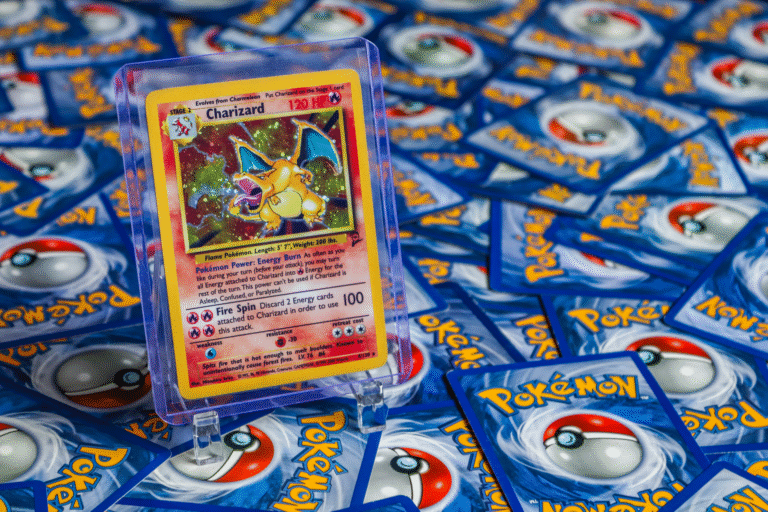
A reverse holo Koraidon card dropping from a PSA 9.5 grade to a PSA 5 represents a loss of approximately 2 to 5 times its value, though the exact figure depends on the set, release date, and current market conditions. For example, if a PSA 9.5 reverse holo Koraidon from a modern set is valued at $150 to $200, the same card graded at PSA 5 would likely sell for $30 to $60. The critical factor here is that a PSA 5—a card showing visible wear, creasing, and corner damage—falls into the lower grading range where premiums largely disappear for modern Pokémon cards.
The gap between a near-mint 9.5 and a heavily played PSA 5 is not just about aesthetics. High grades command exponential premiums, with the jump between grades near the top of the scale worth significantly more per point than drops at the lower end. However, for modern cards like Koraidon reverse holos, a PSA 5 typically doesn’t justify the cost of grading at all, meaning your card would likely be worth only marginally more than an ungraded copy in similar condition.
Table of Contents
- Why Does Grading Grade Drop Matter More for Modern Pokémon Cards?
- Understanding the Exponential Price Curve for High-Grade Modern Cards
- The Role of Card Edition, Set, and Specific Variant
- When Should You Keep a Koraidon at PSA 9.5 Versus Accept a Lower Grade?
- The Hidden Cost of Grading a Card That Will Decline in Grade
- Comparing Your Koraidon to Its Ungraded Counterpart
- The Future of Modern Pokémon Card Grading and Value Stability
- Conclusion
Why Does Grading Grade Drop Matter More for Modern Pokémon Cards?
Modern Pokémon cards have fundamentally different value drivers compared to vintage cards. A psa 9.5 represents the elite tier—a card that will never be played with and shows virtually no wear, with perfect centering and unblemished surfaces. This condition alone makes a modern reverse holo Koraidon collectible and investment-worthy. Drop that same card to a PSA 5, and you’re looking at a card that was clearly used, with visible creasing, discoloration, and edge wear that any collector can spot without a grade label. The harsh reality is that grading costs between $20 and $100 depending on turnaround time.
For a PSA 5 modern card, this expense will never be recovered in resale value. A raw ungraded Koraidon reverse holo in played condition and a PSA 5 graded version of the same card will sell for nearly identical prices on the secondary market, meaning you’ve paid to grade a card that doesn’t command a premium for that grade. The PSA 9.5 category, by contrast, creates measurable value. Collectors specifically hunt for that grade because it’s rare and represents genuine preservation. The 4.5-point drop from 9.5 to 5 crosses from the “collectible and premium” zone into the “collectible but common” zone.

Understanding the Exponential Price Curve for High-Grade Modern Cards
Pokémon card grading premiums don’t operate on a linear scale. The difference between a PSA 9 and a PSA 9.5 might represent a 30 to 50 percent price increase, while the difference between a PSA 7 and a PSA 5 might only be 10 to 15 percent. This exponential curve means the top grades create disproportionate value. A PSA 9.5 can add a 5 to 10 times multiplier to an ungraded modern card’s base price, while a PSA 5 typically adds nothing or even subtracts value by making the card’s flaws permanent and documented.
One limitation to understand: this pricing structure assumes the card itself has inherent demand. Koraidon reverse holos from the Scarlet and Violet sets do have collector interest, but they’re modern cards produced in large quantities. The law of supply and demand means that high-grade examples command premiums while lower-grade modern cards flood the market. A PSA 5 Koraidon reverse holo might be one of thousands available at any given time, while a PSA 9.5 might be one of dozens. That scarcity difference translates directly into price disparity.
The Role of Card Edition, Set, and Specific Variant
Not all Koraidon reverse holos are created equal in the grading value equation. A reverse holo from the base Scarlet and Violet set will have different baseline demand than one from a later expansion. The edition number—first edition versus unlimited—matters far more for vintage cards but still carries some weight for modern releases.
For a 9.5 to 5 drop, these factors become less relevant because both grades lose the premium. However, they do affect the raw dollar amount at stake. For instance, if you’re dealing with a first-edition or otherwise scarce Koraidon variant, the PSA 9.5 premium might be larger in absolute terms, meaning the loss from a drop to PSA 5 is more dramatic in dollar figures. A $400 PSA 9.5 card might drop to $80, while a more common variant dropping from $150 to $40 tells the same grading story at a different price point.

When Should You Keep a Koraidon at PSA 9.5 Versus Accept a Lower Grade?
The decision to hold or sell depends entirely on whether you believe the card will appreciate. A PSA 9.5 Koraidon reverse holo is an investment position—you’re betting that demand increases or that scarcity of high-grade copies drives premium growth. If you believe this is likely, holding is sensible. However, if you anticipate needing to sell within the next two to three years, the exponential depreciation risk becomes real.
A card that drops from 9.5 to 8.5 through storage damage or handling might lose 30 to 50 percent of its value, while the same drop from PSA 6 to 5.5 affects the price barely at all. The tradeoff involves risk tolerance. Modern cards carry inherent reprinting risk, shifting collector preferences, and market saturation that vintage cards don’t face to the same degree. A PSA 9.5 from a hyped release might be worth $200 today but could be worth $80 in five years if the market cools. A PSA 5 carries far less downside because it’s already priced close to its intrinsic value as a playable or low-tier collectible.
The Hidden Cost of Grading a Card That Will Decline in Grade
One of the most overlooked aspects of card grading is that a PSA 9.5 Koraidon reverse holo you own today might not stay at that grade. Cards degrade over time through minor handling, environmental exposure, or storage issues. If your 9.5 slips to a 9 or 8.5, you lose significant value but still have a valuable card. If it drops to a 5, 6, or 7, you’ve experienced catastrophic value destruction.
This risk is entirely real for cards in your collection and underappreciated by collectors who believe their slabbed cards are frozen in time. The warning here is clear: if you’re holding a graded Koraidon expecting to sell later, understand that any card can degrade unexpectedly. A PSA 5 that stays a PSA 5 represents stable holding value, while a PSA 9.5 that degrades represents permanent loss. For modern cards where grading costs and premiums are already marginal, this degradation risk becomes a genuine concern.

Comparing Your Koraidon to Its Ungraded Counterpart
An ungraded Koraidon reverse holo in near-mint condition can sell for 70 to 85 percent of what a PSA 9 sells for, despite lacking the authentication and grade guarantee. This means the premium for submitting a modern card to grading is surprisingly small unless you hit the elite grades.
A PSA 9.5 commands sufficient premium to justify grading costs, while a PSA 5 does not. The specific example here matters: if you own an ungraded Koraidon reverse holo in played condition, sending it to PSA might cost $50 and return you a PSA 5 that adds zero resale value. You’ve paid $50 for authentication on a card worth $50, gaining nothing.
The Future of Modern Pokémon Card Grading and Value Stability
The modern Pokémon card market continues to mature, and grading practices may shift as the novelty fades. High-grade modern cards remain collectible, but the explosive premium growth of 2020 and 2021 has moderated significantly.
This suggests that a PSA 9.5 Koraidon might retain collector interest long-term, while a PSA 5 will gradually become less interesting to buyers seeking either investment pieces or playable cards. The practical implication is that holding premium grades becomes more important over time, not less. A 4.5-point drop from 9.5 to 5 might be worth $100 or $200 today but could represent an even more dramatic percentage loss if overall market values adjust downward.
Conclusion
A reverse holo Koraidon card dropping from a PSA 9.5 to a PSA 5 loses between 60 to 80 percent of its value, translating to a 2 to 5 times price reduction depending on the specific card and market conditions at the time of sale. This loss is driven by the exponential nature of grading premiums in modern Pokémon cards, where high grades create disproportionate value while lower grades add virtually nothing. The key insight is that a PSA 5 modern card barely justifies the cost of grading itself, placing it functionally at the same value tier as an ungraded card in similar condition.
For collectors and investors, this reality highlights the importance of preserving high-grade modern cards and understanding that grading is meaningful only at the elite end of the scale. If you own a 9.5, protect it. If you’re considering grading a modern card that won’t achieve at least a PSA 8 or 9, the math doesn’t work. Use resources like the price guide, Sports Card Investor, and PokeData to check specific grade breakdowns for your Koraidon variant before making grading decisions.