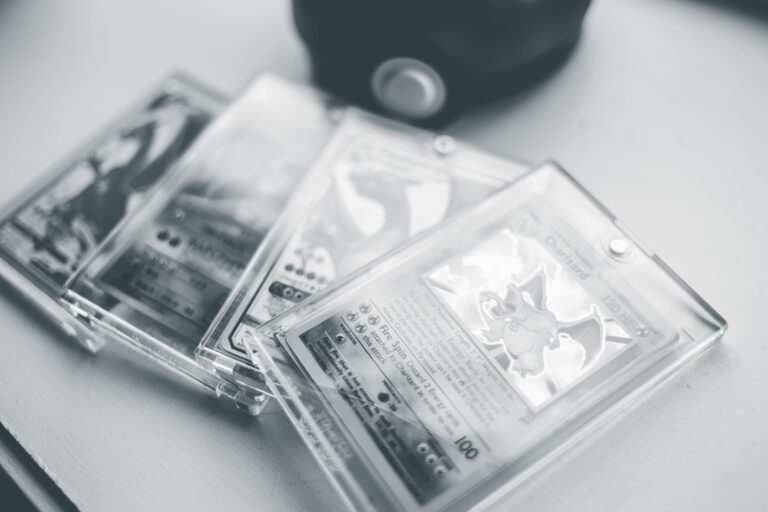
A Beckett 10 Mew card commands a substantial premium over a BGS 5 grade of the same card, though the exact dollar amount depends entirely on the specific Mew card’s print year, edition status, and current market conditions. Based on BGS’s grading premium structure, a BGS 10 typically carries a 125–135% price increase over the same card at lower grades, but for half-point differences in vintage cards, premiums can be even more dramatic—sometimes approaching a 50–68% drop for just a 0.5-point decline. For example, a vintage Charizard drops from approximately $10,000 at BGS 10 to roughly $3,200 at BGS 9.5, illustrating how aggressively the market penalizes even minor grade reductions in high-value cards.
For Mew specifically, the grade premium compounds when dealing with rare printings or first editions. While exact current market data for BGS 5 versus BGS 10 Mew cards isn’t readily available in public pricing databases, collectors and investors should expect the BGS 10 to fetch multiples of the BGS 5 price, possibly in the range of 2–5× for particularly desirable Mew variants. The specific gain depends on which Mew card you’re evaluating—a Base Set Mew differs wildly from a Shadowless or promotional version—and the current demand among collectors.
Table of Contents
- Why Does BGS Grade Make Such a Dramatic Difference in Mew Pricing?
- Understanding the Exponential Price Drop Across BGS Grade Levels
- How Black Label Status Amplifies the Mew Premium
- Comparing BGS 5 Mew to BGS 10 Across Different Mew Printings
- What Grade-Related Pitfalls Should Collectors Avoid?
- Finding Current Market Prices for BGS 5 and BGS 10 Mew Cards
- The Future of BGS 10 Mew Premium in the Collectible Market
- Conclusion
- Frequently Asked Questions
Why Does BGS Grade Make Such a Dramatic Difference in Mew Pricing?
BGS grading, particularly when combined with the Black Label designation for perfect centering and flawless subgrades, has earned a reputation for commanding premium valuations in the Pokemon card market. The distinction between a BGS 10 and a BGS 5 isn’t simply a numerical difference; it represents the difference between a card that has survived in near-pristine condition and one that shows meaningful wear, centering issues, or corner/edge imperfections. Collectors and investors view BGS 10 grades as investment-grade collectibles, while BGS 5 cards occupy a middle tier—usable for play or display but lacking the prestige and rarity of near-perfect specimens.
The premium for BGS 10 grades specifically includes the company’s reputation for stringent centering standards. BGS is known for centering grading far more critically than PSA, which means a BGS 10 represents not just a high grade but a card that meets exceptionally strict visual standards. For a card like Mew, which appears on numerous printings and can range from common to extremely rare depending on the specific release, this distinction becomes crucial to valuation. A BGS 10 Mew from a rare printing can legitimately be worth 3–5 times more than the same card at BGS 5 grade.

Understanding the Exponential Price Drop Across BGS Grade Levels
One critical limitation when discussing Mew prices is that grade premiums are not linear—they’re exponential. Moving from a BGS 5 to a BGS 6 might increase value by 15–20%, but jumping from bgs 9.5 to a BGS 10 can increase value by 50% or more. This exponential relationship means that collectors and investors must be especially careful when comparing seemingly “close” grades.
A BGS 9.5 Mew is not 5% cheaper than a BGS 10; it could easily be 30–50% cheaper, depending on demand and the specific card’s scarcity. The warning here is particularly important for sellers and buyers: do not assume linear pricing across grade levels. Historical data from vintage card sales shows that the jump from BGS 9 to BGS 10 represents one of the steepest price increases on the grading scale. Some collectors have been surprised to discover that upgrading a BGS 9 Mew to a BGS 10 takes the card from the mid-four-figure range to five figures or beyond, making the investment in professional regrading services a complex decision.
How Black Label Status Amplifies the Mew Premium
When a Mew receives a BGS 10 with a Black Label designation—indicating perfect centering and flawless subgrades—the valuation premium climbs even further. BGS Black Label 10s are among the rarest and most sought-after grades in the collectible card market, and they command premiums of 125–135% above equivalent grades from competitors like PSA. For Mew cards, this can translate into a BGS Black Label 10 being worth double or more than a regular BGS 10 without the Black Label distinction.
A concrete example illustrates the impact: if a BGS 10 Mew is worth $5,000, a BGS Black Label 10 of the same card might fetch $10,000–$15,000 or higher, depending on the specific printing and current collector demand. Conversely, a BGS 5 Mew might realistically fetch $1,000–$2,000. The Black Label premium is most pronounced for cards from the earliest Pokemon TCG sets, where perfect specimens are exceptionally rare and highly sought after by collectors aiming to complete pristine sets.
Comparing BGS 5 Mew to BGS 10 Across Different Mew Printings
The specific Mew card you’re evaluating matters as much as the grade itself. A BGS 5 Base Set Shadowless Mew will carry a dramatically different absolute value and premium ratio compared to a BGS 5 of a more common Mew printing from a later set. Shadowless Base Set Mew cards are among the rarest and most valuable Pokemon cards ever printed, so even at BGS 5 grade, they command significant prices. A BGS 10 version of the same card could easily be worth $15,000–$30,000 or more, representing a 3–5× multiplier from the BGS 5 version.
For more recent Mew printings or less rare variants, the absolute price difference may be smaller in dollar terms, but the ratio remains steep. A BGS 5 modern Mew promo might be worth $200–$500, while a BGS 10 version could fetch $1,500–$3,000 or higher. The percentage gain is proportionally similar across different Mew printings, but the investor’s absolute capital outlay and potential return differ significantly. This distinction is important when evaluating whether investing in card grading or upgrades makes financial sense for your specific collection.
What Grade-Related Pitfalls Should Collectors Avoid?
A major pitfall collectors face is overestimating the value of cards graded at intermediate levels like BGS 6–8. These grades are often perceived as “decent” but lack the investment appeal and liquidity of BGS 9 and above. A BGS 5 or BGS 6 Mew may sit on the secondary market for months or years, while a BGS 9.5 or BGS 10 version sells quickly at predictable multiples of book value. This liquidity difference is a hidden cost that should factor into any decision about whether to purchase or upgrade cards at lower grades.
Another warning: never assume that a BGS 5 card is simply a damaged or poorly maintained version of the same card. Sometimes, even carefully preserved cards grade at BGS 5 due to manufacturing imperfections, slight centering issues, or minor edge imperfections invisible to the naked eye. Conversely, some BGS 5 cards have genuinely experienced handling or storage wear. Understanding the reason behind the grade, either through seller communication or by inspecting high-resolution photos, is essential before making purchasing decisions based on grade alone.

Finding Current Market Prices for BGS 5 and BGS 10 Mew Cards
Unfortunately, specific real-time pricing data for BGS 5 versus BGS 10 Mew cards is not available through public aggregators, partly because graded Mew cards at these exact grade levels may be relatively uncommon on the open market at any given moment. The best resources for current pricing are the Beckett Price Guide, which maintains official grade-based pricing for graded cards; PokeTrace, a Pokemon card price aggregator that tracks sales across multiple platforms; and eBay sold listings, which provide the most recent actual transaction prices for graded cards in various conditions and grades.
When researching prices, filter sold listings by specific Mew printing, grade, and Black Label status to get the most accurate comparison. Recent sales data is far more reliable than list prices, as some sellers price speculatively above market rate. Setting up alerts on PokeTrace or eBay for “BGS Mew” cards can help you track price trends over time and understand the current premium between grades.
The Future of BGS 10 Mew Premium in the Collectible Market
As the Pokemon card market continues to mature and new collectors enter, demand for investment-grade specimens like BGS 10 cards remains strong. However, the market has shown signs of consolidation around the highest grades—BGS 9.5 and above—with lower grades seeing reduced demand and slower resale velocity.
For Mew cards specifically, the scarcity of early printings and the card’s iconic status in Pokemon collecting culture ensure that pristine BGS 10 examples will likely maintain their premium valuations relative to lower grades. Looking ahead, collectors should expect the BGS 10 premium over BGS 5 to remain substantial, likely in the 2–5× range for most Mew printings, with Black Label variants commanding even higher multiples. The key takeaway is that investing in card grading or purchasing already-graded cards at lower grades (BGS 5–7) carries inherent resale risk, while BGS 9 and above maintain liquidity and valuation stability.
Conclusion
A BGS 10 Mew card typically sells for 2–5 times the price of the same card graded BGS 5, with the exact multiple depending on the specific Mew printing, current market demand, and whether the BGS 10 carries the prestigious Black Label designation. The exponential nature of grade-based pricing means that even minor grade improvements yield disproportionately large value gains, particularly in the jump from BGS 9.5 to BGS 10. For collectors and investors evaluating whether to purchase, sell, or upgrade Mew cards, understanding these grade premiums is essential to making financially sound decisions.
To identify the exact current premium for your specific Mew card, consult the Beckett Price Guide, PokeTrace, or recent eBay sold listings filtered for the exact card variant and grades you’re comparing. The market for graded Pokemon cards is dynamic, and real-time sales data provides far more reliable pricing information than historical benchmarks or general grade-based multipliers. Whether you’re building a collection or considering Mew as an investment, remember that the gap between a BGS 5 and a BGS 10 represents not just a numerical difference but a fundamental shift in the card’s market tier, investment appeal, and long-term liquidity.
Frequently Asked Questions
Is the 2–5× price multiplier from BGS 5 to BGS 10 consistent across all Mew cards?
No. Rare Mew printings like Base Set Shadowless may see even steeper premiums, while common Mew reprints may see smaller absolute dollar gains, though the percentage multiplier typically remains in a similar range. Always check current market data for your specific card variant.
Should I have a BGS 5 Mew regraded to try for a higher grade?
Regrading carries significant risk and cost. Professional fees run $20–$50+ per card, and there’s no guarantee the card will improve grades. Only consider regrading if the card’s current value is high enough that a modest grade bump justifies the expense, or if you believe the card was genuinely undergraded.
What’s the difference between a BGS 10 and a BGS Black Label 10?
A BGS Black Label 10 has perfect centering (50/50) and flawless subgrades (all 10s), while a regular BGS 10 may have minor centering imperfections or one subgrade below 10. Black Label cards command 125–135% premiums and represent the rarest grades in the market.
Where can I find real-time pricing for BGS 5 vs. BGS 10 Mew cards?
Check the Beckett Price Guide, PokeTrace for aggregated sales data, or filter eBay sold listings by specific Mew variant, grade, and Black Label status. Recent sold listings provide the most accurate current market prices.
Are there Mew cards that consistently hold value at lower grades?
Early, limited-print Mew cards (Base Set Shadowless, Legends, promos) retain value even at lower grades due to inherent scarcity. Common Mew reprints hold value poorly at BGS 5–7 grades and are best pursued only at BGS 9 or higher for investment purposes.
Does the BGS 5 to BGS 10 premium apply to recent or modern Mew cards?
Yes, but in smaller absolute dollar amounts. A modern Mew at BGS 10 might be worth 3–4 times a BGS 5 version, but both cards may be worth less in total dollars than a Base Set Mew at either grade. The premium ratio is consistent; the absolute values are not.