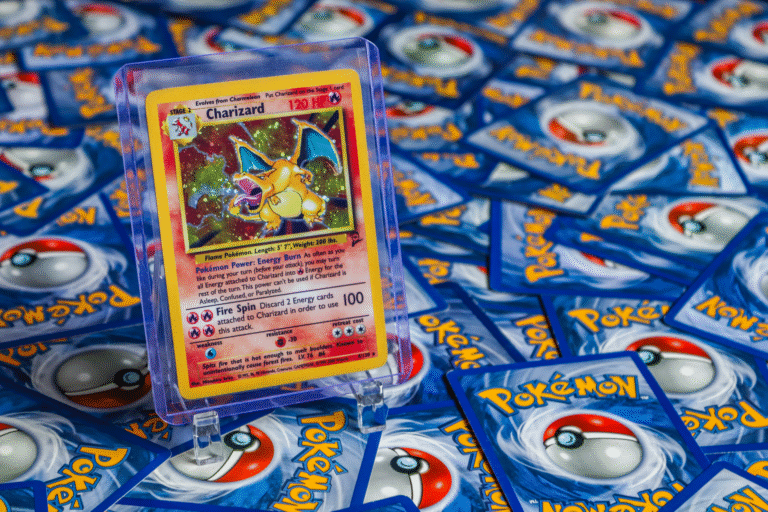
The Pokémon Company has weaponized scarcity. Limited merchandise releases—from the Pokémon Day 2026 Collection to 30th Anniversary special editions—have become the primary driver of retail strategy, not a byproduct of supply constraints. This shift from “we make what we can” to “we release what generates urgency” stems from a fundamental market reality: demand for Pokémon products has outpaced even maximum production capacity. With 10 billion trading cards printed between March 2025 and March 2026 still unable to meet demand, and printing facilities not scheduled to expand until late 2028, the Pokémon Company has strategically embraced limited releases as the mechanism to control retail flow, maximize margins, and drive foot traffic to stores during specific events.
The strategy works because the math is undeniable. The US Pokémon retail market surged 87 percent from 2024 to 2025, making it the most popular franchise in the toy industry. Search interest for Pokémon trading cards peaked at a volume of 88 in December 2025, while merchandise searches reached 20. When supply cannot meet demand, retailers and manufacturers have two choices: raise prices uniformly or create artificial scarcity windows that reset demand cycles. The Pokémon Company chose the latter, transforming product availability into an event-driven experience that keeps collectors returning to stores throughout the year.
Table of Contents
- Why Manufactured Scarcity Became Necessary in a Booming Market
- The Premium Pricing Window and Sales Velocity
- International Championships and Exclusive Retail Merchandise
- Ascended Heroes and the Return of Limited Expansion Sets
- Scalpers, Purchase Limits, and the Enforcement Problem
- The Pokémon Company’s Direct Control Through Excell Brands Acquisition
- The Future of Limited Releases Through 2028 and Beyond
- Conclusion
Why Manufactured Scarcity Became Necessary in a Booming Market
The pokémon Company’s printing partner, Millennium Print Group, has been running at maximum output capacity since early 2025. Despite this, the company chose not to wait for new production facilities—one won’t be operational until the end of 2028 at the earliest. Instead of signaling that supply would eventually normalize, the company accelerated its limited-release strategy, recognizing that the structural supply deficit would persist for at least three more years. This means scarcity is not temporary; it is baked into the business model through 2028.
The decision reflects a calculated trade-off. A uniform price increase across all Pokémon products would optimize revenue per unit but would damage the franchise’s mass-market accessibility and invite competitor scrutiny. Limited releases, by contrast, create the perception of fairness—anyone can queue for a product at launch—while creating psychological value through urgency. The January 30, 2026 Pokémon Day 2026 Collection rollout across Target, Walmart, Best Buy, GameStop, and the Pokémon Center demonstrated this approach: simultaneous availability across multiple retailers created a retail event that drove store traffic and online engagement without explicitly raising prices, at least initially.

The Premium Pricing Window and Sales Velocity
Limited-edition Pokémon products maintain premium pricing for 60 to 90 days after release, a window that corresponds directly to the period before market saturation and secondary market flooding. The data is stark: 65 to 80 percent of total unit sales for limited releases occur within the first 21 days. After three weeks, demand drops sharply, and retailers begin discounting. After 60 to 90 days, the product typically plateaus at or below the original retail price as secondary market supply increases.
This window is not accidental. The Pokémon Company has engineered product availability to create a concentrated demand surge followed by a predictable decline. The 30th anniversary merchandise line exemplifies this: items including Nintendo Switch Fire Red and Leaf Green software and collectible glass Poké Ball objects carried strict one-per-person purchase limits, ensuring that no single buyer could hoard stock and that supply would stretch across more consumers and transactions. However, this also meant that determined scalpers could still purchase multiples by visiting multiple stores or using associates, turning a fairness measure into a vulnerability.
International Championships and Exclusive Retail Merchandise
The 2026 International Championships illustrated how The Pokémon Company extends the limited-release strategy beyond trading cards into experiential retail. Exclusive merchandise available only at the event—including playmats, deck boxes, pins, shirts, hats, and a plush Pikachu card holder—created a secondary market for items that had zero online availability. Collectors and players who attended the championship had access to products that others could only obtain through resale, amplifying the perceived value of event attendance and generating social media engagement as the secondary market for these items developed.
This approach differs from traditional exclusivity. Rather than making certain products available only to VIP members or high-spenders, the Pokémon Company uses event attendance as the scarcity mechanism. This strategy serves dual purposes: it drives real-world engagement with the brand and creates authentic exclusivity that secondary market participants cannot replicate, because new stock cannot be manufactured. The limitation is that it favors wealthy collectors and those geographically near major events, creating disparities in access that the one-per-person limits for standard releases attempt to address elsewhere in the product line.

Ascended Heroes and the Return of Limited Expansion Sets
The Ascended Heroes release marked the first Mega Evolution trading card set since 2016, making it a natural candidate for limited-release event strategy. Rather than a standard rollout with standard availability, the product was released as part of a phased availability plan, with different retailers and markets receiving stock on different dates. This staggered approach extended the demand cycle and prevented the typical 21-day sell-through cliff. Collectors face a strategic choice with this model.
Purchasing during the initial release window guarantees product availability but often at premium pricing if demand exceeds initial stock. Waiting three to four weeks typically brings price decreases but risks complete sell-outs at major retailers, forcing choices between secondary market purchases at markup or missing the set entirely. The tradeoff is that early buyers pay scarcity premiums while late buyers risk non-availability entirely. For serious collectors seeking value, the optimal window is typically 30 to 45 days post-launch, when initial scarcity has eased but stock remains reasonably available.
Scalpers, Purchase Limits, and the Enforcement Problem
GameStop implemented purchase limits on Pokémon trading card products starting May 30, 2025, specifically to combat scalper monopolization of inventory. The limit restricts how many units a single customer can purchase in one transaction, a response to the reality that coordinated groups of scalpers had been clearing shelves of limited products within hours of release. However, purchase limits are notoriously difficult to enforce. Scalpers simply return multiple times, visit multiple locations, or use family members and employees to circumvent per-transaction restrictions. The deeper issue is that the limited-release model creates the incentive for scalping in the first place.
When 65 to 80 percent of demand hits within 21 days and premium pricing persists for 60 to 90 days, the profit margins for resellers become substantial. A collector purchasing a limited set at retail and reselling it for a 20 to 40 percent markup weeks later is engaging in the exact behavior the Pokémon Company’s pricing window enables. Enforcement against scalpers is thus fundamentally inconsistent with the company’s own pricing strategy. The lesson for collectors is that purchase limits are speed bumps, not barriers. Secondary market availability is a built-in feature of limited releases, not a bug.

The Pokémon Company’s Direct Control Through Excell Brands Acquisition
In February 2026, the Pokémon Company International acquired Excell Brands, its largest US distributor. This acquisition shifted the company’s relationship with retailers from licensing-based distribution to direct “category management” control. Rather than relying on independent distributors to manage inventory and decide on allocation, the Pokémon Company now has direct input into how much stock reaches each retailer, when it arrives, and in some cases, how it is displayed and priced.
This change amplifies the limited-release strategy’s effectiveness. The Pokémon Company can now ensure that inventory spikes align precisely with retail events, that tier-one retailers receive stock allocations that drive competition and urgency, and that the premium pricing window is maintained across the retail ecosystem rather than undermined by retailers offering early discounts. For collectors, this means less price variation between retailers and less ability to find deals by shopping around during the initial weeks after a limited release. The centralization of distribution control makes the Pokémon Company’s event-driven strategy more cohesive but reduces the competitive pressure that typically brings prices down faster.
The Future of Limited Releases Through 2028 and Beyond
The structural supply deficit guaranteed through 2028 ensures that limited-release strategy will remain the default for Pokémon merchandise. New production capacity arriving in late 2028 will likely shift the company’s approach, but the years between now and then are locked into the current model. Collectors and investors should anticipate that every major Pokémon release through 2027 and into 2028 will follow the familiar pattern: narrow launch window, 60 to 90-day premium pricing period, secondary market oversupply, and price normalization.
The question for 2029 onward is whether the Pokémon Company will abandon limited releases once supply catches up to demand, or whether the strategy has become so profitable and ingrained in retail relationships that it persists as an operational choice rather than a necessity. Historical precedent from other collectibles suggests that successful scarcity-based strategies rarely disappear entirely; they simply become less frequent. Collectors planning long-term purchases should treat limited releases as temporary pricing premiums rather than permanent value stores, and diversify purchases across multiple release cycles rather than betting on single event drops.
Conclusion
Limited Pokémon merchandise became a retail event strategy because maximum production capacity collided with explosive demand growth, forcing the Pokémon Company to choose between uniform price increases and strategic scarcity. The company chose scarcity, engineering release windows, purchase limits, and exclusive event merchandise to create cyclical urgency rather than sustained availability. The strategy has proven effective: retail surges, secondary markets develop instantly, and foot traffic concentrates during launch periods. However, this model also enables and encourages scalping, creates fairness concerns through allocation disparities, and prices out casual collectors during premium windows.
Understanding the mechanics of limited releases—the 21-day sales concentration, the 60 to 90-day pricing window, the secondary market inevitability—allows collectors to make informed purchasing decisions. For value-conscious buyers, waiting 30 to 45 days after launch typically offers the best balance between availability and price. For completionists and speculators, early purchases carry premium costs but guarantee access. Regardless of strategy, recognition that scarcity is managed, not accidental, reframes how collectors approach the market through 2028 and beyond.