Yes, developers are actively experimenting with gameplay across multiple fronts in 2025-2026. Rather than following established formulas, studios are testing AI-powered dynamic NPCs that respond to player choices in real-time, blending traditionally separate genres into hybrid mechanics, and reimagining how games deliver experiences through cloud infrastructure and immersive technology. For example, some developers are exploring genre fusion by combining action-RPGs with roguelike mechanics or integrating card-based progression systems into shooters—creating gameplay that didn’t exist just a few years ago.
These experiments aren’t confined to a single area. Studios are simultaneously working on procedurally generated levels powered by generative AI, testing cloud-native shooters that run on low-spec devices, designing VR games built from the ground up for immersive play rather than adapted from traditional controls, and exploring tokenized in-game economies using blockchain. This article covers the major gameplay experimentation areas reshaping game development, what they mean for players, and the limitations developers are discovering along the way.
Table of Contents
- What Gameplay Experiments Are Developers Testing Right Now?
- Procedural Design and AI-Powered Level Generation
- Genre Fusion and Hybrid Gameplay Mechanics
- Cloud-Native Gaming and Remote Processing
- VR/AR Experiences Built From the Ground Up
- Blockchain Economies and Tokenized In-Game Assets
- What These Experiments Mean for Gaming’s Future
- Conclusion
What Gameplay Experiments Are Developers Testing Right Now?
Game developers are pursuing at least six distinct gameplay experimentation areas simultaneously. The most prominent involves AI-driven NPCs that adapt in real-time—NPCs that remember prior interactions with players, make dynamic decisions based on player choices, and allow game worlds to respond contextually rather than following predetermined branching paths. Procedural level design has moved beyond simple randomization; generative AI systems now create full quest structures and NPC encounters procedurally, meaning no two playthroughs are identical in design intent, not just implementation details. Genre fusion represents another major push.
Rather than staying within established categories, developers are combining action-RPGs with roguelike mechanics, survival games with base-building systems, and shooters with card-based progression. This creates hybrid experiences that leverage gameplay strengths from multiple genres. Cloud-native gaming, spearheaded by companies like NVIDIA and Xbox, is enabling shooters that run on low-spec devices through remote processing—an example being Project 007, releasing in 2026, which is being tested with cloud-native architecture. The common thread across these experiments is removing constraints. Developers are asking: What becomes possible if NPCs remember? What if levels generate themselves? What if VR games weren’t adapted from mouse-and-keyboard designs? These questions are driving experiments that will likely influence mainstream game design for years.

Procedural Design and AI-Powered Level Generation
Generative AI has moved from a research curiosity to a practical tool in some studios’ workflows. Instead of level designers manually crafting every encounter, procedural systems can generate dynamic quests and NPC interactions that adapt based on player history. However, there’s a significant caveat: procedural generation excels at creating variation but often struggles with narrative coherence and emotional pacing—systems that generate encounters randomly may create moments of brilliant design or jarring disconnects depending on how well the underlying rules are written. One limitation developers are encountering is player agency versus system expectations. When NPCs remember prior interactions and respond dynamically, players expect that memory to be consistent and meaningful.
If a system creates procedural quests without understanding the broader narrative context, generated content can feel disconnected from the world’s logic. This is why studios experimenting with this tech are focusing on systems that generate within guardrails—rule-based proceduralism rather than pure randomness. The advantage is scalability. A team that might spend months building hand-crafted content can iterate on AI-generated variants and curate the best results, dramatically accelerating content creation. But this requires significant upfront investment in the procedural systems themselves, making it more viable for well-funded studios than indie developers.
Genre Fusion and Hybrid Gameplay Mechanics
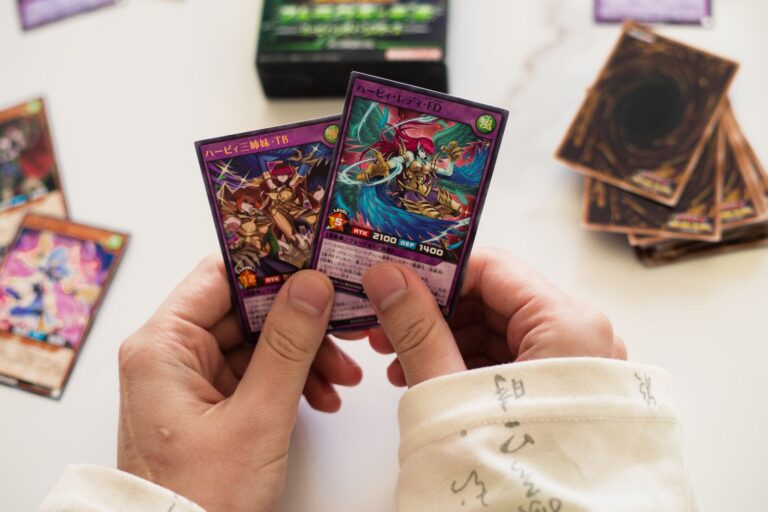
Developers are abandoning genre purity. Traditional game categories—action-RPG, roguelike, survival, shooter, card game—are now building blocks in hybrid systems. Combining action-RPGs with roguelike mechanics creates games where character progression carries across runs but permadeath still applies. Integrating card-based progression into shooters means players build decks alongside acquiring weapons. These combinations work because each genre has solved specific design problems, and mixing solutions creates novel challenges for players to master. An important caveat: hybrid mechanics can overwhelm players if systems don’t integrate cleanly.
A shooter that bolts on card mechanics without making them feel essential often creates confusion rather than depth. Successful hybrids require that each component genuinely informs the other—card effects should modify shooting mechanics in meaningful ways, not exist in parallel. This is why experimentation is necessary; not every combination works, and studios are learning which mergers create emergent gameplay versus which feel forced. The advantage for players is novelty and extended engagement. A roguelike survival game with base-building creates reasons to return across multiple runs, as building systems reward long-term planning while permadeath encourages risk-taking. Developers are finding that carefully blended mechanics extend play time and create richer decision-making frameworks than single-genre approaches.

Cloud-Native Gaming and Remote Processing
NVIDIA and Xbox are testing cloud-native shooters where rendering and processing happen remotely, with players controlling the game on low-spec devices via internet connection. Project 007, releasing in 2026, represents a significant real-world example of this approach entering mainstream releases. This technology removes hardware barriers—players on older devices or lower-end systems can access graphically intensive games previously unavailable to them. However, cloud gaming introduces a tradeoff that doesn’t exist with local processing: latency. Even with excellent internet, remote rendering introduces measurable delays between input and visual feedback. For games requiring split-second precision—competitive shooters, fighting games, rhythm games—cloud delivery can create responsiveness issues that local hardware eliminates.
This is why cloud-native architecture works better for strategy games, slower-paced shooters, and games where latency tolerance is higher. Developers are discovering that cloud success depends on game design that works with latency constraints, not against them. The practical advantage is accessibility. Players without expensive gaming PCs or consoles suddenly have viable entry points. For studios, cloud deployment potentially extends addressable markets to regions with strong internet but limited gaming hardware penetration. The experimentation happening now is determining which game types thrive in cloud-first architectures versus which remain better suited to local hardware.
VR/AR Experiences Built From the Ground Up
Newer VR hardware is becoming lighter, more affordable, and more capable, but the more significant shift is design philosophy. Rather than adapting traditional games—porting mouse-and-keyboard mechanics to motion controllers—developers are increasingly designing games specifically for immersive environments from day one. This means gameplay that leverages spatial awareness, full-body presence, and hand presence rather than retrofitting controller schemes onto established genres. A key limitation developers are discovering is comfort and accessibility. Not all players can use VR for extended periods due to motion sickness, physical disabilities, or hardware discomfort.
Games designed purely for VR exclude these audiences entirely. Forward-thinking studios are either building alternative play modes or staying aware that VR-first design narrows their potential market. Additionally, the barrier to entry remains higher than traditional gaming—even affordable VR systems require dedicated hardware and space, limiting adoption compared to console or PC gaming. The opportunity lies in experiences that simply can’t exist on traditional platforms. A VR game leveraging full spatial presence and hand tracking can create gameplay fundamentally impossible to translate to a screen and controller. As the installed base of VR players grows, developers are finding increasingly viable audiences for these experiences.

Blockchain Economies and Tokenized In-Game Assets
A subset of developers are experimenting with blockchain integration to enable true digital ownership of in-game assets. NFTs and tokenized systems allow players to trade items outside the game itself, own digital goods independently of any single platform, and potentially profit from in-game activities. This represents a fundamental shift from traditional gaming where items exist only within the game’s closed ecosystem. However, blockchain integration faces skepticism for good reason.
Many NFT-based games have prioritized speculation over gameplay, creating experiences that feel financially exploitative. Developers experimenting genuinely with blockchain economies are learning that technology alone doesn’t create fair systems—intentional game design around tokenomics, inflation control, and player earning fairness is essential. Additionally, blockchain’s environmental impact and regulatory uncertainty create friction that purely cosmetic NFT systems don’t justify. The studios experimenting most seriously are those building actual game experiences first, with blockchain as an optional feature rather than the primary draw.
What These Experiments Mean for Gaming’s Future
The common theme across all these experimentation areas is removing limitations. AI removes the constraint of hand-authored content. Cloud removes the constraint of local hardware. VR removes the constraint of screen-based interaction. Genre fusion removes the constraint of established categories. These experiments collectively suggest gaming will become more personalized, more accessible, and more varied.
The experiments happening in 2025-2026 will shape which approaches become standard practices and which remain niche experiments. Cloud gaming will likely dominate for certain game types while remaining supplementary for others. VR will continue attracting dedicated audiences even if it never becomes the primary gaming platform. AI-driven NPCs may become baseline expectations while procedural generation handles specific content types. Genre fusion will likely continue as a design tool rather than a universal replacement for focused genre experiences. Blockchain integration will stabilize around genuine utility rather than speculative hype.
Conclusion
Developers are actively experimenting with gameplay across AI-driven NPCs, genre fusion, procedural level design, cloud-native architecture, VR/AR experiences, and blockchain economies. These aren’t isolated experiments but simultaneous explorations of different ways to remove traditional game development constraints. Each approach carries tradeoffs—cloud gaming trades responsiveness for accessibility, VR-first design trades market size for unprecedented immersion, blockchain integration trades simplicity for player ownership rights.
The experiments happening right now will determine which approaches become standard practice and which remain specialized options. Staying informed about these gameplay innovations matters because the games you play in the next few years will be shaped by which experiments succeed and which get abandoned. The studio taking risks on AI NPCs today might define how player interaction works tomorrow.