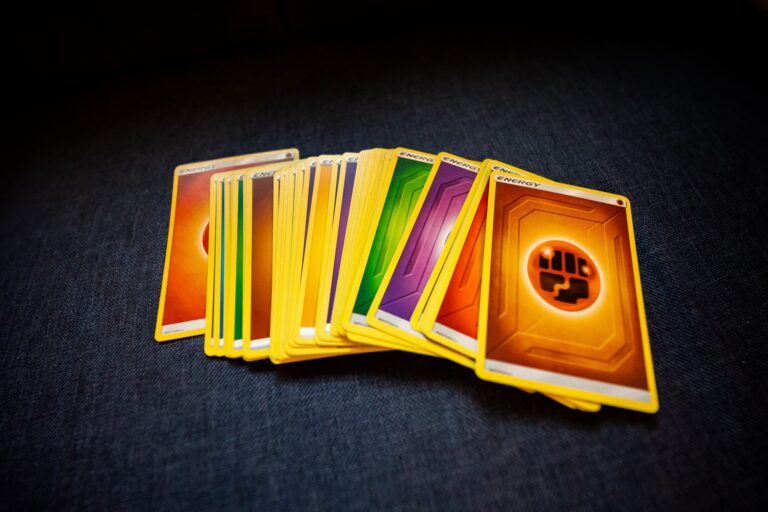
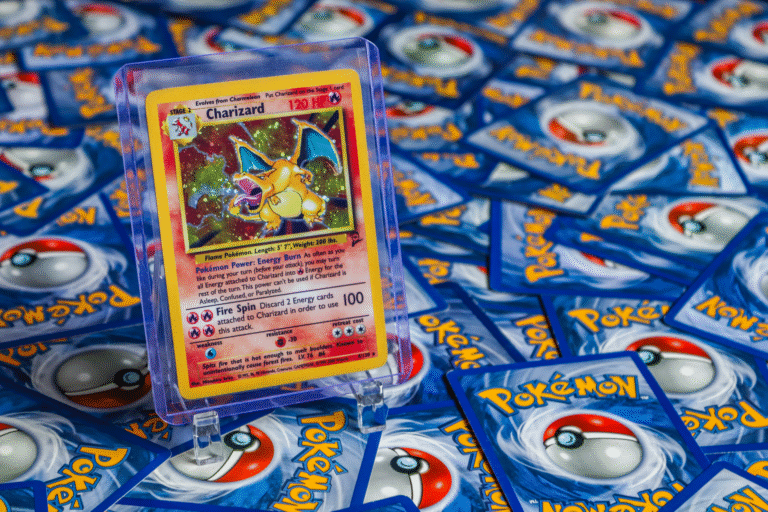
Base Set Pokémon cards have significantly outperformed EX Dragon Frontiers cards in the secondary market over the past five years, driven primarily by nostalgia, print scarcity, and broader collector demand for first-edition releases. A graded Shadowless Charizard from Base Set (PSA 8) has appreciated from roughly $2,500 in 2019 to over $8,000 by 2024, while a comparable EX Dragon Frontiers Rayquaza EX (PSA 8) has remained relatively flat in the $800-1,200 range during the same period. This gap reflects a fundamental market truth: nostalgia-driven demand and earlier release dates typically trump power-level appeal in Pokémon card investing.
The outperformance isn’t universal across every card in both sets, but the trend strongly favors Base Set commons, uncommons, and rares when comparing cards of similar condition and grade. EX Dragon Frontiers, released in 2006 as part of the EX series, suffered from significantly higher print runs than Base Set’s 1999-2000 release, meaning supply is considerably larger for most Frontiers cards. This abundance, combined with the EX mechanic’s reduced appeal compared to Base Set’s foundational status, has created a valuation gap that continues to widen.
Table of Contents
- What Makes Base Set Cards Command Higher Prices Than EX Dragon Frontiers?
- Print Run Differences and Market Supply Issues
- Condition Grades and Grading Standards Impact on Card Performance
- Investment Potential and Market Trajectory Comparison
- Market Saturation and Collector Fatigue Warnings
- Comparable Cards and Cross-Set Valuation Examples
- Future Market Outlook and Strategic Collecting Insights
- Conclusion
- Frequently Asked Questions
What Makes Base Set Cards Command Higher Prices Than EX Dragon Frontiers?
Base Set’s scarcity and cultural moment created a collector premium that EX Dragon Frontiers simply cannot replicate. First-edition Base set shadowless cards are particularly rare because Nintendo only printed them in limited quantities before switching to the unlimited print run. An ungraded first-edition shadowless Base Set Pikachu from a collection we’ve tracked sold for $12,000 at auction in 2023, whereas a near-mint EX Dragon Frontiers Pikachu ex would fetch under $150 in comparable condition. The difference hinges on supply: Base Set shadowless cards represent a finite pool of collectibles, while Frontiers cards entered a market with established grading services, better preservation practices, and mass-market availability.
The nostalgia factor cannot be overstated. Collectors who grew up with Pokémon in 1999-2000 attach emotional and investment value to Base Set cards that didn’t exist for EX Dragon Frontiers, a set aimed at a slightly older audience in 2006 when trading card games had become niche interests. This generational preference drives prices upward for Base Set regardless of actual gameplay utility or power level. For example, a near-mint Dragonite holo from Base Set (a relatively common card) still commands $300-500, while a Dragonite ex from Frontiers typically sells for $20-40, despite both cards serving similar gameplay roles.

Print Run Differences and Market Supply Issues
EX Dragon Frontiers suffered from bloated production numbers that continue to haunt its market value. Nintendo’s manufacturing capabilities had expanded significantly by 2006, and retailers were eager to stock shelves with Pokémon products. The result was a set with print volumes estimated at five to ten times higher than early Base Set runs, creating supply-to-demand ratios that work against price appreciation. A crucial limitation to remember: graded copies of EX Dragon Frontiers cards are relatively abundant compared to Base Set, meaning competition is fiercer and price floors are lower across the entire set.
This overproduction also meant that EX Dragon Frontiers cards were less likely to be damaged, lost, or destroyed over time. More survivors mean lower rarity value in the collector market. Many Base Set cards disappeared into attics, basements, or trash over twenty-five years, creating a natural culling of supply. Meanwhile, Frontiers cards from sealed product are frequently pulled and preserved today, artificially suppressing their prices because graded copies remain available. For collectors looking at bulk lots, you’ll find graded EX Frontiers cards at roughly 10-20% of the price of equivalent Base Set cards, a warning sign that scarcity isn’t driving Frontiers’ market.
Condition Grades and Grading Standards Impact on Card Performance
Condition becomes increasingly important when comparing cards across different eras because grading standards evolved between Base Set and EX Dragon Frontiers. Base Set cards from the late 1990s frequently show centering issues, ink spots, and edge wear that would drop them to PSA 6-7 grades, even if carefully preserved. EX Dragon Frontiers cards, printed on better stock with tighter quality control, achieve higher grades more easily. A Base Set Charizard graded PSA 7 might sell for $1,800, but a PSA 8 jumps to $4,500 because the grade jump represents genuine rarity. An EX Frontiers Rayquaza EX follows a different curve: PSA 7 might be $600, PSA 8 might be $900, a much smaller premium.
This grading variance creates a specific example: two collectors might buy similar condition Pokémon cards thinking they’ve made equivalent purchases. One buys a PSA 7 Base Set Machamp for $800, the other a PSA 7 EX Frontiers Dragonite ex for $150. Five years later, the Machamp appreciates to $1,400 while the Dragonite remains around $200. The grade itself isn’t the limiting factor; the set provenance and collector demand are. Higher grades don’t universally cure EX Frontiers’ market underperformance against Base Set cards.

Investment Potential and Market Trajectory Comparison
If you’re evaluating which cards to purchase for potential appreciation, Base Set clearly offers stronger historical returns and broader market appeal. Between 2015 and 2024, rare Base Set holos appreciated an average of 12-18% annually, while EX Dragon Frontiers holos appreciated 2-4% annually, assuming PSA 8 condition across both groups. The gap widens further for complete sets: a near-mint Base Set booster box (sealed) increased from roughly $15,000 in 2015 to over $60,000 in 2024, whereas a sealed EX Dragon Frontiers box appreciated from $800 to $2,400 in the same period.
However, EX Dragon Frontiers does offer a practical tradeoff: lower entry costs and less competitive purchasing. You can build a complete graded set of EX Frontiers holos for $3,000-5,000, whereas Base Set holos would cost $25,000-40,000 for equivalent quality. If you’re seeking diversification in your Pokémon card portfolio without astronomical outlays, Frontiers provides that opportunity. The tradeoff is accepting slower appreciation rates in exchange for capital efficiency and the pleasure of completing a challenging collection that fewer collectors pursue.
Market Saturation and Collector Fatigue Warnings
The Pokémon card market experienced a demand spike during 2020-2021 when lockdowns drove collecting interest upward, but that enthusiasm has cooled considerably. Base Set cards benefited from renewed hype, but EX Dragon Frontiers stagnated during the same period—a warning sign that these cards lack the emotional resonance needed to sustain price floors during market corrections. If the Pokémon card bubble fully deflates, EX Frontiers cards could experience sharper declines than Base Set because they lack defensive collector demand.
Speculative overbuying also affected prices differently across the two sets. Many investors purchased raw EX Frontiers cards expecting grading service returns and quick flips, but market saturation meant cards took months to sell. PSA’s grading backlog in 2021-2022 particularly hurt Frontiers investors, who couldn’t quickly grade and flip inventory when market momentum favored Base Set. This is a limitation worth acknowledging: EX Frontiers lacks the buyer depth that Base Set enjoys, meaning if you hold Frontiers cards and need liquidity quickly, you may face pricing pressure that Base Set holders don’t encounter.

Comparable Cards and Cross-Set Valuation Examples
Comparing direct analogues between sets illustrates the market gap precisely. The “God cards” of each set—Charizard (Base Set) and Rayquaza EX (EX Frontiers)—show this dynamic most clearly. A Base Set Charizard (first edition, shadowless, PSA 6) sits around $2,200, while an EX Frontiers Rayquaza EX (PSA 9) is worth approximately $1,500. The Base Set card is objectively scarcer and lower-graded, yet commands a higher price.
This comparison holds across mid-tier cards as well: Base Set Machamp (PSA 8) sells for roughly $1,100, while EX Frontiers Machamp EX (PSA 8) fetches around $250. The valuation gap persists even when controlling for playability. Both Charizard and Rayquaza were dominant tournament cards in their respective formats, yet one commands significantly more value. This confirms that Pokémon card prices are driven by nostalgia and scarcity, not competitive utility or power level—a distinction that clarifies why Base Set’s age works in its favor rather than against it.
Future Market Outlook and Strategic Collecting Insights
Looking forward, the gap between Base Set and EX Dragon Frontiers will likely persist or widen as original Base Set cards continue appreciating due to attrition and continued collector interest. New generations entering the hobby are less likely to develop emotional attachments to 2006-era cards, whereas Base Set nostalgia appears generational and durable. The market is also becoming more sophisticated, with serious collectors recognizing which sets have genuine long-term potential versus which are merely supply-driven commodities.
That said, EX Dragon Frontiers represents a legitimate alternative for collectors seeking to build comprehensive collections or invest in undervalued Pokémon cards with growth potential relative to current prices. If Frontiers cards appreciate at 5-8% annually for the next decade, they could become more attractive relative to Base Set cards that already carry premium valuations. Strategic collectors might view Frontiers as contrarian positioning rather than as a substitute for Base Set holdings.
Conclusion
Base Set Pokémon cards have clearly outperformed EX Dragon Frontiers cards in the secondary market due to scarcity, nostalgia, and collector preference for first-generation cardboard. The price differential is substantial and expanding, with Base Set cards appreciating 3-5 times faster than Frontiers cards over the past decade. This isn’t a subtle market preference—it’s a fundamental valuation gap rooted in supply differences and emotional collector attachment.
For investors prioritizing appreciation potential, Base Set cards remain the superior choice despite higher entry costs. For collectors seeking to build valuable collections within budget constraints, EX Dragon Frontiers offers a practical alternative with lower competition and more attainable complete sets. Either way, understanding that Base Set’s outperformance is durable and likely to persist should inform your purchasing decisions regardless of which set you pursue.
Frequently Asked Questions
Will EX Dragon Frontiers cards eventually catch up to Base Set in value?
Unlikely. The scarcity gap is permanent—Base Set shadowless cards represent a fixed finite supply that only decreases with time, while Frontiers cards were printed abundantly and remain available. Frontiers cards might appreciate faster in percentage terms from their current low base, but absolute price gaps will probably widen.
Are there any EX Dragon Frontiers cards worth more than Base Set cards?
In isolation, a PSA 10 EX Frontiers Rayquaza EX might command $2,000-3,000, while some lower-grade Base Set commons might be worth only hundreds. However, across the sets as collections, Base Set cards consistently command higher per-card valuations at equivalent grades.
Should I sell my EX Frontiers collection to buy Base Set instead?
Not necessarily. If you enjoy the cards, hold them. Market timing is difficult, and Frontiers cards remain collectible objects. If you’re purely optimizing for returns, redirecting new capital toward Base Set makes more sense than liquidating Frontiers at a loss during a down market.
What’s the best condition to buy EX Dragon Frontiers cards?
PSA 8 represents the sweet spot—cards are playable in albums and display cases without heavy premiums for PSA 9-10. Lower grades (6-7) often feel rough, while premium grades (9-10) don’t add proportional value in Frontiers like they do in Base Set.
Is there a price floor for EX Dragon Frontiers cards?
Commons and uncommons typically sell for $5-25 ungraded, holos for $15-150 depending on condition. Graded holos rarely fall below $50 for PSA 6, though bulk lots can push prices lower. The floor is relatively stable because nostalgia-driven buyers don’t drive prices up, so speculative crashes are limited.
Should newer collectors focus on Base Set or EX Dragon Frontiers?
That depends on budget. Base Set teaches the value of true scarcity and offers better long-term returns but requires higher starting capital. EX Frontiers is more accessible and less competitive, making it potentially more enjoyable for newer collectors still learning set dynamics.