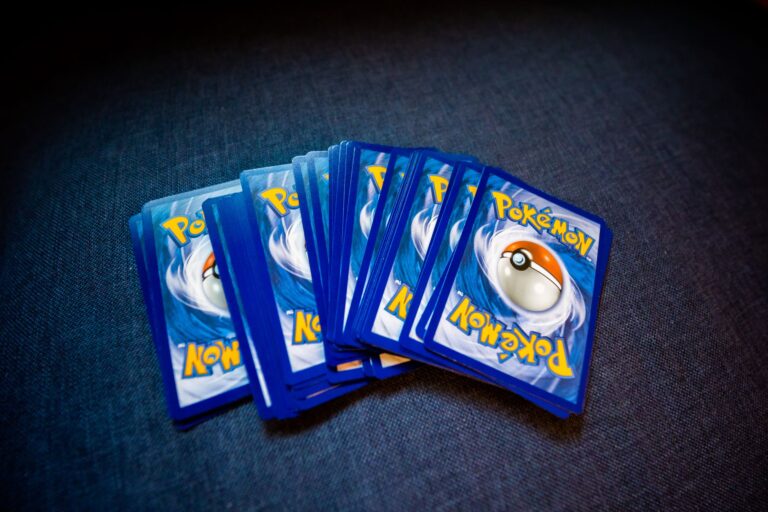
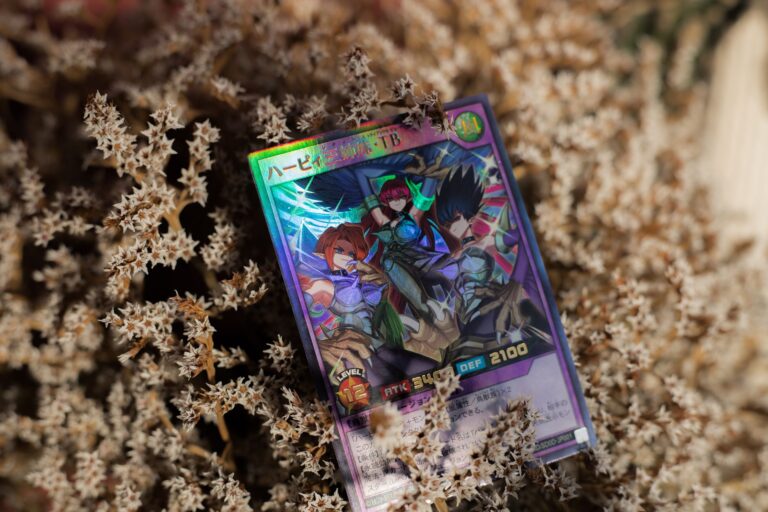
In February 2026, a single Pokémon card shattered every record in the collectibles world. Logan Paul’s Pikachu Illustrator sold for $16,492,000 at Goldin Auctions—more than 65 times the price of a new Mercedes-Benz S-Class and nearly identical to the cost of a complete luxury car collection. This isn’t an outlier. A 1999 Charizard Base Set first edition graded PSA 10 sold for $550,000 in late 2025, and a Neo Genesis Lugia 1st Edition commanded $129,000.
These aren’t fictional numbers or speculative estimates; these are documented auction sales that fundamentally changed how the world views Pokémon cards as investment assets. The reason certain Pokémon cards now rival or exceed luxury vehicle prices comes down to four factors: extreme rarity, condition perfection, historical significance, and massive appreciation. What began as a children’s trading card game in 1996 has evolved into a parallel asset class where the right card can appreciate at rates that dwarf the stock market. This article explores why collectors and investors are paying luxury car prices for cardboard, which cards hold the most value, and what conditions must align for a card to reach these stratospheric prices.
Table of Contents
- What Makes a Pokémon Card Worth More Than a Luxury Car?
- The Hidden Economics Behind Card Price Explosions
- The Role of Condition and Grading in Setting Multimillion-Dollar Prices
- How to Navigate the Pokémon Card Investment Market Practically
- The Risks and Bubble Concerns in Pokémon Card Valuations
- How the Logan Paul Pikachu Illustrator Set New Market Benchmarks
- The Future of Pokémon Card Valuations and Market Evolution
- Conclusion
What Makes a Pokémon Card Worth More Than a Luxury Car?
The answer lies in the convergence of extreme scarcity and condition. The Pikachu Illustrator card exemplifies this perfectly. Only 39 were ever produced—these weren’t sold in packs or printed en masse. They were awards given to winners of a 1998 illustration contest in Japan. Of those 39, only approximately 24 are known to exist today. Of those 24, only one has been graded PSA 10 (the highest possible grade short of PSA 10 gem mint). That single card, in near-perfect condition with no visible wear, sold for $16,492,000 because it represents something that cannot be replicated, purchased, or created again.
Compare this to a luxury car. A $250,000 Ferrari or Mercedes still shares the market with thousands of identical or near-identical vehicles produced that same year. A car can be repaired, restored, and resold. A Pikachu Illustrator in PSA 10 condition cannot. The artwork was created by Atsuko Nishida, the original designer of Pikachu himself, which adds historical and artistic significance that transcends the card’s gameplay function. When rarity reaches these extremes, pricing no longer follows traditional logic. It follows the logic of art markets and historical artifacts, where a single condition-sensitive item can command multimillion-dollar bids from collectors competing for something irreplaceable.

The Hidden Economics Behind Card Price Explosions
The financial returns on Pokémon cards have been staggering compared to traditional investments. Over the past 20 years, certain rare Pokémon cards have appreciated 3,261%—far exceeding the S&P 500’s long-term average of 10-12% annual returns. This means someone who invested $10,000 in the right Charizard or Lugia cards two decades ago could have turned that into over $300,000. However, there’s a critical limitation: these returns only apply to graded, condition-sensitive cards from the first few sets (Base Set, Neo Genesis). A loose, played-with Charizard from 1999 might sell for $500, not $550,000. The broader market shows explosive growth in speculative interest.
Non-sports trading card spending jumped 350% between 2020 and 2025, as retail investors began treating Pokémon cards as an alternative asset class. This spike coincided with supply chain disruptions that made vintage packs harder to open and more expensive, driving scarcity even for common cards. But here’s where investors get burned: not all vintage cards appreciate. Base Set commons still trade for under a dollar each. The returns are concentrated in a specific subset: first editions, shadowless printings, and holographic rares in high grades. If you buy random vintage cards hoping for 3,261% returns, you’ll likely be disappointed.
The Role of Condition and Grading in Setting Multimillion-Dollar Prices
A Pikachu Illustrator worth $16.49 million in PSA 10 condition might be worth $2-3 million in PSA 8 condition, and possibly $500,000 in PSA 7 condition. The difference between a nearly perfect card and one with just slightly more visible wear represents a 90% price collapse. This is why grading services like PSA (Professional Sports Authenticator) and CGC have become gatekeepers to the high-end market. A graded card comes with an independent assessment of condition, authentication, and historical documentation that collectors can trust. The Charizard that sold for $550,000 achieved that price specifically because it was a PSA 10 Base Set first edition holographic—the “holy grail” intersection of set, edition, and condition.
A PSA 9 version of the same card might auction for $150,000-$200,000. The psychological premium for perfection is enormous in collectibles markets. When only one or two examples of a card exist in gem mint condition, that exclusivity justifies exponential price premiums. For collectors considering entry into high-end card investment, this conditioning obsession is both the point and the trap. A card’s value hinges almost entirely on a numerical grade assigned to plastic encasement, making the stakes of storage, handling, and authentication existential.

How to Navigate the Pokémon Card Investment Market Practically
For most collectors, buying a $16 million card isn’t an option. But understanding the investment ladder helps. Entry-level investments might include PSA 7-8 graded Base Set holos ($5,000-$20,000), which have shown steady appreciation and lower risk than ungraded cards or modern releases. Mid-level plays ($50,000-$200,000) might include first-edition Charizards or Blastoise in PSA 8, which have documented sales and price history. High-end collecting ($500,000+) requires significant capital, auction house expertise, and acceptance that liquidity drops dramatically—finding a buyer for a $1 million card takes time.
The critical tradeoff is between rarity and liquidity. The most expensive cards are also the least liquid. Selling that Pikachu Illustrator for $16.49 million required AJ Scaramucci to make an extraordinary bid at Goldin Auctions, and the next comparable sale might not happen for years. A PSA 8 Base Set Charizard, by contrast, has an established market with regular sales, clearer pricing, and faster transaction times. Most serious collectors balance their portfolio with a mix: a few high-value flagship cards (illiquid but prestigious) and multiple mid-tier cards (liquid and appreciating steadily).
The Risks and Bubble Concerns in Pokémon Card Valuations
Not every Pokémon card will maintain its value. The market has shown signs of speculative excess, particularly with first-edition Base Set printings that were produced in millions but graded and flipped based on FOMO (fear of missing out) rather than genuine collector demand. If grading standards tighten or if authentication becomes easier and more widespread, the artificial scarcity premium could collapse. Additionally, the Pikachu Illustrator sale is a publicity-driven outlier—Logan Paul’s involvement, the diamond necklace ceremony, and the auction house marketing all contributed to the record-breaking price. A Pikachu Illustrator of identical grade might fetch $10-12 million in a quieter auction.
Another risk: condition degradation over time. Even cards kept in climate-controlled safes can develop creasing, color loss, or corner wear from handling and storage. A PSA 10 card that degrades to PSA 9 loses 70-80% of its value overnight. This creates a perverse incentive structure where collectors fear handling their own investments, treating cards more like bundles of currency than actual collectibles. The psychological cost of owning a multimillion-dollar card that can’t be looked at closely is substantial. Investors entering the market should assume that high-grade vintage cards require professional-grade climate control, insurance, and vault storage—costs that reduce actual returns over time.

How the Logan Paul Pikachu Illustrator Set New Market Benchmarks
When the Pikachu Illustrator sold for $16,492,000 in February 2026, it didn’t just set a record—it redefined how the entire market values rare Pokémon cards. Prior to this sale, the conversation was dominated by $500,000-$1 million cards. Suddenly, collectors realized that the right card with the right provenance and the right publicity could reach nine figures. The fact that the sold card is the only known PSA 10 graded example added urgency and mystique. It’s not just a rare card; it’s *the* rare card in perfect condition.
This spike created a ripple effect. Other Pikachu Illustrator copies (graded lower) have been re-evaluated upward, with even PSA 8 examples commanding multimillion-dollar valuations now. Auction houses scrambled to authenticate and market their own high-end vintage inventory. The broader market picked up on the momentum, with other first-edition holos seeing increased auction activity and bidding. However, this benchmarking effect is also a warning sign: when a single record-breaking sale becomes the reference point for market pricing, valuations can become untethered from underlying demand and more dependent on speculation.
The Future of Pokémon Card Valuations and Market Evolution
As we move further into 2026, the market will continue to separate high-grade vintage cards from everything else. Supply of near-perfect early-set cards is finite and shrinking as cards move into vault storage rather than circulation. Demand from ultra-high-net-worth collectors and institutional investors appears to be growing, particularly in markets like Asia and the Middle East where Pokémon nostalgia intersects with wealth concentration.
This suggests that the upper tier of the market—$1 million+ cards—may continue appreciating even if lower-tier speculation cools. The bigger question is whether Pokémon card collecting will mature into a stable alternative asset class (like fine art or vintage wine) or remain a speculative bubble vulnerable to cooling interest. The fact that non-sports card spending jumped 350% in five years suggests sustained interest beyond nostalgia, but sustainability depends on whether new high-net-worth collectors continue entering the market faster than early investors exit. For those considering entry into this space in 2026, timing matters less than selection—focusing on documented scarce cards with historical provenance and professional grading will likely outperform speculative plays on modern printings or ungraded vintage lots.
Conclusion
Pokémon cards now trade at luxury car prices because the rarest early-era cards combine finite supply, perfect condition grading, historical and artistic significance, and surging investment demand. The Logan Paul Pikachu Illustrator’s $16,492,000 sale is the most dramatic example, but the $550,000 Charizard and $129,000 Lugia show that the phenomenon extends beyond a single outlier. Investors and collectors who understand rarity hierarchies, grading impact, and market liquidity dynamics can navigate this space profitably.
Those treating every Base Set holofoil as a lottery ticket will likely lose money. If you’re considering entering the Pokémon card investment market, focus on documented scarcity (first editions, shadowless, specific holos), professional grading (PSA, CGC), and realistic price expectations. A PSA 8 Charizard at $15,000 is a more achievable entry point than chasing the next $16 million record sale. Understand that high-end collecting is primarily a passion play with financial returns as a secondary benefit—and that treating cards as financial assets rather than collectible treasures changes how you experience the hobby entirely.