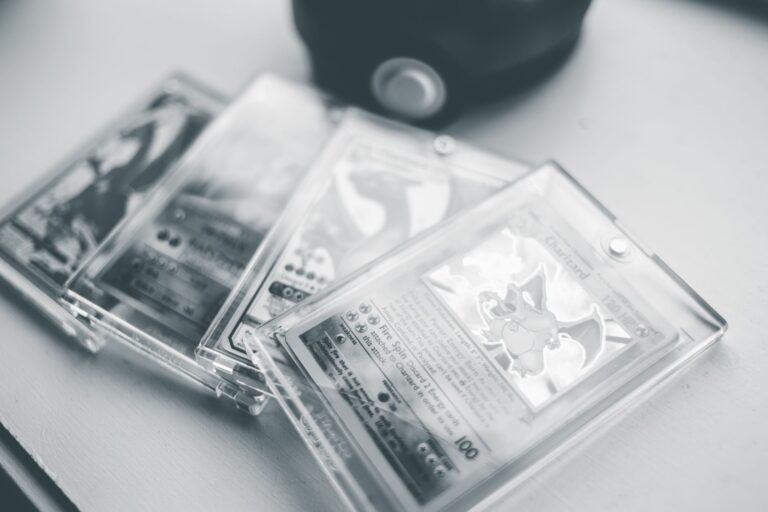
The Burning Shadows Charizard GX commands high prices in today’s secondary market, with perfect-graded Rainbow Rare variants consistently selling for $2,000 or more. However, that premium reflects current demand rather than a guaranteed investment floor. The card’s long-term value remains uncertain because it depends entirely on whether collector interest in this particular Charizard printing sustains over time—a question that becomes harder to answer the further out you project.
This article examines why the card is expensive right now, what factors support those prices, and whether that price tag represents genuine long-term value or a temporary peak driven by nostalgia and scarcity. The story of this card is one of intersection: a set released in August 2017 (Pokémon TCG Sun & Moon – Burning Shadows) that is now completely out of print, featuring one of the most iconic Pokémon ever created, in a collectible format where Charizard commands what collectors call a “Charizard Tax”—a premium purely because of the creature’s legendary status. Understanding the difference between high *current* demand and sustainable long-term value requires looking at what’s actually driving those prices and whether those drivers will still exist in five, ten, or twenty years.
Table of Contents
- What Are Burning Shadows Charizard GX Cards Actually Selling For?
- Why Is a 2017 Card Still Expensive When So Many Others Aren’t?
- The Charizard Tax and Why This Card Commands Premium Prices
- Should You Buy This Card as an Investment?
- The Grade Trap and Why Condition Risk Matters
- Regular Holo vs. Rainbow Rare—A Tale of Two Cards
- The Bigger Picture—Charizard Cards and Market Saturation
- Conclusion
What Are Burning Shadows Charizard GX Cards Actually Selling For?
The Burning Shadows charizard GX exists in two distinct versions with dramatically different market positions. The regular holo card (#20/147) and the Rainbow Rare secret rare version (#150/147) have split the market into two price tiers that can confuse collectors trying to assess value. The Rainbow Rare variant is the one commanding headline prices: perfect-graded PSA 10 copies sell for $2,000 or more, making it one of the more expensive Pokémon cards from that era. Lower grades and ungraded copies trade in the $200–$400 range depending on condition and exact specification. this spread tells you something important about where the real money is concentrated.
You’re not paying mostly for the card’s rarity or historical significance; you’re paying for condition and the prestige of a perfect grading. A mint copy matters enormously. A light play copy or even a well-kept ungraded example might fetch a tenth of the PSA 10 price. This matters for investment because it means the card’s value is extremely sensitive to condition. A careless year in storage, a sleeve mishap, or any cosmetic damage could substantially reduce what you could sell it for.

Why Is a 2017 Card Still Expensive When So Many Others Aren’t?
Burning Shadows was released in August 2017 with 147 cards in the main set and 22 secret rares, and it has been out of print for years. Out-of-print status alone doesn’t guarantee value—thousands of old Pokémon cards are out of print and worthless—but combined with other factors, it matters. The scarcity works in Charizard’s favor because there’s a fixed, finite supply of Rainbow Rare copies in the world. No one is printing new ones. No one can reopen a booster box and pull another copy.
However, the long-term investment potential ultimately depends on sustained collector interest, and that’s where uncertainty enters. Therein lies the tension at the heart of this card’s valuation. Scarcity maintains prices because supply won’t increase. But scarcity alone doesn’t create value; demand does. If Charizard collector enthusiasm shifts five years from now—if another Pokémon becomes the status symbol card, if new competitors enter the collectibles space, if card grading becomes less important to the hobby—then the limited supply of Burning Shadows Rainbow Charizard becomes less relevant to its market price. You could own one of the rarest versions of a Charizard card and still see its value decline if the reasons people want it dry up.
The Charizard Tax and Why This Card Commands Premium Prices
Charizard is not the objectively rarest card from Burning Shadows, nor is it the most powerful in competitive play. What it has is status. Charizard is arguably the most popular pokémon of all time, a creature that appears on merchandise, in spin-off games, and in the cultural memory of everyone who grew up with the original games and anime. That cultural weight translates directly to collector premiums. A Burning Shadows Rainbow Rare of a less iconic Pokémon would sell for a fraction of what this Charizard fetches, even if both cards had identical print runs and rarity.
This “Charizard Tax” is real and measurable, and it’s both a strength and a weakness for long-term value. The strength is that Charizard’s popularity has proven durable for thirty years; there’s no sign it’s about to collapse. The weakness is that the card’s current price reflects a peak moment in collector interest and a specific set of market conditions (limited supply, high grading popularity, active secondary market for vintage cards). That doesn’t mean the price will crash, but it does mean expecting it to climb significantly from current levels is optimistic. You’d essentially be betting that Charizard appreciation outpaces the broader market and the hobby, a harder thesis to defend than “it will stay roughly where it is.”.
Should You Buy This Card as an Investment?
The decision to buy depends on what you mean by investment. If you mean “Will this card be worth more in three years?” the honest answer is: probably roughly the same, possibly a bit more, possibly a bit less. Nobody has a reliable crystal ball. If you mean “Will this card be worth what I paid for it in five years?” history suggests yes, because out-of-print Charizards have held value reasonably well. If you mean “Will this card triple in value in the next decade?” you’re asking a lot of scarcity and nostalgia to compound, which is possible but not the base case. A more practical framing: is the card worth buying for enjoyment and collection purposes, with the understanding that it’s a store of value rather than an appreciation vehicle? For many collectors, the answer is yes.
The card is beautiful, iconic, and rare enough to be special. The $2,000 price tag for a perfect copy might be unavoidable if you want to own one; there are few alternatives. But framing a purchase as “this will make me money” carries more risk. You’d be betting on sustained demand and hoping you can sell when you want to. The earlier you bought (say, in 2019 or 2020), the better your return has likely been. Buying at current highs is different.
The Grade Trap and Why Condition Risk Matters
One dangerous assumption that newer collectors make: that a card graded PSA 10 will always fetch PSA 10 money. In reality, grading authority matters, historical opinion changes, and even a “permanent” grade can trade at discounts if the overall market softens. More importantly, if you own an ungraded copy, getting it graded introduces risk. Grading fees are non-trivial ($20–$100+ depending on turnaround), and there’s always a chance a card you think is gem mint comes back as a 9 instead of a 10. That difference costs thousands of dollars.
This dynamic creates a perverse incentive: if you own a card you’re not certain is perfect, you might skip grading entirely and accept lower prices. If you get it graded and it comes back a 9, you’re stuck holding an asset that sold for $2,000+ at 10 but might move at $1,000–$1,500 at 9. The risk isn’t theoretical; it’s built into the hobby. For the Burning Shadows Rainbow Charizard specifically, the gap between grades is vast. You need to be either confident in your card’s condition or prepared to accept ungraded pricing if you’re uncomfortable with grading risk.

Regular Holo vs. Rainbow Rare—A Tale of Two Cards
The existence of two Burning Shadows Charizard variants often confuses new collectors who see a low price ($15–$50 for a regular holo) and then encounter the Rainbow Rare and wonder why the difference is so extreme. The answer is straightforward: secret rares are printed in much lower quantities, and the Rainbow treatment (a special holographic pattern featuring every color) is one of the most aesthetically striking finishes in the Pokémon TCG. The regular holo is the “normal” version that shipped in booster boxes; the Rainbow Rare was a pull from the same booster boxes but at much rarer odds. The regular holo is a legitimate collectible and a solid card for builders or casual collectors. But if you’re looking at this from a value perspective, the Rainbow Rare is the version that holds price.
A regular holo in near-mint condition might hover in the $20–$50 range depending on the market. The investment conversation is entirely about Rainbow Rares. If you’re considering this card as a value play, that’s the only variant worth your capital. A regular holo is affordable but appreciating slowly, if at all. It’s a different collecting decision.
The Bigger Picture—Charizard Cards and Market Saturation
One detail worth keeping in mind: there are *many* Charizard cards from the Pokémon TCG, spanning dozens of sets and releases. The Burning Shadows Rainbow Rare is rare and premium, but collectors who want a Charizard have options. There are other secret rare Charizards, other special editions, and newer Charizard printings. The value of the Burning Shadows version is partly that it occupies a specific nostalgic moment (Sun & Moon era, before the recent TCG boom) and aesthetic space (the Rainbow Rare treatment). As more vintage Charizards gain collector attention and grading, the relative scarcity of any one version diminishes psychologically, even if it doesn’t mathematically.
Looking forward, the question is whether Burning Shadows Charizard GX remains the premium Charizard or whether newer printings or competing versions dilute its desirability. The card isn’t going anywhere—it will always be a legitimate piece of Pokémon TCG history. But being historically important isn’t the same as being a growth asset. If you’re buying this card, buy it because you want to own it or because you believe Charizard and vintage Pokémon TCG appreciation will remain strong. Don’t buy it expecting to flip it for massive profit in a few years.
Conclusion
The Burning Shadows Charizard GX is genuinely expensive right now, and that price reflects real factors: scarcity from being out of print, Charizard’s legendary cultural status, and the strong collector demand for graded vintage cards. A Rainbow Rare in PSA 10 condition will likely stay in the $2,000+ range for the foreseeable future, and ungraded or lower-grade copies will remain desirable. These are legitimate price floors supported by ongoing collector interest.
However, buying this card as an investment vehicle—betting that its value will significantly appreciate—requires confidence that the factors supporting today’s price will strengthen over time rather than stabilize or weaken. The safer framing is that this card is a store of value and a collectible for people who love Charizard or want to own a piece of early Sun & Moon era history. It’s unlikely to depreciate sharply, but it’s equally unlikely to be a path to outsized returns. Check current prices on the price guide, Pokémon Wizard, and TCGPlayer before making any purchase to understand where the market is trading today, and buy only if the price aligns with your actual collecting goals, not speculative profit expectations.