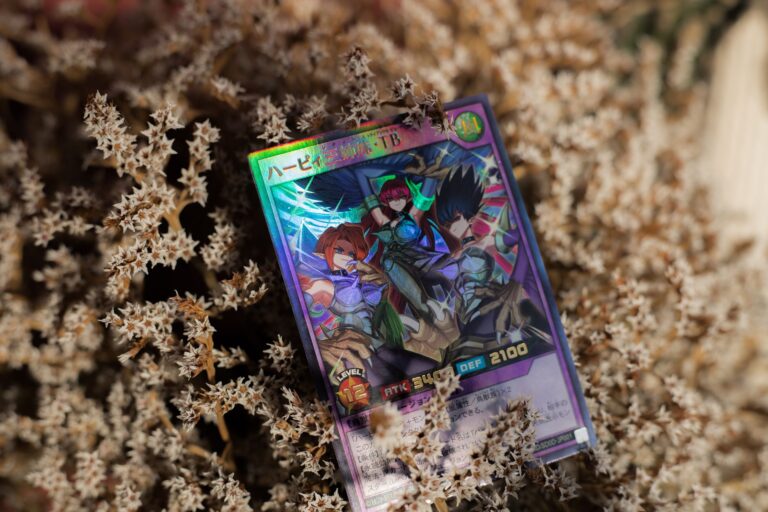
The best Pokémon cards to grade for profit in 2025 are alternate art cards from Evolving Skies, high-demand Charizard variants, and select vintage pulls where the raw-to-graded price multiplier justifies the cost of slabbing. Umbreon VMAX Alt Art from Evolving Skies, often called “Moonbreon,” crossed the $2,000 mark for PSA 10 copies in September 2025. Rayquaza VMAX Alt Art from the same set sells raw for roughly $130 but commands $500 or more in a PSA 10 slab — a clean 4x return.
Charizard VMAX from Shining Fates offers an even steeper multiplier, jumping from about $70 raw in Near Mint condition to $350 and up at PSA 10, a fivefold increase for what amounts to a $20-something grading fee. This article breaks down exactly which cards deliver the strongest grading ROI in both the modern and vintage markets, what grading actually costs across PSA, BGS, and CGC in 2025, when grading is a losing proposition, and how the approaching Pokémon 30th anniversary in 2026 is warping the speculation landscape. If you have cards sitting in top loaders that you suspect might be worth slabbing, this is the math you need before you commit.
Table of Contents
- Which Pokémon Cards Are Most Profitable to Grade in 2025?
- Understanding the Raw-to-Graded Price Multiplier
- Grading Service Costs and How They Affect Your Margins
- How to Decide Which Cards in Your Collection Are Worth Grading
- The PSA 9 Trap and Other Grading Pitfalls
- Vintage Sleepers Worth Grading Before the 30th Anniversary
- What the 2026 Pokémon Anniversary Means for Grading Profit
- Conclusion
- Frequently Asked Questions
Which Pokémon Cards Are Most Profitable to Grade in 2025?
The most profitable cards to grade share two traits: they already carry meaningful raw value (generally $75 or more in near-mint condition) and they belong to sets or feature characters with strong collector demand that inflates the PSA 10 premium. On the modern side, Evolving Skies dominates. Beyond the Umbreon and Rayquaza alt arts, the set’s overall desirability has made it the single most sought-after modern set for grading profit. Special Illustration Rares from recent sets are also performing well — Mega Lucario ex SIR sits around $719 raw with a projected PSA 10 target of roughly $1,078 by mid-2026, representing about 50% ROI. That card has already climbed 25% since September 2025.
Mega Charizard X ex SIR, at approximately $450 raw, is on a 22% monthly surge fueled by what collectors call the “Charizard tax” — the persistent premium that anything bearing the Charizard name commands — combined with anniversary hype, with a projected PSA 10 target around $652. Vintage cards offer even larger multipliers but come with higher entry costs and more grading risk. A raw 1st Edition Base Set Charizard runs about $1,900 right now, but a PSA 10 sold for $16,270 — an 8.5x increase. At the extreme end, a PSA 10 specimen hit $550,000 at Heritage Auctions in late 2025. Only about 124 copies are known to exist in Gem Mint condition, which is why the ceiling keeps rising. For collectors with smaller budgets eyeing the vintage space, the 1996 Bandai Carddass Charizard Prism at roughly $400 raw is projected to reach $560 by Q2 2026, a 40% return driven by 30th anniversary speculation.
Understanding the Raw-to-Graded Price Multiplier
psa 10 graded cards typically sell for two to ten times their raw value. That range is wide for a reason: modern cards tend to fall in the 2x to 5x range because they were printed in larger quantities and more copies survive in mint condition, while vintage cards can hit 5x to 10x or higher because the pool of gradeable copies is small and shrinking. Cards valued above $100 raw see an average value increase of 120% to 300% when they come back as a PSA 10. That is the core math that makes grading worthwhile — when it works. However, if your card comes back as a PSA 9 instead of a 10, the economics shift dramatically.
PSA 9 cards command only 30% to 50% of what a PSA 10 fetches. That single grade point represents a massive financial cliff. A Rayquaza VMAX Alt Art that would sell for $500 as a PSA 10 might move for $150 to $250 as a PSA 9 — still above the $130 raw price, but far less exciting after you factor in grading fees, shipping, and the weeks or months your capital was tied up. Before you submit anything, be honest about the condition. Centering issues, surface scratches invisible to the naked eye, and minor whitening on edges are the silent killers of PSA 10 hopes.
Grading Service Costs and How They Affect Your Margins
The three major grading companies — PSA, BGS, and cgc — all have different fee structures and market reputations that directly impact your bottom line. PSA charges $17 to $22 per card for bulk and member submissions, $28 per card at the Value tier for non-members, and as much as $600 for express turnaround. PSA processed over 19 million items in 2025 and holds more than 70% market share, which means PSA slabs are the most liquid on the secondary market. If you are grading purely for profit and plan to sell, PSA is the default for a reason. BGS charges $18 per card without subgrades and $35 with subgrades.
The subgrade option breaks your score into centering, edges, corners, and surface — useful information, but the premium you pay is mostly justified only if the card lands a Black Label perfect 10, which can sell for two to ten times what a PSA 10 commands. The catch: BGS 9.5 copies, which sound impressive, often trade at PSA 9 prices on the open market. CGC starts at $12 per card, making it the cheapest entry point. A CGC Pristine 10 with a Gold Label can outsell a PSA 10 by 20% to 50%, and the resale gap between PSA and CGC has been narrowing through 2024 and 2025. For budget-conscious graders testing the waters, CGC offers the lowest risk per submission.

How to Decide Which Cards in Your Collection Are Worth Grading
The first filter is raw value. Cards worth $1 to $10 ungraded almost never justify a $25-plus grading fee. Even if you pull a PSA 10, the graded premium on low-value cards rarely covers the cost of the slab plus shipping both ways. The practical threshold is around $75 raw in near-mint or better condition. Below that, the math only works in rare cases where the PSA 10 multiplier is unusually high — and you need to be confident the card will actually grade at a 10. The second filter is condition.
Cards that grade at PSA 7 or below often sell for about the same as ungraded copies once you subtract grading costs. You effectively lose money. Before submitting, examine the card under bright light at multiple angles. Check all four corners for whitening, run your finger gently across the surface to feel for scratches or dents, and compare the centering to known PSA 10 examples online. If you are on the fence, many graders recommend buying a cheap jeweler’s loupe — a 10x magnification lens that costs a few dollars and reveals flaws invisible to the naked eye. The tradeoff here is time versus money: spending an extra fifteen minutes inspecting each card can save you $25 or more in wasted grading fees.
The PSA 9 Trap and Other Grading Pitfalls
The most common mistake new graders make is assuming every near-mint card will come back a 10. PSA’s own population reports show that plenty of modern cards receive 9s even when they look flawless to the untrained eye. The financial consequence is brutal: that 30% to 50% haircut from PSA 10 to PSA 9 pricing means a card you expected to double in value might barely break even after fees. Submitting in bulk can soften the blow — if you send twenty cards and fifteen come back as 10s, the five 9s are an acceptable cost of doing business. But if you are cherry-picking one or two cards to grade, each submission is a concentrated bet.
Another pitfall is timing. Grading turnaround at the standard service tiers can take weeks to months. If you are grading speculatively — say, banking on the Pokémon 30th anniversary bump in 2026 — you need to submit early enough that your cards come back before the market peaks. Cards sitting in PSA’s backlog during a price spike are dead capital. The recommended hold period for maximum ROI is six to twelve months post-grading, especially heading into the anniversary window. Plan your submissions accordingly.

Vintage Sleepers Worth Grading Before the 30th Anniversary
Not every profitable grading candidate is an obvious chase card. The XY-P Promo Pikachu, currently around $350 raw, has seen 18% growth tied to Legends: Z-A reprint hype, with a projected target of roughly $472 — a 35% ROI if it continues on trajectory.
Japanese promos in general tend to fly under the radar of the English-market majority, which means less competition for raw copies and potentially stronger upside when graded. The 1996 Bandai Carddass Charizard Prism at $400 raw is another card riding the 30th anniversary wave, with a 40% ROI projection and a target price of $560 by Q2 2026. These are not guaranteed returns — projections assume continued market momentum — but they represent the kind of calculated speculation that has historically rewarded patient collectors.
What the 2026 Pokémon Anniversary Means for Grading Profit
Pokémon’s 30th anniversary in 2026 is the single biggest catalyst on the horizon. High-demand Special Illustration Rares and meta staples are already seeing projected annual ROI in the 40% to 60% range as speculative buying accelerates. This is not unprecedented — anniversary milestones in the Pokémon franchise have historically driven price spikes across both vintage and modern cards, followed by some cooling. The question is not whether prices will rise heading into the anniversary, but how much of that rise is already priced in.
Collectors who graded cards six to twelve months ago are already sitting on gains. Those entering now are paying higher raw prices but may still benefit if the anniversary drives a broader wave of mainstream attention, as the 25th anniversary did in 2021. The stat that 94% of confirmed Pokémon collectors own at least one graded card tells you something about where this market is headed. Grading is no longer niche — it is the standard. The opportunity is in identifying which cards the market has not yet fully priced for their graded potential, submitting them before demand peaks, and being willing to hold through the anniversary cycle rather than flipping the moment a slab arrives.
Conclusion
Grading Pokémon cards for profit in 2025 comes down to disciplined card selection, honest condition assessment, and smart timing. The strongest candidates right now are Evolving Skies alt arts — particularly Umbreon VMAX and Rayquaza VMAX — Charizard variants like the Shining Fates VMAX and Mega Charizard X ex SIR, and select vintage or Japanese promos positioned to benefit from 30th anniversary momentum. PSA remains the default grading service for liquidity, though CGC offers the lowest entry cost and is closing the resale gap.
The core rule has not changed: only grade cards worth $75 or more raw, only submit cards you genuinely believe will hit a 10, and factor in the full cost — grading fees, shipping, insurance, and the time value of your money sitting in a backlog. If the math works after all those deductions, submit. If it does not, keep the card raw and enjoy it. Not every collection needs to be an investment portfolio, and not every card needs a slab.
Frequently Asked Questions
What is the minimum card value worth grading for profit?
Generally, cards need to be worth at least $75 raw in near-mint or better condition. Cards in the $1 to $10 range almost never recoup the $17 to $28 grading fee, even with a PSA 10 result.
How much more is a PSA 10 worth compared to a PSA 9?
A PSA 10 typically sells for two to three times what a PSA 9 commands. PSA 9 cards fetch only about 30% to 50% of PSA 10 prices, making that single grade point the most consequential in the hobby.
Is CGC grading worth it compared to PSA?
CGC starts at $12 per card, making it the most affordable option. A CGC Pristine 10 with a Gold Label can outsell a PSA 10 by 20% to 50%, and the general resale gap between CGC and PSA has been narrowing. For budget submissions, CGC is a solid choice.
How long should I hold a graded card before selling?
The recommended hold period is six to twelve months post-grading, particularly with the Pokémon 30th anniversary in 2026 driving speculative demand. Selling immediately after receiving a slab often leaves money on the table.
Is it worth grading modern Pokémon cards, or only vintage?
Modern cards are absolutely worth grading if they meet the value threshold. Charizard VMAX from Shining Fates jumps from $70 raw to $350-plus at PSA 10 — a 5x return. The multipliers on vintage tend to be higher (5x to 10x), but the entry cost is also significantly steeper.
What happens if my card grades below a PSA 8?
Cards grading at PSA 7 or below frequently sell for the same or less than their raw value after factoring in grading costs. You effectively lose the grading fee. This is why pre-submission inspection is critical.