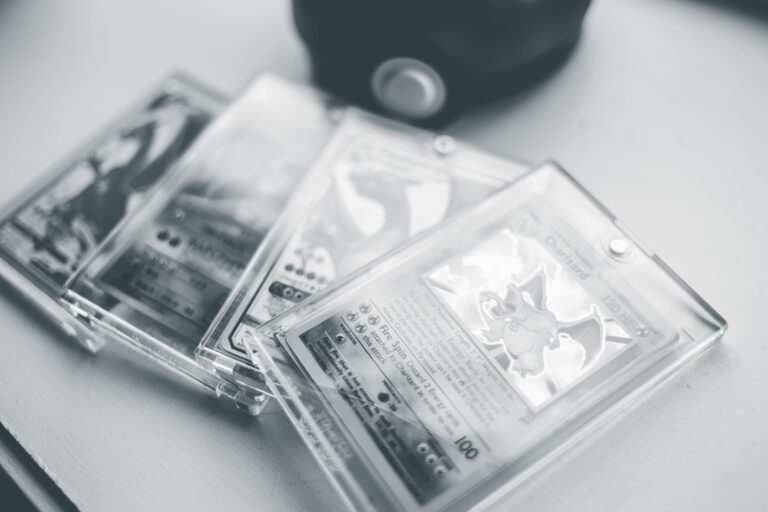
To schedule an individual Pokémon slab—a professionally graded card sealed in a tamper-evident holder—an appraiser may need ownership records, detailed images, grading data, and comparable sales. Scheduling means listing the card separately on an insurance policy with its own description and insured value. The appraiser's report does not guarantee coverage. Your insurer decides whether it accepts the appraisal, which losses it covers, and whether future value updates are required.
Table of Contents
- What scheduling changes
- Records that identify the exact slab
- Proof of ownership and purchase history
- Evidence supporting the appraised value
- Preparing a clean appraisal package
What scheduling changes
A standard collectibles limit may treat many cards as one group and restrict payment for high-value items. A scheduled item is identified individually, reducing uncertainty about which card the policy covers and the value assigned to it. Scheduling can make sense when one slab represents a meaningful share of the collection's value.
It may also help when replacing the exact card would be difficult because its grade, variation, or certification makes it unusually scarce. Ask the insurer what documentation it requires before ordering an appraisal. Some companies may accept a recent purchase record for certain cards, while others may require a formal report from an appraiser they consider qualified.
Records that identify the exact slab
The appraisal must distinguish your card from every similar copy. A set name and card number alone may be insufficient when variants, languages, printings, errors, and promotional releases exist.
Useful identification records include: Certification lookup information can support identification, but it should match the physical slab. A valid number by itself does not establish ownership or eliminate concerns about altered or counterfeit holders.
- Clear photographs of the card's front and back
- Images showing the entire grading holder and label
- Grading company, assigned grade, and certification number
- Card name, set, card number, language, and release type
- Variant details, such as first-edition, reverse-holo, stamped, or error features
Proof of ownership and purchase history
An appraiser may request a receipt, invoice, auction record, trade documentation, or payment confirmation. These records help establish that the slab belongs to you and clarify when and how you obtained it. Private purchases and trades often leave incomplete records.
In that case, preserve dated messages, photographs, payment entries, shipping records, and a written description of what each party exchanged. Avoid presenting an undocumented estimate as a purchase price. Ownership evidence does not automatically determine current value. A card bought during a market spike may now be worth less, while a long-held card may have appreciated far beyond its original cost.
Evidence supporting the appraised value
Recent completed sales of the same card, grade, grading company, language, and variant usually provide the strongest market comparison. Asking prices show seller expectations, not what buyers have actually paid. A useful sales file records the sale date, platform or auction house, realized price, buyer's premium if applicable, and enough listing detail to confirm the match. Screenshots or saved invoices can preserve evidence that may later disappear.
When exact matches are scarce, the appraiser may compare nearby grades or related versions. That requires judgment because prices do not always rise evenly between grades. Population data can provide scarcity context, but it does not prove demand or establish value by itself. Unusual sales deserve caution. A single exceptionally high result, an apparent nonpayment, a damaged holder, or a listing with unclear photographs may not represent the market for a clean, correctly labeled example.
Preparing a clean appraisal package
Create one folder for each slab and use the certification number in the filename. Keep the photographs, ownership records, grading details, and sales evidence together so the appraiser can trace every statement to a specific item. Include a short inventory sheet with the requested insured value, purchase date, purchase price, and any known problems. Label uncertain details as uncertain rather than filling gaps with assumptions.
Confirm whether the policy uses an agreed value, stated value, replacement-cost method, or another settlement basis. Similar terms can produce different claim results, so rely on the policy language and the insurer's written explanation. Before submitting the schedule, check that the appraisal's card description and certification number exactly match the slab and insurance application. Even a one-digit certification error can connect the insured value to the wrong card.