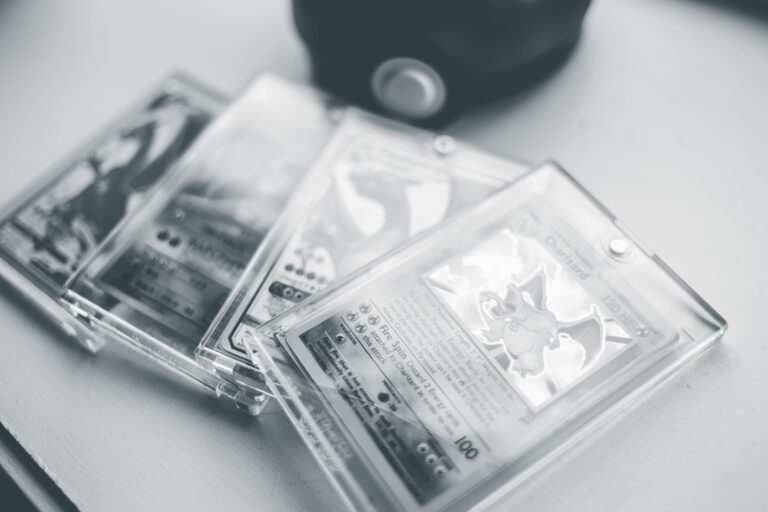
A home UV check cannot confirm that a Pokémon slab label—the printed insert inside a graded card holder—is genuine. It also cannot prove that the holder, card, or assigned grade is authentic. A UV feature is a mark or material that reacts under ultraviolet light, often by glowing or revealing a pattern. That reaction can support a broader inspection, but it is only one clue.
Table of Contents
- What a UV Check Can Show
- Why Glow Is Not Proof
- What the Test Says About the Card
- How to Perform a Careful Home Screen
- When to Seek Stronger Verification
What a UV Check Can Show
A UV lamp can reveal fluorescence that ordinary room light does not show. you may notice glowing fibers, ink, symbols, or areas with a different color response. These observations can help identify a mismatch between two labels that should be alike.
For example, one label may glow evenly while another shows an unexpected bright patch or no visible response. The result remains an observation, not a verdict. You need a reliable comparison label from the same grading company and label generation before treating a difference as meaningful.
Why Glow Is Not Proof
Grading companies can use different label materials and designs over time. Reholders, special labels, printing batches, and regional production may also create legitimate differences. Consumer UV lamps are not standardized. Their wavelength, power, filters, distance, room lighting, and battery condition can change what you see.
Cameras add more uncertainty. A phone may alter exposure, white balance, contrast, and color, making two similar reactions look different in photographs. A counterfeiter may also imitate a fluorescent effect or reuse genuine components. Conversely, an authentic label may appear unremarkable under the particular lamp used at home.
What the Test Says About the Card
Even an expected UV response applies only to the feature being observed. It does not confirm that the card belongs with that label or that the case has never been opened. A certificate-number lookup can confirm that a number exists and that its listed details match the card.
It cannot, by itself, prove that the physical holder is the one originally associated with that record. Inspect the card separately for altered surfaces, trimming, recoloring, or other concerns. UV behavior on the label provides no evidence that the assigned grade remains accurate.
How to Perform a Careful Home Screen
Begin under bright visible light before using UV. Check the label text, font spacing, alignment, certification number, case seams, and any signs of glue, frosting, stress, or tool marks.
Then use UV only as a brief comparison: Do not stare into the lamp or expose skin unnecessarily. Limit the card's exposure because repeated ultraviolet exposure can contribute to fading or material damage over time.
- Compare labels from the same company and apparent label generation.
- Use the same lamp, distance, angle, and darkened room.
- Examine the entire label rather than one expected mark.
- Record both visible-light and UV images without heavy editing.
- Treat an unexplained difference as a reason for further checking, not proof of fraud.
When to Seek Stronger Verification
Pause a purchase when the UV response conflicts with a trustworthy comparison, especially if the label details, case construction, or certification record also look wrong. Ask the seller for clear photographs, provenance, and a return option before paying.
For a valuable or disputed slab, contact the named grading company and ask what verification options it currently provides. Do not crack the holder first, because opening it destroys evidence about the case and label assembly.