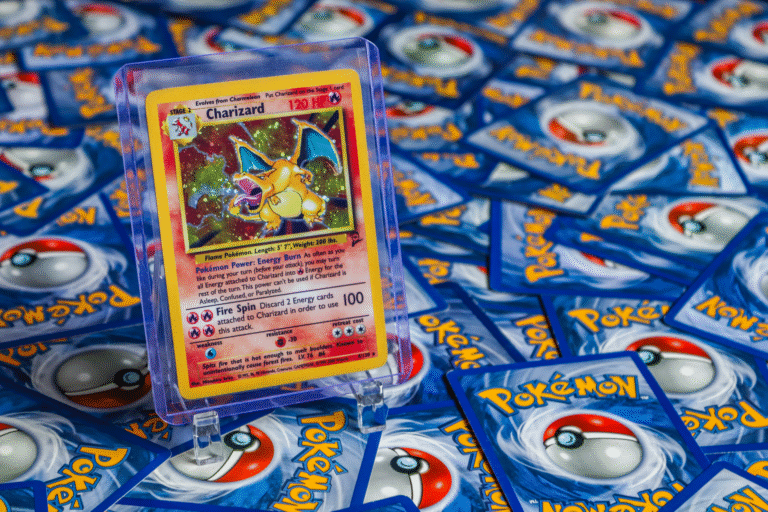
Premium graded Pokemon and Magic: The Gathering trading cards have indeed reached record valuations in July 2026, with prices surging across the market at levels not seen before. The momentum continues from earlier in the year, with collectors and investors witnessing unprecedented demand for high-grade specimens. A 1999 WotC Pokemon Base Unlimited #5 Clefairy HOLO R graded PSA 10 sold for $28,750 in May 2026, exemplifying the extraordinary prices now commanding these vintage cards at major auction houses.
The broader graded card market reflects sustained appetite for premium collectibles across both Pokemon and Magic: The Gathering categories. Trading card valuations have realized increases week after week, with serious players increasingly focused on authenticated, graded copies rather than raw cards. This shift toward graded inventory has fundamentally reshaped how collectors evaluate and acquire cards, pushing prices upward for anything achieving the highest grades.
Table of Contents
- What’s Driving Record Valuations for Premium Graded Cards?
- Premium Pokemon Cards at Unprecedented Price Points
- Magic: The Gathering Cards Surge Alongside Pokemon
- How Grading Affects Card Valuations
- When Graded Cards Disappoint Expectations
- The $10 Billion Graded Pokemon Market
- Year-Over-Year Gains Show Sustained Growth
- Frequently Asked Questions
What’s Driving Record Valuations for Premium Graded Cards?
The recent surge in premium card values stems from a combination of limited supply and concentrated demand among serious collectors who prioritize condition and authentication. graded cards provide the assurance that a card meets its stated specifications, eliminating guesswork about whether creasing, discoloration, or other flaws exist. This certification has become non-negotiable for high-value purchases, where buyers will pay a substantial premium for peace of mind. Demographics shift matters as well.
Millennial collectors who purchased Pokemon cards as children now have disposable income and actively seek the versions they remember from childhood, but in pristine condition. Magic: The Gathering appeals to both nostalgic buyers and competitive players who recognize certain cards as format staples with reliable demand. The combination of nostalgia, format relevance, and supply scarcity creates perfect conditions for prices to rise. However, this trajectory raises a caution: prices can retreat quickly if market sentiment shifts or if newer card releases dilute collector interest. The premium paid for grading itself—typically $20 to $100 per card depending on grade and turnaround time—also becomes a sunk cost that buyers cannot recover if market conditions change.
Premium Pokemon Cards at Unprecedented Price Points
pokemon card sales have dominated recent auction results, with specific cards achieving eye-watering valuations. The EX Deoxys Rayquaza Gold Star Holo exemplifies this phenomenon, selling for $26,400 at Fanatics Premier auction, a dramatic increase from the $9,500 valuation recorded just a year earlier. That represents a 178 percent increase in value over twelve months. At Goldin Auctions, another copy of the same card in PSA 8 condition sold for $32,940, demonstrating that even mid-grade copies of this particular card command serious money. These prices reflect the rarity of cards meeting multiple criteria: print year scarcity, competitive demand, and high-grade availability.
A PSA 10 or PSA 9 copy of a card originally printed in limited quantities simply does not exist in abundance. When one does surface, auction houses can attract bidders globally, driving prices to levels that would have seemed absurd just five years ago. It’s worth noting that not every Pokemon card experiences these gains. Common holos, non-first-edition cards, and cards with printed defects remain affordable. The record prices concentrate in a narrow segment: vintage Pokemon from the late 1990s, especially Base Set editions, and specific holo rares that held cultural significance for collectors.
Magic: The Gathering Cards Surge Alongside Pokemon
Magic: The Gathering graded cards have also experienced remarkable growth, with older, powerful cards commanding attention from cEDH players and format specialists. The 1998 Gaea’s Cradle, a notoriously powerful green enchantment from Urza’s Saga, exemplifies this surge. A CGC 10 copy sold for $1,050 on eBay in May 2026, while BGS 10 copies achieved $1,613 in the same period. Multiple psa 10 copies traded in the $825 to $1,080 range, all well above historical averages.
Gaea’s Cradle represents a special case within Magic’s economy because it remains banned in several formats but legal in Commander, where it’s considered format-essential for green strategies. Format legality, not just rarity, drives demand for Magic cards in ways that differ slightly from Pokemon. A card that generates infinite mana in the right deck attracts players willing to pay for the ability to build a specific strategy, not purely for collectibility. The distinction matters for valuation: Magic cards tied to active formats maintain more stable prices than Pokemon, which relies primarily on collectibility and nostalgia. A ban or format rotation can quickly suppress demand for Magic cards, whereas Pokemon’s collectible status provides a floor beneath any single card’s value.
How Grading Affects Card Valuations
The difference between a raw card and a graded copy of the same card can represent 50 percent or more of the card’s value, depending on the card and grade achieved. A raw Rayquaza Gold Star might sell for $15,000 to $18,000, while a PSA 9 or PSA 10 version commands $26,000 to $32,000. Buyers accepting the cost of grading believe the authentication and condition documentation justify the premium, but this assumption doesn’t hold equally for all cards. Grading companies operate on different scales and have different reputations. PSA and BGS remain the most widely accepted graders for trading cards, with Beckett Grading Services (BGS) specializing in subgrades that detail condition of specific aspects like corners, edges, and centering.
CGC Grading entered the market more recently but has gained acceptance. Cards from lesser-known grading services can face skepticism and may not command the same premiums. The practical downside: grading removes a card from circulation for weeks or months and costs money, with potential for the card to be downgraded from expectations. A seller might expect a PSA 10 but receive a PSA 9, significantly impacting the card’s realized value. This risk means grading decisions should come only for cards with genuine high-grade potential and established market demand.
When Graded Cards Disappoint Expectations
Not every graded card achieves the valuations implied by its grade or print date. Oversupply in certain segments has flattened prices for otherwise respectable cards. Modern Pokemon products released in massive quantities contain high-grade examples that, while visually pristine, lack the scarcity that commands premium prices. A graded PSA 10 from a 2022 release might cost $50, not because buyers reject it, but because millions of copies exist in similar condition.
Condition restoration and counterfeiting also introduce risk to premium cards, particularly vintage Magic cards. Unscrupulous sellers have employed various techniques to artificially improve card condition before grading, and grading companies occasionally discover these alterations only after certification. Buying graded cards from reputable dealers with return policies provides some protection, but the risk never disappears entirely. The psychological trap of grading: collectors sometimes become invested in a grade’s prestige without evaluating the card’s actual demand in the collector market. A 1990s card in perfect condition remains undesirable if collectors simply don’t want that particular card, regardless of how rare and perfect it might be.
The $10 Billion Graded Pokemon Market
The total market capitalization for graded Pokemon cards exceeds $10 billion, a figure that underscores how thoroughly the market has matured and monetized. This market encompasses every graded Pokemon card ever submitted to grading services, from the most valuable Charizards and Blastoise holographics to bulk common holos worth $1 to $10 each. The $10 billion figure includes cards in all conditions and grades, not just the premium specimens achieving auction headlines.
This scale means the Pokemon graded card market now rivals entire cryptocurrency projects or mid-cap public companies in total valuation. Major investment firms and institutional players have begun acquiring portfolios of graded cards as alternative assets, treating them similarly to fine art or classic automobiles. This institutional money has fundamentally altered price dynamics, replacing the purely collector-driven market of five years ago.
Year-Over-Year Gains Show Sustained Growth
The EX Deoxys Rayquaza Gold Star’s jump from $9,500 to $26,400 valuations within a single year illustrates the explosive growth realized by cards hitting perfect market conditions. This card benefited from its association with a popular Pokemon generation, its holographic printing error status, and its role in competitive deck construction when the card was legal in tournament formats. The 178 percent gain in valuation occurred not through speculation alone, but through documented sales at major auction venues, providing concrete evidence of the increase.
However, such gains cannot sustain indefinitely for every card. The market will inevitably consolidate as more cards become graded and cataloged, and some of the recent price spikes will moderate as supply increases. Collectors should recognize that July 2026 prices represent a moment in time, not a permanent baseline, and that future purchases will require assessing individual cards on merit rather than assuming all graded cards appreciate predictably.
Frequently Asked Questions
Why do graded cards cost so much more than raw versions?
Grading provides third-party authentication of condition and legitimacy, eliminating buyer uncertainty on high-value purchases. Buyers pay premiums for this certainty, particularly for vintage cards where restoration or counterfeiting risks are real.
Can a card be downgraded after grading?
No, a graded card’s assigned grade remains permanent. However, cards can receive lower-than-expected grades during the initial grading process, which is why submitting cards with high-grade potential matters.
Which grading companies are most accepted?
PSA and BGS remain the industry standard for trading cards. CGC has gained ground more recently. Cards graded by lesser-known services may face buyer skepticism and lower valuations.
Is now a good time to submit cards for grading?
Grading services currently operate at or near capacity, with turnaround times of several weeks to months. Costs have risen. Submit only cards with genuine high-grade potential and proven market demand, not cards submitted on speculation.
Why do Magic cards cost so much less than Pokemon cards?
Magic cards derive value from both collectibility and format legality, whereas Pokemon cards rely primarily on collectibility. A Magic card banned or rotated out of competitive formats can lose substantial value quickly.
How much can a graded card’s value decrease?
There is no fixed floor. Cards can become undesirable if collector interest shifts, if format changes remove demand, or if supply suddenly increases. Graded Pokémon cards from modern sets often sell for just $5 to $50 despite pristine condition.