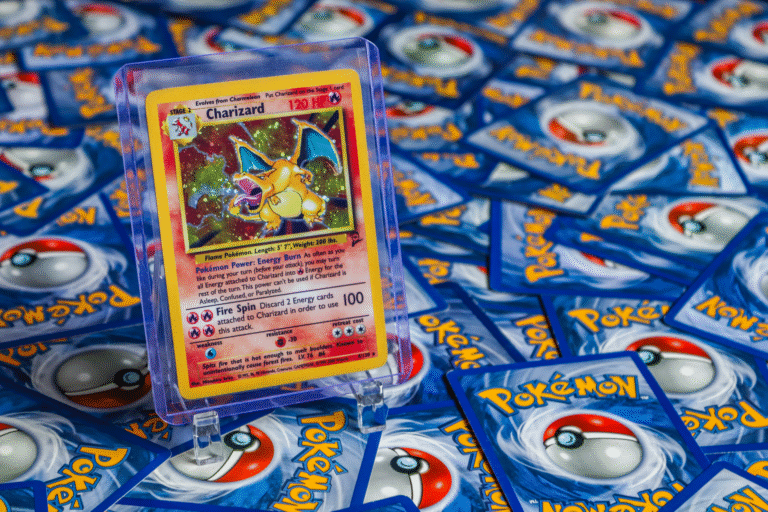
The most important Mysterious Treasures cards to watch before the next price spike are the holographic rares with the strongest fundamentals: Garchomp, Rayquaza, Groudon, and Deoxys stand at the front of any collector’s watchlist. These cards combine legitimate scarcity—the set’s 143-card composition from August 2007 means fewer copies in circulation compared to modern expansions—with sustained competitive demand. Garchomp, for example, currently trades around $35.74 for the holo rare version, a price point that reflects both its playability in the Diamond & Pearl era and its appeal as a vintage collectible.
The entire master set carries a budget value of approximately $854 as of early 2026, suggesting individual high-value cards have significant room for movement if broader set demand increases. Understanding which Mysterious Treasures cards deserve your attention requires looking beyond surface-level pricing and examining the structural factors that precede price spikes in vintage Pokémon sets. The second main expansion of the Diamond & Pearl series carries historical legitimacy that newer sets lack, combined with a shrinking population of well-preserved copies. Rather than chasing speculative hype, smart collectors focus on the cards that have demonstrated staying power: those with both TCG playability history and aesthetic appeal that drive long-term demand.
Table of Contents
- Which Mysterious Treasures Holo Rares Show the Most Spike Potential?
- Set Economics and Scarcity Factors Behind Mysterious Treasures Pricing
- Condition and Grade Premium Dynamics in Mysterious Treasures
- Timing Strategy for Mysterious Treasures Acquisition
- Market Risks and Realistic Limitations for Mysterious Treasures Investment
- Grading and Quality Assessment Before Building Positions
- Future Outlook for Mysterious Treasures Market Movement
- Conclusion
- Frequently Asked Questions
Which Mysterious Treasures Holo Rares Show the Most Spike Potential?
Garchomp, Rayquaza, Groudon, and Deoxys represent the clearest candidates for price appreciation, not because they’re rare in absolute terms but because they occupy the intersection of playable history and collector interest. Garchomp exemplifies this perfectly—it was a competitive staple during the 2007-2009 tournament season, meaning players who actually used these cards in matches are now returning to the hobby with disposable income and nostalgia driving their acquisitions. This differs fundamentally from cards that were always collection-only; competitive history creates a secondary demand vector that survives market cycles. Rayquaza similarly dominated late diamond & Pearl metagames, while Groudon and Deoxys provided competitive viability that attracted serious players rather than casual collectors.
The distinction matters because cards with tournament history typically show more stable demand floors and higher ceiling potential. When a card was actually played in Regional Championships or Nationals events, there’s an established base of collectors who want to own a copy of that specific card. Tyranitar, Aggron, and Manectric fill secondary positions in the value hierarchy—all legitimate collectibles with their own appeal, but lacking the same depth of competitive legacy. This doesn’t exclude them from consideration, but it explains why Garchomp has maintained its $35+ price point while other rares in the set languish at lower values.

Set Economics and Scarcity Factors Behind Mysterious Treasures Pricing
Mysterious Treasures’ position as the second main expansion of Diamond & Pearl means it entered a market where the first expansion had already established early adoption patterns. This affected print runs and secondary market availability in ways that still echo today. The set’s 123-124 base cards distribute value unevenly—not all 143 total cards command collector interest equally. Reverse holo rares, full arts, and special editions naturally command premiums, but the bulk of the set consists of common utility cards that hold minimal value. This concentration means that serious collectors pursuing a complete master set must pay disproportionately for a handful of high-demand cards.
One critical limitation to understand: scarcity alone doesn’t drive price spikes. A card can be genuinely rare and still appreciate slowly if demand remains tepid. The real engine behind price movement is when scarcity meets rising demand—when more collectors decide they want the same card than are willing to sell. The current $854 master set budget suggests that as of February 2026, the set’s pricing had reached an equilibrium. Watch for signs that this equilibrium is breaking: increased Sold listings on TCGPlayer, repeated listing unavailability, or rising floor prices on raw copies of key cards. These are the actual indicators of incipient spikes, not speculation from online forums.
Condition and Grade Premium Dynamics in Mysterious Treasures
The condition market for Mysterious Treasures plays an outsized role in determining spike potential because twenty-year-old cards genuinely have limited supplies in higher grades. A raw Garchomp holo in played condition trades significantly below its $35.74 market reference—that price assumes Near Mint to Mint condition. This is both opportunity and risk. If you‘re watching for a price spike, graded copies certified by PSA, BGS, or CGC often spike first and hardest, because collectors pursuing certified examples face even tighter supply constraints.
A PSA 9 Garchomp holo will move dramatically faster than a PSA 7, not because it’s drastically different as a card but because the population reports for high-grade copies are genuinely limited. The warning here is that condition-based spikes can reverse quickly if grading companies release population reports showing more high-grade copies than expected, or if market sentiment shifts away from certified cards. Conversely, if you’re accumulating raw copies, you might capture the spike’s initial movement before the grading tier takes flight. This creates a meaningful strategic choice: chase the fast-moving graded copies at premium prices, or build a position in quality raw cards that might appreciate more slowly but with less execution risk. There’s no universally correct answer, but your approach should be conscious rather than defaulted.

Timing Strategy for Mysterious Treasures Acquisition
The conventional wisdom—buy before everyone else recognizes value—applies here but requires calibration for a set that’s been trading for nearly two decades. Garchomp, Rayquaza, and their tier-one peers have already been recognized as valuable, so you’re not discovering hidden gems at basement prices. The realistic window is narrower: you’re betting that demand will increase beyond current equilibrium before supply is fully exhausted at higher price points. This happens most often when a particular Pokémon gains cultural relevance (new game release, anime content, tournament announcement) or when Instagram influencers and content creators begin featuring a set or card.
Buying during these windows creates a practical tradeoff. Waiting for explicit demand catalysts can mean waiting indefinitely—demand is notoriously difficult to predict in collectibles. Acquiring positions in key cards now, when pricing is stable and supply is more readily available, means building positions at less dramatic price points but with more choice and better selection. A Garchomp purchased at $35 today is potentially less thrilling than one purchased at $20 next year, but the certainty of acquisition at reasonable terms has its own value, especially for cards that command meaningful premiums when they do move.
Market Risks and Realistic Limitations for Mysterious Treasures Investment
Not every card in the set will spike, and some will experience prolonged downward pressure regardless of broader market enthusiasm. Commons, uncommons, and lower-value rares face inherent ceiling limitations because demand simply doesn’t exist at the same scale as for Garchomp. Even within the holo rare subset, cards like Rare Candy (a utility card with heavy competitive printing across multiple sets) will remain competitively priced because collectors have numerous options for acquiring it. This is a fundamental market reality: abundance suppresses prices, and Pokémon’s printing history means most utility cards exist in substantial quantities across multiple set printings.
Another critical limitation: Diamond & Pearl-era cards face ongoing competition from newer generations that offer better aesthetics, updated printing technology, and cultural recency. A casual collector might choose an EX card from a current-generation set over a Mysterious Treasures holographic rare simply because modern cards feel more vibrant and appealing. This demographic shift is real and measurable. Mysterious Treasures spikes, when they occur, tend to be driven by serious collectors and investment-focused buyers—not by the broader casual market that stabilizes prices for truly mainstream sets. This makes Mysterious Treasures a specialized acquisition, not a mass-market bet.

Grading and Quality Assessment Before Building Positions
Before acquiring cards, establish your own grading baseline and understand what separates a legitimate investment-grade copy from one that looks nicer than it performs. A card graded PSA 8 should have near-flawless centering, clean corners, and no visible damage under casual examination. If you’re buying raw, learn to identify these characteristics yourself or work with dealers who provide detailed photos. The difference between a PSA 7 and PSA 8 Garchomp can easily be $50-100, so your assessment accuracy directly impacts your cost basis.
One practical example: a played-condition Garchomp with visible corner wear and centering issues might sell for $15-20 raw, versus $35-40 for a near-mint copy. That’s a 100% difference in acquisition cost. If both cards appreciate equally in absolute dollars, the raw copy’s percentage return is superior—but the raw copy faces higher execution risk because its path to further appreciation depends on eventually being graded and certified. Build your investment thesis around this distinction, and be honest about whether you’re accumulating collectibles or pursuing speculative percentage gains.
Future Outlook for Mysterious Treasures Market Movement
The Mysterious Treasures set exists in a curious position within Pokémon TCG history: far enough in the past to command nostalgia appeal, but recent enough that some collectors who played with these cards remain active in the market. This demographic advantage is finite. In fifteen years, the cohort of players who actually experienced Diamond & Pearl in tournament settings will likely be less influential in price discovery. This argues for a medium-term horizon for Mysterious Treasures appreciation—spikes are most likely within the next 3-5 years, driven by collectors still active in the market and nostalgic enough to pay premiums.
The structural tailwind supporting all vintage Pokémon sets—the hobby’s overall professionalization and speculative capital inflow—remains intact. But this same trend pushes newer sets into the investment conversation, potentially drawing attention away from Diamond & Pearl products. Smart collectors view Mysterious Treasures as a window that’s been open for eighteen years but may not remain so indefinitely. The window is still there, the cards are still accessible at reasonable prices, and the demand catalysts exist. But the advantage of early recognition belongs to those who act now, not those who wait for absolute certainty that a spike is imminent.
Conclusion
The most important Mysterious Treasures cards to monitor—Garchomp, Rayquaza, Groudon, and Deoxys—deserve attention because they combine structural scarcity with demonstrated demand and competitive history. These cards won’t spike on their own merits; spikes require specific catalyst events or demand shifts that concentrate buying pressure on limited supply. Your role as a collector or investor is to maintain positions in these cards and recognize the early indicators of demand inflection: rising floor prices, frequent listing unavailability, and increased comparative interest across PCG price tracking sites.
Start by establishing your target cards and baseline pricing using current data from TCGPlayer and the price guide, then commit to a regular monitoring schedule that allows you to act decisively when conditions shift. The cards are readily available now at predictable prices; the advantage belongs to those who build positions deliberately and patiently, not to those chasing urgency. Mysterious Treasures remains an underappreciated segment of the vintage Pokémon market, and Garchomp’s current $35.74 price point for the holo rare represents a legitimate entry point for medium-term value accumulation.
Frequently Asked Questions
What makes Mysterious Treasures different from other Diamond & Pearl expansions?
Mysterious Treasures was the second main expansion of the Diamond & Pearl era, releasing August 2007. This timing and positioning as a non-premiere set means slightly different print run and availability dynamics compared to the first expansion. Its 143-card composition makes it a legitimate but specialized target, requiring more discipline to complete versus larger modern sets.
Which single card from Mysterious Treasures has the highest appreciation potential?
Garchomp represents the strongest candidate because of its competitive tournament history, playability across multiple Diamond & Pearl formats, and sustained collector interest. Its current $35.74 price point already reflects recognition, but the card maintains multiple demand vectors that support further appreciation.
How do I know if a Mysterious Treasures card is investment-grade?
Investment-grade copies require near-mint condition with excellent centering, clean corners, no visible wear, and no printing defects. If buying raw, request detailed photos showing corners and centering. If pursuing graded copies, aim for PSA 8 or BGS 8 as the meaningful threshold where population reports start reflecting genuine scarcity.
Should I wait for a price dip before buying Mysterious Treasures cards?
Market timing is inherently uncertain. Current prices represent equilibrium based on available information. If you’ve identified specific cards you want, acquiring them now at transparent pricing provides more certainty than waiting for a dip that may never materialize. Build positions deliberately rather than timing perfectly.
Are older diamond & pearl sets a better investment than Mysterious Treasures?
The first Diamond & Pearl expansion has slightly different scarcity dynamics and pricing history, but the principles remain identical. Compare specific card prices and demand signals across sets rather than assuming older automatically means better. Mysterious Treasures’ competitive legacy and established collector base make it a legitimate peer, not a secondary choice.
What’s the realistic timeline for a Mysterious Treasures price spike?
Spikes are most likely to occur within 2-5 years, driven by broader hobby trends and specific catalyst events. The demographic advantage (collectors who played during this era) is strongest now and declines over time. This argues for medium-term positioning rather than speculative short-term trading.