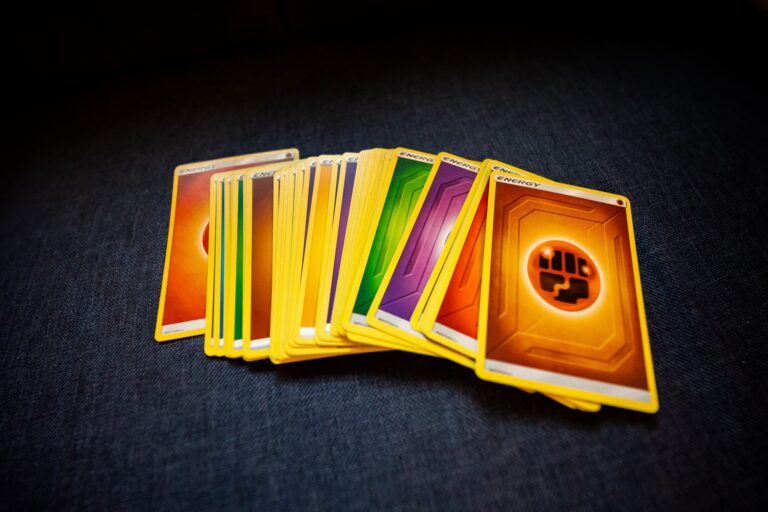
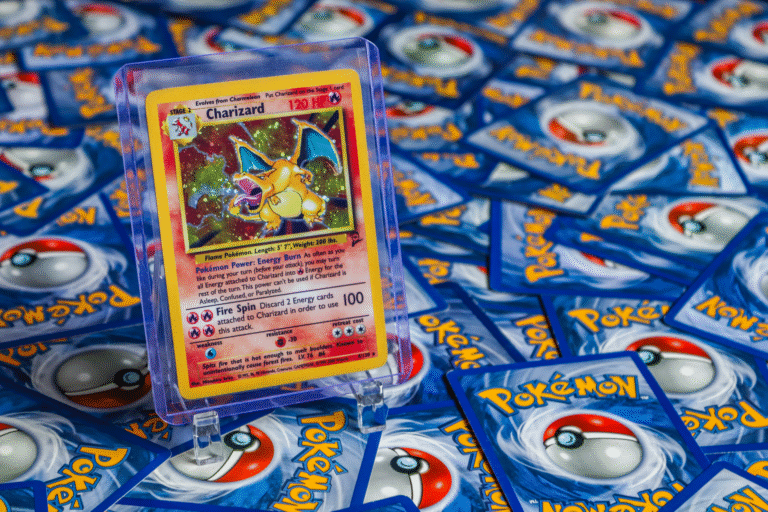
The Pokemon card market’s hidden danger isn’t just volatility or counterfeits—it’s the perfect storm that hits when you inherit a collection. Estate sales expose you to all three simultaneously: cards that lack any authentication history, potential fakes mixed with legitimate ones, and a collapsing resale market that makes expert verification more expensive than the cards themselves. A single inherited collection can contain thousands in theoretical value that becomes worthless when buyers demand proof you can’t provide, or when they discover the cards were stored improperly for years. The risk intensifies because estate collections are uniquely vulnerable.
An inherited binder of Pokemon cards from the 1990s and 2000s might include genuine ex-series PSA-10 candidates worth significant money—but without grading history or proper documentation, potential buyers will assume the worst. Worse, the market itself has fundamentally shifted. A Prismatic Evolutions Umbreon that dropped 50% in value from $1,600 to $832 in late 2025 shows that even high-ticket cards aren’t safe. You could spend $500 to grade and authenticate an inherited collection only to find the combined value is $400.
Table of Contents
- Why Inherited Pokemon Collections Are Authentication Nightmares
- The Modern Counterfeit Problem in Estate Collections
- Market Volatility and the Collapse of Estate Prices
- Storage Sensitivity and Hidden Damage in Inherited Collections
- The Grading Economics Trap and Recent Regulatory Changes
- Fraud Patterns That Target Estate Sellers
- The 2026 Market Shift and What It Means for Inheritance
- Conclusion
- Frequently Asked Questions
Why Inherited Pokemon Collections Are Authentication Nightmares
Estate sales create a documentation vacuum that counterfeiters exploit and legitimate buyers fear. When a collection passes through an estate—whether through probate, a sudden sale, or a relative’s death—the original grading slabs are often missing, the purchase receipts are lost, and the provenance vanishes. A card that was graded PSA 8 in 2018 might have been kept in that slab for years, but if you crack it open to resell or if the slab was damaged, you’re selling a card with no verifiable history to a market that increasingly demands it. The authentication challenge is compounded by the modern counterfeit problem. The hobby loses an estimated $5–$10 million annually to counterfeit fraud, and approximately 80% of confirmed counterfeit cases trace to specific channels: cheap booster boxes on AliExpress and Wish, raw singles from Facebook Marketplace sellers with under 50 friends, unauthenticated eBay singles under $50 from low-feedback sellers, and “bundle deals” via Discord. An inherited collection could easily contain cards purchased from these channels decades ago without the original buyer even knowing the risks. You inherit what looks like a treasure but could be a mixture of real and fake cards with no way to prove otherwise.
One concrete example: A collector inherited 150 cards from their uncle’s estate in early 2026. Among them were what appeared to be several 1990s Charizard cards. Without original grading slabs or receipts, the collector sent the cards for authentication. Expert inspection revealed that two of the three alleged Charizards were counterfeits from overseas printing operations. The real card was worth $400, but the authentication and shipping costs were $180. The two fakes had zero resale value. The collector lost money on the entire transaction just trying to validate what they’d inherited.

The Modern Counterfeit Problem in Estate Collections
Modern counterfeits from 2024–2026 are qualitatively different from older fakes. They’re sourced from overseas printing operations sophisticated enough to fool casual inspection—and sometimes even more experienced collectors. The key identifier that separates real from fake is something most estate sellers never check: authentic cards have a visible black layer sandwiched between the front and back, visible at the edge of the card. Counterfeits lack this entirely. Yet when you’re dealing with hundreds of cards inherited from a deceased relative, manually inspecting every edge for a black layer is time-consuming, and errors are inevitable. The danger is that counterfeit cards can slip into a legitimate sale and destroy your credibility as a seller. If you unknowingly sell a counterfeit to a buyer who later submits it for professional grading, the card will be flagged and returned.
Your feedback rating tanks. You might face a dispute claim. If you’ve already spent money on shipping and grading, you’re deep in losses. An inherited collection with mixed provenance—some cards you’re confident about, others you have no history for—dramatically increases this risk. Estate sales also tend to include cards stored in conditions that invite counterfeiting. Cards kept in humid attics, basements, or closets for years may have damage that makes them look suspicious even if they’re real. A real card with visible wear and storage damage might be rejected by a buyer convinced it’s a fake, while a high-quality counterfeit in mint condition passes initial inspection. This inversion of trust works entirely against the estate seller who inherited these cards without the ability to defend their authenticity.
Market Volatility and the Collapse of Estate Prices
The pokemon card market has posted a 3,821% return since 2004, but that statistic masks a brutal reality: the unsustainable boom of 2020–2022 has completely deflated. Recent sharp declines are concrete examples of this collapse. The Obsidian Flames Charizard dropped from $126 to $79 USD. The Prismatic Evolutions Umbreon fell 50% from $1,600 to $832 USD in late 2025 alone. These aren’t gradual declines—they’re cliff drops that can happen in months. For estate sellers, this volatility creates a timing trap. An inherited collection might have been worth $15,000 two years ago based on peak market prices. Today, the same cards might be worth $8,000. If you hold them waiting for prices to recover, you’re gambling against a market that has fundamentally shifted.
The Pokemon Company International dramatically increased print runs, making modern cards far more accessible and resulting in lower scarcity. This means the artificial scarcity that drove prices up in 2021 is gone permanently. Holding onto inherited cards hoping for a bounce-back is a losing bet unless you have rare, early-print cards that maintain collector interest. The specific downside for estate sellers is that you have no emotional investment in the market timing. An individual collector might hold through volatility because they enjoy the hobby. An estate executor or heir just wants to liquidate the assets and move forward. But the market isn’t waiting. You’re forced to sell into whatever conditions exist when the probate closes or the estate settlement deadline hits. If that’s during a price dip, you absorb the full loss.
Storage Sensitivity and Hidden Damage in Inherited Collections
Cards are remarkably fragile, and most people don’t store them correctly. Inherited collections often carry years of storage damage that you can’t undo: humidity damage that causes warping, light exposure that fades holo patterns, moisture that encourages mold growth on the card surface. These aren’t cosmetic issues—they directly impact the card’s grade and resale value. A card that should grade PSA 7 might only grade PSA 4 because of storage conditions you had nothing to do with but are now responsible for selling. The hidden cost is that proper storage during the estate sale period itself can determine whether the collection retains any value at all. Cards stored in a humid basement while the estate is being processed might develop visible mold or warping by the time you’re ready to sell.
Cards exposed to direct sunlight in a display case will have their holo layers faded, making even rare cards look worthless. You inherit cards that were poorly stored for potentially decades, then have weeks or months to sell them before further damage occurs. This creates an artificial urgency that forces you into a buyer’s market. A real example: An estate included a collection of vintage Pokemon cards stored in a non-climate-controlled garage in Florida for 15 years. Despite the cards appearing fine to casual inspection, professional graders noted visible moisture damage and humidity warping on nearly 40% of the collection. These cards dropped multiple grade points specifically because of storage conditions. The estate seller had to accept lower prices for cards that looked presentable but had internal damage from moisture exposure that only became apparent during professional grading.
The Grading Economics Trap and Recent Regulatory Changes
Grading costs have become the primary risk for estate sellers with mid-tier cards. Professional grading typically costs $10–$20 per card, depending on the service and turnaround time. If you inherit 200 cards valued at an average of $15 each, grading costs alone represent 7–13% of the total collection value. But here’s the catch: as prices have declined, that percentage becomes worse. A card worth $50 costs the same $15 to grade as a card worth $500. With recent price declines, many inherited cards no longer justify the cost of authentication. This creates a brutal decision: grade the cards and hope buyers will pay enough to offset the cost, or sell them raw and accept a 30–50% discount because buyers don’t trust unauthenticated vintage cards.
Either way, you lose. And the economics only get worse as the market continues to deflate. A card that would have justified $20 grading fees at a $100 price point becomes unjustifiable at a $60 price point. Additionally, as of May 2026, The Pokémon Company International banned sales of graded slabs and Japanese Pokémon Center products at official events. This regulatory shift has broader implications for the secondary market. While it’s specifically about event sales, it signals the company’s skepticism about the grading slab market and collectibility of modern cards. If official Pokemon policy is moving away from graded slabs, the long-term resale value of slabs themselves becomes questionable. An inherited collection of graded modern Pokemon cards might be harder to liquidate if official channels are moving in a different direction.

Fraud Patterns That Target Estate Sellers
One specific fraud pattern has emerged that disproportionately affects estate sellers: buyers purchase booster boxes or packs from your collection, open them, claim they received poor pulls or resealed packs, and then force refunds. Since you inherited the collection and can’t verify the packs were never opened, you have no defense. You lose the entire product value plus the cost of shipping both ways.
This is particularly devastating for estate sales because you’re not a regular seller with a protective reputation or multiple transactions—you’re a one-time liquidator with no history. Estate sellers are also targets for buyers claiming cards are counterfeit when they’re actually real, banking on the seller’s inexperience and unwillingness to pursue a dispute. Since estate cards often lack original grading or provenance, you can’t easily prove authenticity, so many sellers just accept the refund rather than fight. The buyer gets a free card plus a return shipment in some cases, and you’re out the money.
The 2026 Market Shift and What It Means for Inheritance
The Pokemon card market in 2026 is fundamentally different from the market that created inherited collections in the first place. Vintage cards from the 1990s and early 2000s still hold value because scarcity is real. But modern cards, which make up the bulk of many inherited collections from the 2010s onward, are now commodity products with limited long-term value potential. This distinction matters enormously for estate planning and liquidation.
A collection that seemed valuable when it was assembled may not be valuable today. The forward outlook is that inheritance valuations need to be based on current market conditions, not historical prices. If your inherited collection was last professionally appraised in 2021, that valuation is obsolete. Current conditions in 2026 require a new assessment by someone who understands the modern market’s risks: counterfeits, price volatility, regulatory shifts, and the collapse of the modern-card premium. The market that rewarded collectors in 2021 no longer exists.
Conclusion
Estate sales of Pokemon card collections carry hidden risks that go far beyond simple market volatility. The combination of authentication challenges, counterfeit proliferation, storage damage, and unfavorable grading economics creates a perfect storm for heirs and executors trying to liquidate these assets. A collection that looked like a financial windfall on paper becomes a logistical and financial burden when you factor in the real costs of verification, grading, storage, and actual resale conditions. The practical path forward is to be realistic about inherited collection value before you invest time and money in authentication.
Get a current professional assessment from someone who understands both the technical grading standards and the 2026 market conditions. For mid-tier cards, the math often doesn’t work out—selling raw or in bulk to dealers might be the only economically rational choice. For rare, early-print cards, professional grading may be justified. But the assumption that inherited Pokemon cards are valuable is no longer safe in 2026.
Frequently Asked Questions
How can I tell if inherited Pokemon cards are counterfeit?
Authentic cards have a visible black layer sandwiched between the front and back, visible at the edge of the card when you look closely. Counterfeits lack this layer entirely. However, this requires careful inspection of every card. Professional authentication through services like PSA or CGC is the most reliable method, though it carries costs.
Is it worth grading inherited Pokemon cards?
Not always. If you have cards valued at $50 or less after inheritance, grading costs ($10–$20 per card) often exceed the marginal benefit. For rarer cards or valuable vintage pieces, professional grading is justified. For bulk modern cards, selling raw or in bulk to dealers is usually more economical.
What if I inherited Pokemon cards stored in bad conditions?
Moisture, humidity, and light damage can’t be reversed. Have the collection professionally assessed before investing in grading or marketing. Many inherited collections contain visible storage damage that drastically reduces grade potential. Accept this reality early rather than spending money on grading cards that won’t pass higher grade thresholds.
Should I hold inherited Pokemon cards waiting for prices to recover?
The 2020–2022 boom is unlikely to repeat. The Pokemon Company increased print runs, reducing scarcity. Unless you have specific rare cards with limited print runs, holding inherited collections is generally a losing bet. Liquidate on a timeline that works for estate settlement rather than waiting for market recovery.
Are inherited cards from eBay or online marketplaces safe to sell?
Not necessarily. If inherited cards were originally purchased from AliExpress, Facebook Marketplace, Discord bundles, or low-feedback eBay sellers, they may be counterfeit or lack proper provenance. Unknown sourcing is a major red flag that should trigger professional authentication before sale.
What does the Pokémon Company’s ban on graded slabs at events mean for my inherited collection?
It signals reduced official support for the grading slab market. While it applies specifically to event sales, it suggests the company is skeptical about secondary-market grading. This could reduce long-term demand for graded cards, making inheritance collections less attractive to buyers who believe grading slabs are a depreciating asset.