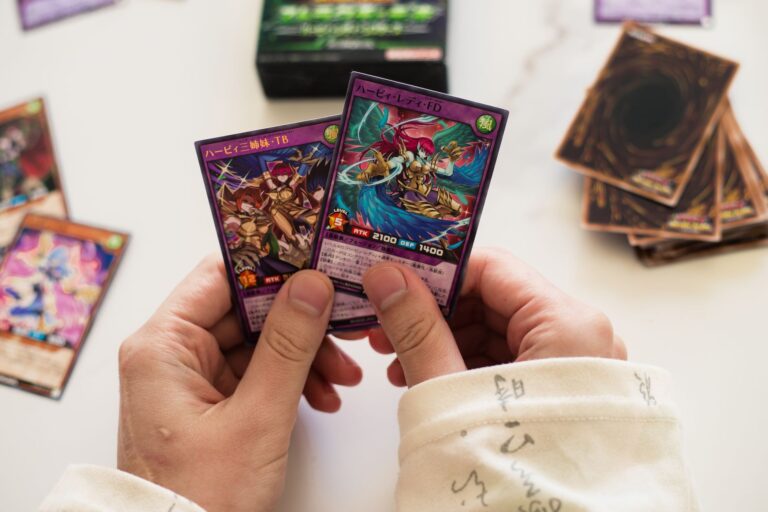
The Pokémon 151 Ultra Premium Collection market is difficult to predict because the set was never released as a traditional booster box—the product line consists only of Ultra Premium Collections with 16 packs, Elite Trainer Boxes with 9 packs, and Booster Bundles with 6 packs. This constraint fundamentally limits sealed supply compared to any other modern Pokémon set, creating a scarcity dynamic that makes pricing trajectories unpredictable and sentiment-driven. When ETBs jumped from $350 to $440 and beyond in recent months, the increase wasn’t based on new supply information but rather on FOMO and retailer inconsistency, demonstrating how quickly 151 markets can shift without the stabilizing influence of booster boxes that other sets rely on.
The 151 market’s volatility stems from a perfect storm of limited product options, rotating set status, and demand concentration in a narrow window. Chase cards like Charizard ex SIR trading at $452 reflect strong collector interest, but this interest exists within a constrained product ecosystem where pricing signals become noise rather than information. Retailers like Sam’s Club releasing exclusive 10-pack mini tins at $79.99 that sell out rapidly further complicate the predictability puzzle—these surprise drops and rapid sellouts suggest demand remains high but also indicate that no single data point reliably indicates where the market is heading next.
Table of Contents
- Why Limited Product Availability Creates Unpredictable Price Movements
- Reprint Uncertainty and the April 2026 Standard Rotation
- Sentiment-Driven Volatility and FOMO Economics
- Collector Versus Investor Implications and Strategic Divergence
- Supply Shocks and Unexpected Restocks as Black Swan Events
- The Role of Chase Card Variation and Single-Card Price Decoupling
- Looking Forward: Standard Rotation and Long-Term Market Stabilization
- Conclusion
- Frequently Asked Questions
Why Limited Product Availability Creates Unpredictable Price Movements
The absence of 36-pack booster boxes—the standard release format for other Pokémon sets—eliminated the market’s largest supply valve. Typically, booster boxes serve as a price floor because retailers can restock them continuously, creating consistent supply that prevents runaway price increases. With 151, the largest sealed product is the UPC at just 16 packs, meaning collectors and investors cannot rely on booster box availability as a stabilizing force. This single constraint cascades through the entire market structure, making each price movement more extreme because there’s no deep supply cushion to absorb demand spikes. The three available products each serve different market segments, which fractures predictability further.
ETBs appeal to casual players and collectors with moderate budgets, while UPCs target serious collectors and investors. This segmentation means price movements in one product don’t reliably predict movements in another. When ETBs spiked from $350 to $440+, and Pokémon Center versions approached $900, booster bundle prices didn’t necessarily follow the same trajectory, leaving analysts guessing which product would stabilize first and at what price point. Retailers handling limited product means each restocking event becomes a market event. Inconsistent availability at major retailers doesn’t just inconvenience buyers—it serves as the primary catalyst for price spikes according to market data. When stock appears at Pokémon Center or specialty retailers, prices often rise in anticipation of another shortage, creating a self-fulfilling prophecy that bears no relationship to actual product fundamentals.

Reprint Uncertainty and the April 2026 Standard Rotation
Predicting 151‘s long-term trajectory requires guessing Pokémon’s reprint intentions, and that’s where analysis breaks down. Market consensus suggests large-scale reprints are unlikely because the set rotates out of Standard play in April 2026, meaning competitive players have no reason to stockpile cards after that date. However, “unlikely” doesn’t mean impossible—limited restocks through specialty channels cannot be ruled out, and even modest reprints could crater prices for overextended investors who banked on permanent scarcity. The April 2026 rotation date creates a hard deadline that no other Pokémon set faces as urgently. Once 151 leaves Standard, demand from tournament players evaporates overnight, shifting the market entirely toward collectors and long-term investors.
This transition period remains unpredictable because collector demand alone hasn’t stabilized the market during the set’s legal window, so projecting forward becomes pure speculation. The risk for investors is that once competitive play ends, even prices for bulk commons and uncommons could fall as the player base pivots to newer sets. This reprint uncertainty explains why margin of safety has thinned considerably since six months ago. Early 151 investors could justify higher risk because appreciation potential seemed unlimited. Today, after five-to-fifteen-percent quarterly growth in top SIR cards, the risk-reward calculation has shifted. A single aggressive reprint announcement could halve values overnight, whereas six months ago the worst-case scenario seemed less severe.
Sentiment-Driven Volatility and FOMO Economics
The 151 market runs on fear of missing out rather than fundamental supply-demand analysis. When retail shelves cleared in certain regions, rumors spread that the set was sold out permanently, triggering a buying frenzy that had nothing to do with actual product scarcity. This FOMO-driven dynamic transformed the UPC from a shelf-sitter into a scarce item with prices fluctuating week-to-week based on which retailers still had stock. A single restock at Target or Pokémon Center can trigger a 10-15% price dip as panic buyers realize they can still acquire product, then prices recover as the new stock sells through. Social media amplifies this sentiment problem.
Collector forums and TCG communities operate as echo chambers where scarcity narratives take on a life of their own. Someone posts that their local Walmart is out of UPCs, and within hours, the narrative becomes “151 UPCs are impossible to find,” even though other regions still have inventory. This creates regional price discrepancies that savvy traders exploit but that make market-wide predictions nearly impossible. The challenge for any analyst is distinguishing between justified price increases based on declining supply and speculative bubbles driven by hype. When Charizard ex SIR trades at $452, is that the true equilibrium for a chase card from a rotating-out set, or is it temporary enthusiasm that will collapse? The honest answer is that no framework reliably answers this question, which is precisely why the 151 market remains so difficult to predict.

Collector Versus Investor Implications and Strategic Divergence
Collectors and investors face fundamentally different calculus in the 151 market, and their strategies reveal the prediction problem. For collectors, waiting for lower prices is unlikely to pay off given the set’s scarcity status and imminent rotation. If you want 151 cards for your collection, the rational play is to acquire what you need now, accepting current prices as the cost of ownership. This diverges sharply from earlier Pokémon sets where patient collectors could wait for inevitable reprints and price drops. With 151, patience looks like losing strategy. Investors, by contrast, still see favorable risk-reward profiles—but the margin of safety has narrowed considerably.
Six months ago, betting on continued appreciation was relatively safe because prices hadn’t peaked and supply remained genuinely constrained. Today, with ETBs already at $440+ and top SIR cards up 5-15% quarterly, the upside remaining is smaller while downside risk has increased. An investor buying at current prices needs conviction that the market will tolerate $500+ ETBs and $600+ Pokémon Center versions, which feels increasingly uncertain. The practical implication is that 151 is no longer a “beginner investor” play. Novice collectors watching YouTube videos about 151 investment returns are arriving late to a market that’s already appreciated substantially. This creates self-reinforcing behavior where newer market participants push prices higher through FOMO, but without fundamental justification. Eventually, this dynamic reverses, and newcomers become the bag holders when prices correct.
Supply Shocks and Unexpected Restocks as Black Swan Events
The 151 market’s history is littered with surprise restocks that violated everyone’s predictions. Sam’s Club releasing exclusive 10-pack mini tins at $79.99 with fast sellouts proved that Pokémon could introduce new SKUs into the market at prices below secondary market levels without warning. This wasn’t a planned announcement—it appeared on shelves and sold through before most collectors even knew it existed. Any analyst trying to predict 151 prices must account for the possibility of similar surprises. These black swan events are almost impossible to forecast.
Pokémon rarely telegraphs regional exclusive restocks, specialty channel releases, or promotional bundles in advance. The mini tin release from Sam’s Club demonstrates that Pokémon still has levers to pull if the secondary market gets too expensive, yet the frequency and scale of these releases remain unknowable. Markets hate uncertainty, and this uncertainty explains much of the week-to-week volatility observers see in 151 prices. The warning for anyone holding 151 product is to maintain realistic expectations about price stability. Sudden retail availability can appear without notice, demand can shift based on new set releases, or Pokémon could announce a larger-scale reprint initiative. None of these scenarios seem imminent, but none would be shocking if they occurred either.

The Role of Chase Card Variation and Single-Card Price Decoupling
Within the 151 set, different cards experience wildly different price trajectories, making set-level analysis less useful. Charizard ex SIR commands $452, but bulk rares and holos trade for single-digit amounts. This vertical variation means “151 prices” is almost meaningless without specifying which cards you’re discussing.
Investors focusing on chase cards face different supply dynamics than those tracking the set’s lower-rarity bulk. SIR (Secret Illustration Rare) cards have emerged as the primary driver of sealed product values, because pulling these cards is the main reason collectors justify spending $440+ on ETBs. As these cards establish secondary market values and investor enthusiasm cools, the justification for opening product at premium prices weakens. This feedback loop could eventually push sealed product prices lower if investors realize they’d be better off buying singles from secondary markets.
Looking Forward: Standard Rotation and Long-Term Market Stabilization
The April 2026 Standard rotation represents the most significant pivot point for 151 pricing. Once competitive play ends, the market transitions from a player-driven dynamics to a pure collector asset. History suggests that Pokémon sets experience price corrections post-rotation as the player base evaporates and sustained demand depends entirely on collectors and investors.
Whether 151 will follow this pattern or establish different equilibrium remains unknown. What seems certain is that 151’s predictability will improve after rotation simply because FOMO-driven speculation will lose its fuel. Collectors will have settled on their collections, investors will have taken profits or losses, and whatever remains will represent genuine, stable demand. The journey from now to that point remains volatile and difficult to forecast, which is the core reason why anyone approaching the 151 market needs to manage expectations and avoid treating current prices as reliable signals for future values.
Conclusion
The 151 Ultra Premium Collection market remains difficult to predict because fundamental supply constraints intersect with sentiment-driven volatility, creating an environment where speculation and actual scarcity become indistinguishable. The absence of traditional booster boxes, the imminent Standard rotation, and Pokémon’s capacity to introduce surprise restocks make building reliable forecasts nearly impossible. Price movements tell you what the market paid yesterday, not what it will pay tomorrow.
For collectors, the strategy is straightforward: acquire what you want now, because waiting is unlikely to offer better pricing. For investors, eyes-wide-open awareness of risks is essential—appreciation remains possible, but the margin of safety has thinned and surprise reprints or market shifts could reverse gains quickly. The 151 market will eventually stabilize, but that stabilization point remains unknowable. Until then, expect volatility and treat predictions skeptically.
Frequently Asked Questions
Will Pokémon reprint 151 after it rotates out of Standard?
Large-scale reprints are unlikely given the rotation timing, but limited restocks through specialty channels cannot be ruled out. Even modest reprints could significantly impact secondary market prices.
Is buying 151 product at current prices a good investment?
It depends on your timeline and risk tolerance. For collectors, prices are worth paying now rather than waiting. For investors, margin of safety has narrowed considerably compared to six months ago, so risk has increased while upside potential has shrunk.
Why do Elite Trainer Box prices fluctuate so much week-to-week?
Inconsistent retail availability at major retailers serves as the primary catalyst for price spikes. When stock appears, speculation occurs. When stock disappears, FOMO drives prices higher. This sentiment-driven dynamic makes prices volatile.
What’s the difference between 151 ETBs and UPCs in terms of pricing?
ETBs contain 9 packs while UPCs contain 16 packs, but they don’t track price movements perfectly. Pokémon Center ETB versions command premiums over retail ETBs, and prices diverge based on which product has more immediate retail availability.
Are SIR cards like Charizard ex worth $452?
Current market trading values support that price, but valuation depends on whether you believe 151 prices will sustain post-rotation. For collector’s satisfaction, yes. For investment returns, that depends on your entry price and beliefs about future demand.
Should I wait for 151 prices to drop before buying?
Unlikely to happen before April 2026 Standard rotation. After rotation, prices could drop as player demand evaporates, but that transition point is unpredictable. If you want the cards now, waiting offers more risk than reward.