Pokémon character recognition technology—powered by computer vision and artificial intelligence—transforms how collectors interact with their cards, authenticate purchases, and discover market value. Instead of hunting for a grading company’s assessment, a collector can photograph a card and instantly receive detailed analysis: condition evaluation, rarity confirmation, price benchmarking, and even historical sales data. This shift from manual expertise to algorithmic verification represents the real-world magic: making specialized knowledge accessible to anyone with a smartphone, removing gatekeepers, and creating new pathways for casual collectors to participate in a multi-billion-dollar market.
The technology isn’t purely theoretical. Apps already exist that scan card images and cross-reference them against databases of known cards, variants, and printing errors. Some platforms use AI to flag potentially counterfeit cards by analyzing printing patterns, centering irregularities, and surface characteristics that human eyes might miss. A collector who once relied on forum communities or hired graders now has instant feedback—no waiting, no shipping fees, no middleman deciding their card’s worth.
Table of Contents
- WHY POKÉMON CHARACTER RECOGNITION MATTERS FOR COLLECTORS
- HOW COMPUTER VISION ACTUALLY IDENTIFIES POKÉMON CARDS
- REAL-WORLD APPLICATIONS ALREADY IN USE
- HOW CHARACTER RECOGNITION CHANGES PRICING AND VALUE DISCOVERY
- AUTHENTICATION RISKS AND COUNTERFEIT DETECTION LIMITS
- IMPACT ON CARD GRADING AND THE PROFESSIONAL GRADING INDUSTRY
- THE FUTURE OF POKÉMON CARD CHARACTER RECOGNITION
- Conclusion
WHY POKÉMON CHARACTER RECOGNITION MATTERS FOR COLLECTORS
Card authentication has historically been controlled by a few grading companies like PSA, Beckett, and CGC. These companies employ trained evaluators who inspect cards for damage, fading, and alignment issues, then assign numerical grades that determine market price. The bottleneck is severe: professional grading costs $10 to $100 per card, takes weeks to months, and creates artificial scarcity because many cards never get professionally graded—owners can’t justify the expense for a $20 card. Character recognition technology bypasses this entirely by enabling instant, decentralized assessment.
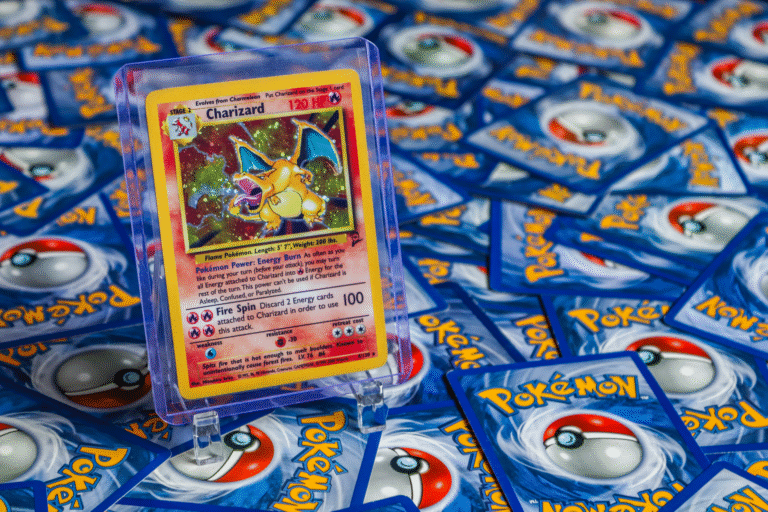
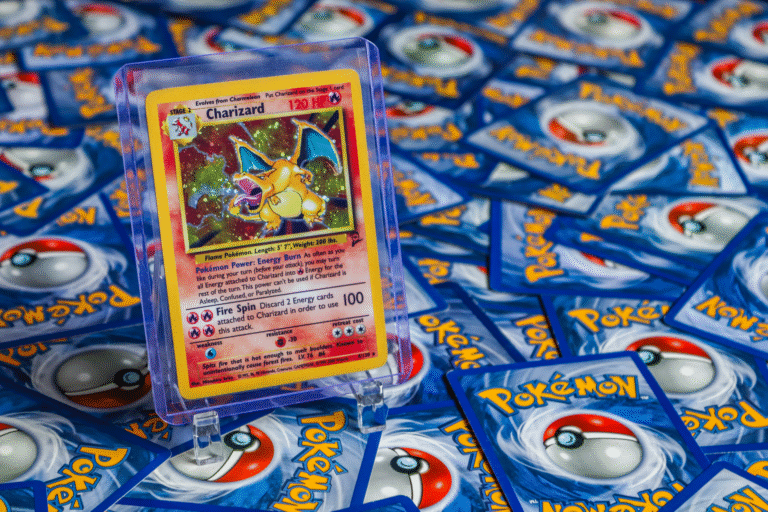
Consider a collector who pulls a holographic Charizard from a vintage booster box. Under the old system, they either sell it raw (ungraded) at significant discount, or pay $50 to grade it and wait eight weeks for results. with character recognition, they photograph the card, the system identifies it as a first edition Charizard, analyzes its condition against thousands of reference images, and provides an estimated grade and price range within seconds. The comparison is stark: knowledge that once required decades of expertise becomes commodified.

HOW COMPUTER VISION ACTUALLY IDENTIFIES POKÉMON CARDS
Computer vision systems work by extracting visual features from card images—the position of the Pokémon’s image, text alignment, color saturation, surface reflectivity—and comparing them against a database of known cards. Machine learning models trained on thousands of labeled card images can distinguish between subtle variants, such as a first edition Shadowless Charizard (worth $10,000+) and a later-run version (worth $500). The system learns patterns that even experienced graders might overlook at first glance. However, the technology has real limitations.
Lighting, angle, camera quality, and background all affect how accurately the system can read a card. A blurry photo or extreme lighting can cause misidentification. Counterfeit cards pose a major challenge—if a fake is well-made enough to fool human eyes in a photo, it may also fool the algorithm. The system is only as good as its training data, and rare, recently-printed variants may not yet exist in the database. A collector should never trust character recognition alone for high-value cards; it’s a fast filter, not a substitute for professional grading on premium purchases.
REAL-WORLD APPLICATIONS ALREADY IN USE
Several platforms have deployed character recognition for pokémon cards. Mobile apps like TCGPlayer’s price guide and CardMarket use image recognition to match cards and pull current market prices. Some third-party services use AI to screen cards for counterfeits before they’re listed on major marketplaces.
Stadium tournaments have experimented with automated deck-checking systems that scan card barcodes and images to verify legality and prevent proxy cards from entering competition. One concrete example: a collector using an app to catalog their collection can photograph each card once, and the system populates condition estimates, print editions, and market values automatically. This is a time-saver for large collections—manually recording 500 cards could take hours, whereas imaging them takes 20 minutes. The tradeoff is that the collector loses the hands-on knowledge they’d gain by physically handling and evaluating each card; they outsource understanding to an algorithm.

HOW CHARACTER RECOGNITION CHANGES PRICING AND VALUE DISCOVERY
Markets have always depended on information asymmetry: experienced collectors know which cards are rare or misprinted, so they can profit by buying from uninformed sellers. Character recognition democratizes that information. A new collector who finds an old Pokémon card at a garage sale can now photograph it and instantly know whether it’s worth $5 or $500. This reduces arbitrage opportunities and compresses pricing, bringing what experienced traders charged closer to true market value.
Comparison: the sports card market experienced this shift when PSA became dominant and real-time pricing became standardized online. Before that, dealers could exploit information gaps; after, margins tightened and pricing became transparent. Pokémon card pricing is moving in the same direction. The downside for established collectors is reduced profit potential from spotting undervalued cards. The upside for the market overall is greater fairness and easier entry for newcomers, which expands the total collector base and can increase overall card prices as demand grows.
AUTHENTICATION RISKS AND COUNTERFEIT DETECTION LIMITS
The rise of counterfeit Pokémon cards has become a major problem—sophisticated fakes can fool casual buyers and even some experienced collectors. Character recognition can help by flagging suspicious cards: misaligned text, wrong color values, incorrect font sizing. However, determined counterfeiters improve their fakes constantly. A system trained on counterfeits from 2023 may fail to detect improved fakes from 2025. The technology is an arms race, not a permanent solution.
Another limitation: authentication depends entirely on the camera and lighting. A high-end counterfeit photographed under poor lighting might look identical to a genuine card with a good photo. The algorithm can’t physically test paper weight, ink composition, or feel—factors that human experts and professional graders rely on. For cards worth more than $1,000, character recognition should never be the sole authentication method. It’s a preliminary filter, useful for bulk screening and casual verification, but not a guarantee of authenticity.

IMPACT ON CARD GRADING AND THE PROFESSIONAL GRADING INDUSTRY
If character recognition becomes widely accurate and trusted, professional grading companies face disruption. Why pay $50 for Beckett to grade a card when an AI system does it for free in seconds? The grading companies are responding by incorporating their own technology: PSA has invested in machine learning systems and digital grading standards. The future likely includes a hybrid model where character recognition provides fast, cheap preliminary grades, and professional graders focus on high-value cards, rare variants, and disputes where human judgment adds value.
This shift could reshape the economics of collecting. As grading becomes cheaper and faster, more cards get graded, which standardizes pricing and reduces the risk for buyers. Collectors who once avoided grading due to cost now budget for it routinely. The total volume of graded cards increases, potentially changing which cards are valuable—scarcity shifts from “ungraded vintage card with unknown condition” to “professionally graded modern card in perfect condition.”.
THE FUTURE OF POKÉMON CARD CHARACTER RECOGNITION
As computer vision improves, character recognition will likely integrate into broader collector platforms: augmented reality apps that overlay card information when you point a phone at a physical card, blockchain-verified authentication that links to a card’s ownership history, or live price feeds that update as you browse a collection. The technology will also improve detection of printing errors and variants—rare misprints that are valuable to collectors could be automatically flagged during quality control, either protecting them from being destroyed or allowing collectors to hunt them efficiently.
The real-world magic isn’t in the technology itself, but in access. A 12-year-old opening their first booster pack can now verify that a rare card is genuine, understand its value, and decide whether to keep or trade it—knowledge that once required years of collecting experience or thousands of dollars spent on professional services. This democratization changes who participates in the Pokémon card market and how value is discovered.
Conclusion
Pokémon character recognition technology answers a fundamental need: collectors want fast, reliable information about their cards. Computer vision provides that by identifying cards, estimating conditions, and flagging potential counterfeits instantly. The real-world impact is already visible in apps, marketplaces, and grading services integrating AI-powered tools. The technology isn’t perfect—it struggles with extreme conditions, rare variants, and sophisticated fakes—but it shifts the baseline of knowledge away from gatekeepers and toward individuals.
For collectors, the next step is learning which tools are reliable and when to trust them. Character recognition works well for cataloging, price research, and preliminary authentication. For high-value cards, professional grading remains the standard. The magic is in the combination: use the technology to filter and understand your collection, then invest in professional verification for cards worth the expense. As the tools improve, the market becomes fairer, more transparent, and more accessible to everyone.