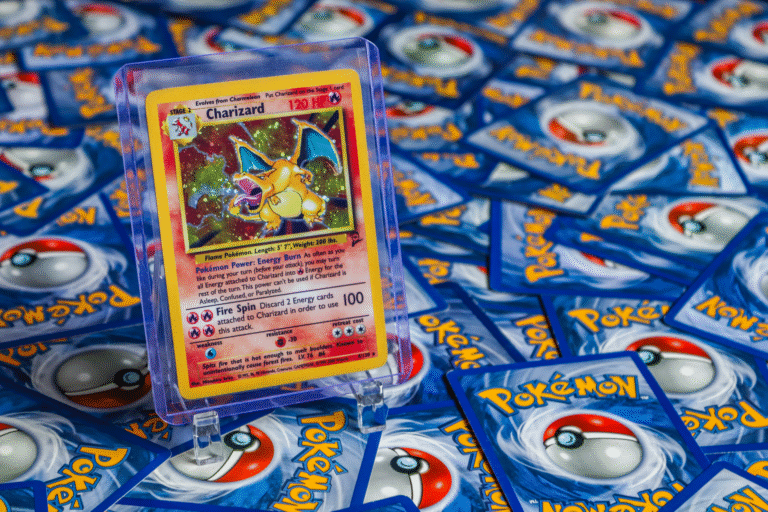
Pokémon’s 30th anniversary retail push is fundamentally reshaping how stores approach merchandise drops by normalizing frequent, high-volume releases across multiple categories simultaneously. Rather than single, concentrated launch events, retailers like Target are implementing a tiered drop strategy—with 65 items hitting stores and online on May 2-3, 2026, followed by a second wave of roughly 40 items on June 6. This approach distributes demand across multiple dates and dramatically increases shelf real estate dedicated to Pokémon, forcing stores to rethink storage, allocation, and inventory turnover in ways that older, smaller drops never required. The scale is unprecedented: Pokémon achieved the #1 retail position in the UK with 45% year-over-year growth, topped Germany with 59% growth, and maintained dominance in Italy with 70% growth in 2025 alone.
What makes this different from prior anniversary campaigns is the integration of multiple product categories—apparel, accessories, home goods, food, and beverages—priced from $3.50 to premium tiers, with nearly half the assortment under $20. This accessible price point combined with the sheer volume of SKUs means stores cannot treat the 30th anniversary as a boutique event. It requires rethinking display logistics, stock rotation, and how promotional inventory integrates with regular retail flow. The old model of a single “drop day” when limited items sell through is giving way to a longer retail window with repeated replenishment cycles.
Table of Contents
- Why This Year’s Momentum Demands Retailers Rethink Drop Logistics
- The Multi-Drop Model and Its Impact on Stock Depletion Patterns
- How Card Market Surge Intensity Reshapes What Retailers Stock and Feature
- Allocation Strategy and the Challenge of Fairness in High-Demand Launches
- Stock Sustainability and the Risk of Market Saturation
- Global and Regional Variations in Anniversary Strategy
- What the 30th Anniversary Sets as Standard for Future Drops
- Conclusion
Why This Year’s Momentum Demands Retailers Rethink Drop Logistics
The raw market data explains the pressure stores now face. pokémon card sales alone increased 10-fold year-over-year, with the broader trading card category surging 200% between February 2024 and June 2025. This isn’t speculation—it’s measurable, repeated purchasing behavior. In France, Pokémon became the top toy property with 59% growth and 8.6% market share. These aren’t niche collector numbers; they’re mainstream retail metrics that make inventory allocation critical. When a brand moves from #3 to #1 in a major market like the UK (gaining 3.7% market share in a single year), retailers cannot treat that category as a side assignment anymore.
The franchise’s $150 billion lifetime revenue provides context for why retailers are willing to dedicate shelf space and logistical resources. This is not a passing trend that peaked in 2021. The 2025 data shows sustained, accelerating demand. For store managers, this means Pokémon inventory now competes for floor space with seasonal categories. A general merchandise retailer that allocated 50 square feet to Pokémon in 2024 may need 150 or more by mid-2026. The problem: that space has to come from somewhere, forcing difficult decisions about what to reduce or eliminate.

The Multi-Drop Model and Its Impact on Stock Depletion Patterns
Target’s two-wave strategy in May and June demonstrates a critical shift from the old “single drop” model to a distributed release calendar. The May 2-3 launch with 65+ items creates initial demand and allows retailers to gauge which products sell fastest. The June 6 second wave then restocks popular items and introduces new SKUs, extending the campaign’s shelf life and smoothing demand spikes. This theoretically reduces the chaos of a single sold-out event, but it creates new operational challenges: stores must maintain display infrastructure for six weeks or longer, and predict which items will remain hot by mid-June. However, the distributed model introduces a supply fatigue risk.
Retailers who stock heavily for the May drop may face overstock if June demand shifts. Conversely, undershooting May inventory because “there’s a June drop coming” can alienate collectors and damage brand relationship. Store employees must also manage customer expectations differently—explaining that a sold-out item might return in June requires communication overhead that a traditional drop avoids. The 100+ item assortment across multiple categories also means logistics become more complex. Apparel goes to the clothing department, home goods to housewares, cards to the trading section, and food items to grocery. Coordinating visual merchandising and pricing across departments stretches store operations.
How Card Market Surge Intensity Reshapes What Retailers Stock and Feature
The 10-fold increase in Pokémon card sales year-over-year explains why cards are likely featured prominently in the 30th anniversary retail push, even if the official assortment details focus on apparel and accessories. Collectors and players are proving through purchasing behavior that cards, particularly special sets and booster boxes, drive traffic. A store that stocks cards in June and sees 300% faster turnover than apparel is likely to adjust May’s allocation accordingly, reducing apparel inventory to make room for more cards. This reshaping happens behind the scenes in inventory planning but has real consequences for what collectors can actually find in stores. The card surge also explains why the Pokémon Company coordinated official campaign timing so precisely: Pokémon Day on February 27, 2026, Best Buy Trade & Play events on February 28, and the First Partner Illustration Collection on March 20 all staggered ahead of the May retail push.
These are demand-priming events. By May, collectors are already conditioned to expect new Pokémon product. The retail push then capitalizes on that momentum. What this means for store drops going forward: expect brands to coordinate official announcements, special releases, and retail partnerships more tightly. The days of a surprise store drop are becoming rarer; instead, drops are telegraphed weeks in advance to drive traffic and manage expectations.

Allocation Strategy and the Challenge of Fairness in High-Demand Launches
With 100+ items across multiple categories and price points starting at $3.50, retailers face an allocation decision: do you limit items per customer, do you first-come-first-served, or do you create a reservation system? Target’s approach is not fully public, but chains typically face pressure from collectors and casual buyers alike. Casual customers hunting a $3.50 item or a $20 shirt feel different expectations than card investors hunting booster boxes. Stores must communicate allocation rules clearly to avoid conflict, particularly on opening day of the May drop. One comparison worth considering: when Apple releases a new product, allocations are often public (two units per customer, online only, etc.).
Pokémon retail drops at Target don’t typically receive that level of formal communication, partly because the product mix is so diverse. A customer buying a Pokémon hoodie isn’t in direct competition with someone buying Pokémon cards, yet they compete for store labor and checkout attention. Practical limitation: stores with limited staff cannot manage high-volume drops effectively. A Target in a slow market may actually be better positioned to serve the 30th anniversary event than a crowded urban location, where lines and stockouts happen faster and more chaotically.
Stock Sustainability and the Risk of Market Saturation
One significant warning from the 30th anniversary push: the combination of 65 items in May, another 40 in June, and ongoing regular Pokémon inventory across other categories may exceed actual demand in some regions. The UK’s 45% growth and Germany’s 59% growth are national aggregates, masking regional variation. A small-town Target may not see comparable growth, yet corporate allocation will assume it does, leading to overstock and clearance markdowns. Collectors should watch whether items from the May drop are still sitting on shelves in July—that’s a signal that retailers allocated too aggressively.
Conversely, undershooting allocation risks alienating the audience the 30th anniversary is designed to capture: engaged collectors and players. If stores stock only conservatively, inventory sells through in 24 hours, and the extended campaign becomes a frustrating exercise in scarcity messaging. The sustainable middle ground requires careful demand forecasting and willingness to adjust June allocation based on May data. Retailers willing to restock fast-moving items and reduce slow-moving ones will win collector loyalty. Those that front-load inventory and abandon the category mid-June will face dissatisfaction.
Global and Regional Variations in Anniversary Strategy
Pokémon’s dominance varies significantly by region: Italy holds #1 at 7.1% market share with 70% growth, France at 8.6% with 59% growth, Germany at 5.5% with 59%, and the UK at 3.7% with 45%. This variance matters for retail strategy because European retailers may allocate percentage-wise more heavily to Pokémon than North American chains.
A Target in the US is working with different baseline assumptions than a Carrefour in France. The 30th anniversary push, while global in branding, will likely see more aggressive execution in Europe where Pokémon’s market position is stronger and growth velocity is higher. Collectors in regions with lower Pokémon market penetration may actually find better inventory availability during the anniversary push, as corporate allocation tilts toward hot markets.
What the 30th Anniversary Sets as Standard for Future Drops
The tiered, multi-date, multi-category approach Pokémon is pioneering will likely become the template for other major collectible and entertainment brands. Rather than single-day chaos, distributed drops smooth demand and extend promotional windows. Retailers will expect more coordination from brand teams on announcement timing, allocation guidance, and restocking schedules. For card collectors specifically, this signals that special sets and anniversary releases will increasingly be handled through mass-market retailers like Target and Best Buy rather than solely through hobby shops. That democratizes access but also means scarcity becomes harder to manufacture and maintain.
The 30th anniversary edition cards may be widely available at moderate prices, reducing collectibility value compared to older, smaller releases. Looking ahead, the success or failure of Target’s May-June rollout will influence how the Pokémon Company coordinates retail for future major events. If the two-wave approach sells through cleanly and satisfies collectors, expect it to repeat. If June shows significant overstock, retailers will tighten allocation for the 40th anniversary. The $150 billion franchise value means retailers will continue dedicating premium space to Pokémon, but that space is now a competitive asset. Other collectibles and entertainment brands are watching this launch carefully.
Conclusion
Pokémon’s 30th anniversary retail push is reshaping store drops by replacing the old single-event model with distributed, multi-category campaigns that integrate with regular retail inventory. Target’s May 2-3 launch of 65+ items followed by a June 6 restock of roughly 40 more items demonstrates that anniversary celebrations are now extended retail events, not one-day spectacles. The underlying growth—10-fold card sales increase, #1 market positions in multiple major regions, and $150 billion franchise value—makes this level of retailer commitment sustainable and permanent. For collectors, the practical takeaway is that 30th anniversary availability will be broader and longer-lasting than prior special releases, reducing the urgency to hunt stores on day one.
However, the early days of May will still see concentrated demand and potential stockouts of popular items. Watching May sell-through data and adjusting expectations for the June restock accordingly is the collector’s best strategy. For retailers, this anniversary signals that Pokémon is no longer a boutique category—it requires serious logistical planning, cross-departmental coordination, and willingness to replenish and adjust allocation based on real demand signals. The stores that execute this well will capture loyalty and traffic. Those that treat it as a one-time promotional event will miss the sustained opportunity that Pokémon’s 2025 momentum has created.