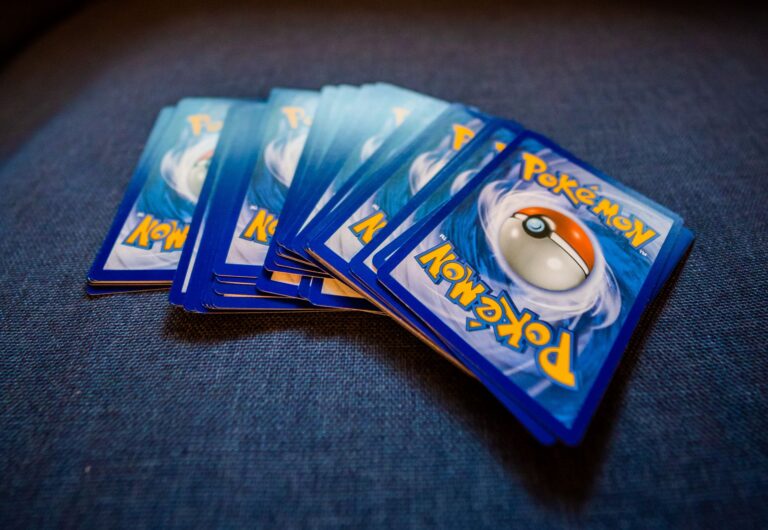
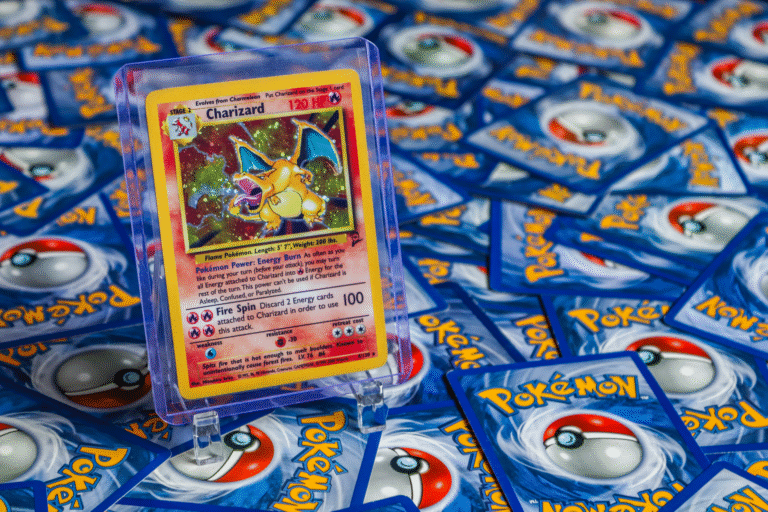
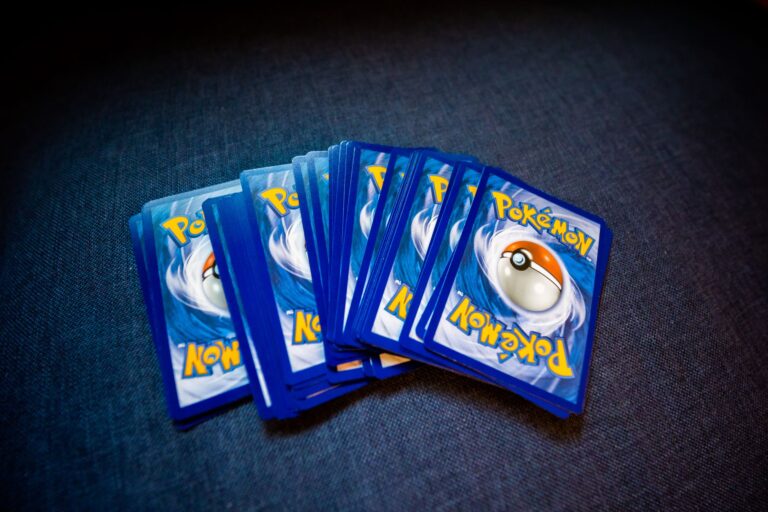
Pokémon cards have become one of the most fiercely contested retail hunts in collectibles again—not because of artificial scarcity, but because demand has fundamentally outpaced the industry’s ability to produce and distribute cards at scale. Between February 2024 and June 2025, Walmart experienced a 200% surge in trading card sales overall, with Pokémon cards alone increasing tenfold year-over-year. The Pokémon Company printed 10 billion cards in fiscal year 2025/2026 alone, yet even at maximum production capacity, inventory disappears from shelves faster than retailers can restock. What started as a pandemic-era collecting boom has evolved into a structural market dynamic where nearly one in five adults actively purchase Pokémon cards, creating persistent retail competition that mirrors the shortages collectors experienced in 2020 and 2021.
This resurgence is different from previous waves. The competitive hunt today isn’t driven by artificial restriction—it’s driven by genuine demand compression where millions of collectors, investors, and casual buyers are competing for the same limited shelf space. Production has never been higher, yet availability remains elusive. Understanding why requires examining how a mobile game, a 30-year milestone, and fundamental supply chain constraints have converged to create retail conditions that haven’t been seen in years.
Table of Contents
- What Reignited the Pokémon Card Competitive Retail Battle
- The Production Paradox—Maximum Capacity Meets Unlimited Demand
- Retail Access Under Threat—Theft and Strategic Withdrawal
- Price Escalation and the Secondary Market Premium
- Scalping Versus Scarcity—The Demand Paradox
- Who’s Collecting Now—The Demographic Shift
- The 30th Anniversary Catalyst and What Comes Next
- Conclusion
What Reignited the Pokémon Card Competitive Retail Battle
The reignition of competitive pokémon card retail hunting traces directly to the October 2024 launch of Pokémon TCG Pocket, a mobile game that reintroduced millions of casual players to the trading card format. While the game exists separately from physical cards, it reignited dormant collector interest and brought new demographics into local card shops and retail chains. Simultaneously, 2026 marks Pokémon’s 30th anniversary, and the Pokémon Company is capitalizing on this milestone with a dedicated TCG set launching in September 2026 featuring Mew and Mewtwo, new card rarities, and all-foil pack options designed to appeal to both legacy collectors and newcomers. These two catalysts—one digital, one milestone-driven—hit at precisely the moment when retail infrastructure was already struggling to meet baseline demand. The timing has proven explosive.
Target is projected to surpass $1 billion in total trading card sales in 2025, a 70% increase from the prior year, with Pokémon representing the dominant category. January 2026 marked the highest average sales volume for booster packs and starter boxes on record, with over 1,000 units sold through major retailers. This isn’t a niche event; it’s a mainstream consumer behavior shift. Collectors report that Pokémon product often sells out within hours of restocking, particularly premium releases and anniversary-themed products. The difference from 2021 is that 2026’s shortages are happening despite record production levels, indicating genuine sustained demand rather than a temporary speculative bubble.

The Production Paradox—Maximum Capacity Meets Unlimited Demand
The Pokémon Company faces a structural constraint that defies easy solutions. As of March 2026, Pokémon has printed over 85 billion cards cumulatively since the TCG’s relaunch in 2021. In the 2025/2026 fiscal year alone, 10 billion cards rolled off production lines. Despite this staggering volume, the company has been operating at maximum production capacity since early 2025, meaning there is no buffer, no stockpiling room, and no ability to surge production in response to unexpected spikes. Every card printed is already allocated to distribution channels before it reaches the factory floor.
The constraint is architectural. The Pokémon Company announced a new printing facility spanning 1.27 million square feet that will double production capacity, but it won’t be operational until the end of 2028. This creates a three-year window where demand-driven retail competition will likely persist. Unlike chip manufacturing or automotive production, printing capacity cannot be quickly augmented through contract manufacturers or temporary facilities. The process requires specialized equipment, trained personnel, and supply chain coordination that takes years to establish. For collectors hunting Pokémon cards in 2026, this reality means shelf scarcity is baked into the system—it’s not a bug, it’s the current production ceiling.
Retail Access Under Threat—Theft and Strategic Withdrawal
Major retailers have begun making a counterintuitive move: withdrawing or severely limiting Pokémon card sales despite record demand. Target and Walmart have implemented purchasing limits, restricted shelf placement, and in some cases, discontinued high-value products due to organized retail theft. Theft has become such a significant problem that some retailers treat Pokémon cards like high-security items, locking them behind customer service desks or removing them from open shelves entirely. This creates an ironic situation where competitive retail hunting is being amplified by artificial supply constraints imposed by retailers themselves, independent of manufacturing capacity.
This development has created opportunity for specialized card shops and hobby stores. Independent retailers who implement basic security measures—such as limiting pack quantities per customer, checking identification, or requiring cashier involvement in purchases—have become the reliable source for collectors. Meanwhile, big-box retailers are reconsidering their commitment to the category. Target’s decision to reduce Pokémon card availability in some locations, allegedly due to shrinkage and demand volatility, represents a strategic withdrawal that concentrates supply in niche channels. The practical effect is that finding current-release Pokémon products at major retailers now requires timing, persistence, and often advance knowledge of restock schedules.

Price Escalation and the Secondary Market Premium
As retail shelf supply remains constrained, secondary market prices have responded sharply. Average Pokémon cards rose 46% year-over-year in January 2026, marking what market analysts called a “watershed moment” for the TCG market. On StockX, Pokémon card sales surged 367% year-over-year during the same period, with prices on desirable products climbing 50% to 100% above suggested retail. eBay reported ten consecutive quarters of surging trading card sales, with Pokémon consistently dominating category growth. The price escalation reflects a mix of genuine scarcity at retail and speculative secondary market dynamics.
A booster box that carries an $108 suggested retail price may sell on StockX or TCGPlayer for $180 to $250 within weeks of release. This gap creates an obvious arbitrage opportunity—if you can buy at retail, selling on the secondary market offers immediate 60% to 130% returns. This incentive structure has attracted professional resellers and scalpers, who now compete directly with collectors for retail inventory. The limitation of this market trend is that it benefits early adopters and those with consistent retail access, while discouraging casual collectors from entering the market. A new collector attempting to build a collection at secondary market prices faces a fundamentally different economics proposition than someone with reliable retail access.
Scalping Versus Scarcity—The Demand Paradox
The Pokémon TCG supply paradox has become increasingly clear: shortages persist not because total production is insufficient, but because demand-driven buying and scalping concentrate products away from retail distribution. With 10 billion cards printed annually, the theoretical supply per capita in North America is substantial. However, 60% to 70% of retail Pokémon product is purchased by resellers, investors, and collectors clearing shelves within hours of restock. This behavior creates the appearance of acute scarcity when the underlying issue is distribution concentration and velocity.
The warning here is critical for collectors: the premium prices you see on secondary markets largely reflect scalping pressure and arbitrage, not true product scarcity caused by manufacturing constraints. A collector paying $220 for a booster box instead of $108 is not paying for rarity—they’re paying a tax imposed by the secondary market. The system creates perverse incentives where casual collectors are priced out while speculators and resellers with volume advantage accumulate inventory for profit. Understanding this distinction matters because it shapes strategy: collectors with patience and retail access win significantly compared to those immediately purchasing from secondary markets. The retail hunt is competitive not because products are scarce, but because the economic incentive structure directs nearly every retail unit toward resale channels.

Who’s Collecting Now—The Demographic Shift
Nearly one in five adults in North America now purchase Pokémon cards, a demographic composition that has shifted dramatically since 2021. The collector base is no longer dominated by 8- to 16-year-old children reliving a 1990s nostalgia. Instead, collectors span from teenagers through retirement-age adults, with a significant cohort of 25- to 45-year-olds who view Pokémon cards as investment vehicles, nostalgia purchases, or serious collecting hobbies. This demographic diversity has expanded the addressable market and created competition across income levels.
The investment angle deserves specific mention. A significant portion of retail Pokémon card purchases are motivated by perceived investment potential rather than use or collection completion. This has compressed retail supply for active players and traditional hobbyist collectors, while attracting financial speculators who treat Pokémon boxes as alternative assets similar to sports cards or vintage collectibles. This trend has amplified retail competition because the investment demographic is less price-sensitive and more willing to hold inventory for appreciation, reducing velocity and turnover that would otherwise replenish shelf stock.
The 30th Anniversary Catalyst and What Comes Next
The Pokémon 30th anniversary milestone launching in September 2026 is shaping up to be the next major supply pressure point. The dedicated TCG set will feature all-foil booster packs, special card rarities, and premium products designed to commemorate three decades of the franchise. Based on pre-release discussions and Pokémon Company communications, this set is expected to be high-production-volume but quickly allocated due to collector demand. Industry analysts project that anniversary product will sell through retail inventory within days to weeks of release, similar to historical high-demand releases.
Looking beyond 2026, the completion of the new 1.27-million-square-foot printing facility by end of 2028 represents the only structural solution to retail scarcity. Once that facility becomes operational and ramps to full capacity, the Pokémon Company will theoretically be able to meet demand that currently exceeds their production ceiling. Until then, collectors should expect competitive retail conditions to persist through 2026 and 2027. The competitive hunt for Pokémon cards isn’t ending—it’s entering a new phase where production constraints and demographic demand sustain scarcity-like conditions despite near-record manufacturing volumes.
Conclusion
Pokémon cards have become competitive retail hunts again due to a convergence of structural and temporal factors: production capacity operating at maximum, a new mobile game reigniting collector interest, and a 30th anniversary milestone driving commemorative releases. The competitive environment is real, but it’s important to distinguish between genuine manufacturing scarcity and demand-driven distribution challenges amplified by resellers and secondary markets. With 10 billion cards printed annually and retail access remaining available through independent retailers and online channels, the hunt is challenging but not insurmountable for patient collectors with realistic expectations. The path forward depends on two timelines.
In the near term (2026-2027), expect continued retail competition, secondary market premiums, and strategic retail withdrawal from major chains. In the medium term (2028+), the Pokémon Company’s new manufacturing facility offers the potential for more consistent retail availability and reduced secondary market prices. For collectors entering the market now, the strategic advantage lies in developing retail relationships at specialized shops, understanding restock schedules, and managing expectations around secondary market pricing. The competitive retail hunt isn’t a temporary phenomenon—it’s the new baseline for Pokémon cards until manufacturing capacity fully catches up with demand.