Yes, German First Edition Pokemon Base Set cards, including Blastoise (Turtok in German), are now worth significant amounts—and prices continue climbing. What was once an overlooked segment of the collecting market has emerged as a legitimate investment category. A 1999 German Base Set 1st Edition holographic Blastoise in CGC 9 condition sits at the higher end of the German card value spectrum, reflecting a collector market that has finally recognized the rarity and desirability of these cards after years of treating them as budget alternatives to their English counterparts.
The shift is real and measurable. German First Edition cards were previously considered an “untapped market” with depressed values, but recent auction data and collector activity show that collectors are actively bidding up prices for quality specimens. A CGC 9 Blastoise isn’t a casual pickup—it represents serious cardboard that has caught the attention of serious collectors.
Table of Contents
- What Are German First Edition Pokemon Cards Actually Worth Today?
- Why Have German First Editions Been Undervalued for So Long?
- How Does Condition and Professional Grading Impact a German Blastoise’s Value?
- What Makes Blastoise Specifically Valuable Compared to Other German 1st Ed Holos?
- What Are the Risks and Limitations of German Base Set Investing?
- How Do German Base Set Prices Compare to Japanese and Other Language Editions?
- What Does the Future Hold for German Pokemon Cards?
- Conclusion
What Are German First Edition Pokemon Cards Actually Worth Today?
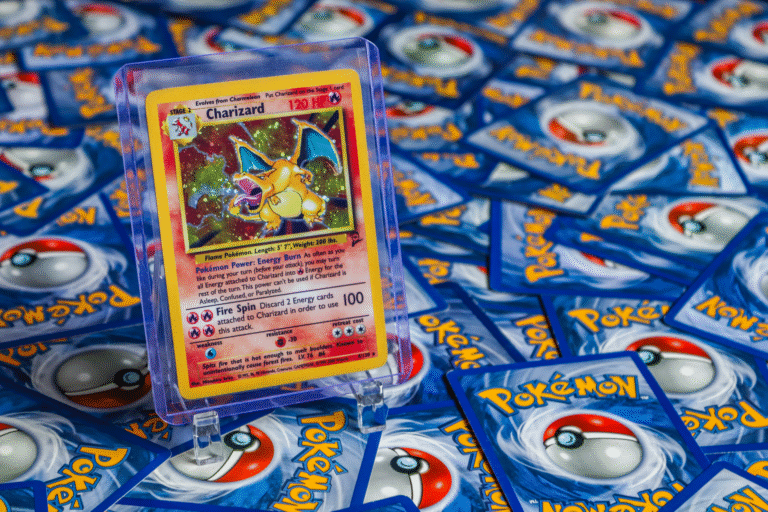
German first Edition base Set cards now average $32.76 on the secondary market, with prices ranging from as low as $0.99 for common cards up to $162.50 and beyond for premium holos. This range reflects the reality that not all German first editions carry equal value—the character matters significantly. Charizard (Glurak), the franchise’s most iconic and valuable card, commands approximately $162.50 for quality raw copies, with professionally graded examples and higher grades pushing into five-figure territory for top specimens. Other notable German 1st Ed cards hold solid value: Hitmonchan sits around $21.51, and Mewtwo around $16.32.
For Blastoise specifically, the pricing data shows these cards occupy a middle-to-upper tier of German Base Set valuation. While direct CGC 9 pricing wasn’t available in recent sales data, comparable graded holos from the same set and era suggest a Blastoise CGC 9 would command anywhere from several hundred to over a thousand dollars depending on exact market conditions and buyer demand. The important point: Blastoise is not a throwaway card anymore. It’s a legitimate collectible with momentum behind it.

Why Have German First Editions Been Undervalued for So Long?
For decades, German pokemon cards were the red-headed stepchild of the hobby. English Base Set first editions carried the brand recognition, the television exposure, and the collector mythology. German cards were “the other thing”—still 1999, still first edition, still genuinely rare, but without the cultural narrative. Collectors prioritized English, Japanese, and even other language variants before seriously considering German market supply.
This undervaluation created a market inefficiency that savvy collectors noticed. A 1999 German Blastoise 1st Edition holo is just as old, just as rare, and just as well-printed as its English equivalent—yet for years it sold for a fraction of the price. That disconnect has corrected itself. The collector base has finally understood that a first printing from 1999 is a first printing from 1999, regardless of which language appears on the card. Prices continue rising as this realization spreads, and supply remains limited because fewer collectors bothered to preserve German cards decades ago.
How Does Condition and Professional Grading Impact a German Blastoise’s Value?
Professional grading transforms a card’s value trajectory completely. A raw German 1st Ed Blastoise might sell for a few hundred dollars in high-condition form. That same card in a CGC 9 slab moves into an entirely different market—where collectors are buying the combination of rarity, age, condition, and third-party verification. A CGC 9 represents near-mint condition with minimal wear; the grade itself is a strong statement about the card’s playability and visual appeal.
The caveat: not all grading companies command equal respect in the market. CGC has built credibility in the Pokemon card space, but PSA grading still carries significant weight for certain collectors, and market preference shifts over time. A card graded CGC 9 will appeal to collectors seeking that particular grader, while others might prefer PSA. The grade number (9 in this case) is legitimately valuable—it separates the card from lower grades and puts it in the upper echelon of preserved specimens. However, getting a card graded costs $15-50+ per card, and if the underlying card is common or in mediocre condition, grading can be a value-destroying decision.

What Makes Blastoise Specifically Valuable Compared to Other German 1st Ed Holos?
Blastoise sits in the sweet spot of Pokemon Base Set economics. It’s not Charizard-level iconic, which means it’s genuinely more affordable while still being a recognizable, desirable Pokemon. The character has staying power; Blastoise has remained relevant in the actual trading card game for decades, which keeps it in the consciousness of both casual collectors and serious players. This dual appeal—nostalgia plus ongoing relevance—supports pricing better than cards that are purely nostalgic.
Compared to a German 1st Ed Mewtwo or Hitmonchan, Blastoise carries more visual appeal and broader collector interest. Compared to Charizard, it’s dramatically more affordable while still occupying a prestigious slot in the set. For someone building a German Base Set 1st Edition collection on a serious but finite budget, a CGC 9 Blastoise is the kind of card that signals genuine collecting intent without requiring the five-figure commitment that a top-grade Glurak demands. The tradeoff: you’re betting that secondary-tier holos appreciate in line with premium cards, which usually holds true but isn’t guaranteed.
What Are the Risks and Limitations of German Base Set Investing?
The biggest limitation is that German cards lack the volume of trading data that English cards possess. When you’re deciding whether a CGC 9 Blastoise is fairly priced at $800 versus $1,200, there’s less historical precedent to lean on. The market is thinner, meaning that if you ever need to sell quickly, you might not find a buyer at your expected price. A 1999 English Blastoise 1st Ed holographic PSA 9 has dozens of comp sales per month; a German equivalent might have a handful.
Market preference can shift unexpectedly. CGC grading has gained strength in Pokemon cards, but if collector sentiment swings hard toward PSA or another company, CGC-graded cards could see temporary softness. Additionally, the German card market is still appreciating partly on the newfound recognition by English-speaking collectors; this momentum isn’t guaranteed to continue forever. Some collectors remain skeptical that German cards will achieve full parity with English cards, and that skepticism could limit upside in a down market.
How Do German Base Set Prices Compare to Japanese and Other Language Editions?
German cards occupy middle ground between Japanese and English in terms of both value and collector focus. Japanese base set cards carry the earliest print dates and often the highest prices, especially in high grades. English cards have the volume and cultural narrative. German cards—along with Italian, Spanish, and French—sit in the secondary tier, but German specifically has outperformed other European language editions in recent years as collectors recognize the quality and rarity.
An example: a Japanese 1st Edition Base Set Blastoise holo in mint condition might fetch $2,000-3,000. An English 1st Edition in the same condition might be $1,500-2,000. A German 1st Edition raw in excellent condition might be $300-500. Now grade that German card to CGC 9, and you’re looking at a meaningful premium that reflects the grading cost and the increasing collector validation of German market cards. The progression shows that German cards are closing the gap, even if they haven’t achieved full parity.
What Does the Future Hold for German Pokemon Cards?
The trajectory points upward, but with gradual appreciation rather than explosive growth. As the English-language collector base continues to discover German cards and recognize their legitimacy, demand should sustain. Supply is fixed—there are only so many high-grade German 1st Ed cards from 1999 still in existence, and preservation rates were lower back when these cards were undervalued and underappreciated.
This classic supply-and-demand dynamic typically supports price appreciation over a 5-10 year horizon. The wild card is whether grading companies remain trusted, whether the broader Pokemon card market stays hot, and whether nostalgia for 1999 collectibles continues. If the English-language Pokemon card market cools significantly, German cards could underperform accordingly since they’re a secondary market riding a larger wave. The smart-money thesis: German First Editions represent legitimate rarity being recognized at last, with room to run, but without the guaranteed moonshot that would make a CGC 9 Blastoise a “can’t miss” investment in isolation.
Conclusion
A 1999 German Base Set 1st Edition Blastoise in CGC 9 condition is legitimately valuable—worth hundreds to over a thousand dollars depending on exact market conditions and buyer demand. German First Edition cards have transitioned from overlooked budget options to recognized collectibles, and Blastoise’s combination of character appeal, rarity, and quality makes it a strong mid-tier hold in that emerging market. The card’s value is real, backed by genuine collector demand and straightforward supply constraints.
If you’re considering purchasing one, understand that you’re buying a card with upside potential but also thinner market liquidity than English equivalents. The CGC 9 grade adds meaningful value and legitimacy, but it’s not a guarantee against future softness if broader market conditions change. For collectors building a serious 1999 Pokemon collection, a German Blastoise 1st Ed holo represents exactly the kind of card worth pursuing—recognizable, rare, and still affordably positioned compared to the absolute icons.