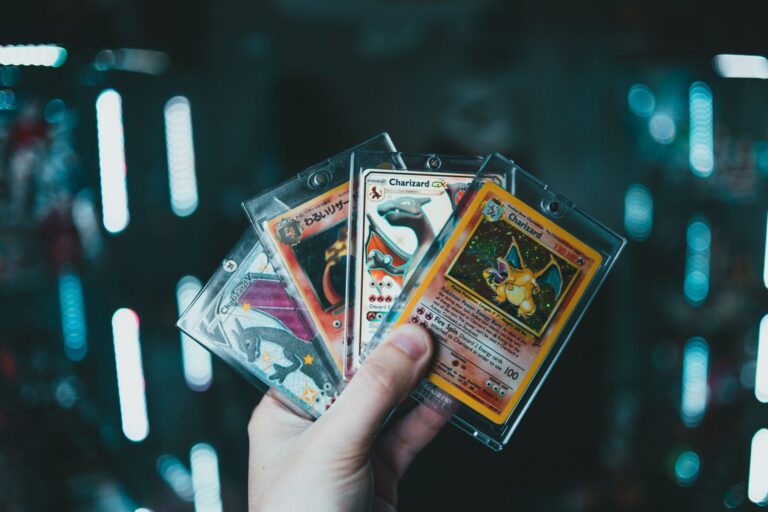
Pokemon Base Set cards are exploding in value because we are witnessing the convergence of three market forces: the Pokemon Company’s 30th anniversary celebration kicking off in January 2026, a stabilization and recovery of vintage card prices after a 30-50% correction from their 2021 speculative peak, and record-breaking auction sales that continue to reset all-time highs. In March 2026 alone, a Japanese Base Set Charizard sold for $1.7 million—a record for any Pokemon card—while more accessible 1st Edition Charizards have stabilized in the $3,000-$6,000 range after heavy volatility. This is not new demand appearing out of nowhere; rather, it represents serious money returning to the vintage Pokemon market as collectors and investors recognize that the deepest drops have already occurred.
The market data supports this narrative clearly. Pokemon cards averaged 46% year-over-year growth in early January 2026, with the Card Ladder Pokemon Index surging 116% over the entire previous year. The broader Pokemon TCG market now represents $2.7 billion in annual sales as of March 2026, holding 12% market share of the entire trading card game industry. Over the next five years, experts project the global TCG market will expand from $9.2 billion in 2026 to $16.9 billion by 2035, and Pokemon—as the category leader—will likely capture the majority of that growth.
Table of Contents
- How Did Pokemon Base Set Prices Jump 46% While the Broader Market Was Recovering?
- The Record-Breaking Sales: What They Tell Us About Market Direction
- Why Base Set Scarcity Amplifies Price Appreciation More Than Modern Cards
- Grading Impact: Why PSA Certification Became the Market’s Central Pillar
- Market Risks and Why the 2021 Bubble Serves as a Cautionary Tale
- The 30th Anniversary Catalyst and Its Duration
- Five-Year Forecast and the Structural Case for Pokemon Growth
- Conclusion
How Did Pokemon Base Set Prices Jump 46% While the Broader Market Was Recovering?
The recovery in Base Set prices reflects a fundamental reset in collector psychology after the 2021-2022 bubble. During that period, vintage cards were treated as pure speculative assets, with investors chasing percentage gains rather than understanding scarcity. Prices peaked irrationally, then corrected sharply as the speculative money fled. What’s happening now in 2026 is different: buyers are re-entering with longer time horizons and realistic expectations. The 46% growth in early 2026 was accelerated by nostalgia-driven demand tied to pokemon‘s 30th anniversary celebrations, which began January 30, 2026, and will sustain momentum throughout the entire year. The Card Ladder Pokemon Index increase of 116% over the past year is particularly telling because it measures broad market movement, not just trophy cards. This means mid-range and lower-grade cards are appreciating alongside the headline-grabbing $1.7 million sales.
A PSA 8 Charizard that sold for $500 two years ago now commands $900-$1,100. Unlimited Charizards have moved from the $200-$300 range to $300-$500. This broad-based appreciation indicates genuine collector demand rather than whale-driven speculation—when price gains are scattered across grade levels, you’re seeing real market adoption, not artificial inflation. However, this recovery comes with a critical caveat: vintage Pokemon prices remain 30-50% below their 2021 peak across most grades and conditions. For investors who bought at the absolute top of the bubble, this means break-even or modest losses remain likely even after the recent 46% jump. The lesson here is that recovery does not equal a return to previous records immediately. It takes time.

The Record-Breaking Sales: What They Tell Us About Market Direction
The $1.7 million sale of a Japanese Base set charizard on March 3, 2026, and the $550,000 price achieved by a 1st Edition Charizard at Heritage Auctions in late 2025 serve two different functions in the market. The $1.7 million sale is a publicity event—a record-setter that generates headlines and brings mainstream attention to the hobby. These extreme sales happen when a collector or institution with deep pockets decides that scarcity and historical significance justify a premium that far exceeds typical market prices. The $550,000 1st Edition sale, by contrast, signals what serious but less extreme buyers are willing to pay, and it’s still extraordinarily high. The gap between these two prices reveals how concentrated the market actually is at the top: there’s a vast difference between a Japanese Base Set (rarer, only 122 PSA 10 examples exist globally) and a 1st Edition English Charizard (more common, but still extraordinarily limited).
Current pricing data shows the tiering clearly. Unlimited Charizards hover in the $300-$500 range—the entry point for actual Base Set cards with real demand. 1st Edition examples command $3,000-$6,000, reflecting their 10-15 times scarcity premium. PSA 10 specimens jump to $15,000 and beyond, and Japanese Base Set PSA 10 cards—with only 122 known to exist—trade in the $150,000-$200,000 range, which puts them within striking distance of the March record. This price ladder tells you exactly where the value is concentrated: at the intersection of historical significance, extreme scarcity, and perfect preservation. The warning embedded in these numbers is obvious: most collectors will never participate in the PSA 10 segment, and the record-breaking sales can create false expectations about what your own cards might fetch.
Why Base Set Scarcity Amplifies Price Appreciation More Than Modern Cards
Base Set cards command premium valuations because of supply-side constraints that simply do not exist in modern printing. Base Set was released in 1999-2000, with production running for roughly two years before the set rotated out. Wizards of the Coast printed no restock, no booster boxes twenty years later, no second editions. What was printed is what exists, and much of that has been lost, damaged, or warehoused in attics where humidity and light exposure have destroyed condition. Only a tiny fraction of printed Base Set cards survive in near-mint condition, and even fewer have been professionally graded and verified. The number of PSA 10 Base Set Charizards—122 copies globally—represents the hard ceiling of scarcity for this particular card at this particular grade. You cannot print more. You cannot import them from overseas.
You cannot find a new stash in someone’s garage that contains thousands of them. This makes high-grade Base Set cards fundamentally different from modern Pokemon cards, where the Pokemon Company can print virtually unlimited supply. Modern cards may see limited print runs occasionally, but the reprint cycle is constant and unpredictable. A modern chase card you hold today might see a reprint announcement tomorrow, cutting its value by 50% overnight. That risk does not apply to Base Set. This is the primary reason experts project high-grade Base Set specimens will appreciate 30-50% in 2026—the supply is truly fixed. However, this scarcity argument has a built-in limitation: it only applies to cards in PSA 9-10 condition. A Base Set Charizard in PSA 6 (excellent condition) will not appreciate as dramatically as a PSA 10 because the market for lower grades is larger and less insulated from downward price pressure. If the broader market corrects again, PSA 6 and PSA 7 cards will feel the pressure faster than pristine examples.

Grading Impact: Why PSA Certification Became the Market’s Central Pillar
The pricing tiers I outlined above all assume professional grading by PSA (Professional Sports Authenticator) or similar services. Raw, ungraded Base Set cards occupy a completely different market tier—they typically sell for 20-40% discounts compared to their PSA-graded equivalents, even if a knowledgeable collector asserts they’re the same condition. This grading premium has become the market’s central pillar, which is a critical insight for anyone considering buying Base Set cards as investments. A PSA 9 Charizard might be worth $12,000, but the same card in raw condition might fetch $7,000-$8,000 if you can even find a buyer willing to grade it at their expense. The grading market itself has become a constraint on supply. PSA’s turnaround times have expanded substantially as demand for grading has surged.
A submission you make today might wait 3-6 months for a grade, which ties up capital and introduces timing risk—if prices drop while your card is in the queue, you may regret submitting it. This is a real, practical problem that wealthy collectors increasingly avoid by buying already-graded cards rather than submitting raw cards themselves. The tradeoff is paying premiums for existing slabs, but you eliminate the wait and the re-grade risk. Comparison: A raw Base Set Charizard purchased at a flea market for $2,000 might genuinely be PSA 8 condition, but you’ll spend $100-$300 in grading fees and face a 3-6 month wait. If it comes back as PSA 7 instead, your perceived asset just dropped $4,000 in value overnight. Most collectors now prefer buying the already-graded card at a known price, even at a markup, over taking the risk of downward regrading. This preference has created pricing stability at the top of the market—less supply uncertainty means less price volatility.
Market Risks and Why the 2021 Bubble Serves as a Cautionary Tale
The 30-50% price decline from 2021 to the market bottom in 2023-2024 should be the first thing anyone considering Base Set investments understands. In 2021, speculative froth and stimulus-driven spending pushed Pokemon card prices to levels that had no fundamental support. A PSA 9 Charizard briefly traded above $55,000 in some transactions. That was bubble behavior, pure and simple. When reality reasserted itself—stimulus ended, interest rates rose, recession fears emerged—buyers withdrew and prices collapsed. The recovery we’re seeing now in 2026 is from the depressed levels, not a return to those peaks. This distinction matters enormously.
The expert consensus for 2026 reflects this caution: 50% of analysts project neutral scenarios with 5-10% annual appreciation, 30% project bullish scenarios with 15-25% annual appreciation, and 20% still project bearish scenarios with -10 to -20% declines. One-fifth of the professional forecasting community thinks Pokemon cards are still overvalued. Their argument is straightforward: the 30th anniversary celebration will eventually end, stimulus-driven demand will prove temporary, and macro headwinds (recession, inflation, credit tightening) could return. They’re not wrong; they’re just betting against historical sentiment, which is always a difficult bet to win. The genuine risk for collectors is overestimating the stability of current prices. Pokemon cards remain volatile compared to traditional collectibles like fine art or rare coins, precisely because they derive value from hobby participation rather than universal cultural agreement. If the anime is cancelled, if the Pokemon Company mismanages the 30th anniversary, or if another trading card game suddenly surges in popularity and captures mindshare, the market could contract rapidly. This is why most financial advisors recommend treating Base Set cards as a speculative asset class, not a core holding.
The 30th Anniversary Catalyst and Its Duration
Pokemon’s 30th anniversary, which began January 30, 2026, serves as a concentrated demand driver that’s almost impossible to overstate. The Pokemon Company has committed to year-long celebrations, special product releases, and sustained marketing. This creates a 12-month window during which casual collectors, gift-buyers, and nostalgic adults are re-engaging with the hobby at elevated rates. The 46% growth we saw in early 2026 is partially attributable to this anniversary effect, and it’s reasonable to expect that growth to sustain—albeit at a slower rate—through the remainder of 2026. However, anniversaries are temporary.
In January 2027, the 30th anniversary celebration ends, the special products stop flowing, and marketing budgets rotate to other initiatives. History suggests that temporary demand spikes often precede corrections, not continued appreciation. Think of the 25th anniversary in 2024—there was a bump in interest, but no sustained market transformation. The same likely applies to the 30th anniversary. The opportunity window is this year. For collectors making strategic purchases, they should expect 2027 to bring headwinds, not tailwinds.
Five-Year Forecast and the Structural Case for Pokemon Growth
The TCG market’s projected growth from $9.2 billion in 2026 to $16.9 billion in 2035 creates a structural tailwind for all trading card games, especially Pokemon. A 6.9% compound annual growth rate over nine years is sustained, but not explosive. It reflects demographic growth (more young collectors entering the hobby), geographic expansion (Pokemon games gaining ground in emerging markets), and increased price levels (not just more units sold, but higher unit values). Within this context, Base Set cards occupy the premium position: they’re collectibles backed by supply scarcity, historical significance, and the universal brand recognition of Pokemon. The 30-50% appreciation forecast for high-grade Base Set specimens in 2026 is realistic because it’s constrained by the 122 PSA 10 examples that exist.
But extending that 30-50% growth rate for five consecutive years is not realistic. Simple math shows that a $15,000 PSA 10 Charizard growing at 40% annually would reach $157,000 in five years—well beyond the $150,000-$200,000 currently asked for Japanese Base Sets. Markets do not operate on consistent, compounding growth curves; they experience cycles of enthusiasm and correction. A more realistic five-year scenario sees Base Set cards appreciating 8-12% annually on average, with uneven distribution—some years producing 20%+ gains, others producing 0-5% or even negative returns. This matters because it means Base Set cards should be treated as a long-term hold, not a short-term flip.
Conclusion
Pokemon Base Set cards are exploding in value in 2026 due to a combination of genuine supply scarcity, market recovery after the 2021-2022 correction, and the momentum generated by Pokemon’s 30th anniversary celebration. The data is compelling: 116% annual growth in the broad Pokemon market, $2.7 billion in annual TCG revenue, and record-breaking sales that validate the market’s collective belief in these cards’ importance. High-grade Base Set specimens—particularly PSA 9-10 examples—represent the deepest point of this value concentration, with only 122 PSA 10 Charizards known to exist globally. For the next five years, expect volatility, but the direction should remain upward if the Pokemon Company continues executing competently and the broader economy remains stable.
The anniversary celebration provides a one-year tailwind that begins in January 2026 and ends in December 2026. Collectors and investors should use this window strategically: this is the highest-demand environment you’re likely to see in 2026. After January 2027, expect growth rates to normalize and market sentiment to cool. The lesson from 2021’s bubble is clear: cycles matter, timing matters, and entry price matters enormously. Buy with conviction, but without excess leverage, and plan to hold for at least 3-5 years to absorb the inevitable corrections that will come.