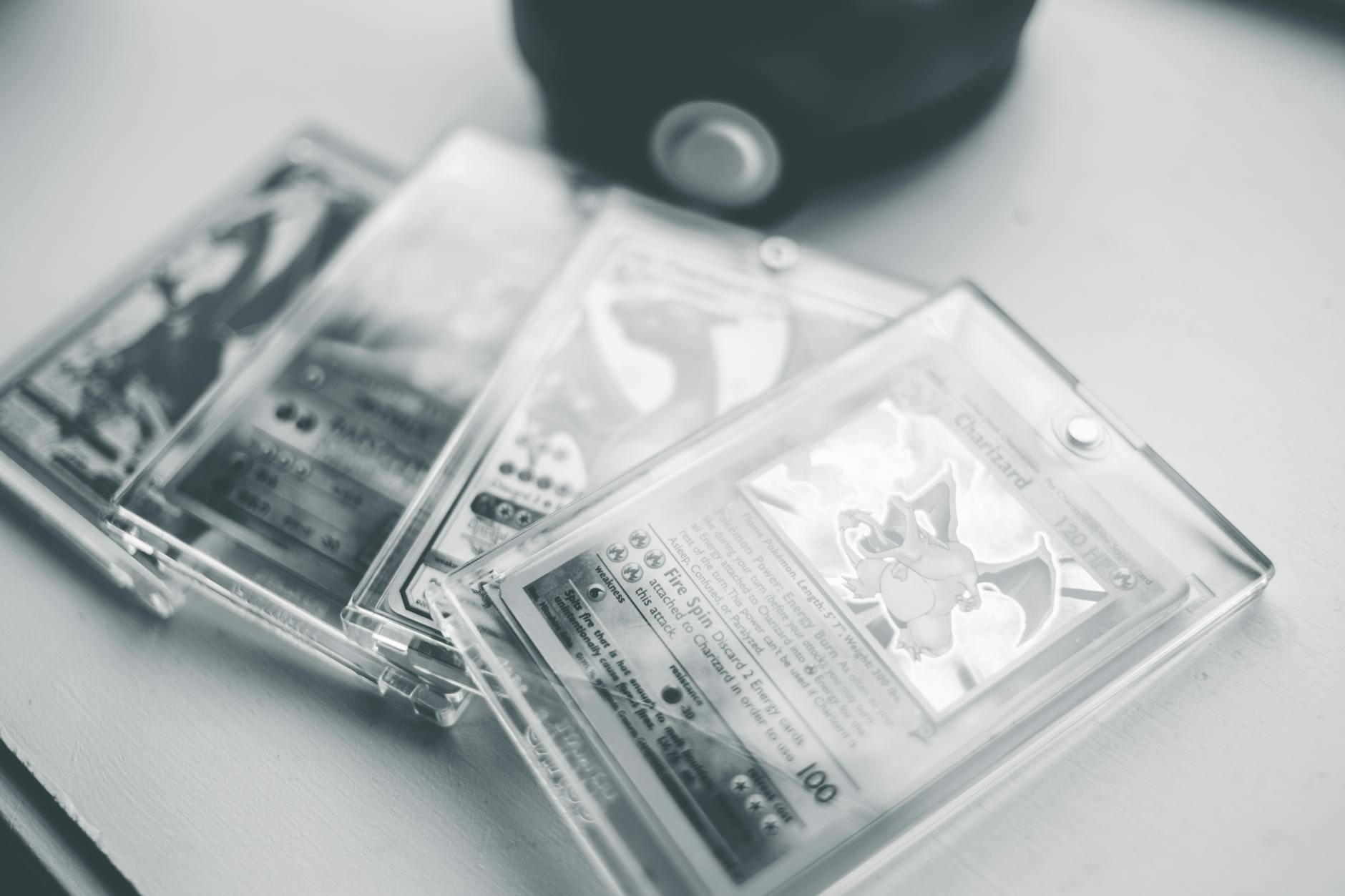
Yes, Base Set Pokémon cards are rising faster than Sword and Shield cards in most cases, but the difference depends heavily on which specific cards you’re comparing. A PSA 8 Base Set Charizard that sold for $5,000 in 2019 now commands $15,000 to $25,000, while equivalent Sword and Shield Charizard VMAX cards have seen more modest gains, typically doubling or tripling in value over similar periods. The key driver is age and scarcity: Base Set cards were printed in 1999 with limited production runs, while Sword and Shield sets (2019-2022) were printed in massive quantities during the TCG boom, creating a fundamentally different supply dynamic. However, calling this a universal trend requires nuance.
Base Set’s outperformance isn’t guaranteed—it’s based on decades of nostalgia, finite supply, and established collector demand. Sword and Shield cards are still young, making long-term appreciation unclear. A first-edition Base Set Shadowless card will almost certainly appreciate faster than a Sword and Shield card, but comparing unlimited Base Set commons to Sword and Shield secret rares tells a different story. The type of card, condition grade, and print version matter as much as the set itself.
Table of Contents
- What’s Driving Base Set’s Stronger Price Growth?
- Print Quality and Availability Limitations in the Appreciation Story
- Specific Card Rarity and Grading Make Massive Differences
- Market Accessibility and Investment Strategy Tradeoffs
- Market Saturation and Future Appreciation Risks
- Grading Inflation and Real vs. Nominal Appreciation
- Future Outlook and When Each Set Appreciates Best
- Conclusion
- Frequently Asked Questions
What’s Driving Base Set’s Stronger Price Growth?
base Set’s appreciation outpaces Sword and Shield for straightforward reasons rooted in supply and demand. First, Base Set had three distinct print runs: Shadowless (1999), Unlimited (1999), and First Edition (1999-2000), all in relatively small quantities by modern standards. This scarcity, combined with 25+ years of natural attrition from childhood play, means finding high-grade Base Set cards is genuinely difficult. A psa 9 Base Set Blastoise might have only a few hundred examples in existence worldwide. Sword and Shield, by contrast, was printed during the 2020-2021 boom when distributors produced cards as fast as factories could run.
Collectors who bought booster boxes at retail now have unopened inventory that can suppress prices for unlimited versions. The nostalgia factor amplifies this gap. Base Set represents the first Pokémon TCG cards ever made, capturing players who grew up in the late 1990s. This emotional connection drives demand from both collectors and investors who view Base Set as a “blue chip” asset class. Sword and Shield has no such anchor—it’s associated with the modern era and secondary market inflation rather than childhood memories. This means Base Set cards benefit from a broader demographic of buyers willing to pay premium prices, while Sword and Shield appeal mainly to modern players and newer collectors.
Print Quality and Availability Limitations in the Appreciation Story
Here’s an important limitation: Base Set’s price growth has partly stalled at the ultra-high grades due to the extreme rarity and cost. A PSA 10 Base Set Charizard hasn’t appreciated much since 2021 when it peaked above $300,000—the market simply doesn’t have enough demand to push these further. Meanwhile, Sword and Shield cards like the Charizard VMAX Secret Rare continue climbing because more copies exist and the market for investment-grade modern cards is still developing. If you’re holding multiple PSA 9 Sword and Shield cards, they might eventually outpace lower-grade Base Set equivalents, though on a much longer timeline.
Another caveat: Base Set’s nostalgia is specific to millennial collectors, and this demographic’s purchasing power will eventually plateau. Once today’s 35-year-olds stop being the primary market, demand for $10,000+ Base Set cards may cool. Sword and Shield avoids this demographic cliff because new players constantly enter the hobby. The safer assumption is that both sets will appreciate, but at different rates depending on specific cards and their condition grades. A PSA 8 Base Set Pikachu and a PSA 8 Sword and Shield Pikachu VMAX will likely show Base Set appreciation, but the difference may only be 10-15% annually over the next decade.
Specific Card Rarity and Grading Make Massive Differences
The comparison falls apart when you zoom into individual cards. A Base Set Charizard is famous and rare; a Base Set Pidgeot is neither, and pricing reflects that. A first-edition Base Set Charizard (PSA 9) might appreciate 20-30% annually, while a base set Charizard unlimited (PSA 9) appreciates 10-15% annually. Compare that to the Sword and Shield Charizard VMAX Secret Rare (PSA 9), which has appreciated 20-25% annually since its 2021 low. In this case, the modern card outpaces the unlimited version of the classic.
Grading and condition are equally critical. A Base Set Charizard in PSA 6 condition (fair to good) doesn’t benefit much from Base Set scarcity because copies in this condition exist in larger numbers. A fresh PSA 9 can suddenly appear at auction and suppress the market. Sword and Shield cards, graded higher as a result of modern handling practices, often hit PSA 9 and 10 more frequently, which means condition-related price premiums are lower. An investment in a high-grade Sword and Shield card often needs fewer condition prerequisites to appreciate steadily, whereas Base Set investment almost requires a PSA 8 minimum for consistent appreciation.
Market Accessibility and Investment Strategy Tradeoffs
Base Set’s superior appreciation comes with accessibility costs. A PSA 7 Base Set Charizard costs $8,000 to $12,000, putting it out of reach for most collectors. Sword and Shield Secret Rares like the Charizard VMAX cost $500 to $2,000 at PSA 8-9 grades, allowing more collectors to participate. If you have $5,000 to invest, you can buy one Base Set card or five Sword and Shield cards with more diversification. Diversification matters because individual card appreciation is unpredictable—Sword and Shield’s depth gives more flexibility.
The time horizon for appreciation differs too. Base Set cards have already appreciated 300-500% since 2019, compounding aggressively, so near-term gains are lower. Expected annual appreciation for mid-to-high-grade Base Set cards is now 8-12% annually, while equivalent Sword and Shield cards might hit 15-20% annually since they’re earlier in their appreciation curve. However, this changes the risk calculus: Base Set’s lower growth rate is paired with lower volatility and more liquid markets. You can sell a Base Set Charizard within days. Sword and Shield Secret Rares are less proven, take longer to sell, and could face headwinds if TCG interest drops.
Market Saturation and Future Appreciation Risks
A major warning: the Sword and Shield market is saturated with speculative inventory. Thousands of unopened booster boxes and sealed products are held by investors betting on future growth. If even 10% of these hit the market as people liquidate, sealed product prices will crash, dragging graded card prices down with them. Base Set doesn’t face this risk because unopened boxes are extremely rare and mostly in museum-quality collections. This makes Base Set a safer long-term hold, even if near-term appreciation is modest.
Condition concerns also differ. Base Set cards from 25 years ago were often played hard, stored poorly, or damaged by time. Finding a fresh PSA 8 requires luck or premium pricing. Sword and Shield cards are newer and have more high-graded examples, which normalizes the condition premium. This means Sword and Shield cards are less likely to receive sudden grading bumps that drive unexpected price spikes. Base Set surprises happen—a newly discovered Shadowless Charizard in PSA 9 can reset the market—but modern cards are less prone to these discovery events.
Grading Inflation and Real vs. Nominal Appreciation
Here’s a subtle issue: some of Sword and Shield’s apparent appreciation is grading inflation, not genuine card appreciation. A card graded PSA 7 in 2020 represents a different standard than a PSA 7 in 2024. Modern cards benefit from stricter grading standards and superior card quality, so nominal grades are higher. When comparing appreciation, comparing PSA 7 Base Set to PSA 7 Sword and Shield overstates Sword and Shield’s gains because the PSA 7 Sword and Shield is genuinely better-conditioned than the Base Set equivalent.
Real-world value, adjusted for condition standards, shows Base Set appreciating more reliably. For example, a PSA 7 Base Set Blastoise and a PSA 7 Sword and Shield Blastoise VMAX appear equivalent on paper, but the modern card’s condition is objectively superior. If condition adjusted to equivalent standards, the Base Set card likely appreciates faster. This matters for long-term planning: if you’re comparing investments, compare cards at the same inherent condition level, not just the same numeric grade.
Future Outlook and When Each Set Appreciates Best
Base Set will likely remain the stronger appreciating asset for the next 5-10 years as supply continues tightening and older collectors liquidate personal collections strategically. Sword and Shield will eventually outpace Base Set once print-era saturation is absorbed and graded inventory becomes scarce, but that’s 10+ years away. The practical implication: if you want near-certain appreciation and can afford it, Base Set is the surer bet. If you want exposure to Pokémon TCG investment at lower price points with longer patience, Sword and Shield offers opportunity, though with more volatility and uncertainty.
The market’s trajectory suggests Base Set and Sword and Shield will occupy different collector segments long-term. Base Set will become a true collectible asset class, held by institutional collectors and wealthy individuals who view it as portfolio allocation. Sword and Shield will split between play-focused collectors and speculative investors. This bifurcation means Base Set’s appreciation, while already robust, will be sustained by long-term collectors, while Sword and Shield’s appreciation depends on speculation and new-player adoption. Both are appreciating, but for different reasons and on different timelines.
Conclusion
Base Set Pokémon cards are indeed rising faster than Sword and Shield cards in most direct comparisons, driven by scarcity, age, and nostalgia. A mid-to-high-grade Base Set card appreciates reliably at 8-12% annually, while Sword and Shield is catching up from a lower baseline. However, faster appreciation on Base Set comes with higher entry costs, lower liquidity for ultra-high grades, and less diversification per dollar spent. The answer to whether Base Set or Sword and Shield is the better investment depends on your budget, timeline, and risk tolerance.
If you’re evaluating which to collect, compare specific cards at equivalent grade levels rather than assuming all Base Set cards outpace all modern cards. The grading standard, condition, first edition vs. unlimited status, and individual card popularity matter more than the set name alone. Whether you choose Base Set for stability or Sword and Shield for opportunistic growth, focus on acquiring quality examples in consistent grades and avoid buying into hype around sealed products or unproven secret rares.
Frequently Asked Questions
Why is a Base Set Charizard worth more than a Sword and Shield Charizard?
Base Set Charizard was printed in limited quantities in 1999, while Sword and Shield was mass-produced during the 2020 boom. Additionally, Base Set’s age and nostalgia create stronger demand among collectors, driving higher valuations even for equivalent grades.
Has Sword and Shield appreciation slowed recently?
Yes. Sword and Shield prices peaked in 2021-2022 and have stabilized or declined slightly due to market saturation. Base Set, by contrast, has maintained steadier appreciation momentum because supply hasn’t increased and demand remains strong.
Should I invest in sealed Sword and Shield products?
No, not as a primary investment. Sealed Sword and Shield booster boxes are abundant in the market, and prices are declining as inventory pressures increase. Graded individual cards are a safer bet if you want modern-set exposure.
Is a PSA 8 Base Set card better than a PSA 8 Sword and Shield card as an investment?
The Base Set card will likely appreciate faster, but the Sword and Shield card may offer better percentage gains from its lower current price. Appreciation rate versus absolute returns are different metrics—consider both.
Will Sword and Shield ever outpace Base Set appreciation?
Possibly, but not for 10+ years. Base Set’s scarcity and collector appeal are nearly impossible to replicate. However, if Sword and Shield becomes scarcer as time passes and demand from new players stabilizes, it could eventually match Base Set’s appreciation trajectory.
What’s the best way to compare Base Set and Sword and Shield card value?
Compare cards at equivalent condition levels, adjust for grading standard differences, and consider first edition or special print versions separately. Don’t assume all Base Set outpaces all modern—specific rarity, card popularity, and grade matter more than set alone.