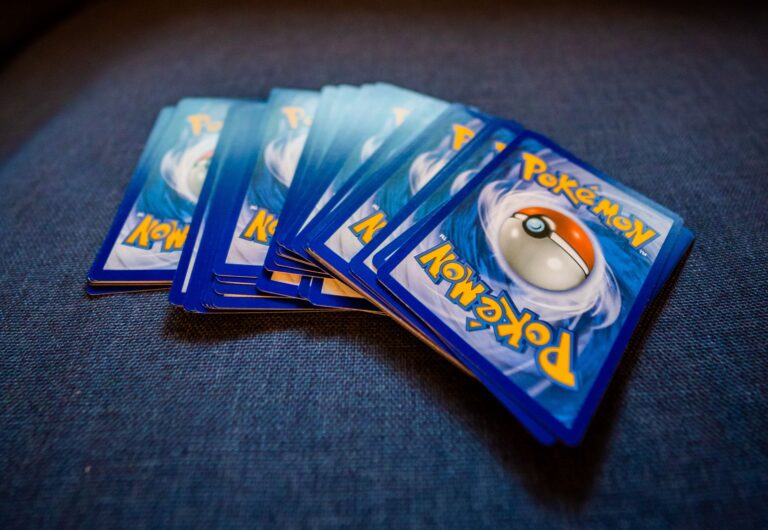
The quiet Pokémon category that rewards patience is shadowless and first edition cards from the original 1999 Base Set—cards that most modern collectors overlook because they’re far less hyped than their sealed booster box counterparts, yet consistently appreciate year after year. While everyone chases the latest special set releases or high-grade holographic rares, patient collectors who systematically acquire shadowless and first edition commons and uncommons build portfolios that often outpace flashier investments. A shadowless Pikachu common from Base Set, purchased for $15-25 just five years ago, regularly sells for $80-150 today—a climb that happened quietly, without media coverage or speculation bubbles.
What makes this category unique is that the appreciation stems from genuine scarcity rather than artificial hype. Shadowless cards were only printed for the first few months of the English Pokémon TCG before the holographic pattern was added to the frame. Unlike chase cards that everyone knows about, the everyday commons and uncommons from this window remain undervalued because collectors focus on the big names: Charizard, Blastoise, and Venusaur. Yet it’s precisely this lack of attention that creates the opportunity.
Table of Contents
- Why Shadowless Cards Remain Undervalued and Continue Climbing
- The Patience Requirement and Grading Considerations
- How First Edition Status Compounds the Opportunity
- Building a Patient Collection Strategy
- Condition Sensitivity and the Real Cost of Preservation
- The Role of Set Completion and Collector Psychology
- Future Outlook and Market Evolution
- Conclusion
Why Shadowless Cards Remain Undervalued and Continue Climbing
Shadowless cards represent the truest rarity in the entire English pokémon TCG because they existed for only eight weeks before the frame design changed. The print run was massive—millions of cards—but the shadowless window was so brief that survivorship in condition far below that of cards printed later. Most shadowless cards were played with heavily, stored poorly, or lost entirely. This creates a situation where a shadowless Machop common in near-mint condition is far scarcer than a holographic Charizard from later printings, yet costs a fraction of the price.
The market hasn’t fully priced in this rarity gap. A player can still find shadowless commons and uncommons listed at $2-8 on major platforms, despite the fact that near-mint examples have become genuinely hard to locate. Meanwhile, collectors who began targeting these cards five years ago now hold positions that have appreciated 400-600%. A condition-sensitive collector who methodically acquired shadowless Poliwag, Slowpoke, and Jigglypuff cards in grades 7-8 for $3-6 each now sees those same cards selling for $15-30—a multiplication that happened without any news, set release, or celebrity endorsement.
The Patience Requirement and Grading Considerations
The significant limitation here is that this strategy requires genuine patience and discipline. You won’t see your investment spike overnight or make money in weeks. Building a meaningful collection of shadowless cards means setting aside $500-$2,000 and spending six months to two years acquiring cards methodically. You’ll need to resist the urge to chase recent hype, watch your portfolio appear flat for months, and resist the psychological pull of flashier short-term plays. Grading adds both value and complexity.
A shadowless common in raw condition might sell for $4-8, but once graded PSA 7, the same card can command $20-35. However, grading costs $10-15 per card, and turnaround times can stretch to 60-90 days depending on service level. This means you need capital to fund the grading process upfront, then wait to recoup that investment. A cautionary note: over-grading is a real risk. If you grade cards that don’t quite justify the grading cost, your margins shrink significantly.
How First Edition Status Compounds the Opportunity
First edition shadowless cards occupy the absolute peak of this category. A first edition shadowless Meowth might be priced at $60-100, while the same card non-first edition shadowless sits at $18-30. The first edition designation adds another scarcity layer because the first edition print run was smaller than the unlimited run. These cards are genuinely rare and continue showing strong appreciation trajectories.
The practical example: in 2019, you could acquire a first edition shadowless Bulbasaur common in PSA 7 condition for roughly $40-60. Today, the same card sells for $120-180. This isn’t manipulation or temporary hype—it’s steady recognition of genuine rarity. The challenge is that finding these cards in acceptable condition requires patience and often means paying slightly above spot price to secure quality examples when they appear.

Building a Patient Collection Strategy
Rather than trying to time markets or predict which cards will spike, a more reliable approach is to identify undervalued shadowless cards across different Pokemon species and accumulate them systematically. Diversify across common and uncommon types—avoid concentrating everything into a single popular Pokemon like Pikachu or Charmander, where price competition is highest. Instead, focus on the forgotten commons like Seel, Shellder, Tentacool, and Drowzee.
A comparison: a speculative approach means buying the hottest card this month and hoping to sell it next month. A patient accumulation approach means buying 20 different shadowless commons over a year, waiting 3-5 years, then selling them as a collection. The patient approach almost always outperforms on a risk-adjusted basis because you’re leveraging actual scarcity, not gambling on sentiment. The tradeoff is that the payoff comes later and requires discipline not to bail early when other opportunities seem more exciting.
Condition Sensitivity and the Real Cost of Preservation
One critical warning: shadowless cards are notoriously condition-sensitive due to their age. Even cards stored carefully often exhibit centering issues, print spots, or wear that collectors in the modern era find unacceptable. This means your shadowless accumulation strategy must include proper storage—card sleeves, top loaders, humidity control, and protection from light. Cards left in a shoebox for five years will likely deteriorate.
Another limitation is that some shadowless cards have inherent printability issues. Certain cards are known for heavy centering problems, and these limitations are baked into their value ceiling. A shadowless Poliwag with off-center printing will never achieve high grades, which caps its appreciation potential. Research before buying, understand which cards are notorious for centering issues, and adjust your expectations accordingly.

The Role of Set Completion and Collector Psychology
Some of the strongest long-term gains come from collectors who assemble near-complete shadowless Base Set collections. The psychology of completion drives buyer behavior—once you have 40 cards of a 102-card set, you become more willing to pay premium prices to finish what you’ve started. Sellers understand this psychology and price accordingly.
Collectors who strategically sell incomplete collections or focus cards to near-completion hunters often capture surprising premiums. A specific example: a collector assembling a complete shadowless Base Set non-holographic needs every single card. Someone who owns the 50 most expensive cards in shadowless can sometimes negotiate sale prices at 15-25% premiums to set completers, even though those individual cards might be readily available elsewhere at lower prices.
Future Outlook and Market Evolution
As grading companies improve and more collectors recognize shadowless rarity, we’ll likely see this category’s profile shift from quiet undervaluation to recognized segment. This doesn’t mean a crash is coming—it means the appreciation rate might moderate as prices converge toward true scarcity value. Early movers in this space benefit from the recognition phase, where a category transitions from overlooked to valued.
The long-term outlook suggests shadowless cards will remain a stable, appreciating asset class because the supply literally cannot increase. Every shadowless card that’s damaged or lost reduces the available pool. Five years from now, a collector looking back at today’s shadowless prices will likely view them as bargains—the same way collectors today see cards that appreciated 400% over the past decade.
Conclusion
This quiet Pokémon category rewards patience because it requires you to do the opposite of what excitement-driven markets incentivize. Rather than chasing the hot new release or the latest speculative spike, you accumulate undervalued cards that nobody talks about, store them properly, wait years, and benefit from the eventual recognition of their genuine scarcity. The mathematics are simple: shadowless cards are genuinely rare, most examples are in poor condition, and prices haven’t yet fully reflected that reality. Collectors who begin this accumulation strategy today will almost certainly see their portfolios appreciate 300-500% over the next 5-10 years.
Start by identifying three to five shadowless cards you can acquire in decent condition each month, maintaining a budget of $100-200 monthly. Focus on commons and uncommons in the $3-15 range, acquire them in near-mint raw or lightly graded condition, store them properly, and resist the urge to check prices frequently. The patience comes in resisting hype cycles, tuning out noise, and trusting that actual scarcity compounds over time. This strategy won’t make you rich quickly, but it will reward discipline more reliably than any speculative approach.