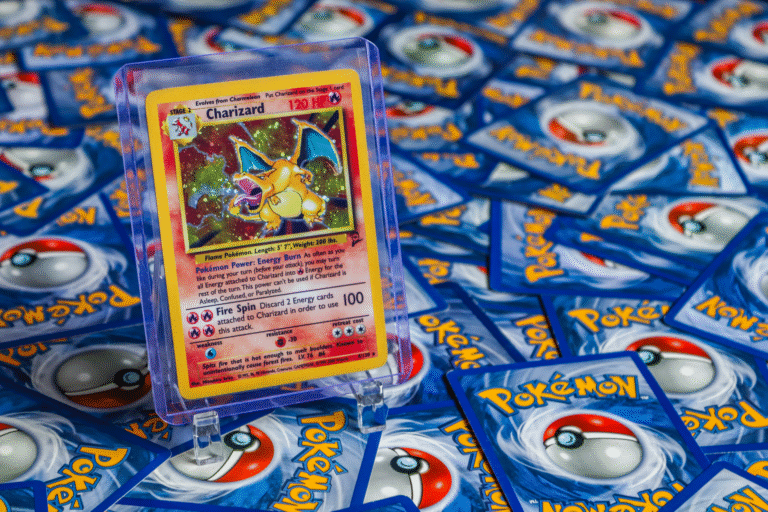
Collectors are watching rare Chansey cards closely because these Pink Pokémon have become some of the most volatile and sought-after cards in the collecting market. The attention stems from a combination of factors: limited printings from early sets, cultural significance as one of the original 151 Pokémon, and genuine scarcity of high-grade copies.
A pristine first-edition Chansey Holo from Pokémon Base Set, for instance, has seen its price swing between $200 and $800 over the past three years depending on condition and market conditions. The intensity of collector interest in Chansey cards has grown measurably as the vintage Pokémon card market matured. Compared to more obvious chase cards like Charizard or Blastoise, Chansey occupies a middle ground that attracts serious collectors rather than speculators, making it a genuine barometer of serious market interest.
Table of Contents
- Why Chansey Cards Command Collector Attention
- Market Pricing Volatility and Real-World Challenges
- Notable Chansey Cards and Their Current Status
- Investment Approaches and Market Strategy
- Grading Standards and Authentication Risks
- Market Competition and Real-World Demand
- Future Outlook for Rare Chansey Cards
- Conclusion
- Frequently Asked Questions
Why Chansey Cards Command Collector Attention
Chansey cards matter to collectors because the supply is genuinely constrained, especially in high grades. Original Chansey cards appeared in Base Set and Jungle, two of the earliest and most heavily played sets. Unlike Charizard, which commanded premium prices since the beginning, Chansey was overlooked for years as a secondary card, which means fewer were kept in mint condition.
The vast majority of surviving Chansey cards show wear from actual play in the 1990s and early 2000s. The card’s design also resonates with collectors who appreciate artwork quality. The illustrator Atsuko Nishida created multiple Chansey versions with distinctive styles, and collectors often focus on specific interpretations. this creates micro-markets within the broader Chansey segment, where one version might spike in interest while others remain stable.
Market Pricing Volatility and Real-World Challenges
chansey‘s pricing remains unpredictable because the card lacks the household-name recognition that keeps Charizard and Blastoise prices stable. A BGS 8 Base set Holo Chansey might sell for $400 one month and $280 three months later, primarily due to individual sales and collector mood shifts rather than broader market news. This volatility can trap collectors who buy expecting appreciation.
One collector paid $550 for a PSA 8 Base Set Holo in early 2024, only to see comparable sales drop to $350 by mid-year. The condition premium is also steeper for Chansey than for more common cards. The difference between a PSA 7 and a PSA 8 can be $150 to $300, which creates pressure to either hold out for perfect examples or accept lower pricing. This makes Chansey risky for casual buyers who don’t understand grading nuances.
Notable Chansey Cards and Their Current Status
Several Chansey printings matter more than others to serious collectors. The Base Set Unlimited Holo remains the most traded version, with grades from PSA 6 to 9 representing the active market. The first-edition version is significantly scarcer, but actual sales data shows it commands only a 15-20% premium over Unlimited in most grades, far less than collectors expect.
This gap reflects real supply differences rather than grading or condition alone. Jungle Holo Chansey occupies a strange position: it’s less sought-after than Base Set despite being older in some ways, yet it’s actually scarcer in high grades. PSA 8 Jungle Chansey cards have fewer recorded sales, which creates pricing uncertainty. When copies do sell, they often surprise collectors by reaching prices comparable to Base Set Unlimited.

Investment Approaches and Market Strategy
Collectors pursuing Chansey cards face a fundamental tradeoff: acquire lower-grade examples of rare printings, or buy high-grade copies of more common printings. A PSA 6 first-edition Base Set Chansey might cost $600-700, while a PSA 8 Unlimited version runs $400-500. Neither choice is inherently wrong, but it determines exit strategy and holding costs.
The practical approach many veteran collectors use is to buy low-grade, raw Chansey cards when prices dip, grade them, and reassess. This reduces entry cost but adds grading expenses (typically $30-50 per card) and carries the risk that the graded result disappoints. A raw card that looks like a 7 might come back as a 5, which can turn a $150 purchase into a $80 asset.
Grading Standards and Authentication Risks
Chansey cards present specific grading challenges that collectors often underestimate. The pink coloring is prone to fading and staining, especially on cards that were stored improperly for decades. A card that looks clean to the naked eye might receive a lower grade than expected because the grading company identifies color fading or light staining invisible to casual inspection.
This creates frustration for buyers expecting a PSA 8 and receiving a PSA 6. Counterfeit Chansey cards, while less common than fakes of Charizard or other premium cards, do exist in the market. The fakes are often lower quality, but careless buyers or inexperienced collectors can be caught. Always purchase from documented sources with return policies, and never buy based on photos alone if the price seems unusually low.

Market Competition and Real-World Demand
Chansey collectors compete directly with Pokémon TCG investors who view the card as a portfolio asset rather than a collectible object. These investors focus purely on grades and don’t care about artwork or personal collecting goals, which creates price pressure at the PSA 7-8 range. When investor sentiment turns negative, prices can drop quickly because there’s no emotional attachment to offset the financial calculation.
The local collector community also matters significantly. In markets with active Pokémon groups, Chansey prices tend to be 5-15% higher than national averages because demand concentrates locally. Conversely, buying in markets with less interest can yield better prices.
Future Outlook for Rare Chansey Cards
The trajectory for Chansey cards likely depends on broader Pokémon TCG market health rather than factors specific to the card itself. If vintage card values stabilize and serious collecting grows, Chansey will benefit as a legitimate scarcity play. If the market corrects, mid-tier cards like Chansey will drop harder than premium chase cards because there’s less emotional demand to anchor prices.
Long-term, Chansey’s greatest strength may be its actual rarity rather than hype. Unlike Charizard, which is collected partly for nostalgia and trend-following, Chansey appeals to serious collectors focused on scarcity and condition. This narrower but more stable audience might protect Chansey prices better than boom-bust market sentiment.
Conclusion
Collectors watch Chansey cards closely because the combination of genuine scarcity, condition sensitivity, and price volatility creates a market that rewards careful research and timing. The card isn’t a simple investment like Charizard, nor is it an overlooked bargain waiting for discovery. Instead, Chansey occupies a complex middle ground where accurate grading, printing edition knowledge, and realistic pricing expectations separate successful collectors from those who overpay or mistime their exits.
If you’re considering Chansey cards, start by establishing clear criteria: decide which printing you want, target a realistic grade range based on your budget, and buy only from documented sources. Track comparable sales across PSA and BGS, and accept that prices will fluctuate. Chansey rewards informed collectors willing to be patient, not speculators hoping for quick appreciation.
Frequently Asked Questions
Should I buy raw Chansey cards and submit for grading?
Only if you’re buying at significant discounts and can accept that grading costs and potential downgrades reduce your return. For most collectors, buying already-graded cards from reputable sellers eliminates uncertainty and the grading gamble.
Which Chansey printing is the best investment?
Base Set first-edition offers rarity appeal but limited price upside over Unlimited. Jungle is scarcer but less sought-after, making it less predictable. Buy based on personal interest, not investment thesis.
How can I tell if a Chansey card is counterfeit?
Check paper texture, card weight, print quality on text, and centering consistency. Counterfeit Chansey cards often have slightly off colors or rough edges. Buy from documented sellers with authentication guarantees rather than relying on your own inspection.
What’s a realistic price range for a good-condition Chansey card?
Expect $150-300 for PSA 6-7 Unlimited copies and $300-600 for PSA 7-8. First-edition versions run 15-25% higher. Anything significantly cheaper should trigger questions about authenticity or hidden condition issues.
Is Chansey a better investment than other Pokémon cards?
No. Chansey is a legitimate scarcity play but lacks the broad appeal and price stability of Charizard or Blastoise. Treat it as a focused collector pursuit, not a diversified investment vehicle.
When is the best time to buy Chansey cards?
After notable price dips in the overall Pokémon market, or when specific printings fall out of collector attention temporarily. Set price alerts and buy when comparable sales suggest undervaluation, not on emotion or fear of missing out.