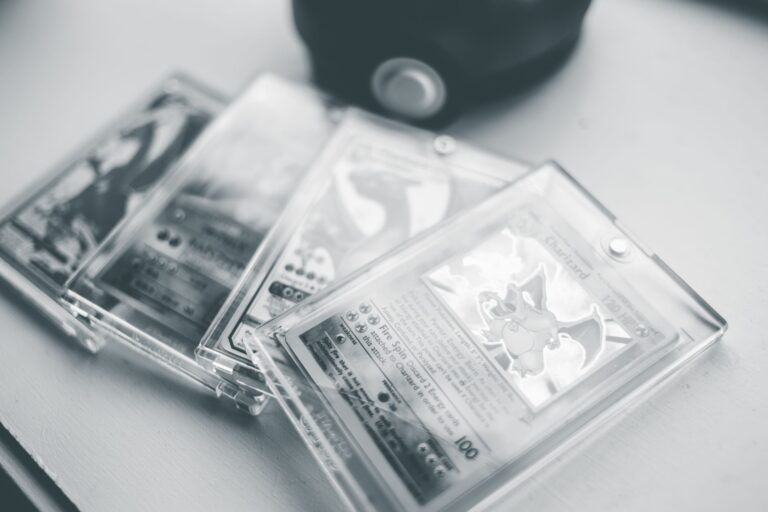
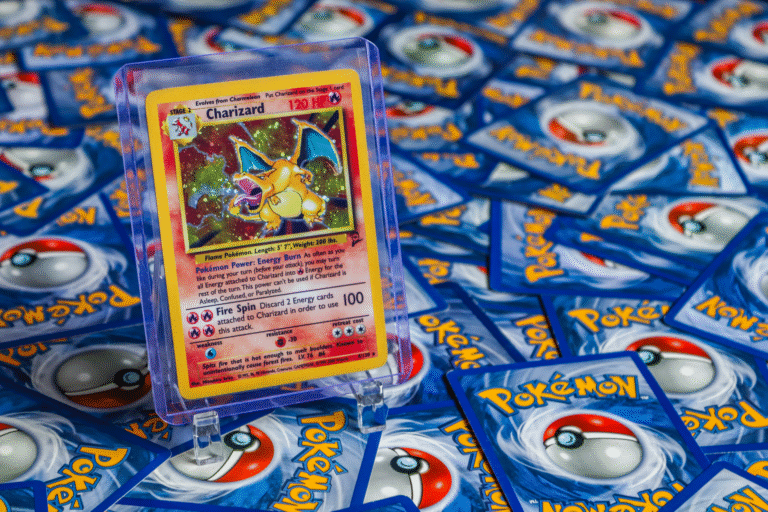
The hidden Pokémon card story that’s bigger than it looks is often about the small details that collectors and investors overlook—details that can shift entire market segments and reshape what a card is actually worth. In the world of Pokémon card collecting, value doesn’t always come from rarity or condition alone. Sometimes it emerges from a printing variation, an authentication revelation, or a market shift triggered by a single high-profile sale that changes how the entire community values a specific card. The 1999 Base Set Charizard, for instance, didn’t become a five-figure card purely because it was difficult to pull.
Its ascent was fueled by a convergence of factors: its iconic status, grading standards that suddenly made high-grade copies scarcer than anyone realized, and celebrity ownership that brought mainstream attention to the category. What seemed like a straightforward rare card story became a lesson in how multiple forces compound to create market movements that only make sense in hindsight. The reason these hidden stories matter is because they affect real money and inform collecting decisions today. When a particular printing variation suddenly commands a 40% premium over its standard counterpart, or when authentication standards shift in a way that retroactively downgrades thousands of slabs, collectors who understood the underlying story early positioned themselves differently from those who didn’t. This article explores the kinds of hidden narratives that move Pokémon card markets and what they reveal about how value actually works in this space.
Table of Contents
- What Makes a Card Story “Hidden” in the Pokémon Market?
- The Role of Printing Variations and Error Cards
- How Grading Standards Shift the Hidden Story
- Authentication Challenges and Market Trust
- Market Manipulation and the Celebrity Effect
- The Print Run and Production Timeline Narrative
- Forward-Looking Trends in Pokémon Card Valuation
- Conclusion
- Frequently Asked Questions
What Makes a Card Story “Hidden” in the Pokémon Market?
A hidden Pokémon card story typically involves a detail or factor that exists but isn’t widely known, discussed, or understood across the collecting community until something changes. It might be a printing error that only affects a small percentage of cards from a particular print run, or a grading threshold that separates two cards with the same name and nearly identical appearance but vastly different values. The 2000 Pokémon base Set Shadowless first edition cards are a good example—for years, collectors knew these were rare, but the true scarcity of gem-mint copies wasn’t fully appreciated until the combination of 1) third-party grading becoming standard and 2) prices rising dramatically created visibility around how few truly pristine copies existed.
Hidden stories also emerge from authentication shifts. The Pokémon community has experienced several waves of counterfeit cards entering the market, and each wave teaches collectors to look more carefully at specific details. When BGS/Beckett and PSA began grading vintage Pokémon cards more heavily (around 2020-2021), many collectors realized that cards they’d owned for years might have tiny flaws or manufacturing inconsistencies that would result in lower grades than expected. This wasn’t a new problem with the cards—the story was hidden because the assessment framework changed.

The Role of Printing Variations and Error Cards
Printing variations in pokémon cards create one of the most significant hidden story categories because they often go unnoticed until someone catalogs them carefully. A single card name might exist in multiple versions based on which factory printed it, which ink formulation was used, or what year it was produced. The 1999 Charizard from Base Set has several printing variations, and experienced collectors know that a first edition “shadowless” version with certain ink characteristics is worth significantly more than a later unlimited printing with slightly different coloring or font weight. For someone casually looking at two Charizards side by side, the difference is nearly invisible. The story is hidden in the manufacturing process itself.
Error cards represent an extreme version of this dynamic. A misprint—whether it’s incorrect text, a missing element, or a color error—can either tank a card’s value or, paradoxically, increase it if the error is rare enough and documented well enough. The risk, however, is significant. Not all errors are equally valuable. A printing error that affected thousands of cards in a set might decrease value because it’s common, while an error that affected only a few cards in a single print run might increase value substantially. Collectors who don’t understand the prevalence of a particular error can easily overpay, thinking they’ve found a hidden gem when they’ve actually bought something that’s common in its error form.
How Grading Standards Shift the Hidden Story
Third-party grading has fundamentally changed how Pokémon card values are assessed, and the standards have continuously evolved. When PSA and BGS first began heavily grading vintage Pokémon cards around 2019-2021, many collectors experienced a revelation: cards they’d stored carefully for years received grades lower than they expected. This wasn’t because the companies were unfair, but because the standards for gem-mint and near-mint grades are precise and unforgiving. A card with a single soft corner crease or slight wear on the back might drop from a perceived 8.5 to a verified 7 or 7.5, and that single grade point can mean a 20-40% difference in price.
The hidden story here involves understanding that condition is not subjective—it’s measured against exacting standards that don’t account for your personal attachment to the card or how well you thought you’d taken care of it. Additionally, grading companies have changed their standards over time. BGS introduced a “Black Label” for flawless cards, which created a new tier that didn’t exist before and shifted some value away from regular 10 grades toward the premium category. Collectors who don’t track these changes can find themselves underestimating what their cards should fetch or, conversely, overpaying for cards because they haven’t realized the grading standard shifted in a way that made high grades less common.

Authentication Challenges and Market Trust
Authentication is perhaps the most consequential hidden story in Pokémon cards because it directly affects whether a card is worth its stated price or worthless. The vintage Pokémon market has experienced waves of counterfeit cards, and the sophistication of fakes has increased significantly. A hidden story in this space is that most casual collectors can’t reliably authenticate vintage cards without expert help, yet many do try. Someone who buys what they believe is an authentic 1999 Shadowless Blastoise for $1,500 without third-party grading is taking a substantial risk, even if they believe they can spot fakes.
The practical tradeoff is between cost and security. Third-party grading adds 5-10% to the cost of a card (depending on the tier of service), but it also provides a chain of custody and expert authentication. Ungraded cards can sometimes be purchased at a discount, but the discount theoretically represents the risk premium for authentication uncertainty. Early in the vintage Pokémon boom, some collectors bought expensive ungraded cards from what they believed were reputable sellers, only to discover years later that the cards had subtle authenticity issues that would have been caught by a grading company. These stories are hidden because they often don’t become public—people don’t announce that they purchased fakes—but they reshape how cautious second-time buyers become.
Market Manipulation and the Celebrity Effect
One of the largest hidden stories in Pokémon card pricing involves how external attention from celebrities, streamers, or media coverage can fundamentally alter the value of specific cards. When celebrities or high-profile athletes are photographed or shown on streaming platforms opening old Pokémon packs and pulling rare cards, it can trigger a demand surge that has little to do with the card’s actual scarcity or collectibility. The hidden part of this story is that the price surge is often temporary and doesn’t reflect genuine supply-demand fundamentals. A warning worth emphasizing: cards that spike in price due to celebrity attention or media coverage often experience significant corrections when attention fades.
Someone who buys a card at the peak of a celebrity-driven hype cycle is often at the worst possible time in the price curve. Conversely, the same card might be available at a 30-40% discount within months. Experienced investors in Pokémon cards often sell during hype spikes and buy during the quiet periods that follow. The hidden story is that most of the value movement isn’t driven by the card’s inherent properties—it’s driven by attention, and attention is cyclical and predictable.
The Print Run and Production Timeline Narrative
A subtler hidden story involves understanding how Pokémon’s production timelines and print run decisions created artificial scarcity. The original Base Set had multiple print runs, and cards from the first print run (particularly first edition shadowless versions) are genuinely rarer because fewer were produced before the set was reprinted. However, the story becomes hidden when collectors conflate “rare” with “first produced.” Some unlimited shadowless cards are actually rarer than some first edition versions because of how many were printed in each batch. Without understanding the print history, a collector might assume that first edition always means scarcer, when in fact the edition status tells you about print run sequence, not necessarily about total quantity produced.
The Japanese Pokémon market illustrates this even more starkly. Japanese sets often had different production volumes, pack configurations, and timing compared to English releases, which means some Japanese cards are substantially rarer than their English equivalents with similar names. A collector focused only on English cards might overpay for a relatively common English version while missing that a superior Japanese equivalent is available at a fraction of the price. The hidden story is in the production history—you need to understand when a card was printed and in what quantities to truly assess its rarity.
Forward-Looking Trends in Pokémon Card Valuation
The hidden stories of tomorrow will likely involve the aftermath of the 2021-2023 Pokémon card boom and the inevitable normalization that follows hype cycles. As newer sets gain more historical distance and collectors age, the vintage cards that were dormant investments for years suddenly become more valuable, while some of the hyped-up recent-set cards plateau or decline. The collectors who understood this cycle early bought vintage cards when they were undervalued relative to where they’re headed, while others chased newer set appreciation that’s unlikely to match the 500%+ gains that vintage saw.
Another emerging hidden story involves the tension between physical and digital collectibles. As blockchain-based Pokémon collectibles and digital trading card games gain adoption, some collectors are beginning to question whether physical cards will retain their cultural and financial primacy. This is still a hidden story because it hasn’t fully played out, but it’s the kind of narrative that, in hindsight, will explain why some collectors made particular decisions about their portfolios in the mid-2020s. The collector who understands that this tension exists—and watches how the market responds—will be better positioned to anticipate which cards will appreciate and which will eventually face headwinds.
Conclusion
The hidden Pokémon card stories that matter most are the ones rooted in facts—printing variations, grading standards, authentication challenges, and production history—rather than hype or speculation. These stories explain why two cards that look nearly identical can have vastly different values, and why the same card can be a shrewd investment or a poor purchase depending on when you buy it. Understanding these narratives doesn’t require being a card expert, but it does require being willing to research details that most casual collectors ignore.
Your advantage as a collector or investor comes from recognizing that the most significant price movements are rarely random. They’re rooted in stories—supply constraints, authentication shifts, production timelines, and market cycles—that are discoverable if you know where to look. The next time you encounter a Pokémon card that seems undervalued or overvalued compared to similar copies, start by asking what story you might be missing. Often, the hidden story is the most important one.
Frequently Asked Questions
How do I know if a printing variation actually affects a card’s value?
Research the specific card on databases like TCGPlayer, the price guide, and sold listings on eBay. Look for patterns in which variations command premiums. If multiple high-grade copies of one variation consistently sell for 30%+ more than another, the variation likely matters. If prices are scattered and inconsistent, the variation probably doesn’t significantly affect value.
Should I buy ungraded vintage Pokémon cards if they’re cheaper?
The discount should theoretically offset the authentication risk. If an ungraded card is significantly cheaper than its graded equivalent, ask why. Is the seller reputable? Does the card have photos showing consistent details across multiple angles? For cards over $500, third-party grading is usually worth the cost because the authentication risk is substantial.
How do I protect myself from buying counterfeit cards?
Buy from established dealers or graded cards from reputable companies (PSA, BGS, CGC). If buying ungraded, use seller reputation and return policies as your safety net. Learn to spot obvious fakes by studying authentic examples at local card shops or grading company websites, but understand that expert-level counterfeits exist and require expert authentication.
Can a card’s grading change if I have it regraded?
Yes, grading standards have evolved and graders may assign different grades upon resubmission. This is risky because you might receive a lower grade, which could cost money in registration fees and reduce the card’s value. Only regrading rarely makes financial sense unless you believe the original grade was clearly wrong.
Should I hold vintage Pokémon cards as investments?
Vintage Pokémon cards have appreciated significantly, but they’re speculative assets with cyclical value. They can serve as part of a diversified collection if you enjoy them, but don’t allocate more than you can afford to lose to any single asset category. Price cycles are real, and timing matters.
What’s the difference between a “shadowless” and “first edition” Base Set card?
Shadowless refers to a printing variation where the card’s border shadow is absent or minimal. First edition refers to the print run sequence. A card can be both shadowless and first edition, or shadowless unlimited, or first edition with the shadow. Both properties affect rarity, but shadowless is typically rarer because it was only produced in the earliest print runs.