Yes, 1st Edition Blastoise values are rising into May 2026, continuing an upward trajectory that has accelerated throughout 2025. A PSA 9 copy sold for $8,350 in December 2025, compared to $6,233 just three months earlier in September 2025—a 34% increase in under a quarter that reflects sustained demand for this foundational Pokémon card. The Pokémon 30th anniversary in 2026 is amplifying this momentum, with vintage WOTC (Wizards of the Coast) cards experiencing 30-50% price increases year-to-date and projections for an additional 30-50% gains through the remainder of 2026.
The price increases span all quality tiers, though the most dramatic appreciation has occurred in high-grade copies. PSA 10 Gem Mint 1st Edition Blastoise examples command prices north of $20,000 when they surface, and February 2026 saw new all-time highs achieved when first edition copies from Logan Paul’s collection sold on Goldin Auctions with special certification labels. For collectors and investors assessing whether to buy now, the data shows consistent upward momentum rather than speculative volatility—but this also means entry prices are higher than they were six months ago.
Table of Contents
- What Are Current 1st Edition Blastoise Price Points by Grade?
- How Much Have 1st Edition Blastoise Prices Risen Since Early 2025?
- The 30th Anniversary Effect: Why 2026 Is Driving Unprecedented Demand
- Why Fixed Supply Supports 1st Edition Blastoise Price Stability
- Grading Inconsistencies and the Hidden Risks of Valuation Gaps
- Comparing 1st Edition Blastoise to Other Vintage Holo Pokémon Cards
- Market Outlook for 1st Edition Blastoise Through 2026 and Beyond
- Conclusion
- Frequently Asked Questions
What Are Current 1st Edition Blastoise Price Points by Grade?
The pricing landscape for 1st Edition Blastoise remains stratified by grading tier, with PSA grades serving as the primary pricing reference in the market. PSA 9 Mint copies have established a price floor around $8,000-$9,000 based on December 2025 sales data, while PSA 8 Very Good-Excellent examples typically trade in the $4,000-$6,000 range. The jump to PSA 10 is substantial—copies in that tier regularly exceed $20,000 and have reached new highs in early 2026, making the difference between a 9 and a 10 worth roughly $12,000-$15,000 or more.
Below the PSA 8 tier, pricing becomes more volatile because fewer recent sales data points exist. PSA 7 Excellent copies likely range from $2,000-$4,000, but the secondary market for lower grades is thinner, making exact valuations difficult. Raw (ungraded) 1st Edition Blastoise cards are inherently less predictable in price because buyers cannot verify condition without inspection. this is a critical limitation: if you’re considering a raw copy, getting it graded by PSA or BGS before purchasing can be the difference between a $500 bargain and a $3,000 mistake if the card grades lower than expected.

How Much Have 1st Edition Blastoise Prices Risen Since Early 2025?
The price momentum is measurable and significant. From September 2025 to December 2025, PSA 9 copies appreciated 34% ($6,233 to $8,350). Extending the timeline further, vintage WOTC cards broadly have appreciated 30-50% as of early 2026 according to market analysts tracking the sector. This outpaces typical inflation and suggests that specific demand drivers—not just general economic trends—are supporting the price increases.
However, it’s important to note that auction prices can be volatile, and a single high sale doesn’t guarantee all copies will fetch similar prices. The December 2025 sale at $8,350 represents a peak transaction, not a floor, and PSA 9 copies may sell for $7,500-$8,000 in typical market conditions. Additionally, grading companies can adjust pricing standards over time, meaning a card that graded PSA 9 in 2020 might not grade at the same level if resubmitted in 2026. This is a hidden risk: newer collectors sometimes assume all PSA 9 copies are created equal, but variation in grading standards and condition drift over time create valuation uncertainty.
The 30th Anniversary Effect: Why 2026 Is Driving Unprecedented Demand
The Pokémon 30th anniversary milestone in 2026 is functioning as a demand catalyst for vintage cards. Collectors who grew up with base Set in 1999 are re-entering the market to celebrate the milestone, and mainstream media coverage around Pokémon nostalgia has increased interest among older demographics with spending power. Analysts are projecting 30-50% additional price increases on vintage cards through the end of 2026, which would push PSA 9 1st Edition Blastoise toward $10,000-$12,000 if the projection holds. The Logan Paul auction results in February 2026 are a concrete example of this phenomenon.
When high-profile collections enter the market with anniversary-themed marketing, it creates media attention that drives broader demand—not just for those specific cards, but for the entire category. Copies of 1st Edition Blastoise sold in conjunction with the Logan Paul collection achieved new all-time highs, signaling that institutional and celebrity-adjacent demand is sustaining prices even at elevated levels. The risk here is that anniversaries are time-bound. Once 2026 concludes, the demand tailwind may soften, and prices could consolidate or retreat slightly if the market becomes oversaturated with sellers capitalizing on anniversary-driven peaks.
Why Fixed Supply Supports 1st Edition Blastoise Price Stability
Unlike modern Pokémon sets where reprints are common, 1st Edition Base Set Blastoise cards have a fixed supply: no new 1st editions will ever be printed. The cards were produced in 1999-2000, and any copies in circulation today represent the entire universe of possible ownership. This scarcity dynamic creates a built-in price floor, because the supply side cannot expand no matter how much demand grows. The only way to acquire a 1st Edition Blastoise is to buy one from a current owner, which means price discovery is entirely demand-driven.
Natural attrition further strengthens this dynamic. Cards are lost, destroyed, damaged in storage, or removed from circulation when owners pass them to heirs or let them languish in closets. Market researchers estimate that 10-15% of vintage cards in existence are lost to attrition each decade, which means the effective supply available for trade shrinks over time. For practical purposes, this means that holding a PSA 9 or 10 1st Edition Blastoise is less risky than holding modern cards, because the supply-side cannot arbitrarily increase to crush prices if demand softens. However, demand can always decline, so fixed supply is a stabilizer, not a price guarantee.
Grading Inconsistencies and the Hidden Risks of Valuation Gaps
One of the most overlooked risks in Pokémon card pricing is grading inconsistency across different time periods. PSA’s grading standards have shifted over the years, and a card that received a PSA 9 in 2015 might receive a PSA 8 if resubmitted today. This creates hidden valuation risk: sellers often rely on historical grading as proof of condition, but if that grading is outdated, the true current value may be lower than assumed. For 1st Edition Blastoise, this is particularly relevant because many of the highest-grade copies were graded 5-10 years ago when standards may have been different.
Additionally, different grading companies (PSA, BGS, CGC) can assign different grades to the same card. A card that grades PSA 9 might grade BGS 8, creating significant valuation discrepancy. The market has a strong preference for PSA grading on vintage Pokémon cards, which means BGS and CGC copies can trade at discounts even if the grade is technically equivalent. Before purchasing an expensive 1st Edition Blastoise, cross-reference the specific card’s sale history and ensure you’re comparing cards graded by the same company with recent sales data to avoid overpaying for inconsistently graded copies.
Comparing 1st Edition Blastoise to Other Vintage Holo Pokémon Cards
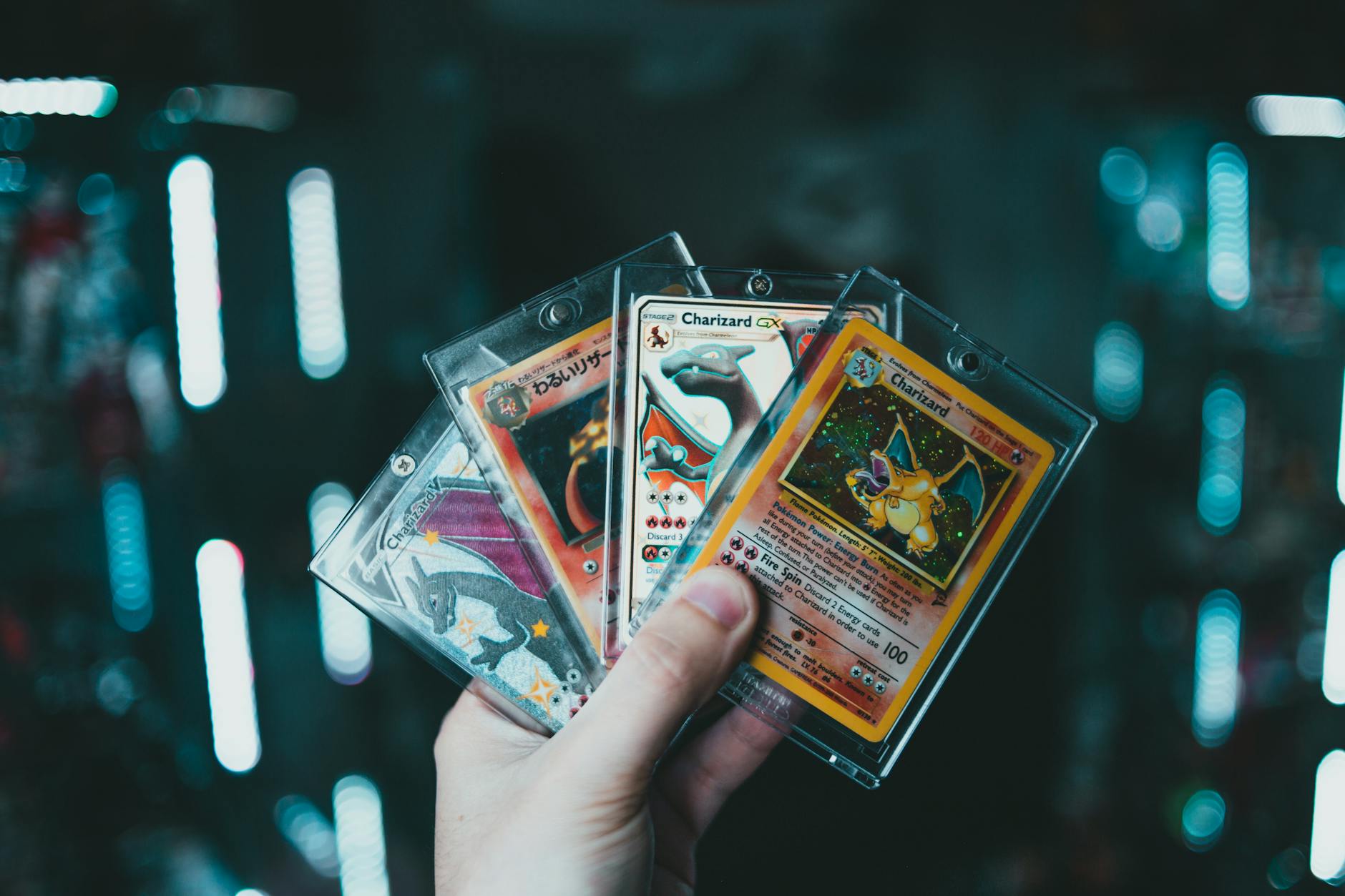
1st Edition Blastoise is one of the “Big Three” from Base Set—alongside Charizard and Venusaur—but it typically trades at a significant discount to Charizard. A comparable PSA 9 1st Edition Charizard can sell for $25,000-$35,000, making Blastoise approximately one-third the price despite similar vintage status and iconic cultural relevance. Venusaur typically falls between the two, with PSA 9 copies in the $12,000-$15,000 range.
This pricing hierarchy reflects Charizard’s broader cultural appeal and higher demand, but it also suggests Blastoise has more upside potential if its popularity increases. From a portfolio diversification perspective, Blastoise offers a middle ground: it has the vintage pedigree and scarcity of Charizard with lower entry costs, making it more accessible to collectors building multi-card collections. However, this lower price also means that if Pokémon nostalgia peaks in 2026 and then softens, Blastoise’s appreciation may reverse more sharply than Charizard’s, because Charizard’s demand is more deeply rooted in multiple subcultures (gaming, competitive TCG, casual collecting). For risk-conscious buyers, Charizard offers more stable long-term support, while Blastoise offers higher percentage gains potential with higher downside risk.
Market Outlook for 1st Edition Blastoise Through 2026 and Beyond
The short-term outlook through the remainder of 2026 is likely to remain positive, with the 30th anniversary momentum continuing to drive demand and the analyst projections of 30-50% additional gains remaining plausible. However, these projections assume no major market disruptions—economic recession, shift in collector demographics, or oversaturation from anniversary sellers could derail the forecast. By late 2026 and into 2027, a consolidation phase is probable, where prices stabilize at higher levels than early 2025 but don’t achieve further dramatic appreciation.
Longer-term (2-5 years), 1st Edition Blastoise is likely to remain a blue-chip vintage card in the Pokémon market, with prices gradually appreciating 5-10% annually as inflation and scarcity factors compound. The recent price surge is not a bubble, but rather a revaluation of these cards to reflect their true scarcity and growing institutional interest. For collectors buying at May 2026 prices, the cards are not overextended, but they’re also not bargains—you’re paying for proven vintage status and fixed supply, not for speculative upside.
Conclusion
1st Edition Blastoise values have risen meaningfully since April 2026 as part of a broader vintage card surge driven by the Pokémon 30th anniversary and institutional interest in blue-chip collectibles. PSA 9 copies have appreciated 34% in the last six months, reaching $8,350, with PSA 10 examples commanding prices north of $20,000.
The fixed supply of these 1999-2000 era cards, combined with natural attrition and anniversary-driven demand, creates a structural case for continued price support through 2026. If you’re considering purchasing a 1st Edition Blastoise at current May 2026 prices, focus on grading verification (prefer recent PSA grades over outdated ones), understand the specific tier you’re buying (the 9-to-10 jump is expensive), and recognize that the anniversary tailwind may soften in 2027. For serious collectors, these cards have become essential holdings in a vintage portfolio, but they’re no longer entry-level—expect prices to remain elevated and appreciation to moderate once the anniversary cycle concludes.
Frequently Asked Questions
Should I buy a PSA 8 1st Edition Blastoise instead of a PSA 9 to save money?
Yes, if your budget is constrained. PSA 8 copies typically trade for $3,500-$5,500, roughly 40-50% less than PSA 9. The visual difference may be subtle to casual observers, and the card will still hold value. However, the price premium for PSA 9 reflects its relative rarity and investment potential, so if budget allows, PSA 9 is the better long-term hold.
Is now a good time to sell a 1st Edition Blastoise I’ve owned since 2015?
Likely yes. Prices are at or near peak levels driven by anniversary demand, and waiting into late 2026 or 2027 risks a consolidation phase. If you’re not a die-hard collector, current market conditions are favorable for selling, particularly if your copy grades PSA 8 or higher.
What’s the difference between a PSA 10 Gem Mint 1st Edition Blastoise and a PSA 10 reprint?
A 1st Edition copy is from the original 1999-2000 production run and will sell for $20,000+. A non-1st-edition base set Blastoise (printed 2000-2001) grades rarely sell above $500-$1,000 even in PSA 10, a 95% valuation gap. Always confirm “1st Edition” in the product description.
Can I get a 1st Edition Blastoise graded by a company other than PSA?
Yes, but expect a price discount. BGS and CGC are alternatives, but the Pokémon market has strong brand preference for PSA, and buyers may resist paying PSA 9 prices for a BGS 9. If evaluating a BGS or CGC copy, research recent comparable sales for that company’s slabs.
What price should I expect if I want to buy right now in May 2026?
Plan for $8,000-$9,500 for PSA 9, $4,500-$6,000 for PSA 8, and $20,000-$25,000+ for PSA 10. Prices vary by specific sale and condition, but these ranges represent current market reality.
Will 1st Edition Blastoise prices keep rising through 2026?
Likely through mid-to-late 2026 as the anniversary momentum continues, but deceleration is probable in Q4 2026. A consolidation or slight pullback in early 2027 is plausible, though the card’s vintage status and fixed supply should prevent dramatic crashes.