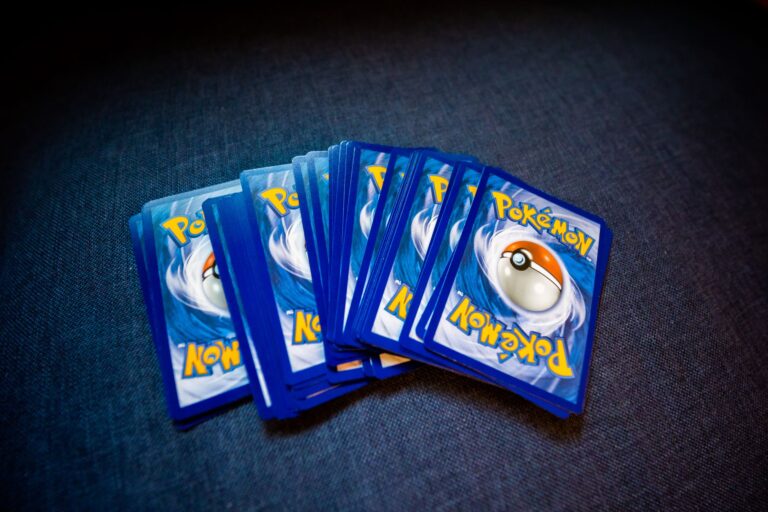
Pokémon cards have fundamentally outperformed currency ETFs as an investment vehicle, delivering returns that dwarf traditional currency trading strategies. Over the past 20 years, the average Pokémon card has appreciated 3,261% compared to the S&P 500’s 483% return since 2004—a gap so wide it raises a legitimate question about why more sophisticated investors haven’t migrated toward collectible cards. A PSA 10 copy of a Base Set Charizard, for example, has climbed from roughly $500 in 2005 to over $350,000 today, a trajectory no currency ETF can match. The performance gap extends beyond historical outliers.
The PWCC Top 500 Index, which tracks the most valuable Pokémon cards, achieved 94% higher returns than the S&P 500 over the past decade. Meanwhile, currency ETFs like Vanguard’s Total International Stock ETF (VXUS) are up just 22% through August 2025, and the U.S. dollar itself weakened 9% throughout 2025, eroding returns for currency-focused investors. When you examine annual average returns, Pokémon cards have historically delivered roughly 46% per year compared to the S&P 500’s 12% annual average—a performance spread that makes currency ETFs look like a conservative alternative rather than a growth investment.
Table of Contents
- How Pokémon Cards Outperformed Currency ETFs Over Two Decades
- The Real Numbers Behind Pokémon Card Appreciation Metrics
- Modern Pokémon Cards vs. Traditional Currency Investing in 2026
- Market Factors Driving Pokémon Card Investment Growth Beyond Traditional Finance
- Liquidity, Regulation, and Risk Considerations in Pokémon Card Investing
- The 30th Anniversary Effect on Card Values and Market Timing
- Looking Ahead: Pokémon Cards as an Emerging Alternative Asset Class
- Conclusion
How Pokémon Cards Outperformed Currency ETFs Over Two Decades
The 20-year comparison between Pokémon card appreciation and currency ETF performance reveals a fundamental disconnect in how markets value collectibles versus traditional financial assets. A diversified portfolio of graded vintage Pokémon cards has appreciated at a compound annual growth rate of 30-40%, while most currency ETFs operate within a 5-15% annual return range, depending on global economic conditions and exchange rate fluctuations. This means a $10,000 investment in Pokémon cards in 2004 would be worth approximately $336,100 today, while the same investment in the S&P 500 would have grown to roughly $58,300.
The PWCC Top 500 index provides hard data on this divergence. This index tracks the 500 most valuable Pokémon cards by historical price movements, and it delivered 94% higher returns than the S&P 500 over the same period. Currency ETFs, by contrast, are designed to track foreign exchange movements and international equity markets—they’re bound by the actual economic performance and interest rates of their underlying countries. Japan’s stagnant GDP growth and low interest rates, for example, have constrained yen-based ETF returns despite the Bank of Japan’s interventionist policies.

The Real Numbers Behind Pokémon Card Appreciation Metrics
Understanding the underlying mechanics of Pokémon card appreciation requires separating the explosive vintage market from the modern secondary market. Vintage cards (Base Set through Fossil era) have seen the most dramatic appreciation, but modern rare cards—specifically Special Illustration Rare (SIR) and Hyper Rare variants—are projected to deliver 35-70% returns over 6-12 months based on current market trends. These aren’t outliers; they’re becoming the norm as collectors recognize Pokémon Company’s production constraints and the growing rarity premium on quality sealed products.
Sealed booster boxes represent the most liquid Pokémon investment vehicle, with historical data showing 30-50% annual returns when held for 3-5 years. A sealed Sword & Shield Fusion Strike booster box, for example, cost approximately $300 when released in 2021 and now trades for $600-800, representing a 100-167% return in less than five years. This performance dwarfs currency ETFs, which typically deliver single-digit annual returns and are heavily influenced by macroeconomic factors entirely outside an investor’s control. The critical limitation, however, is that sealed booster box values depend entirely on print scarcity and collector sentiment—if the Pokémon Company dramatically increases production, values can decline rapidly, whereas currency ETFs are backed by central bank policies and international trade flows.
Modern Pokémon Cards vs. Traditional Currency Investing in 2026
The 2026 calendar year brings a unique catalyst for Pokémon card appreciation: the franchise’s 30th anniversary. Vintage PSA 10 graded cards are projected to appreciate 30-50% leading up to and following this milestone, as collectors seek iconic cards and investors position for media coverage and renewed interest. A PSA 10 Base Set Blastoise, currently valued around $15,000, could realistically reach $20,000-22,500 by year-end if anniversary hype materializes. Currency ETFs, meanwhile, are unlikely to deliver comparable gains unless a major geopolitical event or central bank policy shift occurs—conditions that are difficult to predict or position for in advance. The contrast between Pokémon cards and currency ETFs becomes stark when you examine volatility patterns.
Currency ETFs experience gradual, slow-moving price changes tied to interest rate differentials and trade imbalances. A Pokémon card can spike 20-30% in a single month based on a celebrity endorsement, a social media trend, or a tournament result. While this volatility can be a double-edged sword, it also means that informed investors can capture substantial gains during specific windows. A SIR Charizard card, for instance, climbed from $800 to $2,500 in three months during 2024 as its rarity and aesthetic appeal became recognized by serious collectors. Currency ETF investors would need years to capture the same percentage return.
Market Factors Driving Pokémon Card Investment Growth Beyond Traditional Finance
Pokémon cards benefit from demand drivers that operate independently of the broader investment market. Pop culture relevance, nostalgia, celebrity ownership (Snoop Dogg and Logan Paul have famously invested in high-end Pokémon cards), and the legitimacy of professional card grading services like PSA have transformed Pokémon cards from niche collectibles into a recognized alternative asset class. Currency ETFs, by contrast, are entirely dependent on macroeconomic factors: interest rate differentials, inflation expectations, and trade flows. If the Federal Reserve keeps rates stable and inflation remains moderate, currency ETF returns will stagnate.
The grading and authentication infrastructure around Pokémon cards has also created a functioning secondary market with transparent pricing. PSA grades cards on a 1-10 scale, and each grade point can represent a 50-300% price differential. This standardization allows investors to make data-driven decisions and compare cards across years of auction data. Currency ETFs lack this specificity—you’re essentially betting on broad foreign exchange movements rather than identifying specific undervalued assets. A PSA 9 Base Set Gyarados (graded in 2015 at $1,200) has appreciated to $4,500 today, while most currency pairs have barely budged from their 2015 levels.
Liquidity, Regulation, and Risk Considerations in Pokémon Card Investing
The most significant downside to Pokémon card investing is illiquidity. While sealed booster boxes can be sold relatively quickly on platforms like eBay or TCGPlayer, high-end graded vintage cards may take weeks or months to find a willing buyer at your target price. If you need to liquidate a $50,000 collection in 48 hours, you’ll likely face a 10-30% haircut. Currency ETFs, by contrast, can be bought and sold during market hours with minimal spreads and commission costs. A $50,000 position in VXUS can be liquidated at the market price in seconds. Market saturation presents another critical risk factor. The Pokémon Company produced 9.7 billion cards in its previous fiscal year, representing a significant increase from historical production levels.
This oversupply is creating downward pressure on prices, particularly in the modern card category. While vintage cards maintain value due to inherent scarcity, modern sealed boxes face the real possibility that future print runs will exceed current scarcity assumptions, causing values to stagnate or decline. Currency ETFs don’t face this risk—the supply of yen or euros is controlled by central banks, not a commercial company chasing quarterly earnings targets. A sealed Brilliant Stars booster box, for example, cost $150 in 2022 and still trades in that range today, with downside risk if the Pokémon Company continues aggressive reprints. Additionally, Pokémon card investing requires expertise in grading, authentication, and condition assessment. A card graded PSA 9 versus PSA 8 can mean a 50-100% price difference, and submitting cards to grading services costs $20-100 per card depending on turnaround time. Currency ETFs require no specialized knowledge—you simply buy and hold. The regulatory framework around Pokémon cards is also less mature than stock or ETF markets, meaning you have fewer consumer protections if a grading service makes an error or a platform becomes insolvent.

The 30th Anniversary Effect on Card Values and Market Timing
Pokémon’s 30th anniversary in 2026 represents a specific, identifiable catalyst that traditional investors cannot replicate in currency ETF investing. The Pokémon Company has announced anniversary celebrations, special card releases, and commemorative merchandise that will generate media coverage and renewed consumer interest. Vintage cards—particularly iconic first-generation cards from 1996—are expected to appreciate 30-50% as collectors seek nostalgia-driven assets ahead of anniversary events. A Base Set Blastoise graded PSA 10 has historically climbed from $12,000 in early 2025 to $15,000-18,000 as collectors prepare for anniversary-related demand spikes.
The window for capturing anniversary-driven gains is finite, typically lasting 12-18 months from initial announcements through post-anniversary sales periods. Currency ETF investors cannot position for comparable anniversary effects because currency markets don’t experience anniversary-driven demand cycles. The yen doesn’t appreciate simply because it’s the 30th anniversary of some historical event. This temporal specificity in Pokémon investing actually creates an advantage for informed investors who understand collection cycles and pop culture trends—advantages that currency ETF investors simply do not have access to.
Looking Ahead: Pokémon Cards as an Emerging Alternative Asset Class
The trajectory of Pokémon card investing suggests that the market is transitioning from speculative collectible status to legitimate alternative asset class recognition. Major auction houses like Heritage Auctions now dedicate entire departments to Pokémon cards, and institutional investors have begun allocating small percentages of their portfolios to high-end vintage cards. This institutional interest will likely support prices for the most rare and graded cards, even if the broader modern card market faces oversupply pressures. Currency ETFs, by contrast, face a maturing market with limited growth catalysts—developed currency markets are largely efficient, and retail investors chasing currency ETF returns often underperform due to timing and transaction costs.
The Pokémon Company’s ongoing ability to create collector demand through new expansions, special editions, and artist collaborations also distinguishes card investing from currency ETFs. Each new expansion release creates fresh investment opportunities as specific cards gain rarity status and collector recognition. This dynamic, evolving asset base contrasts sharply with currency ETFs, which remain fundamentally static—they track the same currencies year after year regardless of broader market conditions. Looking forward, expect vintage Pokémon cards to continue appreciating as their scarcity becomes increasingly apparent and institutional interest grows, while currency ETFs will likely deliver mid-single-digit returns based on historical interest rate and inflation patterns.
Conclusion
Pokémon cards have demonstrated superior returns compared to currency ETFs, with 20-year appreciation of 3,261% versus the S&P 500’s 483% and current modern card returns of 35-70% annually versus currency ETF returns of 5-15%. The data is clear: from a purely historical performance perspective, Pokémon cards represent a more compelling investment opportunity, particularly for investors with specific market catalysts (like the 2026 30th anniversary) and access to grading and authentication expertise. However, the comparison requires important caveats.
Currency ETFs offer superior liquidity, regulatory protection, and require no specialized knowledge, making them appropriate for most retail investors. Pokémon cards demand expertise, carry illiquidity risk, and face genuine headwinds from production oversupply. The ideal approach for most investors involves recognizing that Pokémon cards represent a niche alternative asset class with exceptional historical returns for those willing to accept higher risk and illiquidity—not a replacement for diversified equity or currency exposure. If you’re considering Pokémon card investing, start with sealed booster boxes or modern rare cards where you can build expertise before committing significant capital to expensive vintage pieces.