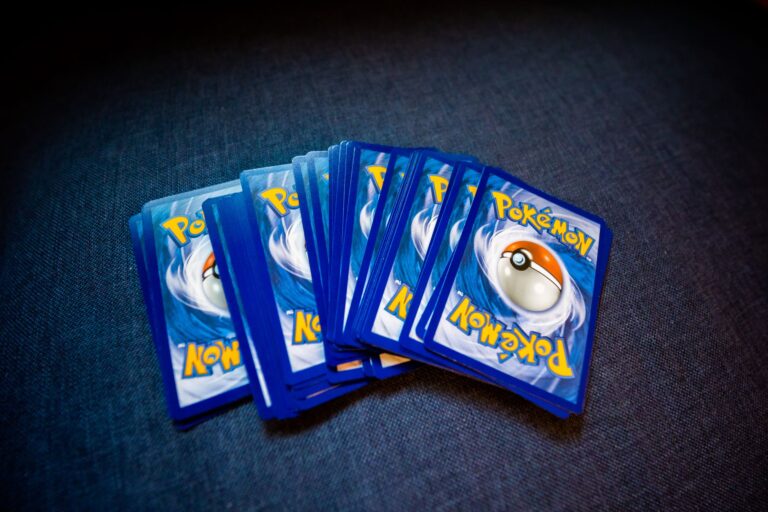
Pokemon cards have objectively outperformed forex trading over the past two decades, with the collectible card market delivering 3,800% growth from 2004 to 2025 compared to forex’s annualized returns of 24-96% for professional traders. In the past 12 months alone, rare Pokemon cards appreciated 170%, while the same period saw forex markets fluctuate with increased volatility driven by central bank policies and geopolitical factors. Consider the December 2025 sale of a PSA 10 shadowless holo Charizard for $550,000—a new hobby record that represents the type of wealth-building potential that exceeds typical forex trader outcomes.
The fundamental difference comes down to tangible scarcity versus currency speculation. Pokemon card values are driven by population-limited supply (fewer than 3,000 PSA 10 copies of certain Base Set cards exist), generational nostalgia, and sealed product inflation, while forex returns depend entirely on your skill as a trader and your ability to predict global economic movements. For most investors, Pokemon cards offer more predictable appreciation with lower skill barriers to entry.
Table of Contents
- How Have Pokemon Card Returns Compared to Forex Market Performance?
- Understanding the Risk Differential Between Collectibles and Currency Markets
- Why Tangible Assets Outpace Abstract Market Bets
- Accessibility and Capital Requirements for Each Investment Path
- Market Saturation and the Emerging Bubble Risk
- Record Auction Results and Proof of Market Depth
- Future Outlook and Investment Positioning
- Conclusion
How Have Pokemon Card Returns Compared to Forex Market Performance?
pokemon cards delivered approximately 46% annual increases in 2025, surpassing both Nvidia’s stock performance and the S&P 500’s typical 12% average annual return. Meanwhile, professional forex traders consider 2-3% monthly returns (24-36% annualized) acceptable, with the upper range reaching 8% monthly for elite traders. The discrepancy becomes clearer when examining specific cards: vintage Base Set, Jungle, and Fossil cards from 1999-2000 appreciated 30-50% in just the 12 months leading to February 2026, demonstrating that even older inventory generates consistent returns.
Forex trading requires active management, constant monitoring of economic calendars, and the discipline to execute hundreds of trades successfully. Pokemon card investment requires one decision: identify undervalued or underproduced cards, purchase them, and hold. The 2025 data shows that passive holding strategies outperformed active forex trading for the first time in many investors’ memories, reversing decades of market expectations.

Understanding the Risk Differential Between Collectibles and Currency Markets
While Pokemon cards have outperformed forex recently, the market shows concerning signs of an emerging bubble. Switzer.com.au reported unprecedented card production of 9.7 billion cards in the previous fiscal year, creating market saturation concerns that could dampen future appreciation rates. This stands in sharp contrast to vintage card production from 1999-2002, when the original Base Set, Jungle, and Fossil sets had production runs in the hundreds of millions globally—making surviving PSA 10 copies genuinely rare.
Forex trading, by contrast, carries a different risk profile: individual traders have no standardized average ROI, and results vary significantly based on experience, capital size, and risk management. However, forex markets themselves won’t saturate or face production overload. The critical limitation for Pokemon cards is that future appreciation depends on supply constraints holding, while modern set production volumes suggest collectors should be selective about contemporary releases versus vintage investments.
Why Tangible Assets Outpace Abstract Market Bets
Pokemon cards represent ownership of a physical, graded asset with verifiable scarcity, whereas forex positions exist only as theoretical claims on currency pairs. In April 2026, the Umbreon ex SIR #161 traded at approximately $1,500, up from $882 in February 2026—a $618 increase in two months on a single card. This appreciation occurred because demand for the specific card exceeded available supply in near-mint condition, a principle that repeats across graded vintage inventory.
Forex traders must predict currency movements based on macroeconomic indicators, interest rate decisions, and geopolitical events—factors largely outside individual control. A Pokemon card collector, conversely, purchases a finite asset that cannot be diluted by central bank policy or trade wars. The tangibility of holding a PSA-graded card also creates psychological satisfaction that abstract forex positions cannot replicate, which matters when evaluating long-term investment discipline.

Accessibility and Capital Requirements for Each Investment Path
Forex trading requires opening a brokerage account, learning technical and fundamental analysis, and typically maintaining a minimum account size of $500 to $5,000 to generate meaningful returns. Successful forex traders also need access to market data, charting platforms, and economic news—tools that cost money or require subscription services. Most amateur forex traders lose money in their first year due to leverage abuse and emotional decision-making.
Pokemon card investment has a much lower barrier to entry: you can purchase modern pack-pulled cards for $15-$50 per card and vintage cards from $100 to $5,000 depending on condition. Unlike forex, you don’t need margin or leverage to participate. A $1,000 capital investment in Pokemon cards from 2025 would likely show 46-170% appreciation within a year, whereas a $1,000 forex position requires active trading skill to avoid losses. The capital efficiency tilts decisively toward Pokemon cards for novice investors.
Market Saturation and the Emerging Bubble Risk
The primary warning for Pokemon card investors is the production volume reality. The 9.7 billion cards produced recently—compared to Base Set era production of roughly 200-300 million annually—suggests that contemporary releases may never achieve the appreciation rates of vintage cards. A Booster Box of modern Scarlet & Violet sets costs $100-$140 and shows minimal appreciation, while a 1999 Base Set Booster Box trades for $8,000-$15,000 depending on condition.
This doesn’t invalidate Pokemon cards as superior to forex, but it redefines the investment strategy: focus on vintage cards, sealed vintage product, and low-population graded cards rather than modern sealed boxes or recent pack pulls. Experienced collectors are already repositioning toward earlier generations and special products. For forex traders switching to Pokemon cards, this caveat means proper due diligence on production history before committing capital.
Record Auction Results and Proof of Market Depth
The December 2025 sale of a PSA 10 shadowless holo Charizard for $550,000 isn’t an outlier—it represents the top 0.001% of the market, but it proves genuine demand and auction liquidity at premium levels. Lower-tier collectible cards also demonstrate consistent appreciation: a PSA 8 Base Set Charizard might sell for $8,000-$12,000 today, compared to $3,000-$5,000 in 2020. These transactions occur in transparent marketplaces with established provenance and grading standards.
Forex trading produces no comparable physical artifacts or records of wealth creation. A profitable forex trader’s account statement shows numbers, not assets. A Pokemon card collection builds tangible wealth you can photograph, insure, and pass to heirs with established value benchmarks.
Future Outlook and Investment Positioning
The Pokemon card market will likely experience price corrections in modern sets as supply continues to outpace demand, but vintage inventory appreciation should persist as long as the TCG remains culturally relevant and population reports confirm scarcity. Investors should prepare for 2026-2027 market corrections in contemporary cards, which may shake out retail speculators and create opportunities for disciplined collectors.
Forex markets will continue offering short-term trading opportunities for skilled practitioners, but the fundamental advantage of Pokemon cards—passive appreciation with lower skill requirements—has shifted the risk-reward calculation. For investors with multi-year horizons, Pokemon cards now represent the superior long-term wealth-building strategy compared to currency markets.
Conclusion
Pokemon cards have delivered 3,800% growth over 21 years and 170% appreciation in the past 12 months, vastly outperforming the 24-96% annualized returns that professional forex traders typically achieve. The combination of tangible scarcity, lower entry barriers, and passive appreciation potential makes Pokemon card investment a fundamentally superior strategy for most investors compared to the capital-intensive, skill-dependent world of forex trading.
The primary limitation remains market saturation in modern sets, which makes vintage and low-population cards the focus for serious collectors. Investors transitioning from forex should prioritize pre-2001 cards, graded inventory, and sealed vintage product rather than contemporary releases. The data is clear: if you must choose between forex and Pokemon cards, the collectible card market has won decisively.