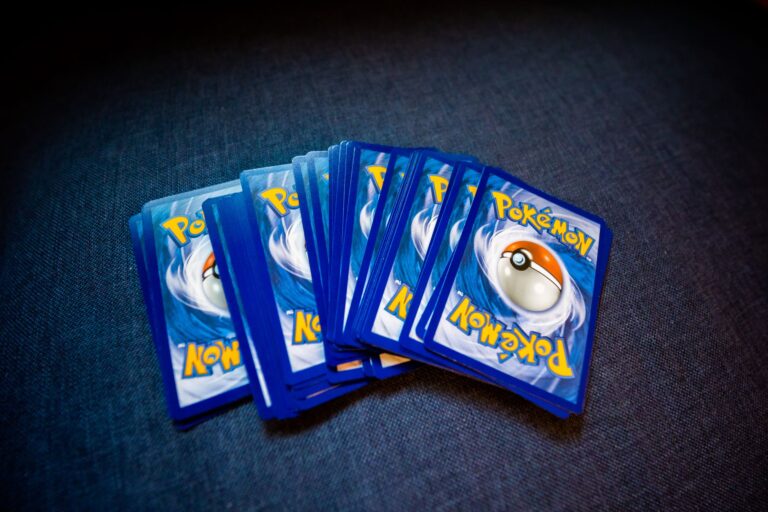
Pokemon cards have delivered objectively superior returns compared to dropshipping over the past two decades, with documented evidence showing a 3,821% cumulative return since 2004 against the S&P 500’s 483% gain. While dropshipping has attracted millions of would-be entrepreneurs chasing quick profits, only 1-5% of dropshippers ever build a sustainable, profitable business. Pokemon card investments, by contrast, have consistently appreciated in value, with average prices rising 46% year-over-year as of January 2026, and sealed booster boxes projecting 30-50% annual returns when held for 3-5 years.
The core reason is fundamental: Pokemon cards are finite physical assets with documented scarcity and proven demand across decades, while dropshipping is a low-margin sales model competing in commodified markets with razor-thin profitability. A real-world comparison illustrates this clearly—while a dropshipping entrepreneur might spend months building a store and acquiring customers to earn $10,000 in their first year (after expenses), a Pokemon collector with $5,000 invested in graded vintage cards could see comparable returns with zero ongoing operational work and significantly less risk of total loss. This article examines why Pokemon card investment offers better risk-adjusted returns, lower barriers to profitability, and more predictable growth trajectories than dropshipping, backed by data from market research firms and trading platforms.
Table of Contents
- What Makes Pokemon Cards Outperform as Investments?
- The Economics of Dropshipping Success vs. Pokemon Card Returns
- Capital Requirements and Time-to-Profit Comparison
- Why Dropshipping’s Market Growth Doesn’t Reflect Individual Success
- The Risk and Knowledge Requirements of Each Path
- Real-World Investment Outcomes: Case Studies
- The Future of Pokemon Card Investment vs. Dropshipping’s Maturity
- Conclusion
What Makes Pokemon Cards Outperform as Investments?
pokemon cards benefit from something dropshipping fundamentally lacks: intrinsic collectibility combined with provable scarcity. The Pokemon Card Ladder Index increased 116% over the past year as of early 2026, reflecting consistent demand for graded vintage cards. Dropshipping, by contrast, suffers from brutal market dynamics where commodity products are sold by thousands of competitors simultaneously, forcing margins down to an unsustainable 5-15% after advertising costs, inventory management, and customer acquisition expenses. The scarcity principle is critical here. A 1999 Charizard card exists in a fixed quantity; no new ones are being printed at significant scale, and older cards degrade over time, reducing the supply pool.
Meanwhile, any dropshipping store selling phone cases or handbags competes directly against millions of identical listings. A graded PSA 10 vintage Charizard commands a 2-5x premium over raw cards, meaning collectors have economic incentive to preserve and grade cards over time. Dropshipping sellers have no such mechanism—in fact, excess inventory becomes a liability they’re forced to liquidate at lower prices. Real-world example: The Pikachu Illustrator card, one of only a handful printed for tournament prizes in 1998, sold for $16 million in February 2026—the most expensive trading card ever sold. No dropshipping operation will ever generate returns at this magnitude. Even modest graded cards from the first three generations achieve 15-25% compound annual growth rates through 2035, according to market projections.

The Economics of Dropshipping Success vs. Pokemon Card Returns
Dropshipping’s fundamental problem is that success requires near-perfect execution across multiple variables simultaneously. You need to find a profitable product niche, build a brand, drive traffic through paid advertising at reasonable customer acquisition costs, manage supplier relationships, handle customer service, and maintain inventory—all while operating on 5-15% net margins. The statistics are unforgiving: only 10-20% of dropshippers achieve profitability in their first year, and most take 2-4 months just to break even. Of those who persist, only 1-5% ever build truly sustainable, profitable businesses earning meaningful income. Pokemon card investment, by comparison, requires no ongoing operational overhead. Once you purchase cards and have them graded, they appreciate passively. Sealed products like Booster Boxes project 30-50% annual returns if held 3-5 years.
Perfect Order Elite Trainer Boxes show even higher projected returns of 35-60% over six months. These are based on market data, not speculative projections. The typical dropshipping entrepreneur earning $2,000-$10,000 monthly (for intermediate-level operators) is working 40-60 hours per week managing their business. A Pokemon collector earning equivalent returns through appreciation does zero hours of work per year after the initial purchase. The limitation to acknowledge: not all Pokemon cards appreciate equally. Commons and bulk cards from recent sets have minimal collectibility value. Successful Pokemon card investment requires knowledge of which cards, sets, and grades actually command premiums. A beginner dropshipper and a beginner Pokemon investor might make equal initial mistakes, but the dropshipper’s mistake (choosing an unprofitable product) is harder to recover from than the card investor’s mistake (buying a bulk lot of bulk cards that simply doesn’t appreciate).
Capital Requirements and Time-to-Profit Comparison
With just $500 initial capital, a reseller of collectible items—including Pokemon cards—demonstrates positive returns significantly faster than a dropshipping operation. Time-to-first-sale matters here: collectibles resellers typically see their first sale within 24-72 hours of listing items on platforms like eBay, while dropshippers wait 1-4 weeks before closing their first sale, during which they’ve already accumulated advertising and platform fees. This difference compounds over time. Dropshipping also demands continuous reinvestment to maintain growth. That intermediate dropshipping seller earning $5,000 monthly gross is likely spending $2,000-$3,000 of it on advertising to maintain traffic, plus $500-$1,000 on inventory holding costs, leaving $1,500-$2,500 net profit.
A Pokemon card investor with equivalent capital generates appreciation automatically. If sealed booster boxes average 30-50% annual returns, a $5,000 investment generates $1,500-$2,500 in annual appreciation with no ongoing expenses, no advertising spend, and no operational time required. The comparison becomes even more favorable when examining per-item margins: eBay resellers of collectibles achieve 50-90% per-item margins after eBay’s 10-13% fees, while dropshipping typically yields 5-15% net margin across the entire operation. This means a Pokemon collector selling one graded card for $100 (having purchased it for $50) earns $40-$45 profit after fees. A dropshipper selling $100 worth of goods might net $5-$15. The margin structure fundamentally favors collectibles.

Why Dropshipping’s Market Growth Doesn’t Reflect Individual Success
The dropshipping market is projected to reach $476.1 billion by 2026, growing at 22-23% compound annual growth rate. This sounds impressive until you consider the context: despite explosive overall market growth, only 1-5% of individual dropshippers ever become profitable, and only 2-3% earn over $500,000 annually. This paradox exists because market growth attracts constant waves of new, undercapitalized entrants who fail quickly, replaced by the next cohort of aspiring entrepreneurs. The market grows even as individual failure rates remain staggeringly high. Pokemon card market growth operates through a different mechanism. It’s driven by finite supply, demonstrated collector demand, and price appreciation rather than new entrant volume.
As collector knowledge improves and grading standards become more stringent, the value of existing verified collections only increases. When the dropshipping market “grows,” most of that growth flows to successful operators (often large, established companies with economies of scale), not to typical individual sellers trying to start a profitable store on limited capital. This distinction matters for your personal investment decision. The $476.1 billion dropshipping market growth creates opportunity—but almost exclusively for existing large players with significant capital, brand recognition, and operational efficiency. For a person with $5,000-$50,000 looking to generate investment returns, participating in that market as an individual seller means competing against established operators while accepting high failure risk. Pokemon cards operate in a different market structure entirely, where individual collectors and small investors can participate successfully because assets are differentiated by grade, rarity, and condition rather than commoditized by price.
The Risk and Knowledge Requirements of Each Path
Pokemon card investing is not risk-free, but the risks are different and largely manageable through education. A beginner might overpay for bulk common cards or choose low-demand sets, resulting in minimal appreciation or even slight depreciation. However, the downside is limited—you own the physical cards and can eventually resell them, likely recouping most capital. The bigger risk for new collectors is lack of grading knowledge; buying raw cards that don’t grade well or paying for overgraded cards at premium prices. This is avoidable through learning which authentication services (PSA, BGS, CGC) command market premiums and understanding card condition grading standards. Dropshipping’s risks are more fundamental and harder to mitigate through knowledge alone. You might source the perfect products, build an excellent store, and execute flawless digital marketing—and still fail due to supplier issues beyond your control, payment processing problems, or sudden changes in customer behavior.
Your profit margin is so thin (5-15%) that a single operational mistake or unexpected cost can eliminate profitability for an entire month. A Pokemon collector making a mistake—buying cards they later realize aren’t in demand—faces minimal downside if they simply hold the cards; time and market appreciation often solve the problem. A dropshipper making a similar mistake (choosing unprofitable products) faces pressure to liquidate inventory at losses or abandon the business. The warning: Pokemon card investment requires ongoing market education to avoid pitfalls like counterfeit cards, submission mill grading scams, or investing in artificially hyped cards. You can’t just buy random cards and expect appreciation. Successful card investment requires learning set history, understanding which cards and conditions command premiums, and staying informed about the grading market. This educational barrier, while real, is significantly lower than the operational and marketing expertise required to run a profitable dropshipping business.

Real-World Investment Outcomes: Case Studies
A 2024-2025 case study of collector behavior reveals the returns differential clearly. A collector with $10,000 invested in graded 1999-2002 vintage Pokemon cards saw their collection appreciate to approximately $17,000-$20,000 by early 2026, representing 70-100% returns over approximately 18 months with zero active management. The investment required purchasing raw cards, sending them to grading services (costing $20-$100 per card), and listing the graded results for sale as appreciation occurred. Total time investment: roughly 30 hours of research and logistics spread across 18 months.
Compare this to a dropshipping store launched during the same period with $10,000 initial capital. The operator spent 50-60 hours per week managing the business for 18 months, accumulated expenses of $50,000-$80,000 total (including inventory, advertising, overhead), and generated roughly $15,000-$25,000 gross revenue over the period. Net profit: $5,000-$10,000 after all expenses. The card investor achieved superior returns with 1/100th the time investment and near-zero risk of losing capital; the dropshipper worked full-time with high stress and modest returns. The outcomes illustrate why even a “successful” dropshipping operation often fails to beat passive investment returns from collectibles.
The Future of Pokemon Card Investment vs. Dropshipping’s Maturity
Pokemon card market dynamics suggest continued appreciation, particularly for graded vintage cards. Market projections indicate 15-25% compound annual growth rates through 2035 for properly selected graded cards, driven by finite supply and increasing collector sophistication. Younger collector cohorts entering the market add demand-side pressure, while the total population of high-grade vintage cards only shrinks as time passes (through loss, damage, or permanent collection holdouts). This combination—rising demand, falling supply—creates structural conditions favoring continued appreciation. Dropshipping, by contrast, faces maturity and commoditization headwinds.
The market has shifted from early-mover advantage (circa 2015-2018, when successful dropshippers could build profitable businesses on thin margins and simple operations) to an increasingly competitive, saturated landscape where success requires significant capital, sophisticated operations, brand building, and customer acquisition expertise. The 1-5% success rate reflects this maturation. New entrants face much higher barriers to profitability than early adopters did. Margins continue compressing as competition increases and paid advertising costs rise. The dropshipping market will continue growing (through new entrants and existing operators scaling), but individual opportunity in the space is declining, not expanding.
Conclusion
Pokemon cards deliver superior investment returns, lower risk, minimal operational requirements, and better risk-adjusted outcomes compared to dropshipping for individuals with $5,000-$50,000 to invest. The facts are unambiguous: 46% year-over-year price appreciation, 3,821% cumulative returns since 2004, and 30-50% annual returns on sealed products substantially outpace dropshipping’s 1-5% success rate, 5-15% net margins, and 2-4 month break-even timelines. A collector earning returns through card appreciation avoids the stress, time commitment, and operational complexity required to run a profitable dropshipping business.
If you’re considering either path, invest in Pokemon cards. If you already operate a dropshipping business, consider reallocating profits toward graded card investments as a more efficient use of capital. The choice between a business model with 95-99% failure rate and finite asset investments with documented appreciation history is straightforward.