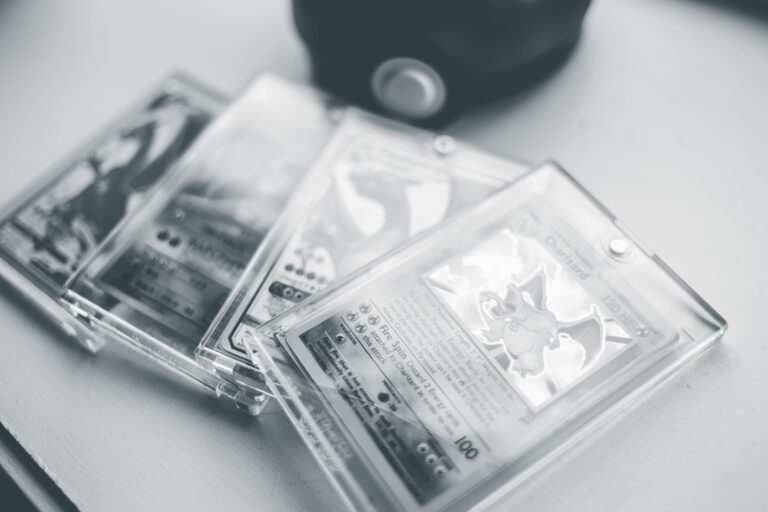
The 1952 Topps Mickey Mantle and the 1999 Charizard Holographic follow the same pattern because both represent the iconic rookie or flagship card of their respective collecting eras, both were produced in limited quantities relative to demand, and both have appreciated in value far beyond their original cost due to scarcity, condition variance, and their status as generational anchor cards. A 1952 Topps Mickey Mantle in near-mint condition sold for $5.2 million in 2021, while a PSA 10 1999 Base Set Charizard has commanded prices over $300,000—both trajectories show exponential growth driven by the same core factors: nostalgia, limited supply, grading premiums, and the psychological weight of owning the “best” card from a cultural moment.
The parallel extends beyond price tags. Both cards emerged during transformative periods in their respective collecting worlds, both created bubbles of speculation and counterfeiting, and both have forced collectors to confront uncomfortable truths about value, authenticity, and what we’re actually paying for when we buy a piece of cardboard. Understanding this pattern matters for anyone holding Charizards, chasing them, or simply trying to make sense of card values in an era where grade inflation and market manipulation feel rampant.
Table of Contents
- What Makes a Card Transcend Its Original Purpose?
- The Grading Premium and Why Condition Became Everything
- Counterfeiting, Reproduction, and the Authenticity Crisis
- The Investment Narrative and Market Bubbles
- The Problem of Supply and Gradual Debasement
- Psychological Value and Generational Connection
- The Future and What Charizard Teaches Us
- Conclusion
- Frequently Asked Questions
What Makes a Card Transcend Its Original Purpose?
Both the Mickey Mantle and Charizard succeeded in transcending their original role as inexpensive trading cards because they arrived at the precise moment when collecting infrastructure existed to elevate them. The 1952 Topps set was baseball’s mainstream entry point into modern card collecting, and Mantle’s rookie card caught the intersection of his emerging talent and the post-war boom in disposable income for leisure purchases. Similarly, the 1999 Pokémon Base Set Charizard hit the market during a global phenomenon that turned children into collectors almost overnight, and unlike earlier Pokémon printings, the holographic card created a visual hierarchy that made Charizard distinct and desirable. The critical factor both cards share is rarity by circumstance rather than intent.
Topps didn’t deliberately limit 1952 Mantle production to create scarcity—cards were simply lost, destroyed, or played with. The same applies to Charizard: Wizards of the Coast printed aggressively during the Base Set era, but most cards entered circulation as bulk commons that didn’t survive schoolyard trades and water damage. Condition-graded specimens became functionally rare not because they were printed rarely, but because preservation was an accident, not the norm. This post-hoc rarity created a hierarchy that collectors couldn’t fabricate through market manipulation alone—you either had a card that survived in high grade, or you didn’t.

The Grading Premium and Why Condition Became Everything
Both cards experienced what might be called the “grading revolution,” where the introduction of standardized, third-party condition assessment transformed perceived value. The Professional Sports Authenticator (PSA) launched in 1991, just before pokémon cards exploded, and grading companies created a language that allowed collectors to compare cards across time zones and decades. A raw Mickey Mantle might trade hands based on optimistic eyeballing, but a PSA 8 or PSA 9 Mantle carried objective criteria and fungibility that transformed the market from hobbyist to investment. The limitation here is severe: grading companies themselves became the price drivers rather than neutral arbiters.
A 1999 Charizard at PSA 9 might sell for five times what an ungraded copy in identical condition would fetch, even though the difference is a label and a slab. This creates perverse incentives where collectors submit cards for grading not to authenticate them but to unlock liquidity and command premiums. The Mickey Mantle market learned this lesson the hard way—grading companies that once focused on accuracy shifted toward customer satisfaction, leading to what collectors call “grade creep,” where the same card would receive higher grades from the same company across different years. Modern Charizard grading shows similar trends, with debate among collectors about whether recent grades reflect actual condition or market-favorable assessment.
Counterfeiting, Reproduction, and the Authenticity Crisis
Both cards have become targets for counterfeiting, and both markets have been roiled by the discovery of sophisticated fakes. The Mickey Mantle market faced “fake Mantle” scandals in the 1980s and 1990s, where counterfeit cards and altered cards entered collections, destroying confidence and forcing major auction houses to implement authentication protocols that sometimes contradict each other. The Charizard market entered this phase more recently but with accelerating speed—by 2021 and 2022, reports of PSA-slabbed counterfeit Charizards circulated widely, and the discovery that some grading companies had certified fakes created a crisis of confidence. The deeper problem is that authentication itself is subjective enough to allow dispute.
A Mickey Mantle from certain printing variations is genuinely difficult to distinguish from a counterfeit without forensic analysis, and the same applies to Charizard variants. Some counterfeiters have achieved print quality so close to original that light detection or ink composition analysis is required—well beyond what a human eye or conventional grading can detect. For buyers, this means the certificate is only as good as the company issuing it, and companies have been caught flat-footed before. Collectors holding high-value Charizards are increasingly asking for authentication beyond PSA grading, and the market has begun developing secondary authentication services, much as the Mantle market did decades earlier.

The Investment Narrative and Market Bubbles
Both the Mickey Mantle and Charizard markets have experienced explosive price growth followed by correction and skepticism. The baseball card market boomed in the 1980s, with investors buying rookie cards as alternative assets, only to crash in the 1990s when enthusiasm collapsed and people realized that demand couldn’t sustain prices indefinitely. Charizard experienced its own speculative bubble from 2020 through 2021, when a combination of pandemic nostalgia, celebrity endorsements, and YouTube-driven hype inflated prices to what many regarded as irrational levels. A 1999 Base Set Charizard that traded for $5,000 in 2020 might trade for $15,000 in early 2021, then settle back to $8,000 by 2023.
The trade-off between these two timelines is that the Mickey Mantle market had decades to mature and stabilize around “fair” value for the card’s historical significance, while the Charizard market is still discovering what that value might be. For collectors, the lesson is that riding the bubble up is exciting but risky, and that sustained value depends on whether the card maintains cultural relevance. Mickey Mantle remains the benchmark for all baseball cards because he’s woven into American sports mythology in a way that transcends his actual statistics. Charizard has cultural staying power within gaming and collecting communities, but whether that translates to multigenerational collecting appeal—as baseball cards have—remains untested.
The Problem of Supply and Gradual Debasement
One often-overlooked parallel is that both cards exist in multiple printings and variants that have fractured their markets. The 1952 Topps Mantle came in a high-number series that was printed in smaller quantities, and the existence of variants (slight printing differences, censored vs. uncensored versions) created micro-segments within the card’s universe. A collector buying a high-end Mantle needs to know not just the grade, but the exact printing variant, which can affect price by 30 percent or more. Similarly, the 1999 Charizard came in multiple printings, and distinguishing a first edition holographic Charizard from an unlimited printing requires forensic knowledge that many casual collectors lack.
The warning here is that complexity kills markets. As the Mickey Mantle market matured, collectors became exhausted by variants, and demand shifted toward cards that were simpler and more liquid. The same may happen with Charizard if the market becomes too fragmented by edition types, shadow text variations, and print line differences. Additionally, both cards have faced the “anniversary reprinting” problem—Pokémon has reprinted Charizard in newer sets, and while these are visually distinct, they created doubt about which Charizard matters. Baseball never reprinted the 1952 Mantle, which is a structural advantage; Charizard collectors must contend with the fact that future Pokémon releases could further dilute the original’s distinctiveness.

Psychological Value and Generational Connection
What both cards share is almost intangible: they represent the peak of a collecting era for the generations that lived through it. For Baby Boomers, the 1952 Mantle is the holy grail because it’s the card of their childhood, the one they threw on their bicycle spokes or lost in trades. For millennials and Gen Z, the 1999 Charizard carries the same weight—it’s the card they or their parents bought at corner stores, the one they remember losing, the one they’re now spending adult money to recover. This psychology sustains value far more powerfully than any fundamentals analysis can explain.
The Mantle market proved that this generational connection is durable. Baby Boomers are now in their 70s and 80s, with disposable income and nostalgia driving purchasing power. That generation is passing its collections down, or liquidating them, which stabilizes prices rather than deflating them. Charizard collectors are still in the accumulation and speculation phase, but as they age, the same pattern should hold—what they owned as children will only deepen in emotional value.
The Future and What Charizard Teaches Us
The Charizard market will likely follow the Mickey Mantle trajectory, but with modern complications. Both cards face digital alternatives—the baseball card industry has contended with declining youth participation, while Pokémon is attempting to manage its card game alongside digital card games and NFT-adjacent attempts to tokenize collectibles. The Mantle market stabilized around a core of serious collectors and investors who accepted that youth engagement was declining; Charizard has the advantage of an active Pokémon Company that continues releasing new products and games, which could sustain generational interest longer.
Looking forward, the cards that survive as stores of value are those with genuine historical significance and social proof. Mickey Mantle survived because he’s a baseball icon independent of the card; Charizard must survive on its status within Pokémon canon, which is secure. Both markets will likely see continued bifurcation between high-end, graded copies held for investment and lower-grade copies that serve pure nostalgia or gameplay collectors. The real pattern both cards follow isn’t about value growth—it’s about how certain artifacts become cultural anchors, and how those anchors maintain worth through waves of speculation, skepticism, and changing preferences.
Conclusion
The 1952 Topps Mickey Mantle and the 1999 Charizard Holographic follow the same pattern because they each arrived at the cultural and economic intersection where supply was limited by circumstance, grading created objective hierarchies that allowed market formation, and generational nostalgia provided a durable floor of demand. Both cards have experienced speculative bubbles, counterfeiting crises, grading inflation, and variant fragmentation. Both have transcended their original purpose as disposable trading cards to become investment assets and emotional repositories for entire generations.
For collectors today, the parallel suggests that Charizard values may continue to appreciate for decades, just as Mantle values have, but that the path will include corrections, authentication crises, and market maturation. The safest approach treats both cards as they truly are: artifacts of cultural moments that carry value precisely because they’re difficult to replace and emotionally resonant. The buyers who profit are not those chasing price peaks, but those who understand that the pattern rewards patience and knowledge over speculation.
Frequently Asked Questions
Will the 1999 Charizard continue to appreciate like the Mickey Mantle did?
Likely yes, but with volatility. The Mantle benefited from decades of market maturation and a stable cultural icon in baseball. Charizard has an active gaming franchise behind it, which could sustain interest, but digital alternatives and reprinting pose risks that Mantle never faced.
How do I know if my Charizard is counterfeit?
Examine print quality, ink color, and card stock weight under magnification. Compare against high-resolution images of authentic copies. For high-value cards, invest in professional authentication beyond PSA grading, as some counterfeiters have fooled standard grading companies.
Should I grade my Charizard or keep it raw?
If the card is worth more than $500, grading adds liquidity and protection, despite the premium grading companies charge. For lower-value copies, the grading fee may exceed the price boost. Check recent sales of both raw and graded copies in your card’s condition range.
Why did the baseball card market collapse in the 1990s?
Overproduction of modern cards, irrational speculation, and the collapse of investor enthusiasm created a crash. However, vintage cards like the Mantle remained valuable because they had scarcity and historical significance. Charizard avoids some of this risk because it’s already 25+ years old and has a stable games industry behind it.
What’s the difference between a first edition and unlimited 1999 Charizard?
First edition printings have a small “1st” symbol on the card face and were printed in smaller quantities. Unlimited printings lack this symbol and were printed more heavily. First edition commands a premium of 50-300% depending on condition, and this difference is a major source of confusion in the market.
Is buying Charizard now a good investment?
The pattern suggests that iconic, scarce cards maintain value, but this depends on Pokémon’s cultural relevance persisting for decades. Buy because you value the card or believe in its cultural staying power, not because you expect rapid gains. The bubble phase has likely passed; steady appreciation is more realistic than explosive returns.